Aster (ASTER) Slashes Token Emissions by 97% in Major Tokenomics Overhaul
Key Takeaways
- The Aster perpetuals platform has eliminated its linear token release schedule in favor of a staking-exclusive distribution system
- ASTER token releases have plummeted from 78.4 million monthly to approximately 1.8–2.25 million — representing a 97% decline
- More than 80% of the 8 billion token total supply was designated for community participants
- The restructuring responds to user concerns regarding token dilution and works alongside the platform’s active buyback initiative
- ASTER has climbed nearly 3% over the last 24 hours
Aster, the decentralized derivatives trading platform supported by Binance co-founder Changpeng Zhao, has implemented a comprehensive restructuring of its token distribution framework. The exchange revealed it is abandoning its predetermined monthly release schedule in favor of a staking-centered approach.
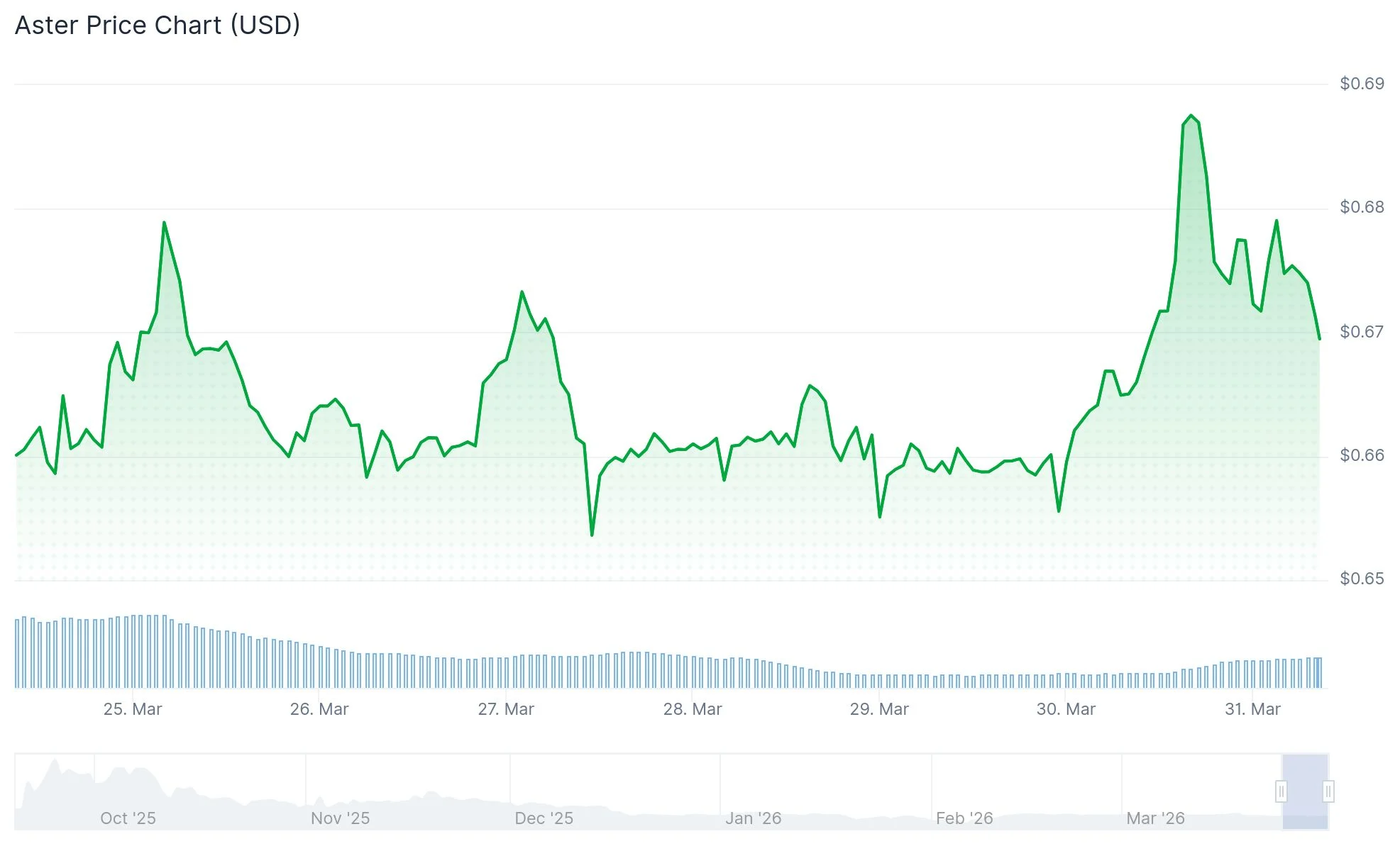 Aster Price
Under the previous system, Aster distributed 78.4 million ASTER tokens monthly — approximately 1% of its complete 8 billion token allocation — following a linear timeline. This figure will now decrease to a range of 1.8 million to 2.25 million tokens each month.
This adjustment represents more than a 97% decrease in fresh tokens entering the market monthly.
The modification was implemented following user feedback expressing concerns about excessive token dilution. Aster stated the objective is to minimize downward pressure on ASTER’s market value.
Within this updated framework, ecosystem-designated tokens will exclusively be distributed as rewards to stakers. The present allocation stands at 450,000 ASTER tokens per weekly epoch period.
Understanding the Updated Distribution Framework
The 30% supply portion allocated to the Ecosystem & Community bucket — initially subject to a 20-month linear vesting timeline — now serves as the exclusive source for staking incentives. This allocation also supports APX-to-ASTER token migration, development grants, promotional activities, and liquidity initiatives.
Aster operates a two-tier staking incentive structure. This framework incorporates a 150,000 ASTER Base APY component and a 300,000 ASTER Loyalty Rewards mechanism that increases payouts based on user lock-up duration and platform engagement levels.
The Aster Foundation’s 7% treasury reserve remains completely locked until distribution through governance-sanctioned processes. Team allocations, representing 5% of supply, are subject to a 12-month cliff period followed by 40 months of gradual vesting.
Over 53% of total supply was earmarked for airdrop distributions. During the token generation event held on September 17, 2025, 8.8% became immediately accessible. The remaining portion vests gradually across 80 months.
Token Buyback Initiative Enhances Deflationary Mechanics
Aster simultaneously maintains a buyback mechanism introduced in December of last year. As much as 80% of daily trading fees generated on the platform are allocated to acquire ASTER from secondary markets.
When paired with the dramatically reduced emission schedule, Aster indicates the token may transition to deflationary status in the future.
Aster unveiled its proprietary Layer-1 blockchain earlier this month, named Aster Chain. The network emphasizes privacy features and enhanced performance specifically designed for derivatives trading operations.
The platform directly competes with Hyperliquid and Lighter, both of which similarly operate on purpose-built blockchain infrastructures.
ASTER has increased nearly 3% during the previous 24-hour period at the time of publication.
The post Aster (ASTER) Slashes Token Emissions by 97% in Major Tokenomics Overhaul appeared first on Blockonomi.
You May Also Like

SBI VC Trade Launches Ripple’s RLUSD in Japan

One Of Frank Sinatra’s Most Famous Albums Is Back In The Spotlight