Exclusive interview with Flare founder Hugo Philion: How to use "blockchain of data" to promote mass adoption?
Author: Weilin, PANews
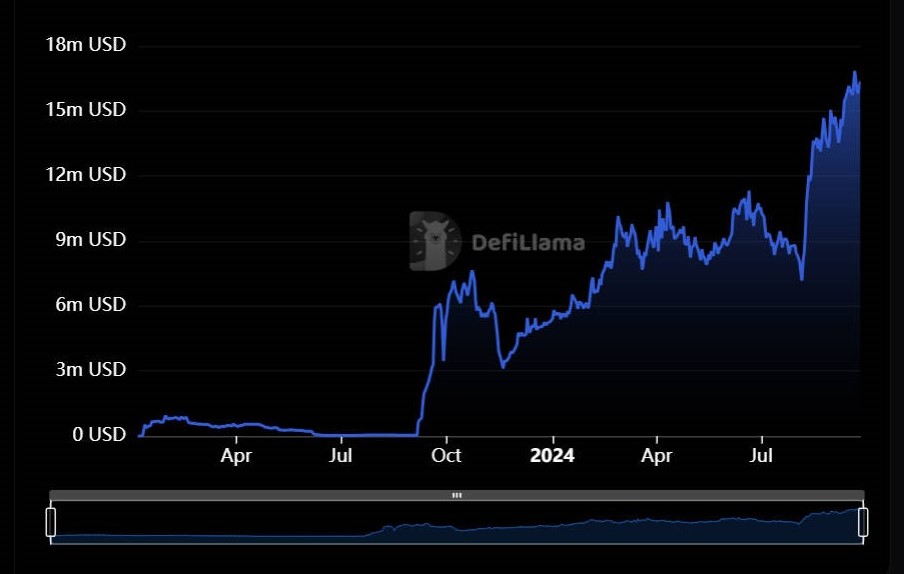
Defillama data shows that the TVL of data-centric Layer1 blockchain Flare has recently climbed to $16.85 million, a record high. In addition, Flare's user base is also expanding rapidly. Flare has reached 1 million wallet addresses and has approximately 150,000 daily active users. More users in the ecosystem are beginning to show interest and contribute liquidity.
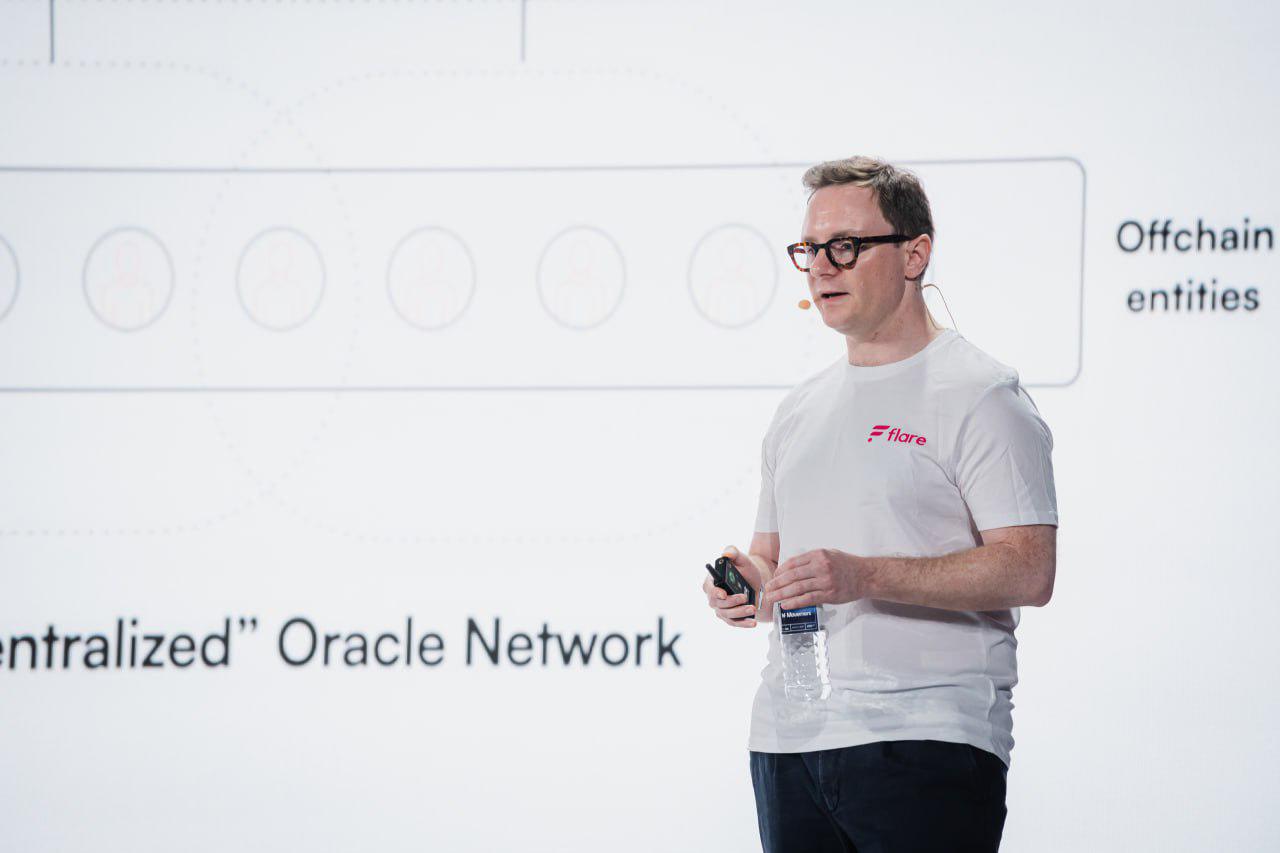
At TOKEN2049 held in Singapore, Flare co-founder and CEO Hugo Philion shared with PANews the driving force behind TVL achievements, why Flare's slogan changed from "scalable smart contract platform" to "blockchain of data", and the problems facing oracles at this stage. In addition, Hugo also shared Flare's recently released research on how to use consensus learning to improve the accuracy of artificial intelligence (AI) and reduce risks.
He revealed that Flare has some interesting things coming up. Currently, Flare is expanding its DeFi ecosystem and plans to launch FAssets, FBTC and FXRP. At the same time, it will implement a trusted execution environment (TEE) strategy to help developers build better user experience and better applications.
TVL hits all-time high
As a Layer 1 blockchain based on the Ethereum Virtual Machine (EVM), Flare aims to achieve strong interoperability. The Flare network uses two open local interoperability protocols, State Connector and Flare Time Series Oracle (FTSO), to support decentralized on-chain acquisition of blockchain data and time series data (such as asset prices, data indices, etc.).
In February of this year, Flare completed a $35 million private placement financing, with investors including Kenetic and Aves Lair. Many interesting dApps have also emerged in the Flare ecosystem, including the lending market Kinetic and the AI-driven DEX Sparkdex. Hugo pointed out that the reasons for the TVL exceeding $16 million include the DeFi Emissions Program, which will incentivize users to participate in Flare's DeFi ecosystem and allocate 510 million FLR tokens in the next 12 months. In addition, Flare has also integrated with Stargate to enable seamless transfers of stablecoins and ETH, thereby expanding Flare's reach. In July of this year, Flare announced the integration of LayerZero V2, connecting 75 blockchains in one fell swoop, including Ethereum, Solana, and Ethereum L2 networks. As a result, more than 50,000 dapps that adopt the LayerZero cross-chain messaging standard can use Flare.
With the successful launch of FAssets' Open Beta, Flare looks forward to further driving TVL growth and actively exploring new partnerships and integrations to attract more assets and users. Hugo said, "On the one hand, this encourages people to build more DeFi applications, and on the other hand, it means that Flare is working hard to reach funds and large traders who want to participate in the ecosystem." By providing innovative solutions, Flare hopes to meet the evolving needs of the community.
The narrative shift from “scalable smart contract platform” to “blockchain for data”
At the beginning, Flare's slogan was "scalable smart contract platform", which was later changed to "blockchain of data". Hugo believes that the development of blockchain can be divided into three generations: the first generation is Bitcoin and non-smart contract platforms; the second generation is smart contract platforms. The first generation enables users to trade and transfer; the second generation allows users to create more logic around these transactions. The third generation allows the introduction of data at the chain level for more interesting operations.
“If you take away the oracles in other blockchains, you’re really only left with automated market makers (AMMs), and that’s basically it. So we think everything we want to do on blockchain, everything today, and most of what we want to do in the future, is data-related.”
Blockchains typically operate in isolated environments without access to real-world data. Oracles fill this gap, providing decentralized applications (dApps) with off-chain data necessary for their functionality. However, existing oracle systems often face challenges: First, security risks. In 2022, more than $400 million was stolen from DeFi due to oracle manipulation attacks. When using third-party oracles, only a few data providers participate in the provision of price information, which creates a problem of easy manipulation. Secondly, there is the problem of centralization, with some third-party oracle systems relying on only five data providers to support data feeds. This low threshold increases the risk of collusion and reduces the overall reliability of the data. In addition, high-end oracle services can be extremely expensive. Some projects pay millions of dollars each year to obtain secure and reliable data feeds. These fees may be unaffordable for many blockchain projects.
In Hugo's view, the current oracles are not well constructed, and it is difficult for people to quantify what ensures their security. They do not have a very clear security method. "For example, at Flare, we have 67% of tokens staked, which ensures the security of the oracle. Some other oracle users and developers cannot clearly understand what ensures its security. Different oracle systems have different structures, but usually the number of nodes providing specific information is variable. You may have a popular information source provided by 20 to 30 nodes, and a less popular information source provided by 5 nodes. 20 and 30 are not many, but 5 is much less, so it is easier to manipulate."
Hugo said that as an engineer or protocol developer, when using other oracles, one must also act as a risk manager and be constrained by the data security provided by other oracles during construction. It is based on such considerations that Flare attaches great importance to the importance of data and data security. The Flare ecosystem has also made more progress recently.
According to Hugo, Flare Time Series Oracle (FTSO) recently released V2, which was released on its predecessor network Songbird and Flare and is now fully operational. It is an upgrade to V1. V1 can obtain 15 price series every 3 minutes, while V2 has 1,000 possible sequences, updated once per block, about 1.8 seconds. "This is basically the fastest oracle that can be guaranteed by the blockchain." Currently, Flare is actively integrating with other decentralized applications and plans to pass its data to other chains.
Launched "consensus learning" research to promote the combination of AI and blockchain

During TOKEN2049, the large-scale adoption of Web3 became a hot topic and the dream of the entire Web3 community. In November this year, Flare will co-host a hackathon with Google Cloud to explore the trusted execution environment (TEE). One direction is to combine Google's Gemini model to perform on-chain operations, which is an area of great interest to Flare. Hugo believes that providing a better user experience is the key to achieving large-scale adoption.
He said that while meme tokens attract some people who want to make a quick profit, this does not represent true mass adoption because these products are limited in nature. Mass adoption can only be achieved when the application is simple and easy to use. "Ideally, I would be able to use a language model like ChatGPT, give instructions, and turn them into transactions on the blockchain. This is very interesting. Our user experience is the first factor, but we are moving too slowly in this regard. The second point can be understood as the product itself. DeFi is limited (product) because there are not many people in the world who are willing to take on the responsibility of borrowing money. It is not something that most 20- to 30-year-olds naturally want to participate in in their daily lives."
Flare is exploring a trusted execution environment that allows people to embed application rules on the chain, move the computation part to a secure computing environment outside the chain to achieve privacy protection, and process larger-scale data and computation. This can bring users a richer experience and make them willing to participate.
Recently, Falre's research paper introduced a new AI method called consensus learning (CL). The paper argues that combining AI with blockchain consensus mechanisms can create safer and more accurate AI.
Hugo believes that there are two aspects to the relevance of AI and blockchain. The first is that AI helps blockchain. For example, using large language models to simplify the user experience of blockchain. At the same time, blockchain can also improve the performance of AI. "A longer-term, research-driven area is how to use blockchain to make AI better. Obviously, there are a lot of narratives and rapidly built products around this topic. We are studying how to use consensus to make AI more accurate and less risky."
“The driving force of the market is to make applications easier to use and more interesting”
Targeting Bitcoin's potential in DeFi, Flare's upcoming FAssets, especially FBTC, provide a compelling solution for integrating BTC into the DeFi ecosystem. FAssets provide a secure and efficient way to bridge BTC to other chains, enabling users to participate in various DeFi activities. FAssets are different from the current Bitcoin L2, including: FAssets are designed to be closer to the core concept of Bitcoin. Optimistic verification on Bitcoin L2 takes 7 days, while FAssets aims for 1 hour settlement.
Bridging BTC to other chains unlocks opportunities such as using BTC as collateral in DeFi lending platforms, earning interest, and cross-DEX trading. Flare believes that there is still a lot of room for improvement in trust-minimized bridging for BTC. FAssets, especially FBTC, can become the biggest competitor to Bitcoin L2 and are currently available on Coston.
"There are a lot of hypothetical L2s out there, but very few are really ready, and none are really ready and capable enough. The descriptions of L2s right now are slightly misleading, and they don't leverage the security of Bitcoin like Ethereum does. There is currently no ability to do fraud proofs on Bitcoin. This is a hot area, but it's still an unsolved problem. I think it should be solved," said Hugo.
Regarding the current state of the crypto market, Hugo said that the main driving factor is DeFi, which has experienced strong growth, but now the growth rate has slowed down, although it is still growing. So I think the market is in an interesting state and needs a catalyst and driving force. For me, this catalyst and driving force is to make applications easier to use and allow people to build better and more interesting applications that attract a wider range of people. Social media, games, and possibly better prediction markets. I think the prediction market will be a strong growth category in the coming year.
Regarding Flare, Hugo added, “We have some really interesting things coming up. We’re currently expanding the DeFi ecosystem. I’m looking forward to launching Assets, FBTC, FXRP. At the same time, I’m also looking forward to implementing the strategy for the trusted execution environment so that people can start building better user experiences or better applications. AI may be a long-term thing, and using consensus AI may not be that long-term.”


You May Also Like

Paxos Labs Secures $12M for Crypto Yield Platform Amplify

US Stocks Surge Higher: S&P 500 Jumps 1.18%, Nasdaq Soars 1.96% in Powerful Rally