This article will delve into the impact of this attack on Aave, Ethena, and USDe, analyze how the DeFi system responded to this incident, and explore whether Proof of Reserves can prevent liquidations of more than $20 million.This article will delve into the impact of this attack on Aave, Ethena, and USDe, analyze how the DeFi system responded to this incident, and explore whether Proof of Reserves can prevent liquidations of more than $20 million.
After the Bybit hack, how can DeFi effectively cope with market turmoil?

2025/02/24 11:33

Original article: Omer Goldberg , Founder of Chaos Labs

Compiled by: Yuliya, PANews

After Bybit suffered a $1.4 billion hack, the cryptocurrency market faced a serious impact. How DeFi (decentralized finance) platforms responded to this largest hack in history, as well as potential contagion risks and USDe price fluctuations, has become the focus of attention in the crypto field. This article will explore the impact of this attack on Aave, Ethena, and USDe, analyze how the DeFi system responded to this incident, and explore whether Proof of Reserves can prevent liquidations of more than $20 million.

After the Bybit hack, how can DeFi effectively cope with market turmoil?

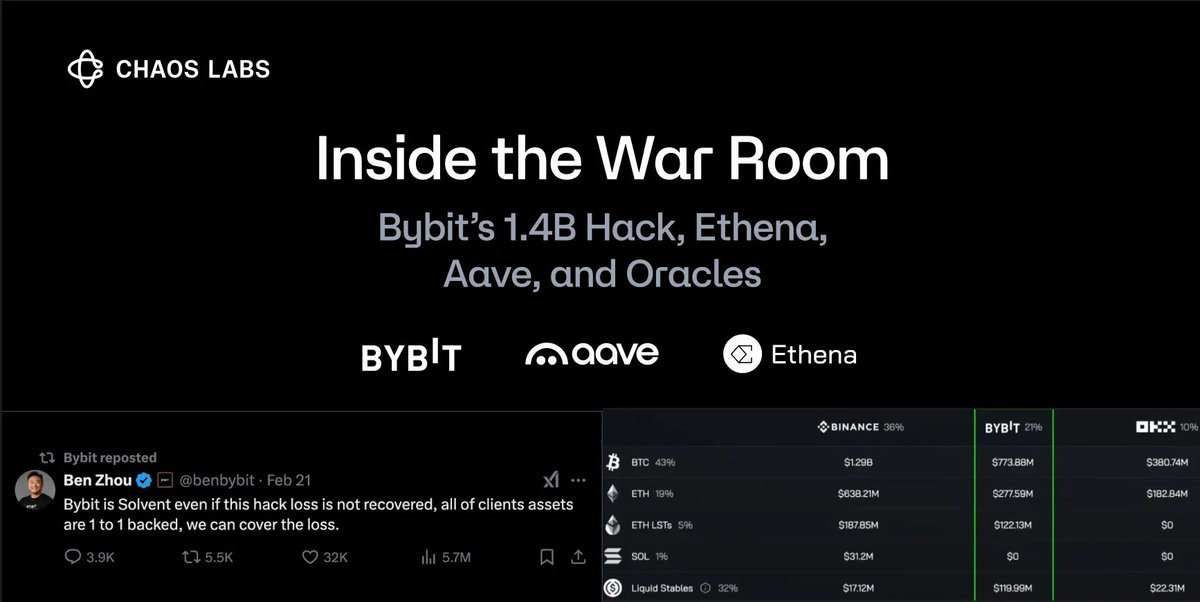
After the attack, the Chaos Labs team, together with bgdlabs, AaveChan and LlamaRisk, formed an emergency response team to assess the risks and systemic risks that Aave may face.
After the Bybit hack, how can DeFi effectively cope with market turmoil?

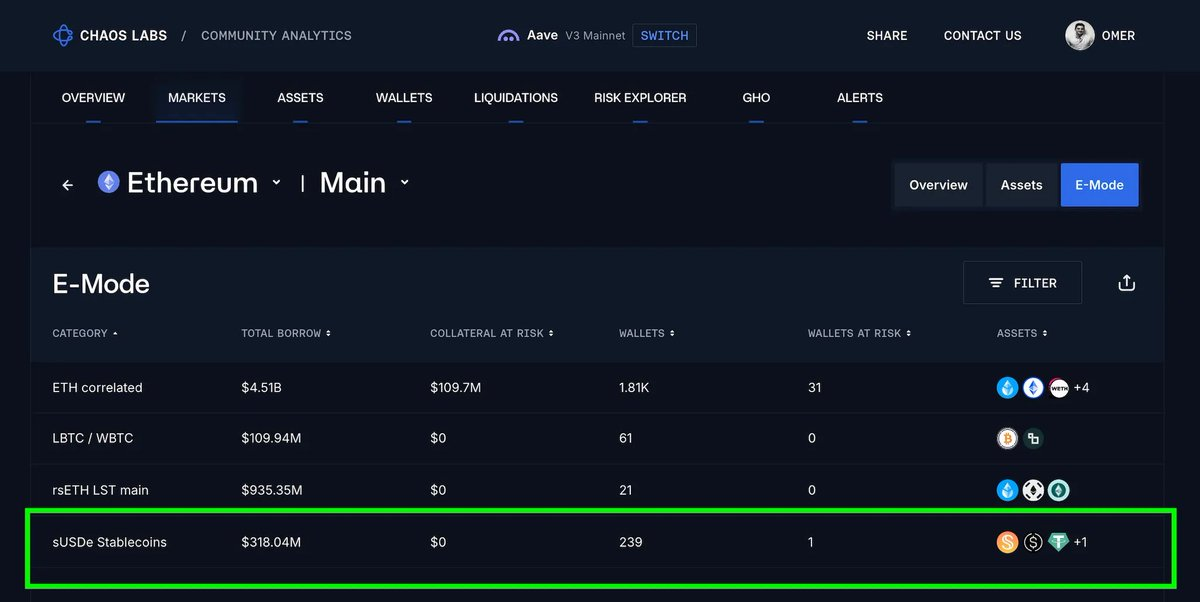
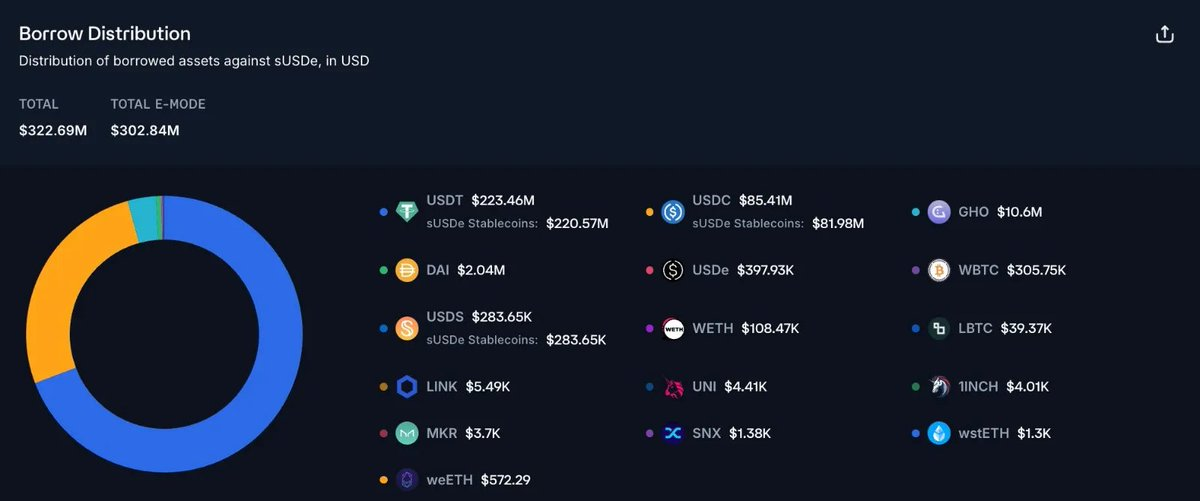
The emergency response team focused on several core issues: Bybit’s solvency status, whether there is a possibility of a larger attack, and the impact any bankruptcy or write-down might have on Aave given its exposure to sUSDe.
After the Bybit hack, how can DeFi effectively cope with market turmoil?

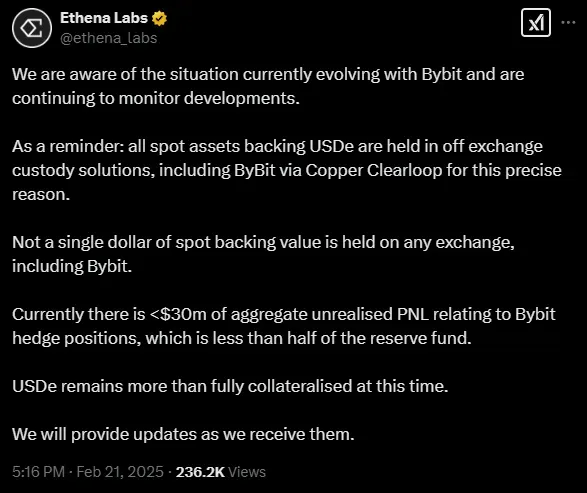
Ethena Labs confirmed that its funds are held in custody through Copper.co , but the market is still concerned about the chain reaction that may be caused by Bybit’s inability to realize profits and losses, and whether USDe will face a deeper risk of decoupling.
After the Bybit hack, how can DeFi effectively cope with market turmoil?

An analysis of Bybit’s bankruptcy risk shows that there are three main hidden dangers: exposure risk caused by USDe hedging failure, chain liquidation risk caused by ETH price decline, and potential DeFi contagion risk.

This prompted the relevant parties to accurately quantify the losses in order to decide whether to take measures such as freezing the sUSDe market. The transparency dashboard shows Ethena's ETH configuration on Bybit, while Ethena Labs' collateral is safely stored over-the-counter at Copper.co . This custody solution and over-the-counter settlement mechanism effectively avoids the bankruptcy risk of exchanges like FTX.

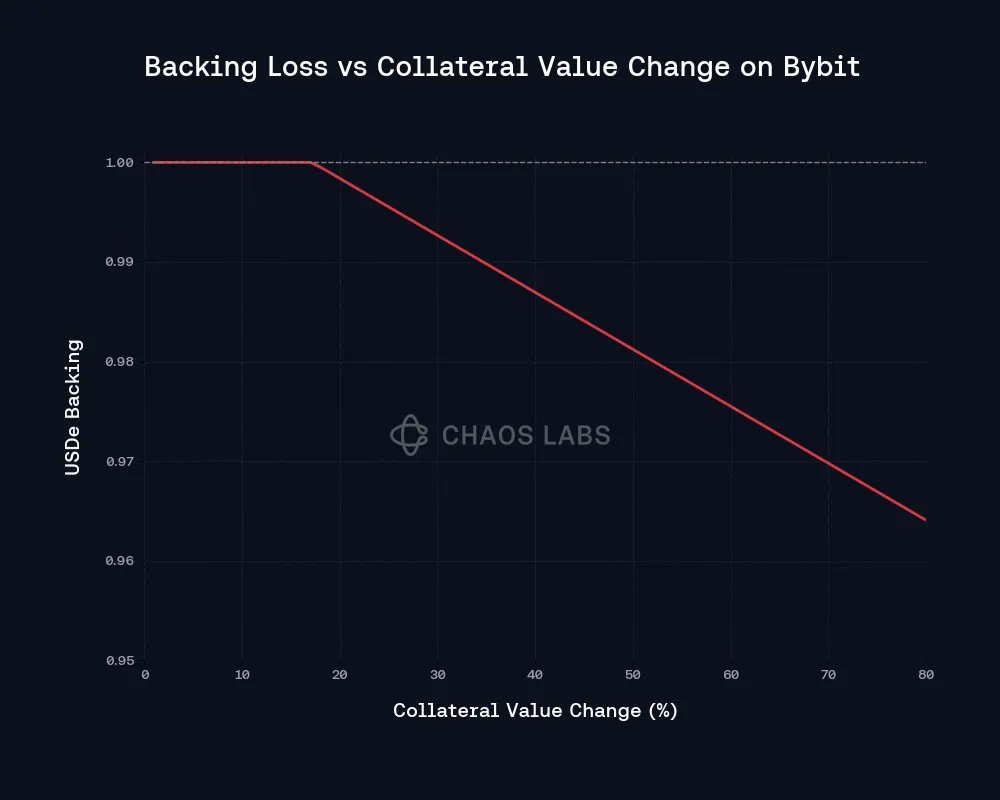
Assuming that the $400 million "book" notional ETH position cannot be liquidated and the ETH price drops 25% before Copper.co releases the funds, Ethena could face an unhedged loss of $100 million. However, considering the $60 million insurance fund, USDe's total backing loss is expected to be only 0.5%.
After the Bybit hack, how can DeFi effectively cope with market turmoil?

Based on the judgment that the risks are relatively controllable, Aave has prepared a risk response plan and continues to monitor developments.

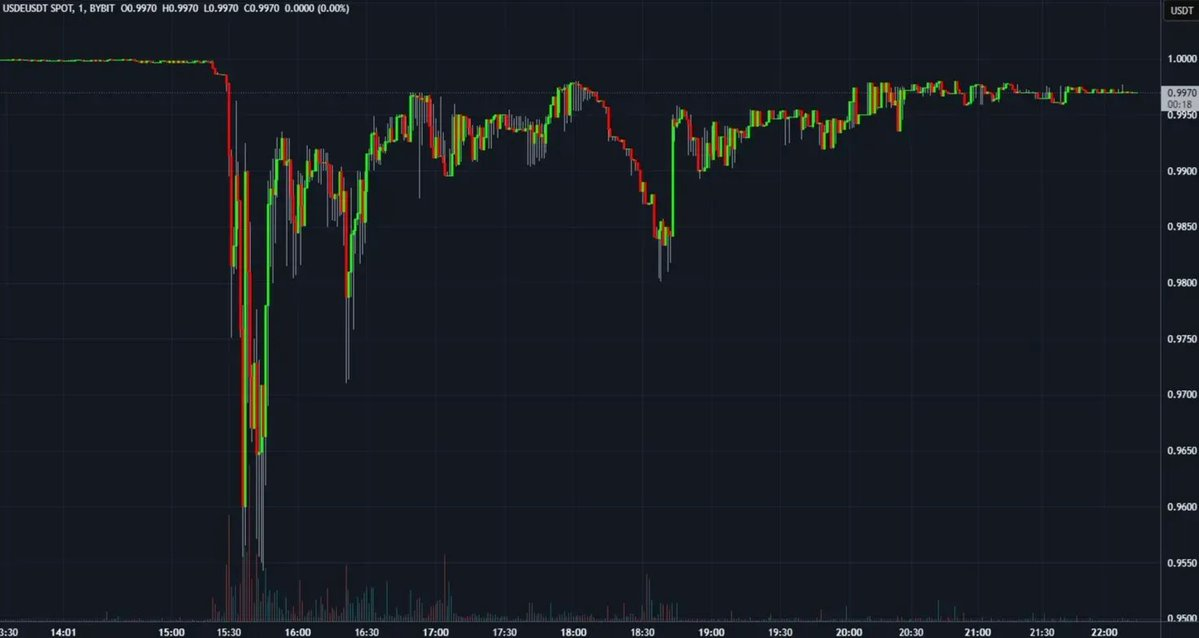
In terms of price, USDe showed obvious price deviations in different trading venues. On the Bybit platform, USDe/USDT once fell to $0.96 due to panic selling and lack of immediate arbitrage.
After the Bybit hack, how can DeFi effectively cope with market turmoil?

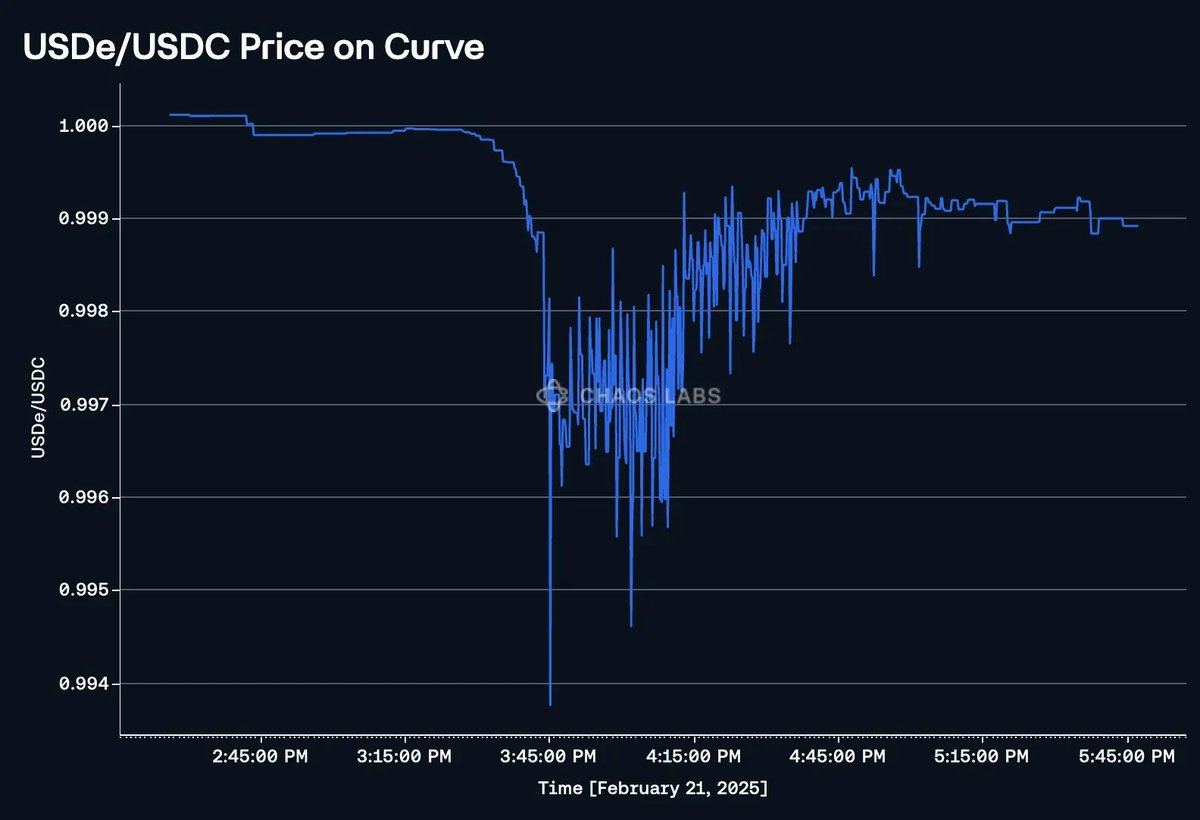
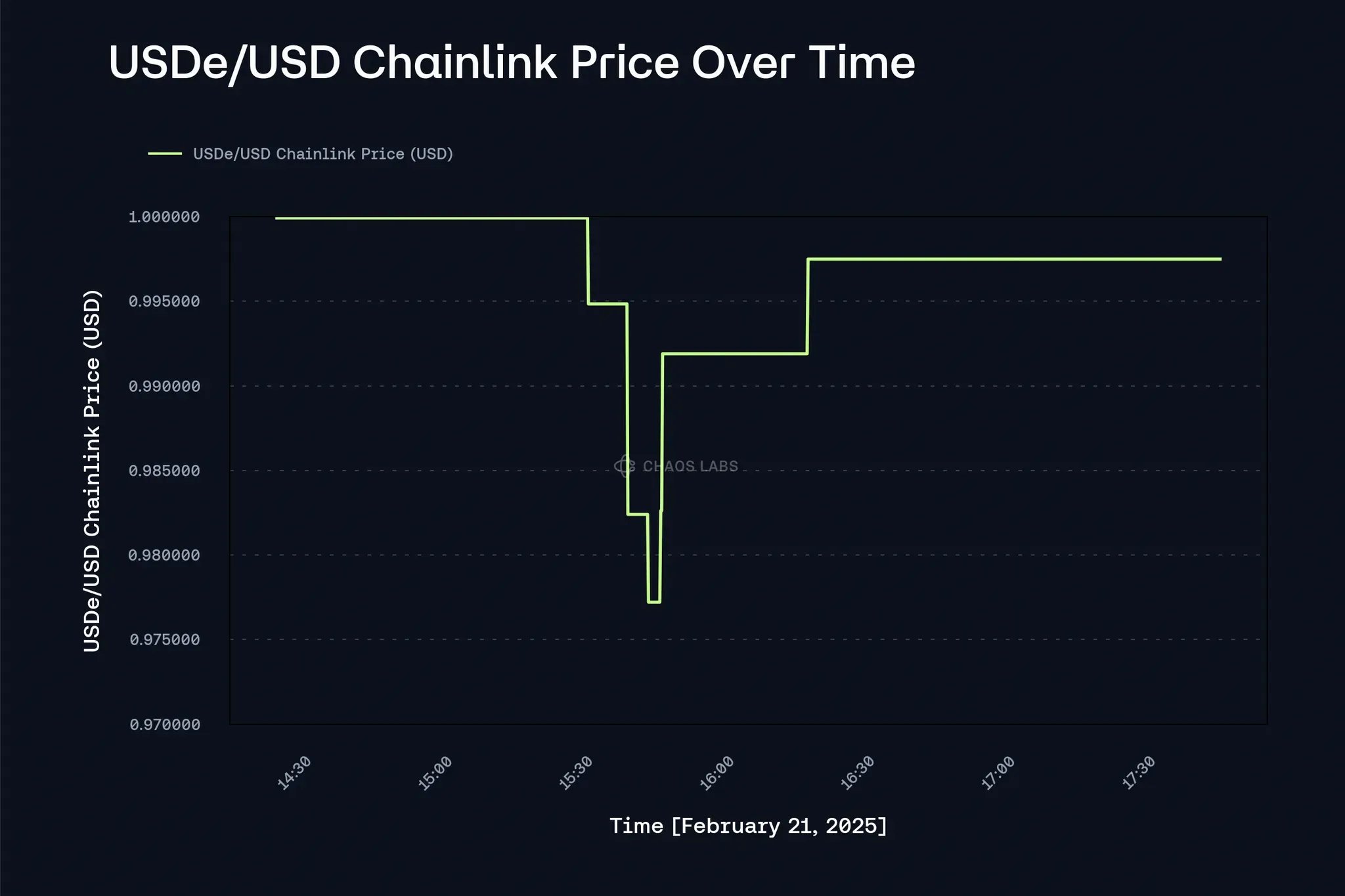
In contrast, on-chain pricing has been more stable, with only a brief decoupling to $0.994, which was quickly recovered through arbitrage. This difference is mainly due to the redemption mechanism and the role of the oracle.
After the Bybit hack, how can DeFi effectively cope with market turmoil?

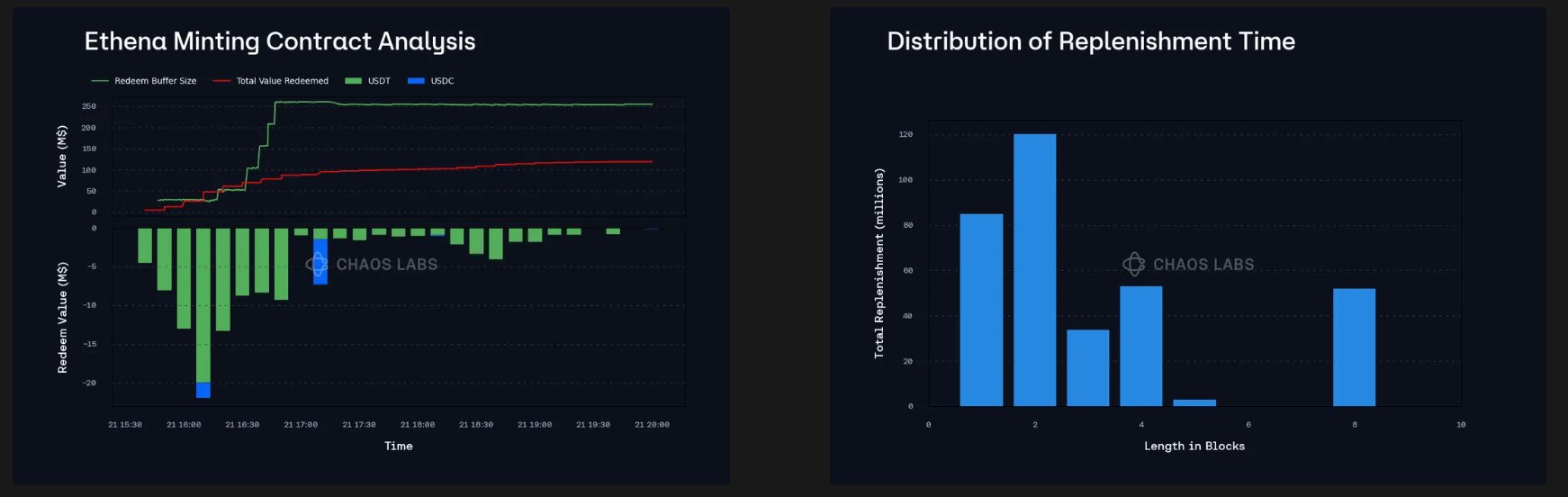
Unlike CeFi, USDe redemptions can be performed continuously and atomically on-chain through the Mint and Redeem contract. USDe's on-chain redemption mechanism worked smoothly, completing $117 million in redemptions in a few hours. Ethena Labs also increased the redemption buffer to $250 million and maintained price stability through continuous replenishment until USDe regained its peg. Due to the atomic nature of USDe redemptions, whitelisted redeemers quickly closed the price gap on Curve.
After the Bybit hack, how can DeFi effectively cope with market turmoil?

However, the anomaly of the oracle amplified the market risk. Chainlink’s USDe/USD price oracle deviated from the on-chain price and fell to $0.977, although the redemption mechanism was still operating normally.
After the Bybit hack, how can DeFi effectively cope with market turmoil?

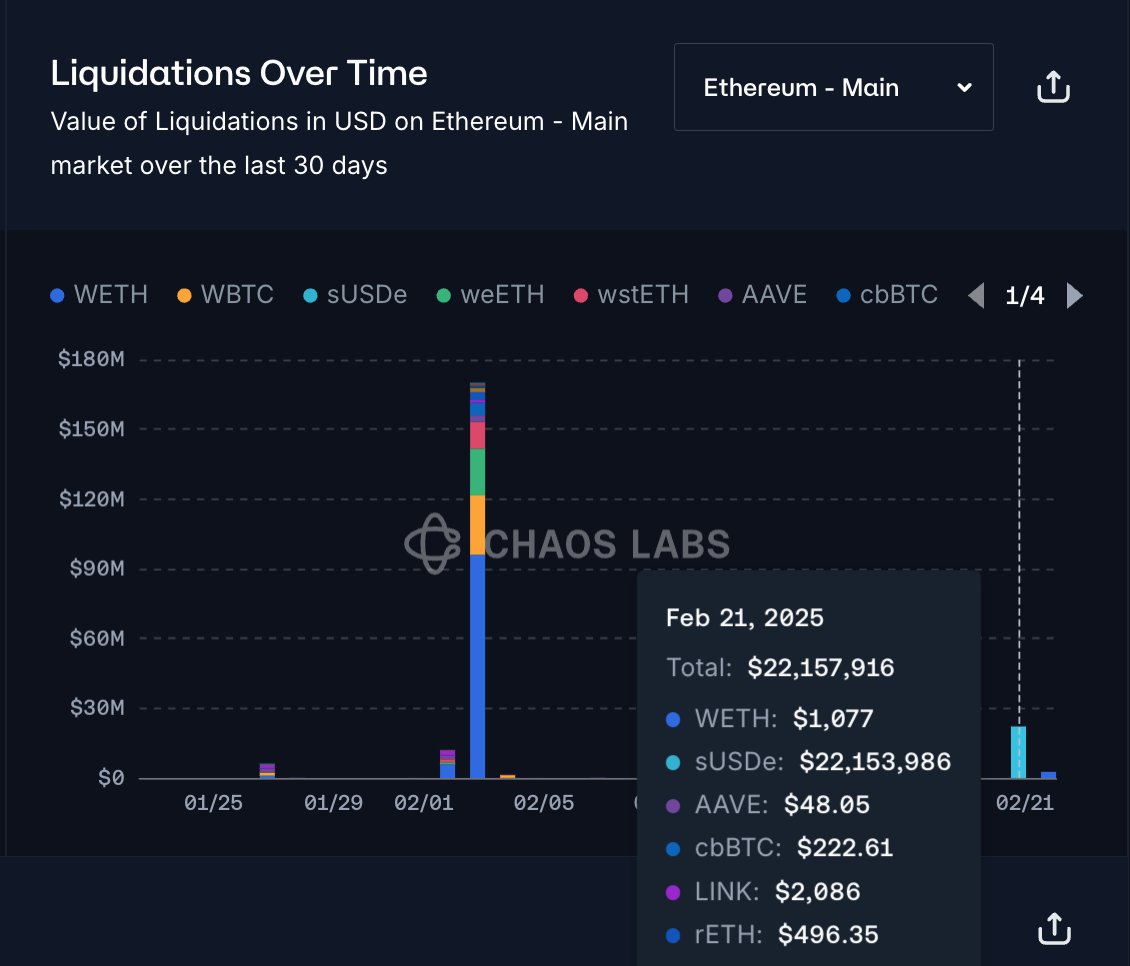
This deviation resulted in $22 million in liquidations on Aave, with traders being liquidated due to secondary market price fluctuations despite the fact that their USDe assets were well collateralized.
After the Bybit hack, how can DeFi effectively cope with market turmoil?

This highlights the room for improvement in the oracle mechanism. A smart data source that integrates proof of reserves may be able to provide a more accurate valuation of USDe and avoid unnecessary liquidations. Considering real-time redemption, rather than relying solely on the weighted average transaction price. Such a smart oracle can:

  • Prevent unnecessary liquidations;
  • Maintaining capital efficiency;
  • Reduce market pressure

What can be improved?

Risk, price, and proof-of-reserve data must work together, not in isolation, to ensure value and maintain the resilience of DeFi systems under stress. Price oracles should reflect true collateral backing, not just secondary market prices.

Overall, the DeFi ecosystem withstood this stress test. The Bybit team stabilized the market by maintaining transparent communication, the Ethena Labs team quickly eliminated risk exposure and ensured smooth redemption, and Aave effectively controlled risks without generating bad debts.

This incident shows that in order to build a more resilient system, the industry needs smarter oracles and risk-aware infrastructure to improve capital efficiency while ensuring security. It is only a matter of time before the next major stress test comes, and the industry needs to prepare for it.

Market Opportunity
Moonveil Logo
Moonveil Price(MORE)
$0.002521
$0.002521$0.002521
+2.56%
USD
Moonveil (MORE) Live Price Chart
Disclaimer: The articles reposted on this site are sourced from public platforms and are provided for informational purposes only. They do not necessarily reflect the views of MEXC. All rights remain with the original authors. If you believe any content infringes on third-party rights, please contact [email protected] for removal. MEXC makes no guarantees regarding the accuracy, completeness, or timeliness of the content and is not responsible for any actions taken based on the information provided. The content does not constitute financial, legal, or other professional advice, nor should it be considered a recommendation or endorsement by MEXC.

You May Also Like

Whales keep selling XRP despite ETF success — Data signals deeper weakness

Whales keep selling XRP despite ETF success — Data signals deeper weakness

The post Whales keep selling XRP despite ETF success — Data signals deeper weakness appeared on BitcoinEthereumNews.com. XRP ETFs have crossed $1 billion in assets
Share
BitcoinEthereumNews2025/12/20 02:55
Top Solana Treasury Firm Forward Industries Unveils $4 Billion Capital Raise To Buy More SOL ⋆ ZyCrypto

Top Solana Treasury Firm Forward Industries Unveils $4 Billion Capital Raise To Buy More SOL ⋆ ZyCrypto

The post Top Solana Treasury Firm Forward Industries Unveils $4 Billion Capital Raise To Buy More SOL ⋆ ZyCrypto appeared on BitcoinEthereumNews.com. Advertisement &nbsp &nbsp Forward Industries, the largest publicly traded Solana treasury company, has filed a $4 billion at-the-market (ATM) equity offering program with the U.S. SEC  to raise more capital for additional SOL accumulation. Forward Strategies Doubles Down On Solana Strategy In a Wednesday press release, Forward Industries revealed that the 4 billion ATM equity offering program will allow the company to issue and sell common stock via Cantor Fitzgerald under a sales agreement dated Sept. 16, 2025. Forward said proceeds will go toward “general corporate purposes,” including the pursuit of its Solana balance sheet and purchases of income-generating assets. The sales of the shares are covered by an automatic shelf registration statement filed with the US Securities and Exchange Commission that is already effective – meaning the shares will be tradable once they’re sold. An automatic shelf registration allows certain publicly listed companies to raise capital with flexibility swiftly.  Kyle Samani, Forward’s chairman, astutely described the ATM offering as “a flexible and efficient mechanism” to raise and deploy capital for the company’s Solana strategy and bolster its balance sheet.  Advertisement &nbsp Though the maximum amount is listed as $4 billion, the firm indicated that sales may or may not occur depending on existing market conditions. “The ATM Program enhances our ability to continue scaling that position, strengthen our balance sheet, and pursue growth initiatives in alignment with our long-term vision,” Samani said. Forward Industries kicked off its Solana treasury strategy on Sept. 8. The Wednesday S-3 form follows Forward’s $1.65 billion private investment in public equity that closed last week, led by crypto heavyweights like Galaxy Digital, Jump Crypto, and Multicoin Capital. The company started deploying that capital this week, announcing it snatched up 6.8 million SOL for approximately $1.58 billion at an average price of $232…
Share
BitcoinEthereumNews2025/09/18 03:42
Cryptos Signal Divergence Ahead of Fed Rate Decision

Cryptos Signal Divergence Ahead of Fed Rate Decision

The post Cryptos Signal Divergence Ahead of Fed Rate Decision appeared on BitcoinEthereumNews.com. Crypto assets send conflicting signals ahead of the Federal Reserve’s September rate decision. On-chain data reveals a clear decrease in Bitcoin and Ethereum flowing into centralized exchanges, but a sharp increase in altcoin inflows. The findings come from a Tuesday report by CryptoQuant, an on-chain data platform. The firm’s data shows a stark divergence in coin volume, which has been observed in movements onto centralized exchanges over the past few weeks. Bitcoin and Ethereum Inflows Drop to Multi-Month Lows Sponsored Sponsored Bitcoin has seen a dramatic drop in exchange inflows, with the 7-day moving average plummeting to 25,000 BTC, its lowest level in over a year. The average deposit per transaction has fallen to 0.57 BTC as of September. This suggests that smaller retail investors, rather than large-scale whales, are responsible for the recent cash-outs. Ethereum is showing a similar trend, with its daily exchange inflows decreasing to a two-month low. CryptoQuant reported that the 7-day moving average for ETH deposits on exchanges is around 783,000 ETH, the lowest in two months. Other Altcoins See Renewed Selling Pressure In contrast, other altcoin deposit activity on exchanges has surged. The number of altcoin deposit transactions on centralized exchanges was quite steady in May and June of this year, maintaining a 7-day moving average of about 20,000 to 30,000. Recently, however, that figure has jumped to 55,000 transactions. Altcoins: Exchange Inflow Transaction Count. Source: CryptoQuant CryptoQuant projects that altcoins, given their increased inflow activity, could face relatively higher selling pressure compared to BTC and ETH. Meanwhile, the balance of stablecoins on exchanges—a key indicator of potential buying pressure—has increased significantly. The report notes that the exchange USDT balance, around $273 million in April, grew to $379 million by August 31, marking a new yearly high. CryptoQuant interprets this surge as a reflection of…
Share
BitcoinEthereumNews2025/09/18 01:01