The post As Brian Kelly Deals With LSU Firing, His Former Notre Dame Defensive Coordinators Flourish appeared on BitcoinEthereumNews.com. LSU head coach Brian Kelly walks on the sideline in the second half of an NCAA college football game against Texas A&M, Saturday, Oct. 25, 2025 in Baton Rouge, La. (AP Photo/Gerald Herbert) Copyright 2025 The Associated Press. All rights reserved. On Sunday night, LSU fired football coach Brian Kelly, ending the tenure of a man who had thrived at each of his previous jobs but failed to meet expectations with the Tigers. Kelly was never a good fit at LSU, his angry outbursts, standoffishness and lack of winning ultimately leading to his departure midway through his fourth season, although he is still going to walk away with tens of millions of dollars. That same day, three of Kelly’s former defensive coordinators at Notre Dame were in much different situations. Texas A&M coach Mike Elko, Vanderbilt coach Clark Lea and Notre Dame coach Marcus Freeman are flourishing in their roles and could each make the College Football Playoff while their ex-boss, Kelly, is unemployed and in limbo. Elko, Kelly’s defensive coordinator at Notre Dame in 2017, ended up hastening Kelly’s exit as Texas A&M defeated LSU, 49-25, Saturday night on the road, outscoring the Tigers by 27 points in the second half as tens of thousands of fans left early. The Aggies are now 8-0 and third in the Associated Press poll, their best ranking in 30 years. Before taking over at A&M last season, following the firing of coach Jimbo Fisher, Elko spent two seasons as Duke’s coach, where he led the Blue Devils to a 16-9 record. During Elko’s first season, the Aggies finished 8-5, although they lost their last three games. This season, they are one of only six undefeated teams in the nation, are tied with Alabama atop the SEC with a 5-0 record and have… The post As Brian Kelly Deals With LSU Firing, His Former Notre Dame Defensive Coordinators Flourish appeared on BitcoinEthereumNews.com. LSU head coach Brian Kelly walks on the sideline in the second half of an NCAA college football game against Texas A&M, Saturday, Oct. 25, 2025 in Baton Rouge, La. (AP Photo/Gerald Herbert) Copyright 2025 The Associated Press. All rights reserved. On Sunday night, LSU fired football coach Brian Kelly, ending the tenure of a man who had thrived at each of his previous jobs but failed to meet expectations with the Tigers. Kelly was never a good fit at LSU, his angry outbursts, standoffishness and lack of winning ultimately leading to his departure midway through his fourth season, although he is still going to walk away with tens of millions of dollars. That same day, three of Kelly’s former defensive coordinators at Notre Dame were in much different situations. Texas A&M coach Mike Elko, Vanderbilt coach Clark Lea and Notre Dame coach Marcus Freeman are flourishing in their roles and could each make the College Football Playoff while their ex-boss, Kelly, is unemployed and in limbo. Elko, Kelly’s defensive coordinator at Notre Dame in 2017, ended up hastening Kelly’s exit as Texas A&M defeated LSU, 49-25, Saturday night on the road, outscoring the Tigers by 27 points in the second half as tens of thousands of fans left early. The Aggies are now 8-0 and third in the Associated Press poll, their best ranking in 30 years. Before taking over at A&M last season, following the firing of coach Jimbo Fisher, Elko spent two seasons as Duke’s coach, where he led the Blue Devils to a 16-9 record. During Elko’s first season, the Aggies finished 8-5, although they lost their last three games. This season, they are one of only six undefeated teams in the nation, are tied with Alabama atop the SEC with a 5-0 record and have…

As Brian Kelly Deals With LSU Firing, His Former Notre Dame Defensive Coordinators Flourish

LSU head coach Brian Kelly walks on the sideline in the second half of an NCAA college football game against Texas A&M, Saturday, Oct. 25, 2025 in Baton Rouge, La. (AP Photo/Gerald Herbert)

Copyright 2025 The Associated Press. All rights reserved.

On Sunday night, LSU fired football coach Brian Kelly, ending the tenure of a man who had thrived at each of his previous jobs but failed to meet expectations with the Tigers. Kelly was never a good fit at LSU, his angry outbursts, standoffishness and lack of winning ultimately leading to his departure midway through his fourth season, although he is still going to walk away with tens of millions of dollars.

That same day, three of Kelly’s former defensive coordinators at Notre Dame were in much different situations. Texas A&M coach Mike Elko, Vanderbilt coach Clark Lea and Notre Dame coach Marcus Freeman are flourishing in their roles and could each make the College Football Playoff while their ex-boss, Kelly, is unemployed and in limbo.

Elko, Kelly’s defensive coordinator at Notre Dame in 2017, ended up hastening Kelly’s exit as Texas A&M defeated LSU, 49-25, Saturday night on the road, outscoring the Tigers by 27 points in the second half as tens of thousands of fans left early. The Aggies are now 8-0 and third in the Associated Press poll, their best ranking in 30 years.

Before taking over at A&M last season, following the firing of coach Jimbo Fisher, Elko spent two seasons as Duke’s coach, where he led the Blue Devils to a 16-9 record. During Elko’s first season, the Aggies finished 8-5, although they lost their last three games. This season, they are one of only six undefeated teams in the nation, are tied with Alabama atop the SEC with a 5-0 record and have a road victory over Notre Dame that should go a long way to helping their CFP chances even if they lose a game or two the rest of the season. After a bye week, A&M travels to face No. 19 Missouri on Nov. 8 before finishing the regular season against South Carolina and Samford at home and playing at No. 20 Texas, its biggest rival.

While Elko had two years of head coaching experience prior to A&M, Lea and Freeman had never been a head coach until leading their current teams.

As Kelly’s defensive coordinator for three seasons at Notre Dame, Lea helped the Fighting Irish to CFP berths in the 2018 and 2020 seasons when only four teams were chosen. In December 2020, Vanderbilt hired Lea, who had played at the school in the early 2000s. Lea embraced the opportunity at his alma mater even as it was considered among the most challenging jobs in the Power Four conferences.

Before Lea arrived, Vanderbilt had gone 0-9 in 2020 and had finished above .500 in the SEC just twice in the past 60 years. The Commodores then went 0-8 in the SEC twice in Lea’s first three seasons before the school began investing in the program and Clark and his staff found the right mix of high school recruits and transfers. Vanderbilt went 7-6 last season, including a win over then-No. 1 Alabama, and has thrived this season. After consecutive seven-point victories over LSU and Missouri, the Commodores are 7-1 and No. 9 in the AP poll, their highest ranking since 1937. Of their final four games, two are against ranked opponents in No. 20 Texas this Saturday and the season finale at No. 14 Tennessee on Nov. 29. If Vanderbilt can win three more games, it should be in a good position to advance to the CFP.

Freeman, meanwhile, has already been to the playoff, as he led Notre Dame to the national title game last season, where the Fighting Irish lost to Ohio State. That ND team sustained a crushing loss to lowly Northern Illinois in the second game of the regular season before winning its last 10 regular season games and qualifying for the CFP. The Fighting Irish then defeated three AP top 10 teams (No. 9 Indiana, No. 2 Georgia and No. 5 Penn State) in the playoffs before falling to Ohio State.

This season is playing out in a similar fashion. Notre Dame started off with losses at Miami and against Texas A&M by a combined four points but has won five consecutive games and is now No. 12 in the AP poll. Of the Fighting Irish’s five remaining opponents, none are ranked, although they do face undefeated Navy (7-0) at home and 6-2 Pittsburgh on the road in back-to-back games on Nov. 8 and 15. If ND can win all of those games, it would likely be in the CFP again.

For Notre Dame, losing Kelly and replacing him with Freeman has worked out about as well as anyone could have hoped. When Kelly left four years ago, he said he had a better chance at winning a national title at LSU, and who could argue with him? The previous three LSU coaches (Nick Saban, Les Miles and Ed Orgeron) each won a national championship within their first four years.

In 12 seasons at Notre Dame, Kelly had become the program’s all-time leader in victories and led the Fighting Irish to two CFP appearances as well as the 2012 national title game. But they went just 4-10 against AP top 10 teams and were blown out in playoff appearances against Alabama (twice) and Clemson. The Fighting Irish last won a national title during the 1988 season, and they were not considered among the truly elite programs even during Kelly’s tenure.

Still, after last season’s success and an influx of recruits and transfers, Freeman has Notre Dame in its best position since the late 1980s and early 1990s under former coach Lou Holtz. The Fighting Irish have the nation’s best running back duo in Jeremiyah Love and Jadarian Price, a promising quarterback in redshirt freshman CJ Carr and an improving defense that features arguably the nation’s top cornerback in sophomore Leonard Moore. Those players and several more starters all have eligibility remaining, plus Notre Dame has the No. 4 high school recruiting class in the nation, per 247Sports, meaning the Fighting Irish seem like they should continue to be an elite program.

LSU, meanwhile, is likely to be fine even though the Tigers still owe Kelly about $54 million on his contract that was scheduled to end following the 2031 season. Scott Woodward, LSU’s athletics director, said in a statement on Sunday that “terms of the separation are still being negotiated.” Whether the Tigers end up paying the full buyout or less, they are still going to be on the hook for a large amount of money, but they were fine with that as Woodward made it clear that Kelly had not met the demands of the job.

Woodward noted that LSU had “high hopes” that Kelly would lead LSU to “multiple SEC and national championships.” After all, Kelly had won two Division II national titles as Grand Valley State’s head coach and then won big at Central Michigan, Cincinnati and Notre Dame. With LSU’s vast financial resources and talent-rich area, Kelly was expected to continue his winning ways. Instead, he finished his tenure with a 34-14 record and having never led the Tigers to a CFP berth or conference championship game.

Now, as Kelly ponders his next move, LSU is looking for his replacement. Freeman, who turns 40 in January, has been the hot name in terms of openings at Penn State and Florida, and LSU will surely consider him, although Freeman seems content at Notre Dame, having signed a major extension last year and spoken highly of the school and its administration. Lea and Elko are almost certainly going to get opportunities, too. Still, like Freeman, they are in situations that fit them well, where they are highly compensated, have financial backing from boosters and their bosses and are winning. Kelly might not find solace in what he’s going through now, but he could take a small sense of pride that his former defensive coordinators are thriving, showing they can excel in the changing college football landscape that demands adaptability and accountability.

Source: https://www.forbes.com/sites/timcasey/2025/10/27/as-brian-kelly-deals-with-lsu-firing-his-former-notre-dame-defensive-coordinators-flourish/


Market Opportunity
SQUID MEME Logo
SQUID MEME Price(GAME)
$37.7796
$37.7796$37.7796
-1.24%
USD
SQUID MEME (GAME) Live Price Chart
Disclaimer: The articles reposted on this site are sourced from public platforms and are provided for informational purposes only. They do not necessarily reflect the views of MEXC. All rights remain with the original authors. If you believe any content infringes on third-party rights, please contact [email protected] for removal. MEXC makes no guarantees regarding the accuracy, completeness, or timeliness of the content and is not responsible for any actions taken based on the information provided. The content does not constitute financial, legal, or other professional advice, nor should it be considered a recommendation or endorsement by MEXC.

You May Also Like

New 15% global tariff reshapes landscape – Commerzbank

New 15% global tariff reshapes landscape – Commerzbank

The post New 15% global tariff reshapes landscape – Commerzbank appeared on BitcoinEthereumNews.com. Commerzbank’s Economic Research team, led by Dr. Vincent Stamer
Share
BitcoinEthereumNews2026/02/23 21:03
Strategy bitcoin milestone in sight as Michael Saylor prepares 100th purchase amid deep unrealized losses

Strategy bitcoin milestone in sight as Michael Saylor prepares 100th purchase amid deep unrealized losses

Investors are watching closely as Strategy bitcoin activity signals another bold move in the middle of a volatile market cycle. Michael Saylor signals 100th Bitcoin
Share
The Cryptonomist2026/02/23 20:55
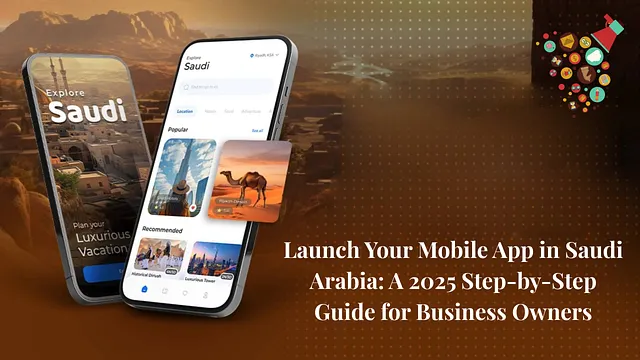
From Idea to App Store: The Complete Guide to Mobile App Development in Saudi Arabia

From Idea to App Store: The Complete Guide to Mobile App Development in Saudi Arabia

Saudi Arabia is at the forefront of digital transformation. With Vision 2030 driving innovation and a rapidly growing population of tech-savvy users, mobile apps have become a core driver of business growth in the Kingdom. From e-commerce and fintech to healthcare, logistics, and on-demand services, Saudi businesses are embracing mobile apps to connect with customers and scale faster. But how do you take a mobile app idea and turn it into a successful launch on the App Store or Google Play? This guide breaks down the complete mobile app development process in Saudi Arabia — step by step. Step 1: Validate Your App Idea for the Saudi Market Before you start building, ask: What problem does my app solve for Saudi users? Is there a cultural or market gap my app can fill? How do local competitors approach the same challenge? For example, apps related to digital payments, e-learning, delivery services, and healthcare are in high demand across Saudi Arabia. Conducting market research and aligning your app idea with local user behavior is critical. Step 2: Plan Features with Local Needs in Mind Your app should start with an MVP (Minimum Viable Product) — a core version that solves the main problem. Later, you can scale with advanced features. In Saudi Arabia, consider adding: Arabic language support (essential for user adoption) Integration with local payment gateways like STC Pay, Mada, or Apple Pay Regulatory compliance (especially for fintech and health apps) Localization for user preferences (Hijri calendar, cultural UI elements) Step 3: Select the Right Development Approach You can choose: Native Apps (Swift for iOS, Kotlin for Android) — Great for scalability and performance. Cross-Platform Apps (Flutter, React Native) — Cost-effective for startups targeting both iOS and Android simultaneously. Hybrid Apps — Suitable for simpler apps with limited features. For Saudi startups and enterprises, cross-platform development is often preferred to reach a wider audience quickly and efficiently. Step 4: Design With a Local Touch The design must balance global usability standards with local cultural relevance. UI (User Interface): Clean, modern visuals that align with Saudi branding. UX (User Experience): Simple navigation, clear Arabic text support, and intuitive flows. Wireframing & Prototyping: Test early with Saudi users to ensure adoption. A user-friendly design is one of the top reasons apps succeed in the Kingdom’s competitive market. Step 5: Develop Your Mobile App Once the design is ready, the coding begins. Saudi app development companies often follow Agile methodology, ensuring flexibility and faster delivery. Front-End Development: Interface and user interactions. Back-End Development: Databases, servers, and APIs. Integration: Secure connections between front-end and back-end. Strong collaboration between developers, designers, and business analysts ensures your app aligns with Saudi market needs. Step 6: Testing Across Devices and Networks Saudi users rely on different devices and network speeds. That’s why rigorous testing is critical: Functionality Testing: Features work as expected. Performance Testing: The app runs smoothly on both 4G and 5G networks. Localization Testing: Arabic text displays correctly, without alignment issues. Security Testing: Data protection compliance with Saudi cybersecurity standards. Step 7: App Store & Google Play Launch in Saudi Arabia To publish your app: Apple App Store (iOS): Requires an Apple Developer account and strict guideline compliance. Google Play Store (Android): Faster approval but still requires detailed app info. You’ll also need metadata in both English and Arabic — titles, descriptions, and screenshots — to maximize visibility among Saudi users. Step 8: Market Your App in Saudi Arabia Launching an app is only the beginning. You need a marketing strategy tailored to the Kingdom: App Store Optimization (ASO): Use Arabic and English keywords. Social Media Campaigns: Leverage platforms like Snapchat, Twitter (X), and Instagram, which are highly popular in Saudi Arabia. Influencer Marketing: Collaborate with Saudi influencers for early traction. Paid Ads: Google Ads and Saudi-focused Facebook/Instagram ads. Partnerships: Collaborate with local businesses to reach a wider audience. Step 9: Gather Feedback and Optimize Once your app is live, monitor: User reviews on app stores Analytics on engagement, retention, and churn rates Suggestions from Saudi users for culturally relevant features Continuous updates and improvements are vital to stay competitive. Step 10: Scale With Advanced Features Once your MVP gains traction, you can expand with advanced features such as: AI and machine learning for personalization Blockchain-based payments for fintech apps AR/VR features for retail and gaming apps IoT integration for smart home and mobility solutions Saudi Arabia’s digital ecosystem is growing rapidly — apps that adapt quickly will thrive. Conclusion Mobile app development in Saudi Arabia is not just about building an app — it’s about aligning with Vision 2030, cultural needs, and user expectations. By following a clear process — from idea validation to launch and beyond — you can transform your concept into a profitable digital product. Whether you’re a startup or an enterprise in Saudi Arabia, the opportunity is massive. With the right strategy, you can move from idea to App Store and create an app that truly resonates with Saudi users. From Idea to App Store: The Complete Guide to Mobile App Development in Saudi Arabia was originally published in Coinmonks on Medium, where people are continuing the conversation by highlighting and responding to this story
Share
Medium2025/09/18 14:46