Mainland China’s crypto freeze hasn’t stopped its financial giants from wading in where regulators allow. CMB International Securities, a subsidiary of the $1.7 trillion China Merchants Bank, has launched a crypto exchange in Hong Kong. On August 18, CMB International…Mainland China’s crypto freeze hasn’t stopped its financial giants from wading in where regulators allow. CMB International Securities, a subsidiary of the $1.7 trillion China Merchants Bank, has launched a crypto exchange in Hong Kong. On August 18, CMB International…

China Merchants Bank unit ventures into crypto through Hong Kong gateway

2025/08/18 23:58
3 min read

Mainland China’s crypto freeze hasn’t stopped its financial giants from wading in where regulators allow. CMB International Securities, a subsidiary of the $1.7 trillion China Merchants Bank, has launched a crypto exchange in Hong Kong.

Summary
  • CMB International Securities, a China Merchants Bank subsidiary, launches a licensed crypto platform in Hong Kong.
  • The service allows qualified investors to trade Bitcoin, Ethereum, and USDT following SFC approval.
  • Hong Kong’s regulatory framework offers a legal on-ramp for Chinese institutions despite mainland crypto bans.

On August 18, CMB International Securities flipped the switch on its newly licensed crypto trading platform, allowing qualified investors to trade Bitcoin (BTC), Ethereum (ETH), and Tether (USDT) through its mobile app.

The move comes just over a month after Hong Kong’s Securities and Futures Commission greenlit its expanded license, marking a quiet but strategic pivot for a firm deeply embedded in China’s traditional finance system.

Unlike mainland China’s outright ban, Hong Kong’s regulatory framework provides a rare on-ramp for state-linked institutions to engage with digital assets without directly challenging Beijing’s stance.

Hong Kong’s regulatory tightrope

CMB International Securities’ crypto pivot comes with strict guardrails. The platform restricts access to “qualified investors,” a classification that automatically screens out mainland Chinese residents and mandates users to establish a conventional cash account before gaining crypto access.

According to the announcement, users need professional investor credentials, which in Hong Kong usually means representing an institution or holding an investment portfolio north of HK$8 million (roughly $1 million) to qualify. This gatekeeping reflects Hong Kong’s deliberate playbook: roll out the red carpet for institutional money while keeping the crypto-curious retail crowd at bay.

The current menu stays conservative, with just Bitcoin, Ethereum, and USDT for now. But CMB has already hinted at plans to slowly broaden its crypto offerings. This measured expansion isn’t surprising given Hong Kong’s regulatory playbook, where even adding a new token requires jumping through the SFC’s approval hoops.

A bridge between two worlds

What makes CMB International Securities’ move noteworthy isn’t just its first-mover status as a Chinese bank-linked crypto licensee. It’s the deliberate framing of digital assets as a complement to traditional finance, not a replacement.

The firm’s announcement emphasized plans to “integrate” crypto with conventional stock trading and fintech applications for wealth management clients seeking diversified portfolios.

The backdrop, of course, is Hong Kong’s aggressive push to become Asia’s regulated crypto hub, even as mainland China’s ban enters its eighth year. Recent months have seen the city finalize rules for stablecoins, tighten custody requirements, and crack down on unlicensed platforms. For CMB, operating in this environment offers both a shield and a constraint: regulatory legitimacy, but little room for the wild experimentation seen in offshore crypto hubs. 

Market Opportunity
Threshold Logo
Threshold Price(T)
$0.007088
$0.007088$0.007088
-0.39%
USD
Threshold (T) Live Price Chart
Disclaimer: The articles reposted on this site are sourced from public platforms and are provided for informational purposes only. They do not necessarily reflect the views of MEXC. All rights remain with the original authors. If you believe any content infringes on third-party rights, please contact [email protected] for removal. MEXC makes no guarantees regarding the accuracy, completeness, or timeliness of the content and is not responsible for any actions taken based on the information provided. The content does not constitute financial, legal, or other professional advice, nor should it be considered a recommendation or endorsement by MEXC.

You May Also Like

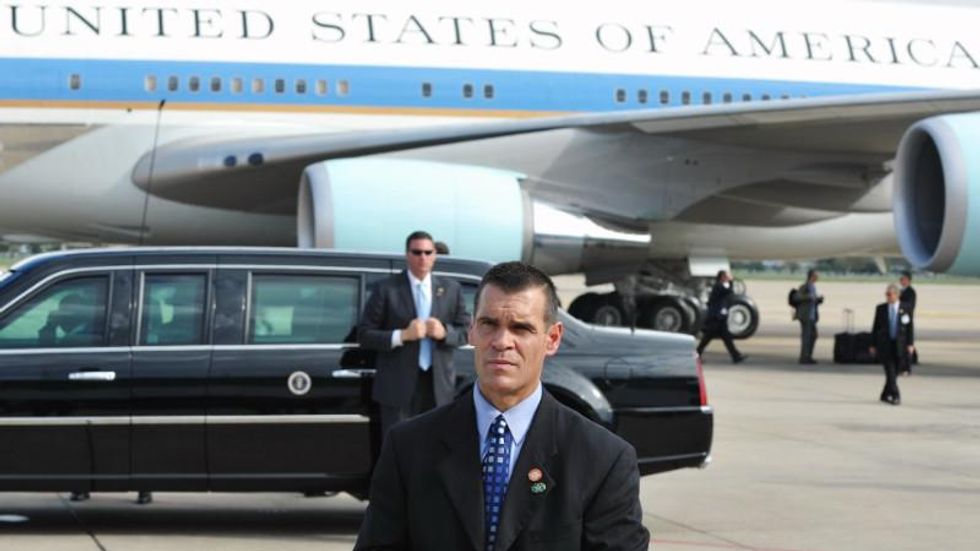
Secret Service’s ‘odd’ new suit policy raises eyebrows

Secret Service’s ‘odd’ new suit policy raises eyebrows

New Secret Service agents assigned to protective details are set to receive a taxpayer-funded wardrobe upgrade, according to a new CNN exclusive report.The Secret
Share
Rawstory2026/02/21 08:04
The Shift to Fractional Leadership: Agility in the 2026 Executive Suite
The Shift to Fractional Leadership: Agility in the 2026 Executive Suite

The traditional model of a permanent, full-time executive suite is undergoing a radical transformation. As we move through 2026, the concept of “Fractional Leadership
Share
Techbullion2026/02/21 08:20
OFAC Designates Two Iranian Finance Facilitators For Crypto Shadow Banking

OFAC Designates Two Iranian Finance Facilitators For Crypto Shadow Banking

The Department of the Treasury’s Office of Foreign Assets Control (OFAC) sanctioned two Iranian financial facilitators for coordinating over $100 million worth of cryptocurrency in oil sales for the Iranian government, a September 16 press release shows. OFAC Sanctions Iranian Nationals According to the Tuesday press release, Iranian nationals Alireza Derakhshan and Arash Estaki Alivand “used a network of front companies in multiple foreign jurisdictions” to transfer the digital assets. OFAC alleges that Alivand and Derakhshan’s transfers also involved the sale of Iranian oil that benefited Iran’s Islamic Revolutionary Guard Corps-Qods Force (IRGC-QF) and the Ministry of Defense and Armed Forces Logistics (MODAFL). IRGC-QF and MODAFL then used the proceeds to support regional proxy terrorist organizations and strengthen their advanced weapons systems, including ballistic missiles. U.S. officials say the move targets shadow banking in the region, where illicit financial actors use overseas money laundering and digital assets to evade sanctions. “Iranian entities rely on shadow banking networks to evade sanctions and move millions through the international financial system,” said Under Secretary of the Treasury for Terrorism and Financial Intelligence John K. Hurley. “Under President Trump’s leadership, we will continue to disrupt these key financial streams that fund Iran’s weapons programs and malign activities in the Middle East and beyond,” he continued. Dozens Designated In Shadow Banking Scandal Both Alivand and Derakhshan have been designated “for having materially assisted, sponsored, or provided financial, material, or technological support for, or goods or services to or in support of the IRGC-QF.” In addition to Alivand and Derakhshan, OFAC has sanctioned more than a dozen Hong Kong and United Arab Emirates-based entities and individuals tied to the network. According to the press release, the sanctioned entities may face civil or criminal penalties imposed as a result
Share
CryptoNews2025/09/18 11:18