Global banking regulators are preparing to overhaul rules on how banks handle crypto assets, particularly stablecoins, as pressure mounts from major economies and industry groups to revise stringent capital requirements set to take effect next year. The Basel Committee on Banking Supervision (BCBS), the world’s top banking standard-setter, is in discussions over possible amendments to its 2022 framework, which imposed some of the toughest capital rules ever proposed for crypto holdings. The standards, designed after years of volatility in digital markets, required banks to assign a 1,250% risk weight to unbacked crypto assets such as Bitcoin, meaning they must hold capital equal to the entire value of their crypto exposure. Those measures, meant to protect banks from potential losses, effectively discouraged most institutions from offering crypto-related services. But the rapid rise of stablecoins and a broader shift in how regulators and governments view digital assets have triggered renewed debate. Is Basel’s Rules about to Evolve With the Crypto Market? According to the Bloomberg report, the United States is leading calls for revisions, arguing that the original standards are now outdated and inconsistent with the current structure of the crypto market. Stablecoins, digital tokens pegged to assets like the U.S. dollar, have grown rapidly, with new regulatory frameworks such as the U.S. GENIUS Act encouraging their use for payments. Yet under the current Basel rules, permissionless stablecoins like Tether (USDT) and Circle’s USDC, which operate on open blockchain networks, face the same heavy capital charges as highly volatile cryptocurrencies such as Bitcoin. Senior finance executives said this approach has left banks on the sidelines, unable to serve growing institutional demand for digital asset services. A recent report by The Banker revealed that the high-risk classification has made it “economically unviable” for banks to hold crypto on their balance sheets, forcing trading activity toward unregulated platforms.Source: ECB The BCBS framework, first finalized in late 2022 and updated in 2024, divides crypto assets into two main groups: Group 1, which includes tokenized traditional assets and stablecoins with reliable backing mechanisms, and Group 2, which covers all other crypto assets subject to punitive capital treatment. The global implementation of these standards was delayed by one year to January 2026. Global Regulators Diverge on Basel Crypto Standards as Implementation Nears While the Basel Committee’s guidelines are non-binding, its 45 members, including regulators from 28 jurisdictions, typically adopt them domestically. However, not all major regions are on the same timeline. The European Central Bank supports implementing the existing rules first, while the U.S., U.K., and several Asian jurisdictions are seeking revisions before the standards come into force. Singapore recently postponed its rollout by a year to ensure global alignment, and Hong Kong plans to follow in 2026 with lighter requirements for licensed stablecoins. In the European Union, the Basel standards are being incorporated through the Capital Requirements Regulation (CRR 3) and the Markets in Crypto-Assets (MiCA) framework. Draft rules from the European Banking Authority (EBA) published in August outline detailed methods for calculating crypto exposure across credit, market, and liquidity risks. Unbacked crypto assets will retain a 1,250% risk weight, while stablecoins backed by traditional assets may receive a lower 250% charge. The EBA’s approach aligns with Basel principles but introduces transitional rules, allowing banks limited engagement with digital assets while more permanent frameworks develop. The EU is also preparing for the launch of a euro-backed stablecoin in 2026, led by a consortium of nine European banks, including ING and UniCredit, under MiCA supervision. The United Kingdom is taking a similarly cautious path. The Bank of England has confirmed that upcoming rules will likely fall on the “restrictive end,” encouraging banks to keep low crypto exposure. The Prudential Regulation Authority is developing a new prudential regime, CRYPTOPRU, expected to be finalized in 2026. GENIUS Act Sparks Policy Clash Over Stablecoin Treatment in Banking Sector Meanwhile, U.S. regulators are reevaluating their prudential treatment of stablecoins following the passage of the GENIUS Act earlier this year. The law provides a framework for stablecoin issuance and payments but leaves open questions about how banking rules will adapt. The Federal Reserve, OCC, and FDIC are coordinating on how to implement Basel standards while addressing domestic regulatory overlaps. Industry groups have intensified pressure on the Basel Committee to ease the capital burden. In August, associations including the Global Financial Markets Association and the Institute of International Finance urged regulators to drop what they called “cliff-effect” penalties. Their joint letter argued that treating tokenized U.S. Treasury securities as high-risk simply because they exist on public blockchains contradicts technology-neutral policy principles. The debate comes amid broader concerns about how stablecoins could reshape global finance. A recent report by Standard Chartered warned that over $1 trillion could flow out of emerging-market banks and into stablecoins by 2028, as users in developing economies turn to dollar-pegged digital assets as a safer store of valueGlobal banking regulators are preparing to overhaul rules on how banks handle crypto assets, particularly stablecoins, as pressure mounts from major economies and industry groups to revise stringent capital requirements set to take effect next year. The Basel Committee on Banking Supervision (BCBS), the world’s top banking standard-setter, is in discussions over possible amendments to its 2022 framework, which imposed some of the toughest capital rules ever proposed for crypto holdings. The standards, designed after years of volatility in digital markets, required banks to assign a 1,250% risk weight to unbacked crypto assets such as Bitcoin, meaning they must hold capital equal to the entire value of their crypto exposure. Those measures, meant to protect banks from potential losses, effectively discouraged most institutions from offering crypto-related services. But the rapid rise of stablecoins and a broader shift in how regulators and governments view digital assets have triggered renewed debate. Is Basel’s Rules about to Evolve With the Crypto Market? According to the Bloomberg report, the United States is leading calls for revisions, arguing that the original standards are now outdated and inconsistent with the current structure of the crypto market. Stablecoins, digital tokens pegged to assets like the U.S. dollar, have grown rapidly, with new regulatory frameworks such as the U.S. GENIUS Act encouraging their use for payments. Yet under the current Basel rules, permissionless stablecoins like Tether (USDT) and Circle’s USDC, which operate on open blockchain networks, face the same heavy capital charges as highly volatile cryptocurrencies such as Bitcoin. Senior finance executives said this approach has left banks on the sidelines, unable to serve growing institutional demand for digital asset services. A recent report by The Banker revealed that the high-risk classification has made it “economically unviable” for banks to hold crypto on their balance sheets, forcing trading activity toward unregulated platforms.Source: ECB The BCBS framework, first finalized in late 2022 and updated in 2024, divides crypto assets into two main groups: Group 1, which includes tokenized traditional assets and stablecoins with reliable backing mechanisms, and Group 2, which covers all other crypto assets subject to punitive capital treatment. The global implementation of these standards was delayed by one year to January 2026. Global Regulators Diverge on Basel Crypto Standards as Implementation Nears While the Basel Committee’s guidelines are non-binding, its 45 members, including regulators from 28 jurisdictions, typically adopt them domestically. However, not all major regions are on the same timeline. The European Central Bank supports implementing the existing rules first, while the U.S., U.K., and several Asian jurisdictions are seeking revisions before the standards come into force. Singapore recently postponed its rollout by a year to ensure global alignment, and Hong Kong plans to follow in 2026 with lighter requirements for licensed stablecoins. In the European Union, the Basel standards are being incorporated through the Capital Requirements Regulation (CRR 3) and the Markets in Crypto-Assets (MiCA) framework. Draft rules from the European Banking Authority (EBA) published in August outline detailed methods for calculating crypto exposure across credit, market, and liquidity risks. Unbacked crypto assets will retain a 1,250% risk weight, while stablecoins backed by traditional assets may receive a lower 250% charge. The EBA’s approach aligns with Basel principles but introduces transitional rules, allowing banks limited engagement with digital assets while more permanent frameworks develop. The EU is also preparing for the launch of a euro-backed stablecoin in 2026, led by a consortium of nine European banks, including ING and UniCredit, under MiCA supervision. The United Kingdom is taking a similarly cautious path. The Bank of England has confirmed that upcoming rules will likely fall on the “restrictive end,” encouraging banks to keep low crypto exposure. The Prudential Regulation Authority is developing a new prudential regime, CRYPTOPRU, expected to be finalized in 2026. GENIUS Act Sparks Policy Clash Over Stablecoin Treatment in Banking Sector Meanwhile, U.S. regulators are reevaluating their prudential treatment of stablecoins following the passage of the GENIUS Act earlier this year. The law provides a framework for stablecoin issuance and payments but leaves open questions about how banking rules will adapt. The Federal Reserve, OCC, and FDIC are coordinating on how to implement Basel standards while addressing domestic regulatory overlaps. Industry groups have intensified pressure on the Basel Committee to ease the capital burden. In August, associations including the Global Financial Markets Association and the Institute of International Finance urged regulators to drop what they called “cliff-effect” penalties. Their joint letter argued that treating tokenized U.S. Treasury securities as high-risk simply because they exist on public blockchains contradicts technology-neutral policy principles. The debate comes amid broader concerns about how stablecoins could reshape global finance. A recent report by Standard Chartered warned that over $1 trillion could flow out of emerging-market banks and into stablecoins by 2028, as users in developing economies turn to dollar-pegged digital assets as a safer store of value

Crypto Banking Rules Face Overhaul as Global Regulators Sound the Alarm on Stablecoins

Global banking regulators are preparing to overhaul rules on how banks handle crypto assets, particularly stablecoins, as pressure mounts from major economies and industry groups to revise stringent capital requirements set to take effect next year.

The Basel Committee on Banking Supervision (BCBS), the world’s top banking standard-setter, is in discussions over possible amendments to its 2022 framework, which imposed some of the toughest capital rules ever proposed for crypto holdings.

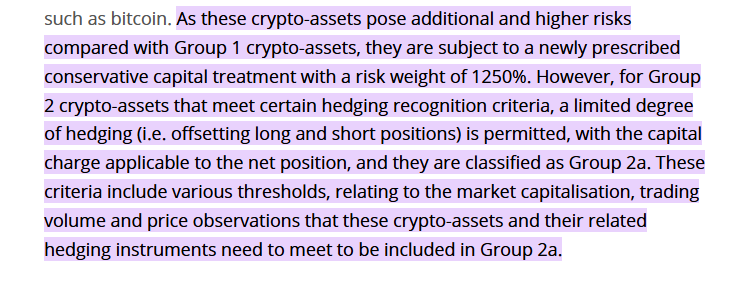
The standards, designed after years of volatility in digital markets, required banks to assign a 1,250% risk weight to unbacked crypto assets such as Bitcoin, meaning they must hold capital equal to the entire value of their crypto exposure.

Those measures, meant to protect banks from potential losses, effectively discouraged most institutions from offering crypto-related services.

But the rapid rise of stablecoins and a broader shift in how regulators and governments view digital assets have triggered renewed debate.

Is Basel’s Rules about to Evolve With the Crypto Market?

According to the Bloomberg report, the United States is leading calls for revisions, arguing that the original standards are now outdated and inconsistent with the current structure of the crypto market.

Stablecoins, digital tokens pegged to assets like the U.S. dollar, have grown rapidly, with new regulatory frameworks such as the U.S. GENIUS Act encouraging their use for payments.

Yet under the current Basel rules, permissionless stablecoins like Tether (USDT) and Circle’s USDC, which operate on open blockchain networks, face the same heavy capital charges as highly volatile cryptocurrencies such as Bitcoin.

Senior finance executives said this approach has left banks on the sidelines, unable to serve growing institutional demand for digital asset services.

A recent report by The Banker revealed that the high-risk classification has made it “economically unviable” for banks to hold crypto on their balance sheets, forcing trading activity toward unregulated platforms.
Source: ECB

The BCBS framework, first finalized in late 2022 and updated in 2024, divides crypto assets into two main groups: Group 1, which includes tokenized traditional assets and stablecoins with reliable backing mechanisms, and Group 2, which covers all other crypto assets subject to punitive capital treatment.

The global implementation of these standards was delayed by one year to January 2026.

Global Regulators Diverge on Basel Crypto Standards as Implementation Nears

While the Basel Committee’s guidelines are non-binding, its 45 members, including regulators from 28 jurisdictions, typically adopt them domestically.

However, not all major regions are on the same timeline. The European Central Bank supports implementing the existing rules first, while the U.S., U.K., and several Asian jurisdictions are seeking revisions before the standards come into force.

Singapore recently postponed its rollout by a year to ensure global alignment, and Hong Kong plans to follow in 2026 with lighter requirements for licensed stablecoins.

In the European Union, the Basel standards are being incorporated through the Capital Requirements Regulation (CRR 3) and the Markets in Crypto-Assets (MiCA) framework.

Draft rules from the European Banking Authority (EBA) published in August outline detailed methods for calculating crypto exposure across credit, market, and liquidity risks.

Unbacked crypto assets will retain a 1,250% risk weight, while stablecoins backed by traditional assets may receive a lower 250% charge.

The EBA’s approach aligns with Basel principles but introduces transitional rules, allowing banks limited engagement with digital assets while more permanent frameworks develop.

The EU is also preparing for the launch of a euro-backed stablecoin in 2026, led by a consortium of nine European banks, including ING and UniCredit, under MiCA supervision.

The United Kingdom is taking a similarly cautious path. The Bank of England has confirmed that upcoming rules will likely fall on the “restrictive end,” encouraging banks to keep low crypto exposure.

The Prudential Regulation Authority is developing a new prudential regime, CRYPTOPRU, expected to be finalized in 2026.

GENIUS Act Sparks Policy Clash Over Stablecoin Treatment in Banking Sector

Meanwhile, U.S. regulators are reevaluating their prudential treatment of stablecoins following the passage of the GENIUS Act earlier this year.

The law provides a framework for stablecoin issuance and payments but leaves open questions about how banking rules will adapt.

The Federal Reserve, OCC, and FDIC are coordinating on how to implement Basel standards while addressing domestic regulatory overlaps.

Industry groups have intensified pressure on the Basel Committee to ease the capital burden. In August, associations including the Global Financial Markets Association and the Institute of International Finance urged regulators to drop what they called “cliff-effect” penalties.

Their joint letter argued that treating tokenized U.S. Treasury securities as high-risk simply because they exist on public blockchains contradicts technology-neutral policy principles.

The debate comes amid broader concerns about how stablecoins could reshape global finance.
A recent report by Standard Chartered warned that over $1 trillion could flow out of emerging-market banks and into stablecoins by 2028, as users in developing economies turn to dollar-pegged digital assets as a safer store of value.

Disclaimer: The articles reposted on this site are sourced from public platforms and are provided for informational purposes only. They do not necessarily reflect the views of MEXC. All rights remain with the original authors. If you believe any content infringes on third-party rights, please contact [email protected] for removal. MEXC makes no guarantees regarding the accuracy, completeness, or timeliness of the content and is not responsible for any actions taken based on the information provided. The content does not constitute financial, legal, or other professional advice, nor should it be considered a recommendation or endorsement by MEXC.

You May Also Like

The Channel Factories We’ve Been Waiting For

The Channel Factories We’ve Been Waiting For

The post The Channel Factories We’ve Been Waiting For appeared on BitcoinEthereumNews.com. Visions of future technology are often prescient about the broad strokes while flubbing the details. The tablets in “2001: A Space Odyssey” do indeed look like iPads, but you never see the astronauts paying for subscriptions or wasting hours on Candy Crush.  Channel factories are one vision that arose early in the history of the Lightning Network to address some challenges that Lightning has faced from the beginning. Despite having grown to become Bitcoin’s most successful layer-2 scaling solution, with instant and low-fee payments, Lightning’s scale is limited by its reliance on payment channels. Although Lightning shifts most transactions off-chain, each payment channel still requires an on-chain transaction to open and (usually) another to close. As adoption grows, pressure on the blockchain grows with it. The need for a more scalable approach to managing channels is clear. Channel factories were supposed to meet this need, but where are they? In 2025, subnetworks are emerging that revive the impetus of channel factories with some new details that vastly increase their potential. They are natively interoperable with Lightning and achieve greater scale by allowing a group of participants to open a shared multisig UTXO and create multiple bilateral channels, which reduces the number of on-chain transactions and improves capital efficiency. Achieving greater scale by reducing complexity, Ark and Spark perform the same function as traditional channel factories with new designs and additional capabilities based on shared UTXOs.  Channel Factories 101 Channel factories have been around since the inception of Lightning. A factory is a multiparty contract where multiple users (not just two, as in a Dryja-Poon channel) cooperatively lock funds in a single multisig UTXO. They can open, close and update channels off-chain without updating the blockchain for each operation. Only when participants leave or the factory dissolves is an on-chain transaction…
Share
BitcoinEthereumNews2025/09/18 00:09
Red Dog Pet Resort & Spa Selects MoeGo as Its Enterprise Operating System to Power Multi-State Expansion
Red Dog Pet Resort & Spa Selects MoeGo as Its Enterprise Operating System to Power Multi-State Expansion

MoeGo Becomes Enterprise Operating System for Red Dog Pet Resort & Spa to Standardize and Scale Nationwide Operations BOSTON, Dec. 29, 2025 /PRNewswire/ — Red Dog
Share
AI Journal2025/12/30 02:45
Ethereum Price Prediction: ETH Targets $10,000 In 2026 But Layer Brett Could Reach $1 From $0.0058

Ethereum Price Prediction: ETH Targets $10,000 In 2026 But Layer Brett Could Reach $1 From $0.0058

Ethereum price predictions are turning heads, with analysts suggesting ETH could climb to $10,000 by 2026 as institutional demand and network upgrades drive growth. While Ethereum remains a blue-chip asset, investors looking for sharper multiples are eyeing Layer Brett (LBRETT). Currently in presale at just $0.0058, the Ethereum Layer 2 meme coin is drawing huge [...] The post Ethereum Price Prediction: ETH Targets $10,000 In 2026 But Layer Brett Could Reach $1 From $0.0058 appeared first on Blockonomi.
Share
Blockonomi2025/09/17 23:45