Nigel Farage has pledged to slash crypto taxes and establish a UK Bitcoin reserve if elected. Reform UK’s leader declared at the Digital Asset Summit in London on Monday that “when it comes to your industry, when it comes to growth in this industry, then I am your champion.” The proposed legislation would reduce the capital gains tax on crypto investments from 24% to a flat 10% and mandate that the Bank of England establish a Bitcoin reserve using approximately £5 billion worth of Bitcoin currently held from seized criminal assets. Reform has become the first major UK political party to accept crypto donations, currently receiving Bitcoin, Ethereum, Solana, and USD Coin through its website.Nigel Farage in Bitcoin ‘25 Conference | Source: The London Economic What Reform’s Crypto Bill Would Actually Do Farage’s platform mirrors the approach taken by U.S. President Donald Trump, who cultivated industry support before his 2024 election victory and has pursued a crypto-friendly agenda since taking office in January 2025. The Reform Party chief’s proposed bill would allow British taxpayers to pay taxes directly in Bitcoin, with funds either converted to pounds or directed to the reserve fund. Additionally, banks would be prohibited from denying or withdrawing services to customers based on lawful crypto-related activities, directly addressing industry concerns over “debanking.” Farage connected the debanking issue to his own experience, telling the conference crowd, “I went to 10 banks, all of whom refused me an account,” and adding, “No wonder so many people are going for Bitcoin—because they can’t close you down, and that is the ultimate freedom.” Meanwhile, Farage characterized the Bank of England’s plans for a central bank digital currency as “the ultimate authoritarian nightmare” and vowed to “stop it overnight” should Reform win the next election. He also targeted the Bank of England’s proposed stablecoin holding limits, capping personal holdings at £10,000 to £20,000 and business holdings at £10 million, calling the restrictions “frankly ridiculous.” According to Bloomberg, Farage claimed he had discussed the stablecoin caps directly with Andrew Bailey, the Governor of the Bank of England. The Reform leader stated that the UK government is falling behind international competitors and must act quickly to regulate the crypto industry to safeguard Britain’s position as a financial hub. Farage said “this whole area of digital assets and crypto just isn’t being talked about at all,” and pointed out that “we’ve got no regulated market.” He also said that if Reform wins the next election, his government would enact the Crypto Assets and Digital Finance Bill “very, very quickly.” Reform UK currently leads in numerous polling projections. However, Britain’s first-past-the-post electoral system presents a major structural challenge to translating that support into parliamentary seats, as demonstrated in the 2024 general election when Reform received 4.1 million votes but secured only five seats. The next UK general election is not expected until 2029, leaving four years for both political and market conditions to shift. Why Global Crypto Competition is Forcing UK Regulators to Act Britain’s regulatory environment now faces competitive pressure from the United States, where the Trump administration accelerated crypto-friendly policies, including the GENIUS Act for stablecoin oversight. The European Union has also instituted a unified regulatory framework for digital assets, creating incentives for UK policymakers to clarify their own approach to crypto regulation. Earlier this month, the Bank of England announced that it was considering exemption plans for its proposed stablecoin holding limits for crypto exchanges and other firms requiring large holdings for liquidity purposes. Most recently, Governor Andrew Bailey acknowledged that stablecoins could drive financial innovation and coexist with traditional banking systems. The Bank of England is also preparing to permit stablecoins as settlement assets in its Digital Securities Sandbox, a controlled environment for testing blockchain-based trading and issuance. The uncertain stance of the nation has prompted industry executives to warn that overly restrictive regulations in the UK will risk diverting business and talent to jurisdictions with more favorable crypto frameworks. As it stands now, the Financial Conduct Authority will complete its consultation on whether crypto firms should face the same regulatory standards as traditional financial institutions by year-end, with implementation expected to begin in January 2026Nigel Farage has pledged to slash crypto taxes and establish a UK Bitcoin reserve if elected. Reform UK’s leader declared at the Digital Asset Summit in London on Monday that “when it comes to your industry, when it comes to growth in this industry, then I am your champion.” The proposed legislation would reduce the capital gains tax on crypto investments from 24% to a flat 10% and mandate that the Bank of England establish a Bitcoin reserve using approximately £5 billion worth of Bitcoin currently held from seized criminal assets. Reform has become the first major UK political party to accept crypto donations, currently receiving Bitcoin, Ethereum, Solana, and USD Coin through its website.Nigel Farage in Bitcoin ‘25 Conference | Source: The London Economic What Reform’s Crypto Bill Would Actually Do Farage’s platform mirrors the approach taken by U.S. President Donald Trump, who cultivated industry support before his 2024 election victory and has pursued a crypto-friendly agenda since taking office in January 2025. The Reform Party chief’s proposed bill would allow British taxpayers to pay taxes directly in Bitcoin, with funds either converted to pounds or directed to the reserve fund. Additionally, banks would be prohibited from denying or withdrawing services to customers based on lawful crypto-related activities, directly addressing industry concerns over “debanking.” Farage connected the debanking issue to his own experience, telling the conference crowd, “I went to 10 banks, all of whom refused me an account,” and adding, “No wonder so many people are going for Bitcoin—because they can’t close you down, and that is the ultimate freedom.” Meanwhile, Farage characterized the Bank of England’s plans for a central bank digital currency as “the ultimate authoritarian nightmare” and vowed to “stop it overnight” should Reform win the next election. He also targeted the Bank of England’s proposed stablecoin holding limits, capping personal holdings at £10,000 to £20,000 and business holdings at £10 million, calling the restrictions “frankly ridiculous.” According to Bloomberg, Farage claimed he had discussed the stablecoin caps directly with Andrew Bailey, the Governor of the Bank of England. The Reform leader stated that the UK government is falling behind international competitors and must act quickly to regulate the crypto industry to safeguard Britain’s position as a financial hub. Farage said “this whole area of digital assets and crypto just isn’t being talked about at all,” and pointed out that “we’ve got no regulated market.” He also said that if Reform wins the next election, his government would enact the Crypto Assets and Digital Finance Bill “very, very quickly.” Reform UK currently leads in numerous polling projections. However, Britain’s first-past-the-post electoral system presents a major structural challenge to translating that support into parliamentary seats, as demonstrated in the 2024 general election when Reform received 4.1 million votes but secured only five seats. The next UK general election is not expected until 2029, leaving four years for both political and market conditions to shift. Why Global Crypto Competition is Forcing UK Regulators to Act Britain’s regulatory environment now faces competitive pressure from the United States, where the Trump administration accelerated crypto-friendly policies, including the GENIUS Act for stablecoin oversight. The European Union has also instituted a unified regulatory framework for digital assets, creating incentives for UK policymakers to clarify their own approach to crypto regulation. Earlier this month, the Bank of England announced that it was considering exemption plans for its proposed stablecoin holding limits for crypto exchanges and other firms requiring large holdings for liquidity purposes. Most recently, Governor Andrew Bailey acknowledged that stablecoins could drive financial innovation and coexist with traditional banking systems. The Bank of England is also preparing to permit stablecoins as settlement assets in its Digital Securities Sandbox, a controlled environment for testing blockchain-based trading and issuance. The uncertain stance of the nation has prompted industry executives to warn that overly restrictive regulations in the UK will risk diverting business and talent to jurisdictions with more favorable crypto frameworks. As it stands now, the Financial Conduct Authority will complete its consultation on whether crypto firms should face the same regulatory standards as traditional financial institutions by year-end, with implementation expected to begin in January 2026

Farage Pitches Himself as Crypto’s ‘Champion,’ Proposes UK Bitcoin Reserve and Tax Cuts

2025/10/14 03:52
4 min read
For feedback or concerns regarding this content, please contact us at [email protected]

Nigel Farage has pledged to slash crypto taxes and establish a UK Bitcoin reserve if elected. Reform UK’s leader declared at the Digital Asset Summit in London on Monday that “when it comes to your industry, when it comes to growth in this industry, then I am your champion.”

The proposed legislation would reduce the capital gains tax on crypto investments from 24% to a flat 10% and mandate that the Bank of England establish a Bitcoin reserve using approximately £5 billion worth of Bitcoin currently held from seized criminal assets.

Reform has become the first major UK political party to accept crypto donations, currently receiving Bitcoin, Ethereum, Solana, and USD Coin through its website.
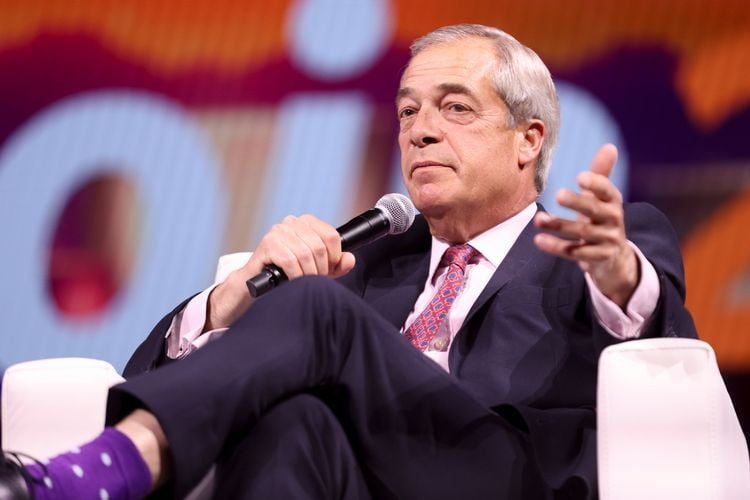
Farage Pitches Himself as Crypto's 'Champion,' Proposes UK Bitcoin Reserve and Tax CutsNigel Farage in Bitcoin ‘25 Conference | Source: The London Economic

What Reform’s Crypto Bill Would Actually Do

Farage’s platform mirrors the approach taken by U.S. President Donald Trump, who cultivated industry support before his 2024 election victory and has pursued a crypto-friendly agenda since taking office in January 2025.

The Reform Party chief’s proposed bill would allow British taxpayers to pay taxes directly in Bitcoin, with funds either converted to pounds or directed to the reserve fund.

Additionally, banks would be prohibited from denying or withdrawing services to customers based on lawful crypto-related activities, directly addressing industry concerns over “debanking.”

Farage connected the debanking issue to his own experience, telling the conference crowd, “I went to 10 banks, all of whom refused me an account,” and adding, “No wonder so many people are going for Bitcoin—because they can’t close you down, and that is the ultimate freedom.”

Meanwhile, Farage characterized the Bank of England’s plans for a central bank digital currency as “the ultimate authoritarian nightmare” and vowed to “stop it overnight” should Reform win the next election.

He also targeted the Bank of England’s proposed stablecoin holding limits, capping personal holdings at £10,000 to £20,000 and business holdings at £10 million, calling the restrictions “frankly ridiculous.”

According to Bloomberg, Farage claimed he had discussed the stablecoin caps directly with Andrew Bailey, the Governor of the Bank of England.

The Reform leader stated that the UK government is falling behind international competitors and must act quickly to regulate the crypto industry to safeguard Britain’s position as a financial hub.

Farage said “this whole area of digital assets and crypto just isn’t being talked about at all,” and pointed out that “we’ve got no regulated market.”

He also said that if Reform wins the next election, his government would enact the Crypto Assets and Digital Finance Bill “very, very quickly.”

Reform UK currently leads in numerous polling projections.

However, Britain’s first-past-the-post electoral system presents a major structural challenge to translating that support into parliamentary seats, as demonstrated in the 2024 general election when Reform received 4.1 million votes but secured only five seats.

The next UK general election is not expected until 2029, leaving four years for both political and market conditions to shift.

Why Global Crypto Competition is Forcing UK Regulators to Act

Britain’s regulatory environment now faces competitive pressure from the United States, where the Trump administration accelerated crypto-friendly policies, including the GENIUS Act for stablecoin oversight.

The European Union has also instituted a unified regulatory framework for digital assets, creating incentives for UK policymakers to clarify their own approach to crypto regulation.

Earlier this month, the Bank of England announced that it was considering exemption plans for its proposed stablecoin holding limits for crypto exchanges and other firms requiring large holdings for liquidity purposes.

Most recently, Governor Andrew Bailey acknowledged that stablecoins could drive financial innovation and coexist with traditional banking systems.

The Bank of England is also preparing to permit stablecoins as settlement assets in its Digital Securities Sandbox, a controlled environment for testing blockchain-based trading and issuance.

The uncertain stance of the nation has prompted industry executives to warn that overly restrictive regulations in the UK will risk diverting business and talent to jurisdictions with more favorable crypto frameworks.

As it stands now, the Financial Conduct Authority will complete its consultation on whether crypto firms should face the same regulatory standards as traditional financial institutions by year-end, with implementation expected to begin in January 2026.

Disclaimer: The articles reposted on this site are sourced from public platforms and are provided for informational purposes only. They do not necessarily reflect the views of MEXC. All rights remain with the original authors. If you believe any content infringes on third-party rights, please contact [email protected] for removal. MEXC makes no guarantees regarding the accuracy, completeness, or timeliness of the content and is not responsible for any actions taken based on the information provided. The content does not constitute financial, legal, or other professional advice, nor should it be considered a recommendation or endorsement by MEXC.

You May Also Like

President Trump’s Critical Talks With 7 Nations Revealed

President Trump’s Critical Talks With 7 Nations Revealed

The post President Trump’s Critical Talks With 7 Nations Revealed appeared on BitcoinEthereumNews.com. Strait Of Hormuz Crisis: President Trump’s Critical Talks
Share
BitcoinEthereumNews2026/03/16 11:25
First Multi-Asset Crypto ETP Opens Door to Institutional Adoption

First Multi-Asset Crypto ETP Opens Door to Institutional Adoption

The post First Multi-Asset Crypto ETP Opens Door to Institutional Adoption appeared on BitcoinEthereumNews.com. The US Securities and Exchange Commission (SEC) has officially approved the Grayscale Digital Large Cap Fund (GDLC) for trading on the stock exchange. The decision comes as the SEC also relaxes ETF listing standards. This approval provides easier access for traditional investors and signals a major regulatory shift, paving the way for institutional capital to flow into the crypto market. Grayscale Races to Launch the First Multi-Asset Crypto ETP According to Grayscale CEO Peter Mintzberg, the Grayscale Digital Large Cap Fund ($GDLC) and the Generic Listing Standards have just been approved for trading. Sponsored Sponsored Grayscale Digital Large Cap Fund $GDLC was just approved for trading along with the Generic Listing Standards. The Grayscale team is working expeditiously to bring the FIRST multi #crypto asset ETP to market with Bitcoin, Ethereum, XRP, Solana, and Cardano#BTC #ETH $XRP $SOL… — Peter Mintzberg (@PeterMintzberg) September 17, 2025 The Grayscale Digital Large Cap Fund (GDLC) is the first multi-asset crypto Exchange-Traded Product (ETP). It includes Bitcoin (BTC), Ethereum (ETH), XRP, Solana (SOL), and Cardano (ADA). As of September, the portfolio allocation was 72.23%, 12.17%, 5.62%, 4.03%, and 1% respectively. Grayscale Digital Large Cap Fund (GDLC) Portfolio Allocation. Source: Grayscale Grayscale Investments launched GDLC in 2018. The fund’s primary goal is to expose investors to the most significant digital assets in the market without requiring them to buy, store, or secure the coins directly. In July, the SEC delayed its decision to convert GDLC from an OTC fund into an exchange-listed ETP on NYSE Arca, citing further review. However, the latest developments raise investors’ hopes that a multi-asset crypto ETP from Grayscale will soon become a reality. Approval under the Generic Listing Standards will help “streamline the process,” opening the door for more crypto ETPs. Ethereum, Solana, XRP, and ADA investors are the most…
Share
BitcoinEthereumNews2025/09/18 13:31
Nigeria Leads the World in Stablecoin Adoption as USDT Dominates Globally

Nigeria Leads the World in Stablecoin Adoption as USDT Dominates Globally

Stablecoin usage varies significantly across countries, with Tether (USDT) continuing to dominate globally, while USD Coin (USDC) is gradually increasing its share
Share
Ethnews2026/03/16 11:17