By Ben Weiss, Fortune Magazine Compiled by Luffy, Foresight News Building one's own blockchain has become a new trend in the fintech sector. US cryptocurrency exchange Coinbase already has itsBy Ben Weiss, Fortune Magazine Compiled by Luffy, Foresight News Building one's own blockchain has become a new trend in the fintech sector. US cryptocurrency exchange Coinbase already has its

From Stripe to Circle, why are fintech companies rushing to build their own blockchains?

2025/08/15 08:00

By Ben Weiss, Fortune Magazine

Compiled by Luffy, Foresight News

Building one's own blockchain has become a new trend in the fintech sector. US cryptocurrency exchange Coinbase already has its own blockchain; online brokerage Robinhood announced plans to launch its own blockchain in June, and competitor eToro is also considering following suit. Now, fintech giant Stripe and stablecoin issuer Circle have joined the trend.

Stripe is developing a blockchain called Tempo, focused on payments, according to a since-deleted job posting and people familiar with the matter, while Circle said Tuesday morning it is building Arc, a blockchain designed specifically for stablecoins.

The sudden surge in enterprise blockchains raises the question: Why are seemingly all the big financial companies (especially Stripe and Circle) transitioning to become blockchain developers?

Master the complete technology stack

Two executives in the stablecoin space and one investor said Stripe’s motivation is simple: vertical integration.

With its $1.1 billion acquisition of stablecoin startup Bridge, Stripe now has its own stablecoin and payment network. Furthermore, with its acquisition of cryptocurrency wallet company Privy in June, Stripe will also be able to offer users accounts for storing stablecoins. For Stripe, known for traditional payment services like online checkout, adding blockchain services means building a mature stablecoin ecosystem.

Rob Hadick, a general partner at the crypto venture capital firm Dragonfly, which frequently invests in stablecoin startups, told Fortune: “These large companies have an incentive to own the entire technology stack.”

Stripe, which is betting stablecoins are the future of payments, could miss out on millions of dollars in revenue if a significant portion of its $1.4 trillion in transaction volume is processed through stablecoins.

Blockchain is like the Google Cloud or Amazon Web Services of the crypto technology stack: a decentralized cluster of servers processes the transactions of cryptocurrency applications, and the server owners are paid for providing computing power.

For example, according to DefiLlama, Coinbase's own blockchain, Base, has generated more than $130 million in fees since its launch in early 2023.

“Everyone wants to control the economy,” Luca Prosperi, co-founder and CEO of stablecoin infrastructure company M0, told Fortune.

However, it remains to be seen whether the proliferation of stablecoins and their associated blockchains will lead to average consumers struggling to navigate the endless stream of tokens and blockchains.

Stripe did not respond to a request for comment.

Defense and Offense
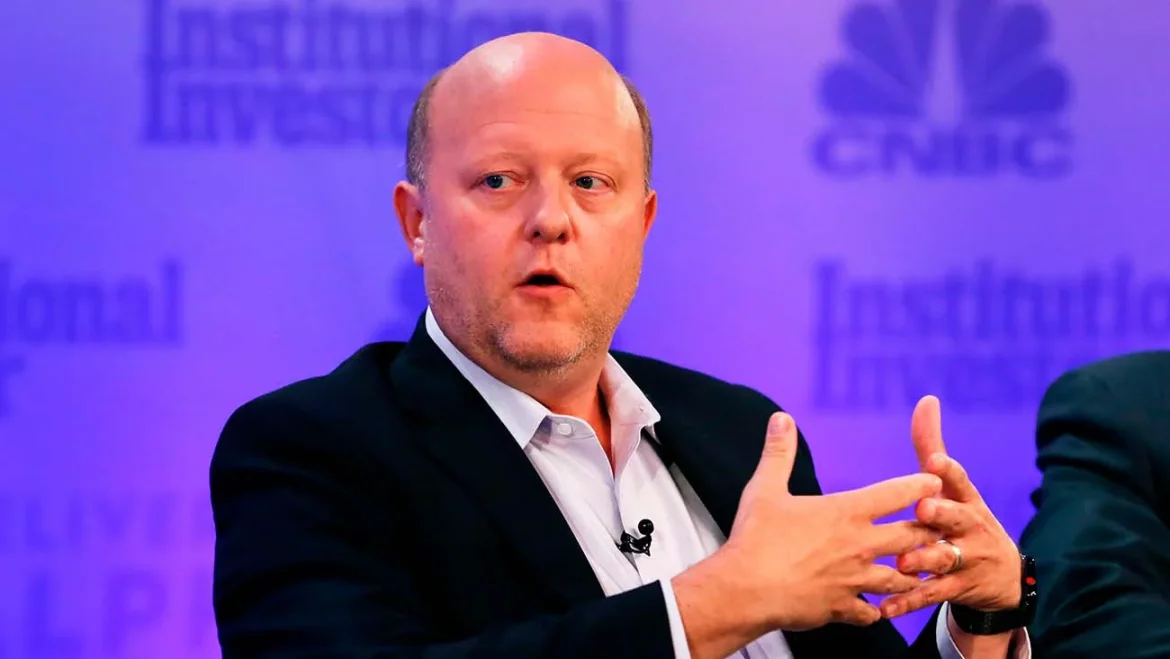
 Circle CEO Jeremy Allaire

Circle's motivations are similar.

The stablecoin issuer, which debuted in June, has its own token, USDC, built a growing payment network, and even offers services that allow corporate clients to create their own cryptocurrency wallets. However, the cryptocurrency company does not yet have its own blockchain and cannot earn fees from payment transactions on its services.

“They want to control that aspect of the money flow as well,” Bam Azizi, co-founder and CEO of cryptocurrency payments startup Mesh, said of Circle.

But Stripe and Circle are in different situations. Stripe is one of the largest private companies in the tech sector, a dominant payments processor with diverse revenue streams. In January alone, its Stripe Billing business generated $500 million in annual revenue.

In contrast, Circle earned over 96% of its revenue in the second quarter of 2025 solely from interest on the U.S. Treasury bonds backing its stablecoin. If interest rates fall, its entire business model could be threatened.

“We’re building a complete system, from the infrastructure layer to the stablecoin layer to the payment network layer,” Circle CEO Jeremy Allaire said in an interview with The Information about the company’s second-quarter results. A Circle spokesperson declined to comment further.

Still, some believe the newly public company is playing catch-up to its competitors.

“Circle is taking a defensive and reactive approach,” said Hadick, a general partner at Dragonfly. “Stripe, on the other hand, is taking an offensive and proactive approach, focusing on the future of payments and the future of its own business.”

Market Opportunity
LUFFY Logo
LUFFY Price(LUFFY)
$0.00001999
$0.00001999$0.00001999
-5.48%
USD
LUFFY (LUFFY) Live Price Chart
Disclaimer: The articles reposted on this site are sourced from public platforms and are provided for informational purposes only. They do not necessarily reflect the views of MEXC. All rights remain with the original authors. If you believe any content infringes on third-party rights, please contact [email protected] for removal. MEXC makes no guarantees regarding the accuracy, completeness, or timeliness of the content and is not responsible for any actions taken based on the information provided. The content does not constitute financial, legal, or other professional advice, nor should it be considered a recommendation or endorsement by MEXC.

You May Also Like

Ethereum unveils roadmap focusing on scaling, interoperability, and security at Japan Dev Conference

Ethereum unveils roadmap focusing on scaling, interoperability, and security at Japan Dev Conference

The post Ethereum unveils roadmap focusing on scaling, interoperability, and security at Japan Dev Conference appeared on BitcoinEthereumNews.com. Key Takeaways Ethereum’s new roadmap was presented by Vitalik Buterin at the Japan Dev Conference. Short-term priorities include Layer 1 scaling and raising gas limits to enhance transaction throughput. Vitalik Buterin presented Ethereum’s development roadmap at the Japan Dev Conference today, outlining the blockchain platform’s priorities across multiple timeframes. The short-term goals focus on scaling solutions and increasing Layer 1 gas limits to improve transaction capacity. Mid-term objectives target enhanced cross-Layer 2 interoperability and faster network responsiveness to create a more seamless user experience across different scaling solutions. The long-term vision emphasizes building a secure, simple, quantum-resistant, and formally verified minimalist Ethereum network. This approach aims to future-proof the platform against emerging technological threats while maintaining its core functionality. The roadmap presentation comes as Ethereum continues to compete with other blockchain platforms for market share in the smart contract and decentralized application space. Source: https://cryptobriefing.com/ethereum-roadmap-scaling-interoperability-security-japan/
Share
BitcoinEthereumNews2025/09/18 00:25
USD/INR opens flat on hopes of RBI’s follow-through intervention

USD/INR opens flat on hopes of RBI’s follow-through intervention

The post USD/INR opens flat on hopes of RBI’s follow-through intervention appeared on BitcoinEthereumNews.com. The Indian Rupee (INR) opens on a flat note against
Share
BitcoinEthereumNews2025/12/18 13:33
A Netflix ‘KPop Demon Hunters’ Short Film Has Been Rated For Release

A Netflix ‘KPop Demon Hunters’ Short Film Has Been Rated For Release

The post A Netflix ‘KPop Demon Hunters’ Short Film Has Been Rated For Release appeared on BitcoinEthereumNews.com. KPop Demon Hunters Netflix Everyone has wondered what may be the next step for KPop Demon Hunters as an IP, given its record-breaking success on Netflix. Now, the answer may be something exactly no one predicted. According to a new filing with the MPA, something called Debut: A KPop Demon Hunters Story has been rated PG by the ratings body. It’s listed alongside some other films, and this is obviously something that has not been publicly announced. A short film could be well, very short, a few minutes, and likely no more than ten. Even that might be pushing it. Using say, Pixar shorts as a reference, most are between 4 and 8 minutes. The original movie is an hour and 36 minutes. The “Debut” in the title indicates some sort of flashback, perhaps to when HUNTR/X first arrived on the scene before they blew up. Previously, director Maggie Kang has commented about how there were more backstory components that were supposed to be in the film that were cut, but hinted those could be explored in a sequel. But perhaps some may be put into a short here. I very much doubt those scenes were fully produced and simply cut, but perhaps they were finished up for this short film here. When would Debut: KPop Demon Hunters theoretically arrive? I’m not sure the other films on the list are much help. Dead of Winter is out in less than two weeks. Mother Mary does not have a release date. Ne Zha 2 came out earlier this year. I’ve only seen news stories saying The Perfect Gamble was supposed to come out in Q1 2025, but I’ve seen no evidence that it actually has. KPop Demon Hunters Netflix It could be sooner rather than later as Netflix looks to capitalize…
Share
BitcoinEthereumNews2025/09/18 02:23