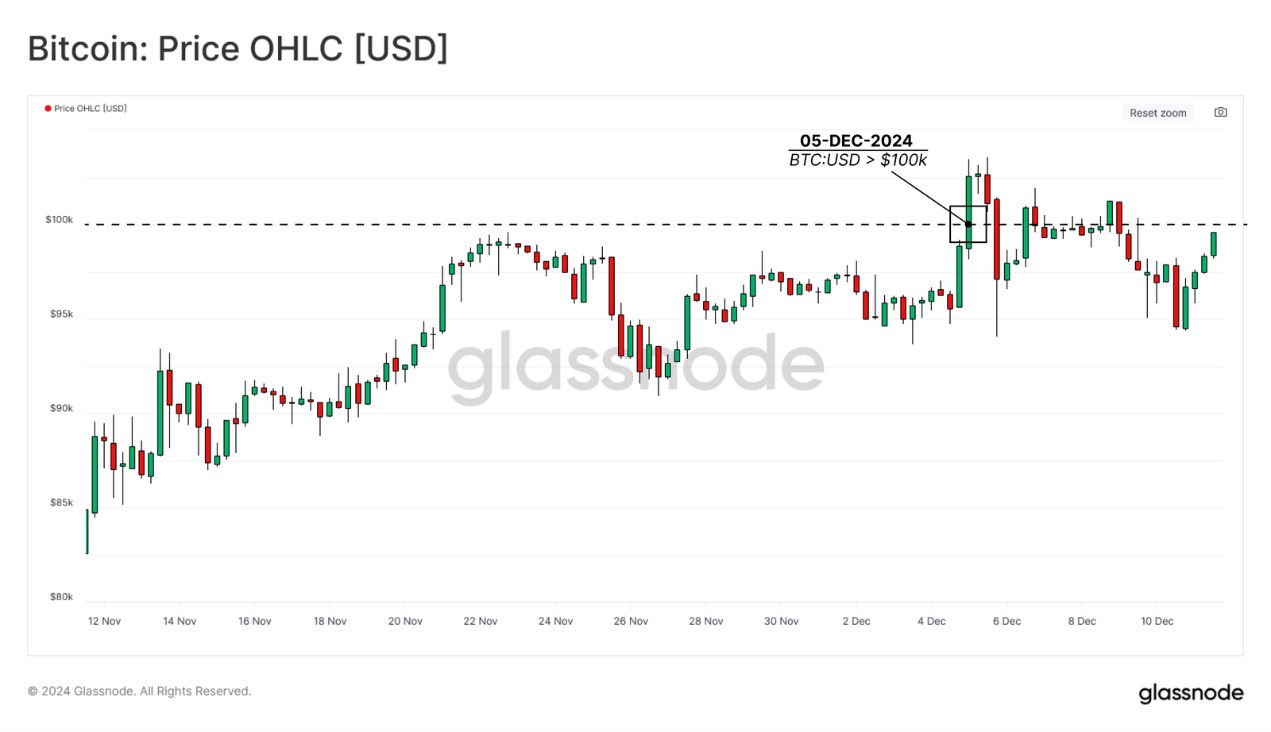
After 5,256 trading days, Bitcoin broke through the $100,000 mark for the first time on December 5, 2024. The Bitcoin network processed a total of 1.12 billion transactions, settled $131.25 trillion in transfers, and miners earned a total of $71.49 billion.After 5,256 trading days, Bitcoin broke through the $100,000 mark for the first time on December 5, 2024. The Bitcoin network processed a total of 1.12 billion transactions, settled $131.25 trillion in transfers, and miners earned a total of $71.49 billion.

From the Genesis Block to Breaking $100,000, the Evolution of the Bitcoin Network and Its Economic Foundation

2024/12/12 15:50

Author: Glassnode

Compiled by: Felix, PANews

Key points:

  • After 5,256 trading days, Bitcoin broke through the $100,000 mark for the first time on December 5, and its market value once exceeded $2 trillion.
  • Miners have earned a cumulative $71.49 billion, reflecting the security and economic incentives of the Bitcoin network.
  • The Bitcoin network processed a total of 1.12 billion transactions and settled $131.25 trillion in transfers. The entity-adjusted data can more clearly reflect real economic activities.
  • The details of holdings of different groups show that Bitcoin holders are widely distributed, covering both retail investors and institutional holders.

This article explores the evolution of the Bitcoin network and its economic foundations, reviewing Bitcoin’s journey from the genesis block to breaking the $100,000 mark.
From the Genesis Block to Breaking $100,000, the Evolution of the Bitcoin Network and Its Economic Foundation

Market expansion

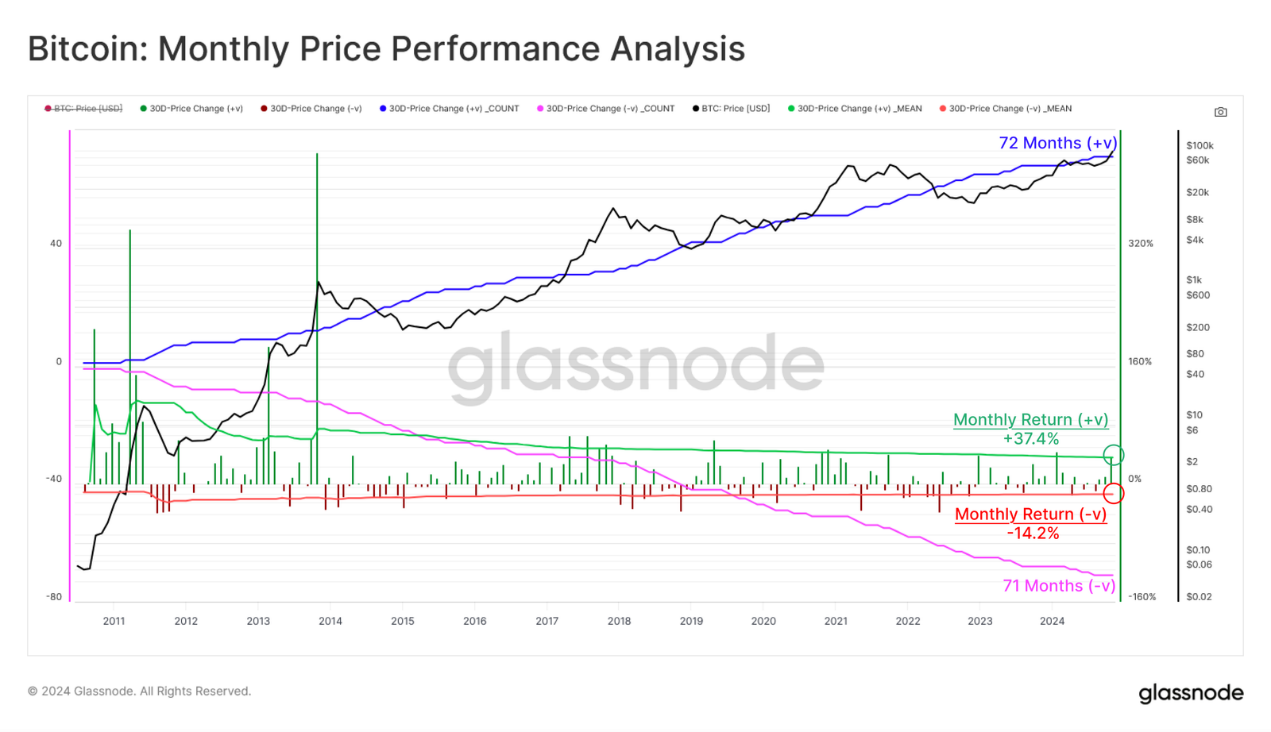
Bitcoin has been trading actively for 5,256 days, rising from a few cents to $100,000. This journey includes 72 positive monthly candlesticks (including December 2024), with an average increase of 37.4%, and 71 negative monthly candlesticks, with an average decrease of -14.2%.

This reflects a fantastic balance between bull and bear markets, and a positive tilt during the most important periods of price appreciation.
From the Genesis Block to Breaking $100,000, the Evolution of the Bitcoin Network and Its Economic Foundation

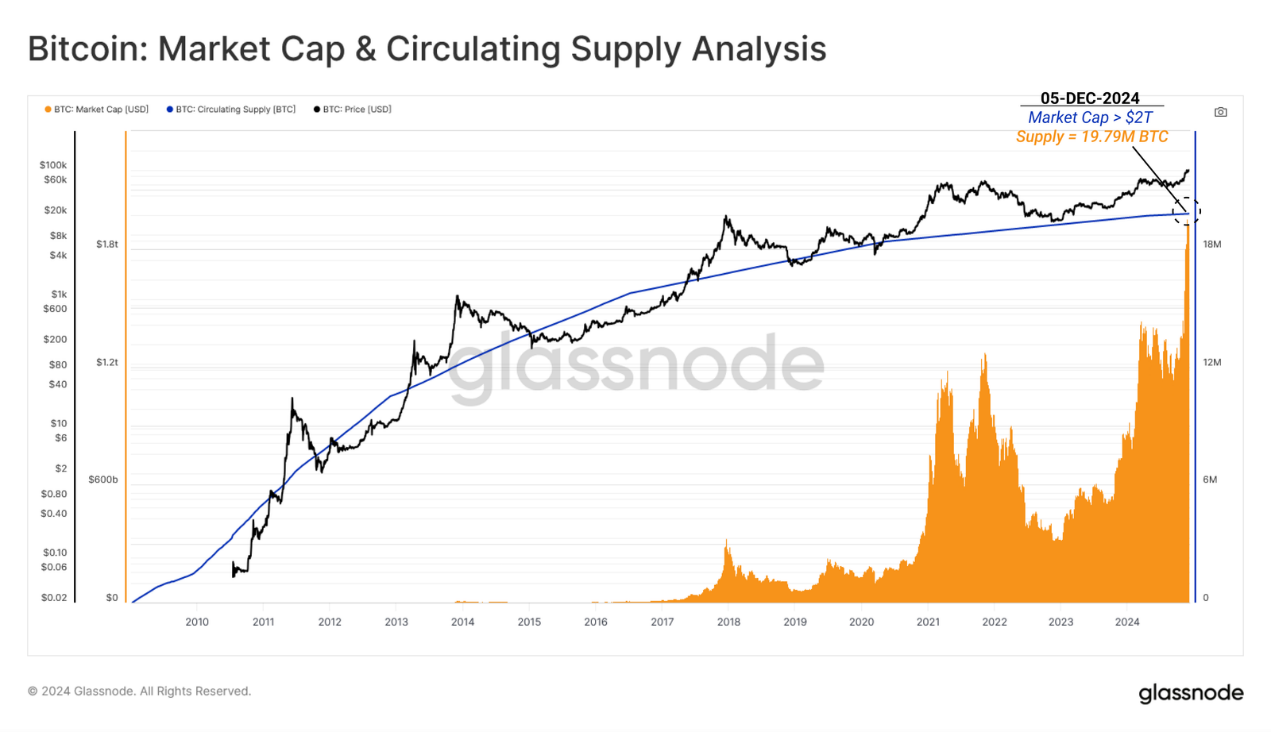
As of December 5, a total of 19,791,952 BTC have been mined, accounting for 94.2% of the total 21 million BTC. The market value of Bitcoin also briefly exceeded $2 trillion, surpassing the market value of silver (about $1.84 trillion).
From the Genesis Block to Breaking $100,000, the Evolution of the Bitcoin Network and Its Economic Foundation

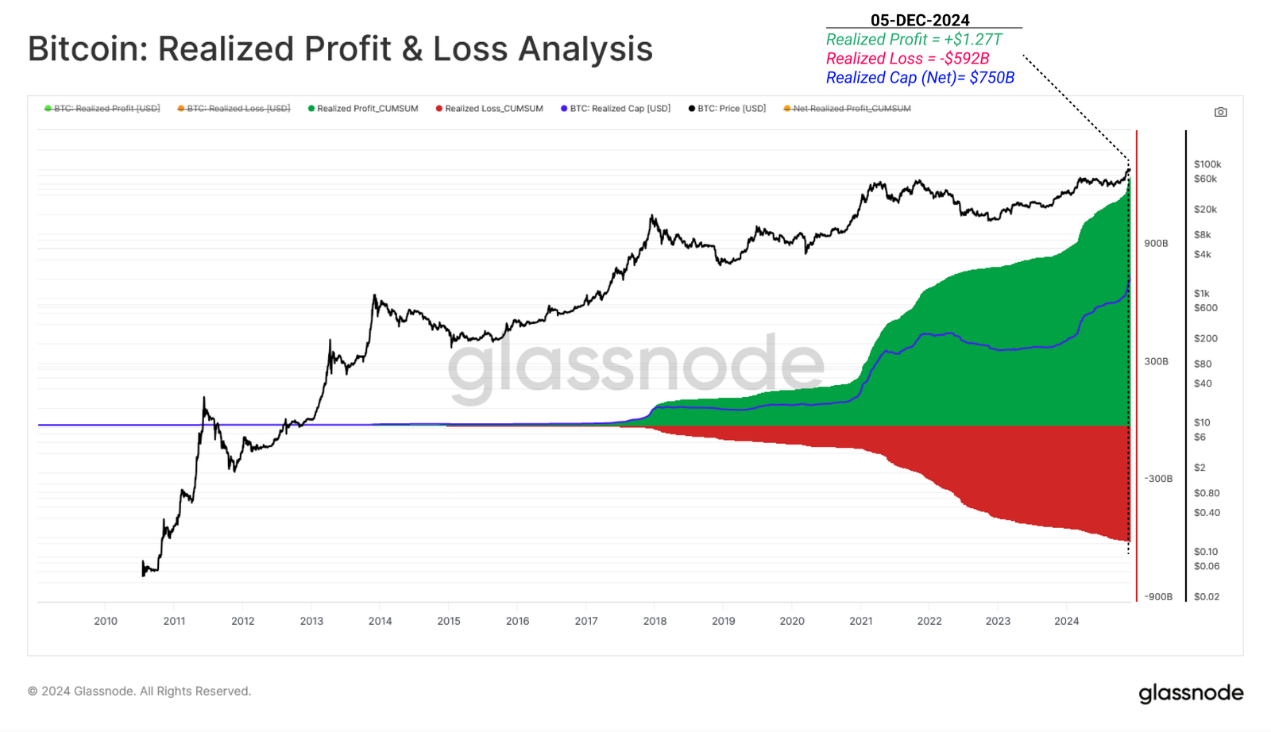
During this period of market expansion, investors realized $1.27 trillion in profits and $592 billion in on-chain losses (based on the difference between buy and sell prices). This resulted in a cumulative net capital inflow (realized market capitalization) of $750 billion and highlights the enormous value that has flowed into the Bitcoin network over its lifetime.
From the Genesis Block to Breaking $100,000, the Evolution of the Bitcoin Network and Its Economic Foundation

Supply Distribution

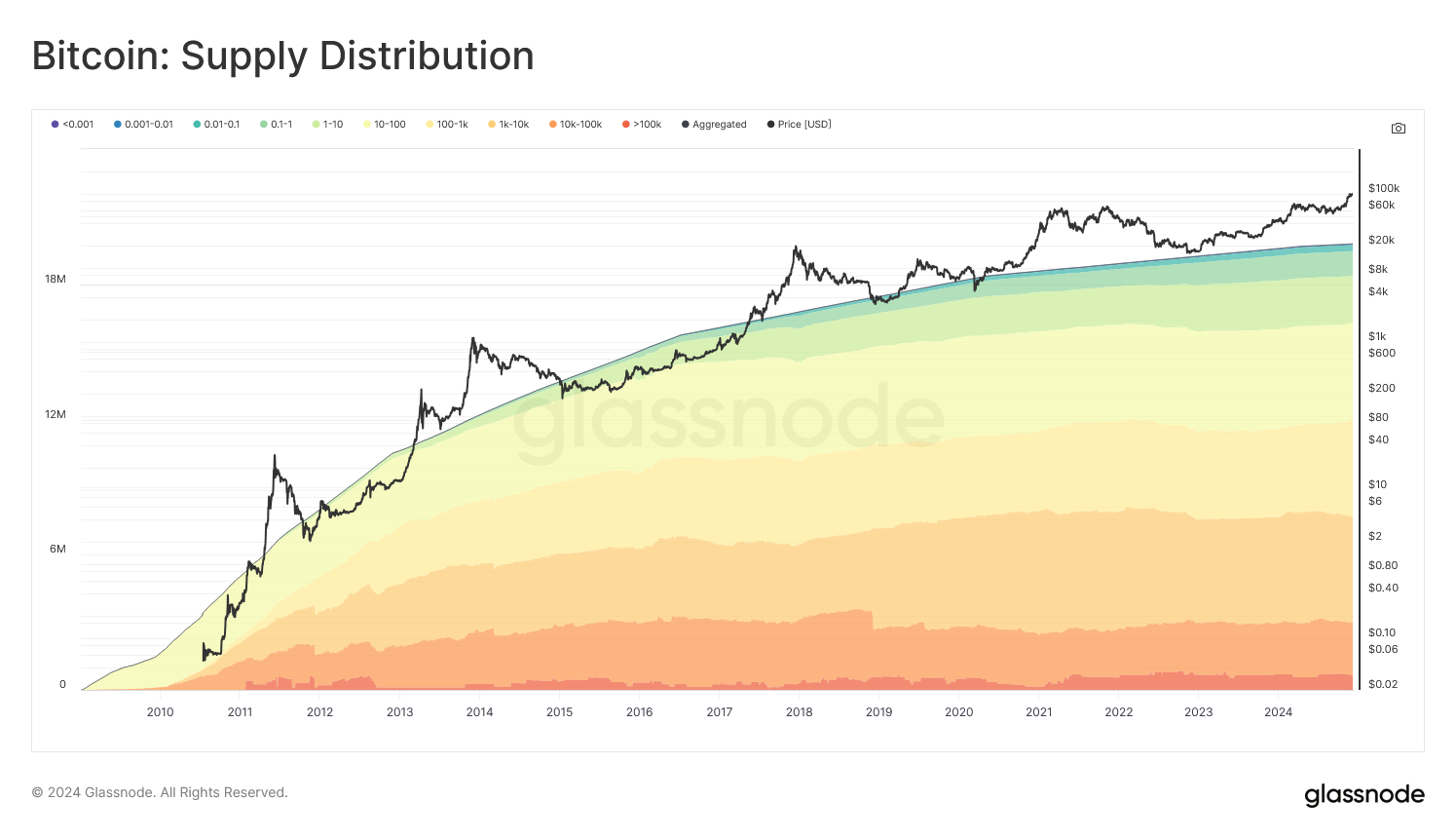
Among the mined Bitcoins, the distribution of groups with different wallet sizes is as follows:

  • <0.001 BTC: 5,491 BTC (0.027%)
  • 0.001–0.01 BTC: 42,683 BTC (0.216%)
  • 0.01–0.1 BTC: 271,641 BTC (1.373%)
  • 0.1–1 BTC: 1,077,839 BTC (5.446%)
  • 1–10 BTC: 2,093,845 BTC (10.581%)
  • 10–100 BTC: 4,306,780 BTC (21.761%)
  • 100–1,000 BTC: 4,342,868 BTC (21.935%)
  • 1,000–10,000 BTC: 4,693,216 BTC (23.716%)
  • 10,000–100,000 BTC: 2,309,654 BTC (11.671%)
  • >100,000 BTC: 647,934 BTC (3.274%)

It is worth noting that most of the whale wallets (holding 1,000+ BTC) are associated with exchanges, ETFs, and large institutions such as MicroStrategy. Each of these large entities represents the collective ownership of thousands to millions of customers and shareholders.
From the Genesis Block to Breaking $100,000, the Evolution of the Bitcoin Network and Its Economic Foundation

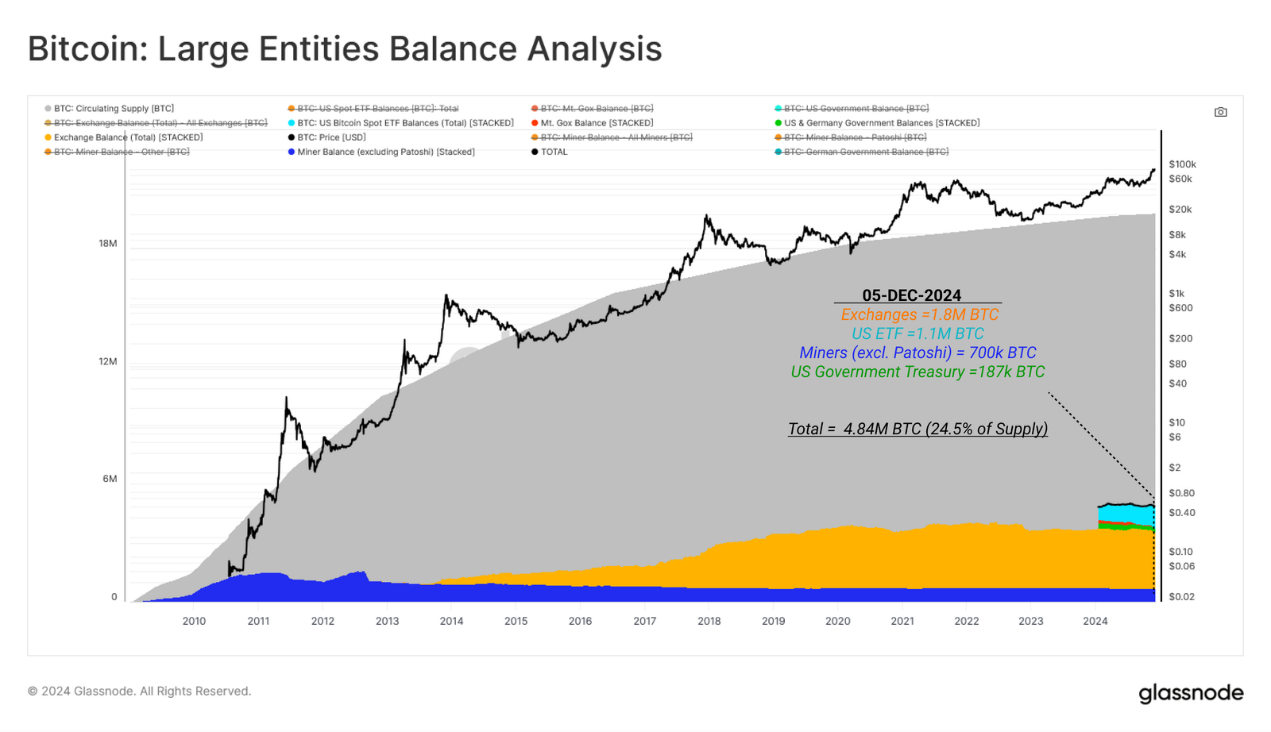
Notable holdings include 1.8 million bitcoins held on exchanges (9.1% of the supply) and 1.1 million bitcoins managed by U.S. ETFs (5.6% of the supply). In addition, miners (excluding Patoshi) retain 700,000 bitcoins (3.5% of the supply), while the U.S. government Treasury holds 187,000 bitcoins (0.9% of the supply), reflecting the wide distribution of bitcoins among various entities and highlighting the increasing institutionalization and centralization of bitcoin custody. (Note: An independent miner first mined a large number of bitcoins. The community believes that this miner is Satoshi Nakamoto and calls this mining model Patoshi)
From the Genesis Block to Breaking $100,000, the Evolution of the Bitcoin Network and Its Economic Foundation

Network Evolution

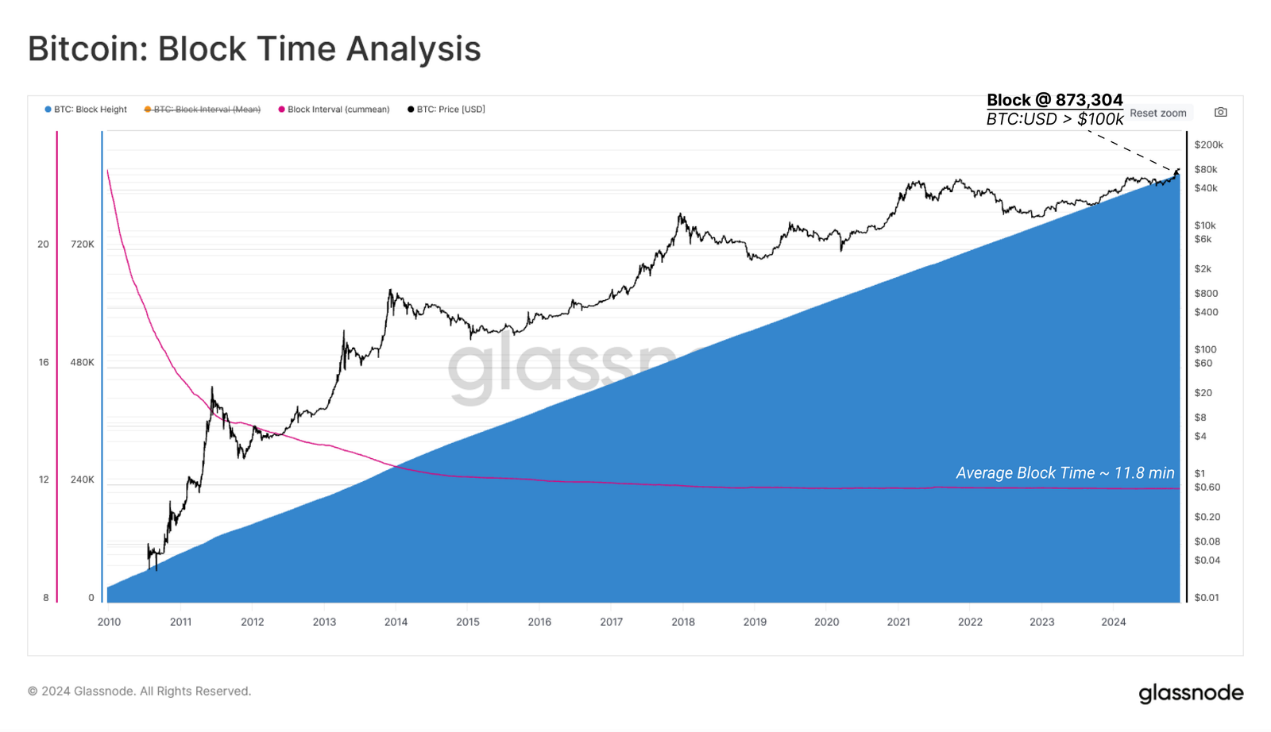
Since the genesis block, a total of 873,304 blocks have been mined, with an average Bitcoin block generation time of 11.8 minutes. While the current average block interval is about 9.6 minutes due to an increase in hash rate, the early years saw a slow start because Satoshi Nakamoto overestimated the performance of laptop CPUs relative to the initial difficulty setting.
From the Genesis Block to Breaking $100,000, the Evolution of the Bitcoin Network and Its Economic Foundation

During the same period, the network difficulty increased dramatically. As the security and computing power behind Bitcoin continued to grow, after 418 difficulty adjustments (excluding periods without adjustments), the network difficulty increased to 446,331,432,498,125,300,000,000.

From the Genesis Block to Breaking $100,000, the Evolution of the Bitcoin Network and Its Economic Foundation

The difficulty adjustment target of the Bitcoin Proof of Work (PoW) consensus is to mine a block approximately every 10 minutes, regardless of changes in the network hash rate. The mining difficulty is dynamically adjusted every 2016 blocks (about 2 weeks) to align with the target block time of 600 seconds.

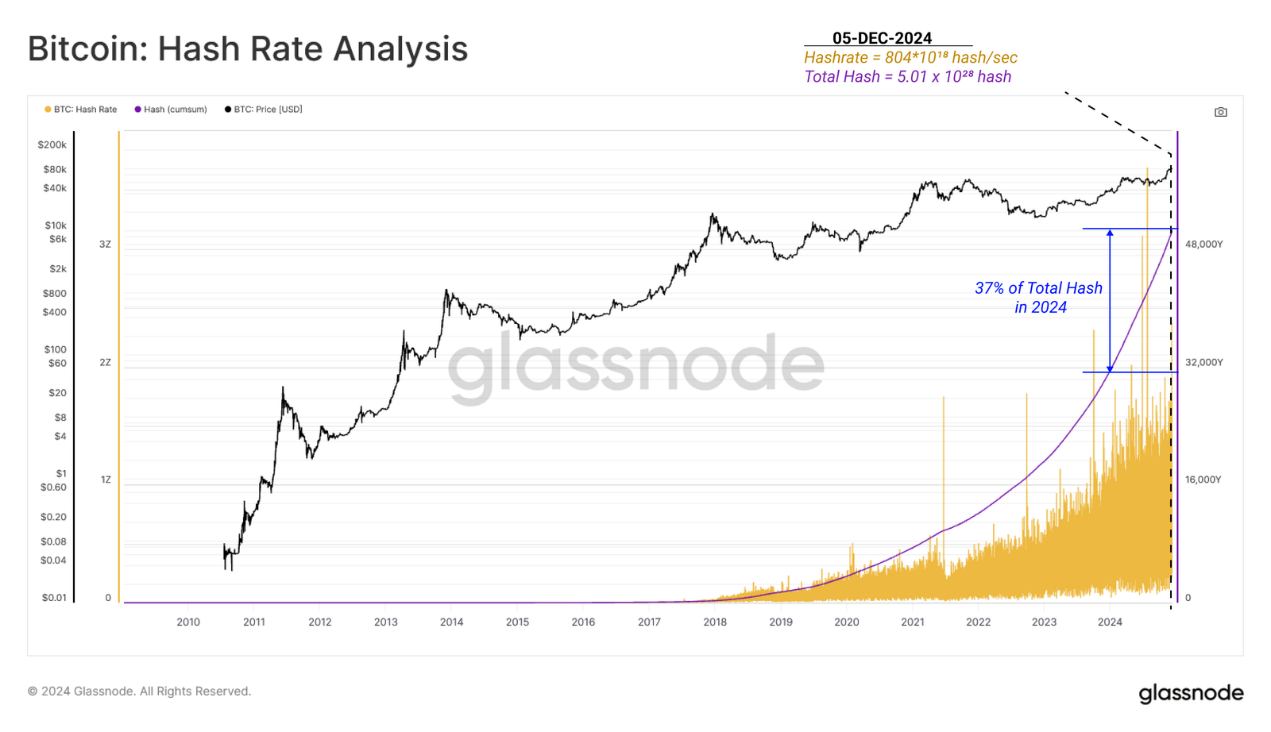
When Bitcoin reached $100,000, the network hash rate soared from 128,185 hashes/second to 804,407,834,059,443,100,000 hashes/second. So far, miners have cumulatively calculated about 5.01 x 10^28 hashes. It is worth noting that the hashes calculated in 2024 account for 37% of the total hashes.
From the Genesis Block to Breaking $100,000, the Evolution of the Bitcoin Network and Its Economic Foundation

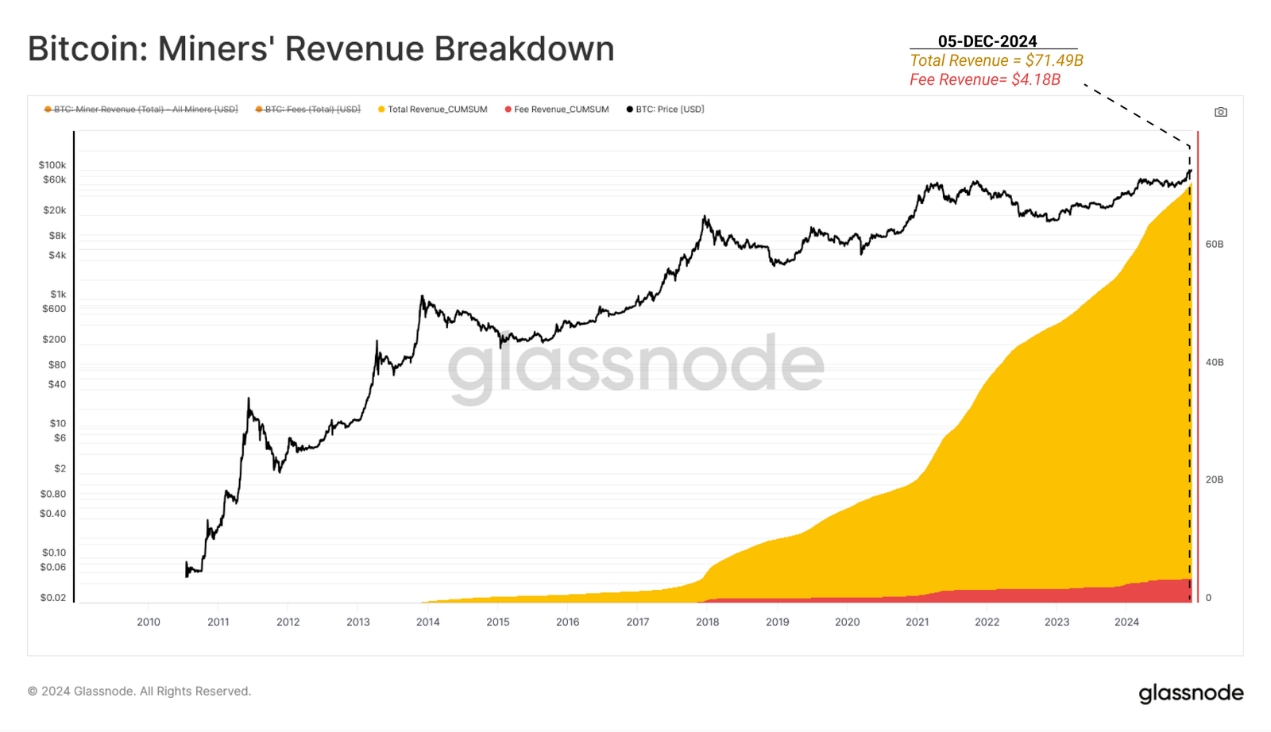
As of December 5, miners have earned a cumulative $71.49 billion, the value of the block reward based on the day the block is mined. This revenue includes $67.31 billion in block subsidies earned through minting new coins and $4.18 billion in transaction fees paid by users. This is only 3.57% of Bitcoin's peak market value of $2 trillion, reflecting a huge return on the security budget invested.
From the Genesis Block to Breaking $100,000, the Evolution of the Bitcoin Network and Its Economic Foundation

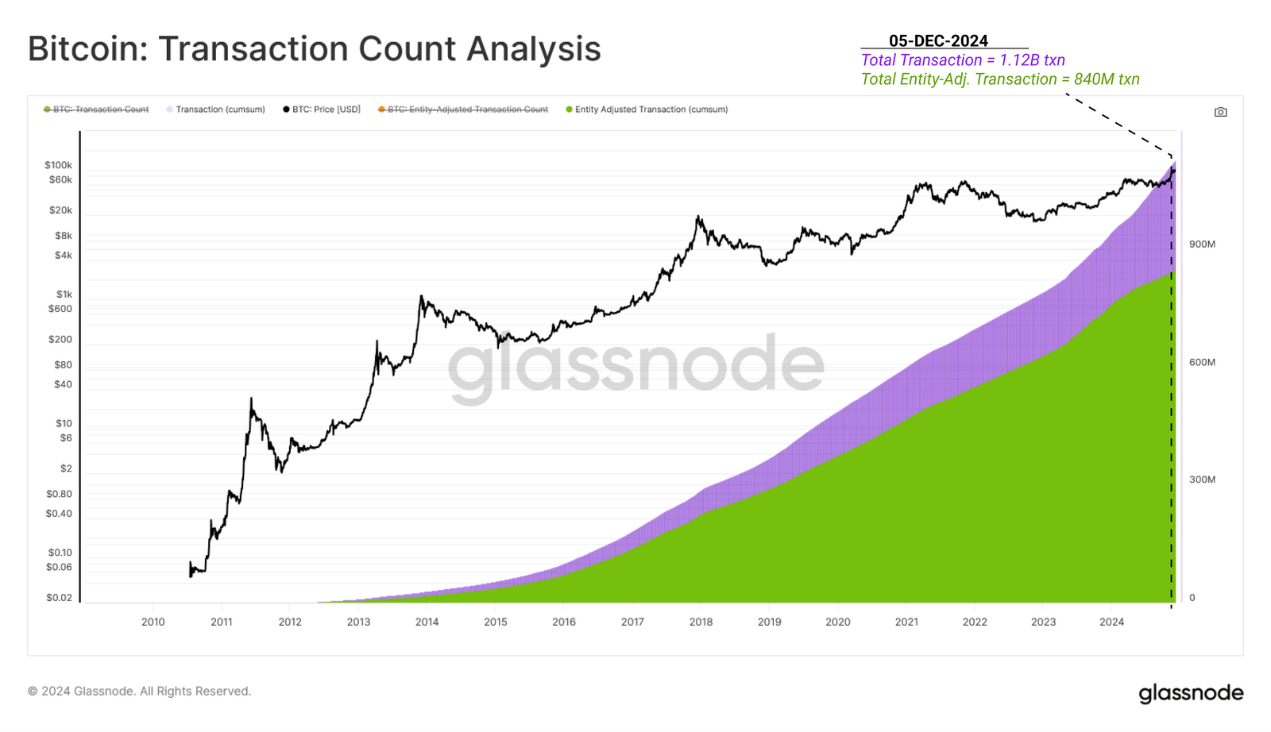
Bitcoin transaction volume has also seen a staggering increase. To date, the Bitcoin network has successfully processed 1.12 billion transactions (unfiltered), filtering out internal transfers, and the total number of actual economic transactions is 840 million.
From the Genesis Block to Breaking $100,000, the Evolution of the Bitcoin Network and Its Economic Foundation

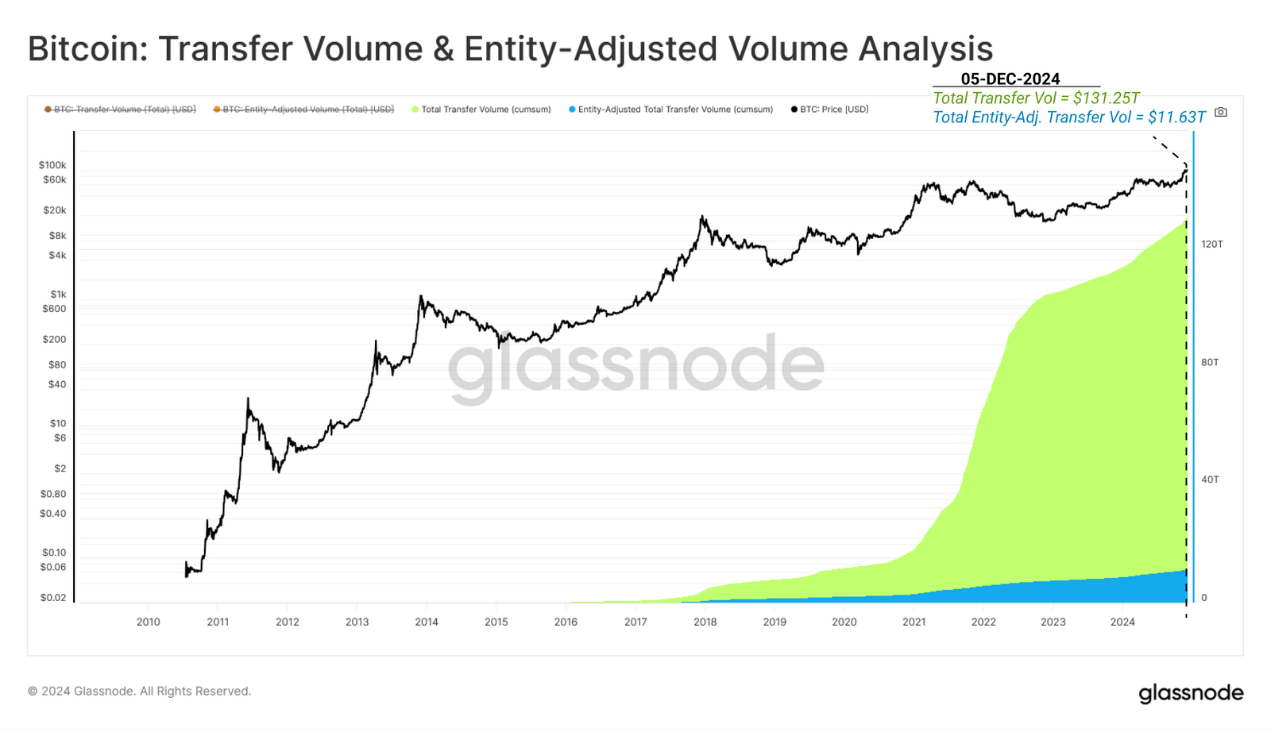
The Bitcoin network has processed a total of $131.25 trillion in transactions, based on the dollar value of transactions at the time of confirmation. After adjustment, the filtered transfer volume was $11.63 trillion, accounting for only 8.86% of the total.

This reflects that most transactions are economic in nature. However, the vast majority of volume transferred on-chain is likely associated with large exchanges and custodial wallet management.
From the Genesis Block to Breaking $100,000, the Evolution of the Bitcoin Network and Its Economic Foundation

in conclusion

The rise of Bitcoin to $100,000 not only represents a price milestone, but also demonstrates its extraordinary journey from a small corner of the Internet to an important global financial infrastructure. Since the genesis block, the Bitcoin network has grown by leaps and bounds, reaching a market value of $2 trillion, surpassing silver, and settling $131 trillion in trading volume through 1.12 billion transactions.

The network has cumulatively paid miners $71.49 billion in value, just over 3% of its market valuation, to support its own input costs, reflecting an incredible return on input costs. With its hash rate near all-time highs and a highly dispersed holder base, Bitcoin is playing an increasingly important role on the world stage.

Related reading: Data explains how Bitcoin holders behave after reaching new highs?

Disclaimer: The articles reposted on this site are sourced from public platforms and are provided for informational purposes only. They do not necessarily reflect the views of MEXC. All rights remain with the original authors. If you believe any content infringes on third-party rights, please contact [email protected] for removal. MEXC makes no guarantees regarding the accuracy, completeness, or timeliness of the content and is not responsible for any actions taken based on the information provided. The content does not constitute financial, legal, or other professional advice, nor should it be considered a recommendation or endorsement by MEXC.

You May Also Like

Santander’s Openbank Sparks Crypto Frenzy in Germany

Santander’s Openbank Sparks Crypto Frenzy in Germany

 In Germany, the digital bank Santander Openbank introduces trading in crypto, which offers BTC, ETH, LTC, POL, and ADA in the MiCA framework of the EU. Santander, the largest bank in Spain, has officially introduced cryptocurrency trading to its clients in Germany, using its digital division, Openbank.  With this new service, users can purchase, sell, […] The post Santander’s Openbank Sparks Crypto Frenzy in Germany appeared first on Live Bitcoin News.
Share
LiveBitcoinNews2025/09/18 04:30
UK and US Seal $42 Billion Tech Pact Driving AI and Energy Future

UK and US Seal $42 Billion Tech Pact Driving AI and Energy Future

The post UK and US Seal $42 Billion Tech Pact Driving AI and Energy Future appeared on BitcoinEthereumNews.com. Key Highlights Microsoft and Google pledge billions as part of UK US tech partnership Nvidia to deploy 120,000 GPUs with British firm Nscale in Project Stargate Deal positions UK as an innovation hub rivaling global tech powers UK and US Seal $42 Billion Tech Pact Driving AI and Energy Future The UK and the US have signed a “Technological Prosperity Agreement” that paves the way for joint projects in artificial intelligence, quantum computing, and nuclear energy, according to Reuters. Donald Trump and King Charles review the guard of honour at Windsor Castle, 17 September 2025. Image: Kirsty Wigglesworth/Reuters The agreement was unveiled ahead of U.S. President Donald Trump’s second state visit to the UK, marking a historic moment in transatlantic technology cooperation. Billions Flow Into the UK Tech Sector As part of the deal, major American corporations pledged to invest $42 billion in the UK. Microsoft leads with a $30 billion investment to expand cloud and AI infrastructure, including the construction of a new supercomputer in Loughton. Nvidia will deploy 120,000 GPUs, including up to 60,000 Grace Blackwell Ultra chips—in partnership with the British company Nscale as part of Project Stargate. Google is contributing $6.8 billion to build a data center in Waltham Cross and expand DeepMind research. Other companies are joining as well. CoreWeave announced a $3.4 billion investment in data centers, while Salesforce, Scale AI, BlackRock, Oracle, and AWS confirmed additional investments ranging from hundreds of millions to several billion dollars. UK Positions Itself as a Global Innovation Hub British Prime Minister Keir Starmer said the deal could impact millions of lives across the Atlantic. He stressed that the UK aims to position itself as an investment hub with lighter regulations than the European Union. Nvidia spokesman David Hogan noted the significance of the agreement, saying it would…
Share
BitcoinEthereumNews2025/09/18 02:22
DOGE ETF Hype Fades as Whales Sell and Traders Await Decline

DOGE ETF Hype Fades as Whales Sell and Traders Await Decline

The post DOGE ETF Hype Fades as Whales Sell and Traders Await Decline appeared on BitcoinEthereumNews.com. Leading meme coin Dogecoin (DOGE) has struggled to gain momentum despite excitement surrounding the anticipated launch of a US-listed Dogecoin ETF this week. On-chain data reveals a decline in whale participation and a general uptick in coin selloffs across exchanges, hinting at the possibility of a deeper price pullback in the coming days. Sponsored Sponsored DOGE Faces Decline as Whales Hold Back, Traders Sell The market is anticipating the launch of Rex-Osprey’s Dogecoin ETF (DOJE) tomorrow, which is expected to give traditional investors direct exposure to Dogecoin’s price movements.  However, DOGE’s price performance has remained muted ahead of the milestone, signaling a lack of enthusiasm from traders. According to on-chain analytics platform Nansen, whale accumulation has slowed notably over the past week. Large investors, with wallets containing DOGE coins worth more than $1 million, appear unconvinced by the ETF narrative and have reduced their holdings by over 4% in the past week.  For token TA and market updates: Want more token insights like this? Sign up for Editor Harsh Notariya’s Daily Crypto Newsletter here. Dogecoin Whale Activity. Source: Nansen When large holders reduce their accumulation, it signals a bearish shift in market sentiment. This reduced DOGE demand from significant players can lead to decreased buying pressure, potentially resulting in price stagnation or declines in the near term. Sponsored Sponsored Furthermore, DOGE’s exchange reserve has risen steadily in the past week, suggesting that more traders are transferring DOGE to exchanges with the intent to sell. As of this writing, the altcoin’s exchange balance sits at 28 billion DOGE, climbing by 12% in the past seven days. DOGE Balance on Exchanges. Source: Glassnode A rising exchange balance indicates that holders are moving their assets to trading platforms to sell rather than to hold. This influx of coins onto exchanges increases the available supply in…
Share
BitcoinEthereumNews2025/09/18 05:07