BitcoinWorld Indian Rupee Crisis: Unveiling the Devastating Impact of US Tariffs In the dynamic world of global finance, where digital assets like cryptocurrencies often grab headlines for their volatility, it is crucial to remember the foundational role of traditional fiat currencies. Lately, the Indian Rupee has found itself in a precarious position, teetering on the edge of a record low against the mighty US Dollar. This isn’t just a number on a screen; it’s a stark indicator of underlying economic pressures, particularly the bite of steep US tariffs, which can have ripple effects even on the broader financial landscape, influencing investor sentiment across all asset classes, including crypto. Understanding these macroeconomic shifts is vital for any investor navigating today’s interconnected markets. Indian Rupee Crisis: A Deep Dive into Record Lows The Indian Rupee’s recent performance has been a cause for significant concern among policymakers, businesses, and citizens alike. The currency has been steadily losing ground, inching closer to an all-time low against the US Dollar. This trend is not isolated but a symptom of various domestic and international pressures converging. A weaker rupee means that more rupees are required to buy one US Dollar, making imports more expensive and potentially fueling inflation. For a developing economy like India, heavily reliant on imported goods such as crude oil, this can have a cascading effect across all sectors. Historically, the Indian Rupee has faced periods of volatility, often influenced by global economic slowdowns, capital outflows, and geopolitical tensions. However, the current situation is compounded by specific trade-related issues that directly impact India’s economic stability. The proximity to a record low is a clear warning sign, signaling a need for careful economic management and strategic policy interventions to stabilize the currency and protect the economy from further shocks. Unpacking the Force: How US Tariffs Bite India’s Economy At the heart of the Indian Rupee’s woes are the steep US Tariffs imposed on various Indian products. These tariffs, essentially taxes on imported goods, are designed to make foreign products more expensive in the US market, thereby encouraging domestic production. However, for exporting nations like India, they translate into reduced competitiveness and lower demand for their goods. The impact is multi-faceted: Reduced Export Earnings: Indian exporters find it harder to sell their products in the US, leading to a decline in export revenues. This directly impacts India’s trade balance and foreign exchange reserves. Supply Chain Disruptions: Tariffs can force companies to rethink their global supply chains, potentially diverting orders away from Indian manufacturers. Investment Uncertainty: Businesses planning to invest in export-oriented sectors in India might reconsider due to the unpredictable nature of trade policies and the risk of future tariffs. Sector-Specific Pain: Industries such as steel, aluminum, and certain agricultural products, which have been targets of US tariffs, face significant challenges, including reduced production and job losses. The cumulative effect of these tariffs creates a challenging environment for India’s economy, putting downward pressure on the rupee as foreign currency inflows diminish and the trade deficit potentially widens. It’s a classic example of how protectionist measures in one major economy can create significant economic headwinds for others. The Ripple Effect: Understanding Rupee Depreciation When the Rupee Depreciation occurs, its effects are felt far and wide, impacting everything from daily household budgets to the balance sheets of multinational corporations. It’s not just an abstract economic concept; it has tangible consequences for every Indian citizen and business. What Does a Weaker Rupee Mean for Your Wallet? A depreciating rupee has several direct implications for consumers: Higher Import Costs: Goods imported into India, such as electronics, luxury items, and most critically, crude oil, become more expensive. Since India imports a significant portion of its energy needs, a weaker rupee directly translates to higher fuel prices, which in turn drives up transportation costs for all goods. Inflationary Pressure: Increased import costs often lead to higher prices for a wide range of products, contributing to inflation. This erodes the purchasing power of consumers, making daily necessities more expensive. Impact on Foreign Travel and Education: For those planning to travel abroad or send their children for overseas education, a weaker rupee means spending more Indian currency to acquire the necessary foreign exchange. Foreign Debt Burden: Indian companies or the government that have borrowed in foreign currencies find their repayment obligations increasing in rupee terms, adding stress to their financial health. While exporters might see a marginal benefit as their products become cheaper for foreign buyers, the overall negative impact of uncontrolled rupee depreciation often outweighs these advantages, especially in an economy heavily reliant on imports. Navigating the Storm: Global Trade Dynamics and India’s Position The current challenges faced by the Indian Rupee are not entirely isolated but are part of a larger narrative of shifting Global Trade dynamics. The world has witnessed an increase in protectionist tendencies, with major economies engaging in trade disputes and imposing tariffs on each other’s goods. This environment of uncertainty and trade friction creates a challenging backdrop for all trading nations, including India. Is India Caught in a Wider Global Trade War? India, as a significant player in global commerce, finds itself navigating complex trade relationships. While not directly involved in a full-blown trade war like some other nations, it is certainly impacted by the fallout. The US tariffs, for instance, are part of a broader strategy that has affected many countries, creating a domino effect where trade flows are redirected and global supply chains are re-evaluated. India’s response to these global trade dynamics involves a mix of diplomatic efforts and strategic policy adjustments. The government might explore new trade agreements with other nations, diversify its export markets, and focus on boosting domestic manufacturing to reduce reliance on imports. However, these are long-term strategies, and the immediate challenge remains managing the currency’s stability amidst external pressures. Beyond the Headlines: The Wider Economic Impact on India The immediate concerns about the Indian Rupee and US Tariffs quickly translate into a broader Economic Impact on India’s growth trajectory and future prospects. This impact goes beyond just trade figures and currency valuations, touching various facets of the economy. What Are the Long-Term Economic Impacts for India? The long-term economic consequences of persistent currency weakness and trade tensions can be significant: Economic Area Impact of Rupee Depreciation & Tariffs Foreign Direct Investment (FDI) Uncertainty can deter foreign investors, slowing down capital inflows essential for growth. Inflation Sustained import cost increases can lead to higher consumer prices, eroding purchasing power. Government Finances Higher import bills for essential goods (like oil) can strain government budgets, affecting public spending. Job Market Export-oriented industries facing reduced demand might scale back operations, leading to job losses or slower job creation. Consumer Sentiment Rising prices and economic uncertainty can dampen consumer confidence, leading to reduced spending. Addressing these challenges requires a multi-pronged approach, including fiscal prudence, monetary policy adjustments, and proactive trade diplomacy. While the immediate outlook might seem challenging, India’s inherent economic strengths and potential for growth offer resilience. The focus will be on converting these challenges into opportunities for domestic innovation and self-reliance. Actionable Insights and The Road Ahead For businesses and individuals alike, understanding the implications of a weakening Indian Rupee and the ongoing trade dynamics is crucial. While governments work on macroeconomic solutions, there are practical steps that can be considered: For Businesses: Explore hedging strategies to mitigate currency risks, diversify export markets beyond traditionally tariff-prone regions, and focus on value-added exports to improve competitiveness. Investing in domestic supply chains can also reduce reliance on potentially expensive imports. For Individuals: Review personal budgets, especially for discretionary spending on imported goods. Consider diversifying investment portfolios, potentially including assets that offer a hedge against inflation or currency depreciation, while always exercising caution and consulting financial advisors. For Policymakers: The Reserve Bank of India (RBI) plays a critical role in managing currency stability through monetary policy tools, such as interest rate adjustments and foreign exchange market interventions. The government must also focus on fiscal consolidation, boosting domestic manufacturing, and engaging in constructive trade negotiations to alleviate external pressures. The current scenario serves as a powerful reminder of the interconnectedness of the global economy. A tariff imposed by one nation can create a ripple effect that destabilizes currencies and impacts economies thousands of miles away. India’s ability to navigate this complex landscape will depend on robust policy responses, resilient domestic markets, and strategic engagement on the global stage. Conclusion: A Critical Juncture for India’s Economy The Indian Rupee teetering near a record low, largely influenced by the biting impact of US Tariffs, signals a critical juncture for India’s economy. This situation highlights the profound consequences of protectionist trade policies on global financial stability and the domestic well-being of nations. The ensuing Rupee Depreciation reverberates through every aspect of life, from increased inflation to a higher cost of living and doing business. Navigating the complexities of current Global Trade dynamics requires strategic foresight and adaptability from both the government and the private sector. The broader Economic Impact underscores the urgent need for comprehensive policies that bolster domestic resilience, diversify trade relationships, and stabilize the currency. While challenges are significant, they also present an opportunity for India to strengthen its economic foundations and foster greater self-reliance in a rapidly changing global environment. The path ahead demands vigilance, innovation, and a collaborative approach to ensure sustained growth and stability. To learn more about the latest Forex market trends, explore our article on key developments shaping the Indian Rupee and global currency movements. This post Indian Rupee Crisis: Unveiling the Devastating Impact of US Tariffs first appeared on BitcoinWorld and is written by Editorial TeamBitcoinWorld Indian Rupee Crisis: Unveiling the Devastating Impact of US Tariffs In the dynamic world of global finance, where digital assets like cryptocurrencies often grab headlines for their volatility, it is crucial to remember the foundational role of traditional fiat currencies. Lately, the Indian Rupee has found itself in a precarious position, teetering on the edge of a record low against the mighty US Dollar. This isn’t just a number on a screen; it’s a stark indicator of underlying economic pressures, particularly the bite of steep US tariffs, which can have ripple effects even on the broader financial landscape, influencing investor sentiment across all asset classes, including crypto. Understanding these macroeconomic shifts is vital for any investor navigating today’s interconnected markets. Indian Rupee Crisis: A Deep Dive into Record Lows The Indian Rupee’s recent performance has been a cause for significant concern among policymakers, businesses, and citizens alike. The currency has been steadily losing ground, inching closer to an all-time low against the US Dollar. This trend is not isolated but a symptom of various domestic and international pressures converging. A weaker rupee means that more rupees are required to buy one US Dollar, making imports more expensive and potentially fueling inflation. For a developing economy like India, heavily reliant on imported goods such as crude oil, this can have a cascading effect across all sectors. Historically, the Indian Rupee has faced periods of volatility, often influenced by global economic slowdowns, capital outflows, and geopolitical tensions. However, the current situation is compounded by specific trade-related issues that directly impact India’s economic stability. The proximity to a record low is a clear warning sign, signaling a need for careful economic management and strategic policy interventions to stabilize the currency and protect the economy from further shocks. Unpacking the Force: How US Tariffs Bite India’s Economy At the heart of the Indian Rupee’s woes are the steep US Tariffs imposed on various Indian products. These tariffs, essentially taxes on imported goods, are designed to make foreign products more expensive in the US market, thereby encouraging domestic production. However, for exporting nations like India, they translate into reduced competitiveness and lower demand for their goods. The impact is multi-faceted: Reduced Export Earnings: Indian exporters find it harder to sell their products in the US, leading to a decline in export revenues. This directly impacts India’s trade balance and foreign exchange reserves. Supply Chain Disruptions: Tariffs can force companies to rethink their global supply chains, potentially diverting orders away from Indian manufacturers. Investment Uncertainty: Businesses planning to invest in export-oriented sectors in India might reconsider due to the unpredictable nature of trade policies and the risk of future tariffs. Sector-Specific Pain: Industries such as steel, aluminum, and certain agricultural products, which have been targets of US tariffs, face significant challenges, including reduced production and job losses. The cumulative effect of these tariffs creates a challenging environment for India’s economy, putting downward pressure on the rupee as foreign currency inflows diminish and the trade deficit potentially widens. It’s a classic example of how protectionist measures in one major economy can create significant economic headwinds for others. The Ripple Effect: Understanding Rupee Depreciation When the Rupee Depreciation occurs, its effects are felt far and wide, impacting everything from daily household budgets to the balance sheets of multinational corporations. It’s not just an abstract economic concept; it has tangible consequences for every Indian citizen and business. What Does a Weaker Rupee Mean for Your Wallet? A depreciating rupee has several direct implications for consumers: Higher Import Costs: Goods imported into India, such as electronics, luxury items, and most critically, crude oil, become more expensive. Since India imports a significant portion of its energy needs, a weaker rupee directly translates to higher fuel prices, which in turn drives up transportation costs for all goods. Inflationary Pressure: Increased import costs often lead to higher prices for a wide range of products, contributing to inflation. This erodes the purchasing power of consumers, making daily necessities more expensive. Impact on Foreign Travel and Education: For those planning to travel abroad or send their children for overseas education, a weaker rupee means spending more Indian currency to acquire the necessary foreign exchange. Foreign Debt Burden: Indian companies or the government that have borrowed in foreign currencies find their repayment obligations increasing in rupee terms, adding stress to their financial health. While exporters might see a marginal benefit as their products become cheaper for foreign buyers, the overall negative impact of uncontrolled rupee depreciation often outweighs these advantages, especially in an economy heavily reliant on imports. Navigating the Storm: Global Trade Dynamics and India’s Position The current challenges faced by the Indian Rupee are not entirely isolated but are part of a larger narrative of shifting Global Trade dynamics. The world has witnessed an increase in protectionist tendencies, with major economies engaging in trade disputes and imposing tariffs on each other’s goods. This environment of uncertainty and trade friction creates a challenging backdrop for all trading nations, including India. Is India Caught in a Wider Global Trade War? India, as a significant player in global commerce, finds itself navigating complex trade relationships. While not directly involved in a full-blown trade war like some other nations, it is certainly impacted by the fallout. The US tariffs, for instance, are part of a broader strategy that has affected many countries, creating a domino effect where trade flows are redirected and global supply chains are re-evaluated. India’s response to these global trade dynamics involves a mix of diplomatic efforts and strategic policy adjustments. The government might explore new trade agreements with other nations, diversify its export markets, and focus on boosting domestic manufacturing to reduce reliance on imports. However, these are long-term strategies, and the immediate challenge remains managing the currency’s stability amidst external pressures. Beyond the Headlines: The Wider Economic Impact on India The immediate concerns about the Indian Rupee and US Tariffs quickly translate into a broader Economic Impact on India’s growth trajectory and future prospects. This impact goes beyond just trade figures and currency valuations, touching various facets of the economy. What Are the Long-Term Economic Impacts for India? The long-term economic consequences of persistent currency weakness and trade tensions can be significant: Economic Area Impact of Rupee Depreciation & Tariffs Foreign Direct Investment (FDI) Uncertainty can deter foreign investors, slowing down capital inflows essential for growth. Inflation Sustained import cost increases can lead to higher consumer prices, eroding purchasing power. Government Finances Higher import bills for essential goods (like oil) can strain government budgets, affecting public spending. Job Market Export-oriented industries facing reduced demand might scale back operations, leading to job losses or slower job creation. Consumer Sentiment Rising prices and economic uncertainty can dampen consumer confidence, leading to reduced spending. Addressing these challenges requires a multi-pronged approach, including fiscal prudence, monetary policy adjustments, and proactive trade diplomacy. While the immediate outlook might seem challenging, India’s inherent economic strengths and potential for growth offer resilience. The focus will be on converting these challenges into opportunities for domestic innovation and self-reliance. Actionable Insights and The Road Ahead For businesses and individuals alike, understanding the implications of a weakening Indian Rupee and the ongoing trade dynamics is crucial. While governments work on macroeconomic solutions, there are practical steps that can be considered: For Businesses: Explore hedging strategies to mitigate currency risks, diversify export markets beyond traditionally tariff-prone regions, and focus on value-added exports to improve competitiveness. Investing in domestic supply chains can also reduce reliance on potentially expensive imports. For Individuals: Review personal budgets, especially for discretionary spending on imported goods. Consider diversifying investment portfolios, potentially including assets that offer a hedge against inflation or currency depreciation, while always exercising caution and consulting financial advisors. For Policymakers: The Reserve Bank of India (RBI) plays a critical role in managing currency stability through monetary policy tools, such as interest rate adjustments and foreign exchange market interventions. The government must also focus on fiscal consolidation, boosting domestic manufacturing, and engaging in constructive trade negotiations to alleviate external pressures. The current scenario serves as a powerful reminder of the interconnectedness of the global economy. A tariff imposed by one nation can create a ripple effect that destabilizes currencies and impacts economies thousands of miles away. India’s ability to navigate this complex landscape will depend on robust policy responses, resilient domestic markets, and strategic engagement on the global stage. Conclusion: A Critical Juncture for India’s Economy The Indian Rupee teetering near a record low, largely influenced by the biting impact of US Tariffs, signals a critical juncture for India’s economy. This situation highlights the profound consequences of protectionist trade policies on global financial stability and the domestic well-being of nations. The ensuing Rupee Depreciation reverberates through every aspect of life, from increased inflation to a higher cost of living and doing business. Navigating the complexities of current Global Trade dynamics requires strategic foresight and adaptability from both the government and the private sector. The broader Economic Impact underscores the urgent need for comprehensive policies that bolster domestic resilience, diversify trade relationships, and stabilize the currency. While challenges are significant, they also present an opportunity for India to strengthen its economic foundations and foster greater self-reliance in a rapidly changing global environment. The path ahead demands vigilance, innovation, and a collaborative approach to ensure sustained growth and stability. To learn more about the latest Forex market trends, explore our article on key developments shaping the Indian Rupee and global currency movements. This post Indian Rupee Crisis: Unveiling the Devastating Impact of US Tariffs first appeared on BitcoinWorld and is written by Editorial Team

Indian Rupee Crisis: Unveiling the Devastating Impact of US Tariffs

BitcoinWorld
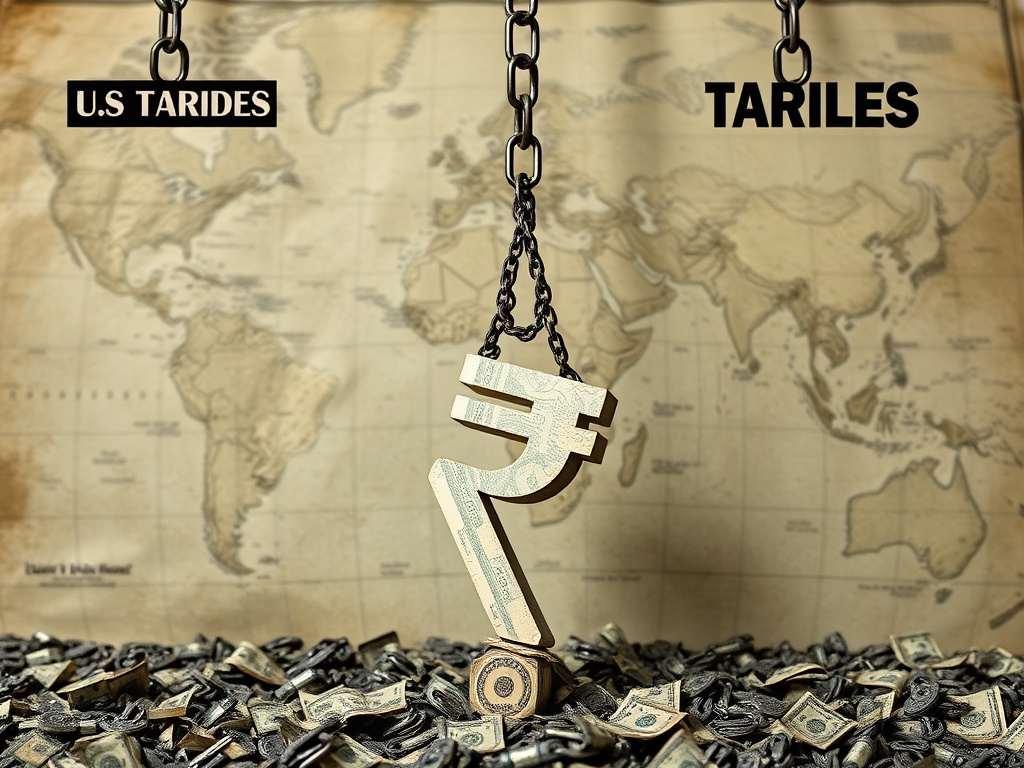
Indian Rupee Crisis: Unveiling the Devastating Impact of US Tariffs

In the dynamic world of global finance, where digital assets like cryptocurrencies often grab headlines for their volatility, it is crucial to remember the foundational role of traditional fiat currencies. Lately, the Indian Rupee has found itself in a precarious position, teetering on the edge of a record low against the mighty US Dollar. This isn’t just a number on a screen; it’s a stark indicator of underlying economic pressures, particularly the bite of steep US tariffs, which can have ripple effects even on the broader financial landscape, influencing investor sentiment across all asset classes, including crypto. Understanding these macroeconomic shifts is vital for any investor navigating today’s interconnected markets.

Indian Rupee Crisis: A Deep Dive into Record Lows

The Indian Rupee’s recent performance has been a cause for significant concern among policymakers, businesses, and citizens alike. The currency has been steadily losing ground, inching closer to an all-time low against the US Dollar. This trend is not isolated but a symptom of various domestic and international pressures converging. A weaker rupee means that more rupees are required to buy one US Dollar, making imports more expensive and potentially fueling inflation. For a developing economy like India, heavily reliant on imported goods such as crude oil, this can have a cascading effect across all sectors.

Historically, the Indian Rupee has faced periods of volatility, often influenced by global economic slowdowns, capital outflows, and geopolitical tensions. However, the current situation is compounded by specific trade-related issues that directly impact India’s economic stability. The proximity to a record low is a clear warning sign, signaling a need for careful economic management and strategic policy interventions to stabilize the currency and protect the economy from further shocks.

Unpacking the Force: How US Tariffs Bite India’s Economy

At the heart of the Indian Rupee’s woes are the steep US Tariffs imposed on various Indian products. These tariffs, essentially taxes on imported goods, are designed to make foreign products more expensive in the US market, thereby encouraging domestic production. However, for exporting nations like India, they translate into reduced competitiveness and lower demand for their goods. The impact is multi-faceted:

  • Reduced Export Earnings: Indian exporters find it harder to sell their products in the US, leading to a decline in export revenues. This directly impacts India’s trade balance and foreign exchange reserves.
  • Supply Chain Disruptions: Tariffs can force companies to rethink their global supply chains, potentially diverting orders away from Indian manufacturers.
  • Investment Uncertainty: Businesses planning to invest in export-oriented sectors in India might reconsider due to the unpredictable nature of trade policies and the risk of future tariffs.
  • Sector-Specific Pain: Industries such as steel, aluminum, and certain agricultural products, which have been targets of US tariffs, face significant challenges, including reduced production and job losses.

The cumulative effect of these tariffs creates a challenging environment for India’s economy, putting downward pressure on the rupee as foreign currency inflows diminish and the trade deficit potentially widens. It’s a classic example of how protectionist measures in one major economy can create significant economic headwinds for others.

The Ripple Effect: Understanding Rupee Depreciation

When the Rupee Depreciation occurs, its effects are felt far and wide, impacting everything from daily household budgets to the balance sheets of multinational corporations. It’s not just an abstract economic concept; it has tangible consequences for every Indian citizen and business.

What Does a Weaker Rupee Mean for Your Wallet?

A depreciating rupee has several direct implications for consumers:

  • Higher Import Costs: Goods imported into India, such as electronics, luxury items, and most critically, crude oil, become more expensive. Since India imports a significant portion of its energy needs, a weaker rupee directly translates to higher fuel prices, which in turn drives up transportation costs for all goods.
  • Inflationary Pressure: Increased import costs often lead to higher prices for a wide range of products, contributing to inflation. This erodes the purchasing power of consumers, making daily necessities more expensive.
  • Impact on Foreign Travel and Education: For those planning to travel abroad or send their children for overseas education, a weaker rupee means spending more Indian currency to acquire the necessary foreign exchange.
  • Foreign Debt Burden: Indian companies or the government that have borrowed in foreign currencies find their repayment obligations increasing in rupee terms, adding stress to their financial health.

While exporters might see a marginal benefit as their products become cheaper for foreign buyers, the overall negative impact of uncontrolled rupee depreciation often outweighs these advantages, especially in an economy heavily reliant on imports.

The current challenges faced by the Indian Rupee are not entirely isolated but are part of a larger narrative of shifting Global Trade dynamics. The world has witnessed an increase in protectionist tendencies, with major economies engaging in trade disputes and imposing tariffs on each other’s goods. This environment of uncertainty and trade friction creates a challenging backdrop for all trading nations, including India.

Is India Caught in a Wider Global Trade War?

India, as a significant player in global commerce, finds itself navigating complex trade relationships. While not directly involved in a full-blown trade war like some other nations, it is certainly impacted by the fallout. The US tariffs, for instance, are part of a broader strategy that has affected many countries, creating a domino effect where trade flows are redirected and global supply chains are re-evaluated.

India’s response to these global trade dynamics involves a mix of diplomatic efforts and strategic policy adjustments. The government might explore new trade agreements with other nations, diversify its export markets, and focus on boosting domestic manufacturing to reduce reliance on imports. However, these are long-term strategies, and the immediate challenge remains managing the currency’s stability amidst external pressures.

Beyond the Headlines: The Wider Economic Impact on India

The immediate concerns about the Indian Rupee and US Tariffs quickly translate into a broader Economic Impact on India’s growth trajectory and future prospects. This impact goes beyond just trade figures and currency valuations, touching various facets of the economy.

What Are the Long-Term Economic Impacts for India?

The long-term economic consequences of persistent currency weakness and trade tensions can be significant:

Economic AreaImpact of Rupee Depreciation & Tariffs
Foreign Direct Investment (FDI)Uncertainty can deter foreign investors, slowing down capital inflows essential for growth.
InflationSustained import cost increases can lead to higher consumer prices, eroding purchasing power.
Government FinancesHigher import bills for essential goods (like oil) can strain government budgets, affecting public spending.
Job MarketExport-oriented industries facing reduced demand might scale back operations, leading to job losses or slower job creation.
Consumer SentimentRising prices and economic uncertainty can dampen consumer confidence, leading to reduced spending.

Addressing these challenges requires a multi-pronged approach, including fiscal prudence, monetary policy adjustments, and proactive trade diplomacy. While the immediate outlook might seem challenging, India’s inherent economic strengths and potential for growth offer resilience. The focus will be on converting these challenges into opportunities for domestic innovation and self-reliance.

Actionable Insights and The Road Ahead

For businesses and individuals alike, understanding the implications of a weakening Indian Rupee and the ongoing trade dynamics is crucial. While governments work on macroeconomic solutions, there are practical steps that can be considered:

  • For Businesses: Explore hedging strategies to mitigate currency risks, diversify export markets beyond traditionally tariff-prone regions, and focus on value-added exports to improve competitiveness. Investing in domestic supply chains can also reduce reliance on potentially expensive imports.
  • For Individuals: Review personal budgets, especially for discretionary spending on imported goods. Consider diversifying investment portfolios, potentially including assets that offer a hedge against inflation or currency depreciation, while always exercising caution and consulting financial advisors.
  • For Policymakers: The Reserve Bank of India (RBI) plays a critical role in managing currency stability through monetary policy tools, such as interest rate adjustments and foreign exchange market interventions. The government must also focus on fiscal consolidation, boosting domestic manufacturing, and engaging in constructive trade negotiations to alleviate external pressures.

The current scenario serves as a powerful reminder of the interconnectedness of the global economy. A tariff imposed by one nation can create a ripple effect that destabilizes currencies and impacts economies thousands of miles away. India’s ability to navigate this complex landscape will depend on robust policy responses, resilient domestic markets, and strategic engagement on the global stage.

Conclusion: A Critical Juncture for India’s Economy

The Indian Rupee teetering near a record low, largely influenced by the biting impact of US Tariffs, signals a critical juncture for India’s economy. This situation highlights the profound consequences of protectionist trade policies on global financial stability and the domestic well-being of nations. The ensuing Rupee Depreciation reverberates through every aspect of life, from increased inflation to a higher cost of living and doing business. Navigating the complexities of current Global Trade dynamics requires strategic foresight and adaptability from both the government and the private sector. The broader Economic Impact underscores the urgent need for comprehensive policies that bolster domestic resilience, diversify trade relationships, and stabilize the currency. While challenges are significant, they also present an opportunity for India to strengthen its economic foundations and foster greater self-reliance in a rapidly changing global environment. The path ahead demands vigilance, innovation, and a collaborative approach to ensure sustained growth and stability.

To learn more about the latest Forex market trends, explore our article on key developments shaping the Indian Rupee and global currency movements.

This post Indian Rupee Crisis: Unveiling the Devastating Impact of US Tariffs first appeared on BitcoinWorld and is written by Editorial Team

Market Opportunity
NEAR Logo
NEAR Price(NEAR)
$1.532
$1.532$1.532
+2.20%
USD
NEAR (NEAR) Live Price Chart
Disclaimer: The articles reposted on this site are sourced from public platforms and are provided for informational purposes only. They do not necessarily reflect the views of MEXC. All rights remain with the original authors. If you believe any content infringes on third-party rights, please contact [email protected] for removal. MEXC makes no guarantees regarding the accuracy, completeness, or timeliness of the content and is not responsible for any actions taken based on the information provided. The content does not constitute financial, legal, or other professional advice, nor should it be considered a recommendation or endorsement by MEXC.

You May Also Like

Why 100 Percent Test Coverage is Not Possible — Lessons from Testing Banking and Healthcare Systems

Why 100 Percent Test Coverage is Not Possible — Lessons from Testing Banking and Healthcare Systems

Quality is not about testing everything; quality is about testing what is most important.
Share
Hackernoon2025/12/26 16:05
US eyes crypto mining at disputed nuclear plant in Russia-Ukraine conflict: report

US eyes crypto mining at disputed nuclear plant in Russia-Ukraine conflict: report

The plant is located in Ukraine and has been under Russian control since 2022, with its future management a key issue in peace talks.
Share
Coinstats2025/12/26 18:58
Google's AP2 protocol has been released. Does encrypted AI still have a chance?

Google's AP2 protocol has been released. Does encrypted AI still have a chance?

Following the MCP and A2A protocols, the AI Agent market has seen another blockbuster arrival: the Agent Payments Protocol (AP2), developed by Google. This will clearly further enhance AI Agents' autonomous multi-tasking capabilities, but the unfortunate reality is that it has little to do with web3AI. Let's take a closer look: What problem does AP2 solve? Simply put, the MCP protocol is like a universal hook, enabling AI agents to connect to various external tools and data sources; A2A is a team collaboration communication protocol that allows multiple AI agents to cooperate with each other to complete complex tasks; AP2 completes the last piece of the puzzle - payment capability. In other words, MCP opens up connectivity, A2A promotes collaboration efficiency, and AP2 achieves value exchange. The arrival of AP2 truly injects "soul" into the autonomous collaboration and task execution of Multi-Agents. Imagine AI Agents connecting Qunar, Meituan, and Didi to complete the booking of flights, hotels, and car rentals, but then getting stuck at the point of "self-payment." What's the point of all that multitasking? So, remember this: AP2 is an extension of MCP+A2A, solving the last mile problem of AI Agent automated execution. What are the technical highlights of AP2? The core innovation of AP2 is the Mandates mechanism, which is divided into real-time authorization mode and delegated authorization mode. Real-time authorization is easy to understand. The AI Agent finds the product and shows it to you. The operation can only be performed after the user signs. Delegated authorization requires the user to set rules in advance, such as only buying the iPhone 17 when the price drops to 5,000. The AI Agent monitors the trigger conditions and executes automatically. The implementation logic is cryptographically signed using Verifiable Credentials (VCs). Users can set complex commission conditions, including price ranges, time limits, and payment method priorities, forming a tamper-proof digital contract. Once signed, the AI Agent executes according to the conditions, with VCs ensuring auditability and security at every step. Of particular note is the "A2A x402" extension, a technical component developed by Google specifically for crypto payments, developed in collaboration with Coinbase and the Ethereum Foundation. This extension enables AI Agents to seamlessly process stablecoins, ETH, and other blockchain assets, supporting native payment scenarios within the Web3 ecosystem. What kind of imagination space can AP2 bring? After analyzing the technical principles, do you think that's it? Yes, in fact, the AP2 is boring when it is disassembled alone. Its real charm lies in connecting and opening up the "MCP+A2A+AP2" technology stack, completely opening up the complete link of AI Agent's autonomous analysis+execution+payment. From now on, AI Agents can open up many application scenarios. For example, AI Agents for stock investment and financial management can help us monitor the market 24/7 and conduct independent transactions. Enterprise procurement AI Agents can automatically replenish and renew without human intervention. AP2's complementary payment capabilities will further expand the penetration of the Agent-to-Agent economy into more scenarios. Google obviously understands that after the technical framework is established, the ecological implementation must be relied upon, so it has brought in more than 60 partners to develop it, almost covering the entire payment and business ecosystem. Interestingly, it also involves major Crypto players such as Ethereum, Coinbase, MetaMask, and Sui. Combined with the current trend of currency and stock integration, the imagination space has been doubled. Is web3 AI really dead? Not entirely. Google's AP2 looks complete, but it only achieves technical compatibility with Crypto payments. It can only be regarded as an extension of the traditional authorization framework and belongs to the category of automated execution. There is a "paradigm" difference between it and the autonomous asset management pursued by pure Crypto native solutions. The Crypto-native solutions under exploration are taking the "decentralized custody + on-chain verification" route, including AI Agent autonomous asset management, AI Agent autonomous transactions (DeFAI), AI Agent digital identity and on-chain reputation system (ERC-8004...), AI Agent on-chain governance DAO framework, AI Agent NPC and digital avatars, and many other interesting and fun directions. Ultimately, once users get used to AI Agent payments in traditional fields, their acceptance of AI Agents autonomously owning digital assets will also increase. And for those scenarios that AP2 cannot reach, such as anonymous transactions, censorship-resistant payments, and decentralized asset management, there will always be a time for crypto-native solutions to show their strength? The two are more likely to be complementary rather than competitive, but to be honest, the key technological advancements behind AI Agents currently all come from web2AI, and web3AI still needs to keep up the good work!
Share
PANews2025/09/18 07:00