Japan’s Financial Services Agency (FSA) is preparing a sweeping change to how cryptocurrencies tax is regulated, a move that could reshape the country’s crypto and Web3 ecosystem. In a proposal released on June 24, the agency outlined plans to reclassify cryptocurrencies under the Financial Instruments and Exchange Act (FIEA), moving them away from their current treatment under the Payment Services Act. 🚨UPDATE: JAPAN’S FSA PROPOSES PLACING CRYPTO UNDER FINANCIAL INSTRUMENTS ACTS, PAVING THE WAY FOR $BTC ETFS — BSCN (@BSCNews) June 24, 2025 The change would formally categorize crypto assets as financial products. If adopted, it would reduce crypto taxation from a progressive rate of up to 55% to a flat 20%, the same rate applied to stocks. The FSA’s proposal is set to be discussed at the Financial Services Council general meeting on June 25. Alongside the tax cut, the shift could also open the door for Bitcoin exchange-traded funds (ETFs) in Japan by removing the current legal barriers. Japan Recognizes Crypto as ‘Alternative Investment’ in Economic Revamp According to local outlet CoinPost, this initiative is part of Japan’s wider strategy to position itself as an “investment-based nation.” The government sees Web3 and crypto assets as tools for value creation and regional development, aiming to foster an environment that supports full-scale digital asset adoption. The new policy direction also aligns with Japan’s updated “Grand Design and Action Plan for New Capitalism,” which was approved by the Cabinet earlier this month. The document explicitly supports the growth of Web3 businesses and names them as part of the country’s broader goal of economic revitalization. The government’s stance is that digital assets should be considered part of a diversified investment portfolio. Officials have described cryptocurrencies as “alternative investments,” pointing to their potential as financial instruments with risk-return profiles different from traditional securities. “The healthy development of Web3 businesses such as cryptocurrencies will help resolve social issues and contribute to improving productivity,” the government noted in the action plan. Japan is also looking to tap into the potential of NFTs and Web3 infrastructure to unlock the cultural and economic value hidden in its regions. The FSA report suggests that borderless technologies could help local industries find recognition on a global scale. Analysts believe the policy shift may also be influenced by changing dynamics abroad. The report points to the supportive stance on crypto taken by the Trump administration in the United States and pro-crypto policies in U.S . states like Texas as part of the backdrop. If the proposed changes go through, Japan could mark a historic turning point in its Web3 policy, transitioning from a regulatory-heavy framework to one focused on crypto utilization and market growth. Japan Plans Securities-Style Crypto Rules, Spot Bitcoin ETFs Possible Japan’s recent crypto tax cut to 20% is just one part of a larger transformation underway in the country’s digital asset landscape. In early 2025, Japan’s FSA resumed efforts to formally reclassify crypto assets as financial products under the Financial Instruments and Exchange Act, a move that could pave the way for spot Bitcoin ETFs and stricter trading rules similar to those for traditional securities. 🇯🇵 Japan's FSA plans crypto tax cuts and Bitcoin spot ETF approval by 2026. #Japan #Crypto https://t.co/kzNYI1CtwH — Cryptonews.com (@cryptonews) February 10, 2025 This regulatory overhaul follows years of discussions with experts, industry leaders, and lawmakers. In February, the FSA launched a closed-door study group to review how digital assets should be governed , with a reform outline expected by mid-2025 and a potential bill submission by 2026. If passed, this bill would bring crypto under existing securities laws, enforcing rules around insider trading and market conduct, while also allowing regulated ETFs to be launched. The move mirrors the U.S. SEC’s approval of Bitcoin ETFs in January 2024 , which opened the door for institutional inflows through firms like BlackRock and Fidelity. Japan is also taking cues from regional players like Hong Kong and Singapore , both of which are evolving their regulatory frameworks to support digital asset growth. On the taxation front, momentum is building. After the 2023 exemption of corporate taxes on unrealized gains, Japan’s ruling party previously proposed slashing the top crypto income tax rate from 55% to 20% , aiming to attract both individual investors and institutional players. Industry leaders like Sota Watanabe have publicly supported these reforms, stating that Japan is preparing to regulate crypto as a distinct asset class, not just a financial anomaly. Today is a big day of Japan. The ruling party proposed to regulate crypto with a new framework under Financial Instruments and Exchange Act. If approved this year, likely crypto ETFs and tax deduction from up to 55% to 20% come. I am 100% sure more Japanese people come onchain. — Sota Watanabe 💿 (@WatanabeSota) March 6, 2025 Taken together, these steps signal Japan’s intent to legitimize and expand its crypto economy, while aligning with global standards.Japan’s Financial Services Agency (FSA) is preparing a sweeping change to how cryptocurrencies tax is regulated, a move that could reshape the country’s crypto and Web3 ecosystem. In a proposal released on June 24, the agency outlined plans to reclassify cryptocurrencies under the Financial Instruments and Exchange Act (FIEA), moving them away from their current treatment under the Payment Services Act. 🚨UPDATE: JAPAN’S FSA PROPOSES PLACING CRYPTO UNDER FINANCIAL INSTRUMENTS ACTS, PAVING THE WAY FOR $BTC ETFS — BSCN (@BSCNews) June 24, 2025 The change would formally categorize crypto assets as financial products. If adopted, it would reduce crypto taxation from a progressive rate of up to 55% to a flat 20%, the same rate applied to stocks. The FSA’s proposal is set to be discussed at the Financial Services Council general meeting on June 25. Alongside the tax cut, the shift could also open the door for Bitcoin exchange-traded funds (ETFs) in Japan by removing the current legal barriers. Japan Recognizes Crypto as ‘Alternative Investment’ in Economic Revamp According to local outlet CoinPost, this initiative is part of Japan’s wider strategy to position itself as an “investment-based nation.” The government sees Web3 and crypto assets as tools for value creation and regional development, aiming to foster an environment that supports full-scale digital asset adoption. The new policy direction also aligns with Japan’s updated “Grand Design and Action Plan for New Capitalism,” which was approved by the Cabinet earlier this month. The document explicitly supports the growth of Web3 businesses and names them as part of the country’s broader goal of economic revitalization. The government’s stance is that digital assets should be considered part of a diversified investment portfolio. Officials have described cryptocurrencies as “alternative investments,” pointing to their potential as financial instruments with risk-return profiles different from traditional securities. “The healthy development of Web3 businesses such as cryptocurrencies will help resolve social issues and contribute to improving productivity,” the government noted in the action plan. Japan is also looking to tap into the potential of NFTs and Web3 infrastructure to unlock the cultural and economic value hidden in its regions. The FSA report suggests that borderless technologies could help local industries find recognition on a global scale. Analysts believe the policy shift may also be influenced by changing dynamics abroad. The report points to the supportive stance on crypto taken by the Trump administration in the United States and pro-crypto policies in U.S . states like Texas as part of the backdrop. If the proposed changes go through, Japan could mark a historic turning point in its Web3 policy, transitioning from a regulatory-heavy framework to one focused on crypto utilization and market growth. Japan Plans Securities-Style Crypto Rules, Spot Bitcoin ETFs Possible Japan’s recent crypto tax cut to 20% is just one part of a larger transformation underway in the country’s digital asset landscape. In early 2025, Japan’s FSA resumed efforts to formally reclassify crypto assets as financial products under the Financial Instruments and Exchange Act, a move that could pave the way for spot Bitcoin ETFs and stricter trading rules similar to those for traditional securities. 🇯🇵 Japan's FSA plans crypto tax cuts and Bitcoin spot ETF approval by 2026. #Japan #Crypto https://t.co/kzNYI1CtwH — Cryptonews.com (@cryptonews) February 10, 2025 This regulatory overhaul follows years of discussions with experts, industry leaders, and lawmakers. In February, the FSA launched a closed-door study group to review how digital assets should be governed , with a reform outline expected by mid-2025 and a potential bill submission by 2026. If passed, this bill would bring crypto under existing securities laws, enforcing rules around insider trading and market conduct, while also allowing regulated ETFs to be launched. The move mirrors the U.S. SEC’s approval of Bitcoin ETFs in January 2024 , which opened the door for institutional inflows through firms like BlackRock and Fidelity. Japan is also taking cues from regional players like Hong Kong and Singapore , both of which are evolving their regulatory frameworks to support digital asset growth. On the taxation front, momentum is building. After the 2023 exemption of corporate taxes on unrealized gains, Japan’s ruling party previously proposed slashing the top crypto income tax rate from 55% to 20% , aiming to attract both individual investors and institutional players. Industry leaders like Sota Watanabe have publicly supported these reforms, stating that Japan is preparing to regulate crypto as a distinct asset class, not just a financial anomaly. Today is a big day of Japan. The ruling party proposed to regulate crypto with a new framework under Financial Instruments and Exchange Act. If approved this year, likely crypto ETFs and tax deduction from up to 55% to 20% come. I am 100% sure more Japanese people come onchain. — Sota Watanabe 💿 (@WatanabeSota) March 6, 2025 Taken together, these steps signal Japan’s intent to legitimize and expand its crypto economy, while aligning with global standards.

Japan Moves to Greenlight Bitcoin ETFs—Crypto Gains Taxed at Flat 20% Rate

2025/06/24 21:10
4 min read
For feedback or concerns regarding this content, please contact us at [email protected]

Japan’s Financial Services Agency (FSA) is preparing a sweeping change to how cryptocurrencies tax is regulated, a move that could reshape the country’s crypto and Web3 ecosystem.

In a proposal released on June 24, the agency outlined plans to reclassify cryptocurrencies under the Financial Instruments and Exchange Act (FIEA), moving them away from their current treatment under the Payment Services Act.

The change would formally categorize crypto assets as financial products. If adopted, it would reduce crypto taxation from a progressive rate of up to 55% to a flat 20%, the same rate applied to stocks.

The FSA’s proposal is set to be discussed at the Financial Services Council general meeting on June 25. Alongside the tax cut, the shift could also open the door for Bitcoin exchange-traded funds (ETFs) in Japan by removing the current legal barriers.

Japan Recognizes Crypto as ‘Alternative Investment’ in Economic Revamp

According to local outlet CoinPost, this initiative is part of Japan’s wider strategy to position itself as an “investment-based nation.”

The government sees Web3 and crypto assets as tools for value creation and regional development, aiming to foster an environment that supports full-scale digital asset adoption.

The new policy direction also aligns with Japan’s updated “Grand Design and Action Plan for New Capitalism,” which was approved by the Cabinet earlier this month.

The document explicitly supports the growth of Web3 businesses and names them as part of the country’s broader goal of economic revitalization.

The government’s stance is that digital assets should be considered part of a diversified investment portfolio. Officials have described cryptocurrencies as “alternative investments,” pointing to their potential as financial instruments with risk-return profiles different from traditional securities.

“The healthy development of Web3 businesses such as cryptocurrencies will help resolve social issues and contribute to improving productivity,” the government noted in the action plan.

Japan is also looking to tap into the potential of NFTs and Web3 infrastructure to unlock the cultural and economic value hidden in its regions. The FSA report suggests that borderless technologies could help local industries find recognition on a global scale.

Analysts believe the policy shift may also be influenced by changing dynamics abroad. The report points to the supportive stance on crypto taken by the Trump administration in the United States and pro-crypto policies in U.S. states like Texas as part of the backdrop.

If the proposed changes go through, Japan could mark a historic turning point in its Web3 policy, transitioning from a regulatory-heavy framework to one focused on crypto utilization and market growth.

Japan Plans Securities-Style Crypto Rules, Spot Bitcoin ETFs Possible

Japan’s recent crypto tax cut to 20% is just one part of a larger transformation underway in the country’s digital asset landscape.

In early 2025, Japan’s FSA resumed efforts to formally reclassify crypto assets as financial products under the Financial Instruments and Exchange Act, a move that could pave the way for spot Bitcoin ETFs and stricter trading rules similar to those for traditional securities.

This regulatory overhaul follows years of discussions with experts, industry leaders, and lawmakers. In February, the FSA launched a closed-door study group to review how digital assets should be governed, with a reform outline expected by mid-2025 and a potential bill submission by 2026.

If passed, this bill would bring crypto under existing securities laws, enforcing rules around insider trading and market conduct, while also allowing regulated ETFs to be launched.

The move mirrors the U.S. SEC’s approval of Bitcoin ETFs in January 2024, which opened the door for institutional inflows through firms like BlackRock and Fidelity.

Japan is also taking cues from regional players like Hong Kong and Singapore, both of which are evolving their regulatory frameworks to support digital asset growth.

On the taxation front, momentum is building. After the 2023 exemption of corporate taxes on unrealized gains, Japan’s ruling party previously proposed slashing the top crypto income tax rate from 55% to 20%, aiming to attract both individual investors and institutional players.

Industry leaders like Sota Watanabe have publicly supported these reforms, stating that Japan is preparing to regulate crypto as a distinct asset class, not just a financial anomaly.

Taken together, these steps signal Japan’s intent to legitimize and expand its crypto economy, while aligning with global standards.

Market Opportunity
Threshold Logo
Threshold Price(T)
$0.006266
$0.006266$0.006266
-2.29%
USD
Threshold (T) Live Price Chart
Disclaimer: The articles reposted on this site are sourced from public platforms and are provided for informational purposes only. They do not necessarily reflect the views of MEXC. All rights remain with the original authors. If you believe any content infringes on third-party rights, please contact [email protected] for removal. MEXC makes no guarantees regarding the accuracy, completeness, or timeliness of the content and is not responsible for any actions taken based on the information provided. The content does not constitute financial, legal, or other professional advice, nor should it be considered a recommendation or endorsement by MEXC.

You May Also Like

Solana co-founder urges need for Bitcoin to adopt quantum resistance for future security

Solana co-founder urges need for Bitcoin to adopt quantum resistance for future security

The post Solana co-founder urges need for Bitcoin to adopt quantum resistance for future security appeared on BitcoinEthereumNews.com. Solana co-founder Anatoly Yakovenko is urging the Bitcoin community to begin transitioning to quantum-resistant security measures, warning that advances in quantum computing may arrive faster than expected. Speaking during a Sept. 18 session at the All-In Summit, said the accelerating pace of technological breakthroughs means Bitcoin should not wait until the threat is imminent. According to him: “We should migrate Bitcoin to a quantum-resistant signature scheme. This is my bet, and it’s because so many technologies are converging right now, and this asymptotic rate of AI and how fast it’s accelerating—going from a research paper to an implementation—is astounding. So I would try to encourage folks to speed things up.” Yakovenko’s position is unsurprising, as market concerns over Bitcoin’s vulnerability to quantum-powered attacks have gained momentum following companies like Google reporting advances in the space. Considering this, he argued that these major tech firms’ adoption of quantum-resistant cryptography should signal the right time for Bitcoin to migrate its security architecture. The Solana co-founder furthered: “My key for this is Google and Apple adopting a quantum-resistant cryptographic stack. This is the time to go migrate, because now the consumer side of it is effectively solved and you don’t have to kind of wait. So you watch where Google’s going.” However, despite Yakovenko’s warnings, industry experts remain split on the technological advancements timeline as some argue that breakthroughs could occur within this decade, while others contend that the risks remain distant. Regardless of when its implementation occurs, Yakovenko stressed that the technology would be both a challenge and an opportunity. He said: “For the general public, quantum computing is such a massive unlock in terms of how much we can process that it’s going to be as big of a wealth creator, if we pull it off, as AI.” Bitcoin remains resilient…
Share
BitcoinEthereumNews2025/09/19 23:06
Why The Green Bay Packers Must Take The Cleveland Browns Seriously — As Hard As That Might Be
Why The Green Bay Packers Must Take The Cleveland Browns Seriously — As Hard As That Might Be

The post Why The Green Bay Packers Must Take The Cleveland Browns Seriously — As Hard As That Might Be appeared on BitcoinEthereumNews.com. Jordan Love and the Green Bay Packers are off to a 2-0 start. Getty Images The Green Bay Packers are, once again, one of the NFL’s better teams. The Cleveland Browns are, once again, one of the league’s doormats. It’s why unbeaten Green Bay (2-0) is a 8-point favorite at winless Cleveland (0-2) Sunday according to betmgm.com. The money line is also Green Bay -500. Most expect this to be a Packers’ rout, and it very well could be. But Green Bay knows taking anyone in this league for granted can prove costly. “I think if you look at their roster, the paper, who they have on that team, what they can do, they got a lot of talent and things can turn around quickly for them,” Packers safety Xavier McKinney said. “We just got to kind of keep that in mind and know we not just walking into something and they just going to lay down. That’s not what they going to do.” The Browns certainly haven’t laid down on defense. Far from. Cleveland is allowing an NFL-best 191.5 yards per game. The Browns gave up 141 yards to Cincinnati in Week 1, including just seven in the second half, but still lost, 17-16. Cleveland has given up an NFL-best 45.5 rushing yards per game and just 2.1 rushing yards per attempt. “The biggest thing is our defensive line is much, much improved over last year and I think we’ve got back to our personality,” defensive coordinator Jim Schwartz said recently. “When we play our best, our D-line leads us there as our engine.” The Browns rank third in the league in passing defense, allowing just 146.0 yards per game. Cleveland has also gone 30 straight games without allowing a 300-yard passer, the longest active streak in the NFL.…
Share
BitcoinEthereumNews2025/09/18 00:41
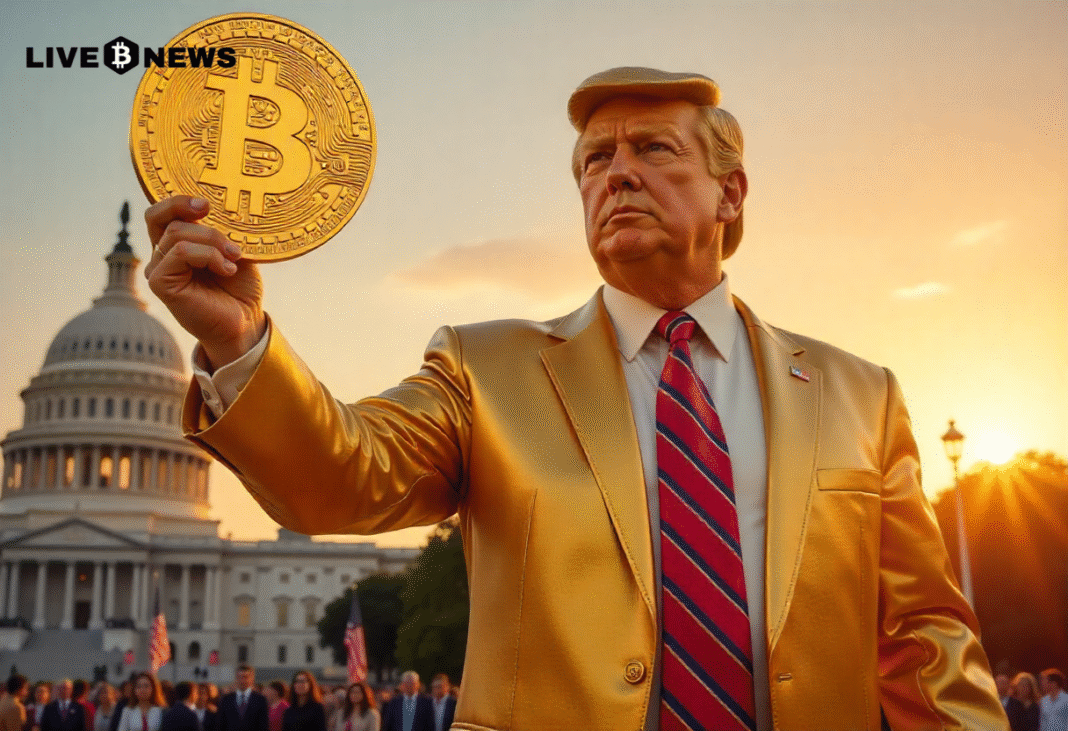
Golden Trump Statue Holding Bitcoin Appears Near U.S. Capitol

Golden Trump Statue Holding Bitcoin Appears Near U.S. Capitol

Golden Trump statue holding Bitcoin appears near U.S. Capitol, symbolizing crypto’s challenge to traditional finance and sparking political and cultural debate. A striking golden statue of U.S. President Donald Trump appeared outside the U.S. Capitol this week. The 12-foot figure is holding a large Bitcoin symbol in one hand. This was spotted on September 17 […] The post Golden Trump Statue Holding Bitcoin Appears Near U.S. Capitol appeared first on Live Bitcoin News.
Share
LiveBitcoinNews2025/09/19 07:00