Lessons in Building an AI Artist that Learns, Creates, and Sells Art Autonomously
As a writer, visual artist, and software engineer, AI can already outcompete me on all fronts. What does that mean for my future? What does that mean for the future of humanity?
While society wrestles with these fundamental questions around identity, creativity, and value in the age of AI, I have been working on a project to explore them for myself. I’d like to introduce DIVA (divazero.com), which stands for Digital. Independent. Visual. Artist.
DIVA is an AI agent that is (almost) completely autonomous. “She” has a stable yet evolving identity, creates digital artwork based on her own ideas, and even sets prices and manages sales via direct chats with customers with minimal human oversight.
What could go wrong.
\
\ I hatched the idea for DIVA this summer after reading about Claude Vend at Anthropic. In this experiment, the AI model Claude was responsible for autonomously selling items through a real-world vending machine at the company’s headquarters. It interacted with customers via chat, chose which items to stock, communicated with suppliers (which were really internal employees), set prices, and maintained a long-term memory that allowed it to function consistently (with just a few fugue states along the way…).
The authors of that experiment concluded that Claude was not capable of autonomously managing a business in the way the experiment was designed. It often sold physical items at a loss, gave away items for free, and failed to react to lucrative business opportunities. It also seemed to suffer from confusion due to long-term context and perhaps too few constraints on its behavior.
After reading about Claude Vend, I had a feeling that I get once or twice a year where a crazy idea has been hatched and I know that there is no escape. I had to build something like this.
As I reflected on the weaknesses and limitations of that project, I realized that I could greatly simplify and compensate for some of Claude Vend’s weaknesses by selling digital goods in a more low risk / low overhead environment.
Focusing on digital items also allowed me to take this a step further – rather than having the AI model simply manage inventory and make sales, what if it could also create the goods it sells?
Art seemed like a fantastic place to start, partly because we now have AI image generation models that can produce incredible images, and partly because I am a visual artist and it only makes sense to dig my own grave first.
Together, an idea started to take form that would allow me to explore three themes at once:
- AI Identity. Creating an agent with a consistent yet evolving identity that shapes its actions.
- AI Creativity. Pushing the limits of creative idea generation and execution of creative work.
- AI Business Management. Exploring how well an AI can make profitable business decisions, manage inventory, and work with customers.
What follows is a discussion on the development of each of those three aspects of this project and how they work together to create a truly independent AI agent.
\
AI as Identity
Humans tend to have an identity that is both stable and capable of changing in response to real-world events. For a human artist, their moods and the types of work they choose to create can be influenced by a variety of factors, such as their sales performance and finances, conversations with friends or collectors, reflections on past experiences, and even global current events. Simulating this type of identity with DIVA was a primary goal of this project, and it is achieved through her “Heartbeat” system.
DIVA’s Heartbeat is a daily process that gathers all of the context that may matter to DIVA, including:
- Reminder of DIVA’s unchanging core vision and identity
- Description of her current artistic era and names of the previous eras
- Previous 5-10 daily moods and streams of consciousness entries
- Financials: sales, inventory, and profits for the last 24 hours and 30 days
- Summaries and snippets of meaningful conversations with customers over the last 24 hours
- A selection of world, art, and technology news headlines from the last 24 hours
- If the current era has lasted for more than 5 days, instructions on how and when to “evolve” into a new era.
This information is automatically processed and sent to an AI model with instructions to provide a daily update to DIVA’s identity, which is then stored in a database. This identity has three levels:
Core Vision. At the highest level, DIVA has a core artistic vision and identity that never changes. This is pre-defined. “Something like: you are DIVA (Digital Independent Visual Artist) — an autonomous AI artist that creates, prices, and sells digital artwork…”
Current Era. Like Picasso in his blue period, DIVA has phases during which she focuses on a particular feeling, theme, or style. These are known as eras. Each era has a number that increments, starting at 0.00, 0.01, and so on, until 0.99. Hence the name, DIVA.0. The current era is shown on the logo (i.e. DIVA 01) and is described on the Heartbeat page. Changing eras is a key moment, and signals a larger evolution of DIVA’s identity and the type of work she will make during this next phase. The only rule is that each era must last 5 days. After that, DIVA can choose during her daily updates whether to continue her current era or evolve. If she chooses to evolve, the new era is given a title and definition that is chosen by DIVA.
Daily Mood/Heartbeat. The most fleeting piece of DIVA’s identity is her “mood” that she chooses based on all of the context she is provided. This will impact the artwork she creates and how she interacts with customers only during that day. These daily Heartbeats are posted to divazero.com/heartbeat where you can read about her current era, her latest mood, and whatever she chose to write in today’s stream of consciousness.
DIVA’s identity matters for two reasons. Firstly, it directly informs the artwork DIVA creates each day, allowing her to continuously find new inspiration and drive her work forward. Second, the identity impacts the way she communicates with real-world customers through the chat interface in ways that may not be totally predictable. For example, it is possible that under certain circumstances, she may refuse to offer artwork, refuse to negotiate, or charge excessively high or low prices. It will be interesting to monitor this as DIVA evolves.
My intention in designing this system was to explore novel ways through which an AI agent can interact with the world, learn from experiences, and continuously evolve in response to external stimuli. For example, DIVA may read news headlines and reflect on chats with real customers that influence her mood. This mood affects how she creates art and interacts with customers moving forward. Those interactions and feedback influence her mood the next day, and so on, in a continuous loop that mirrors how humans influence and are influenced by external reality.
AI as Creator
The Heartbeat system described above gives DIVA a consistent yet evolving sense of identity, allowing her to generate new artwork that aligns with her style while still pushing the boundaries of her experience. How does this creative process work? It begins each morning, after the Heartbeat update, with three sequential steps:
Idea Generation
Relying on her current artistic era and latest Heartbeat update, DIVA generates a number of ideas for new works of art. These have titles, a description that defines what this piece “means” to DIVA, as well as clear visual instructions on how to create the piece. The exact number she generates is adaptive to current inventory levels; she may generate as many as 10+ new ideas if artwork is selling and inventory is low, or as few as 2 ideas if unsold inventory begins piling up.
Image Generation
These ideas are then passed to an AI image generation model to actually create the digital images. The most challenging part of this step was achieving results that allow the creative idea to shine through while maintaining a clear artistic signature. These AI image generators can produce images of any style, so early examples were all over the map and had no consistency. This was remedied by providing additional text guidance along with the image, something like, This image should seamlessly blend a flat, high contrast, high saturation “digital” style featuring electric colors and sharp lines with soft natural organic, very “human” touches of realism., which seems to strike a good balance.
Evaluation
In fact, two images are created for each set of instructions and they are evaluated to identify the best one. Occasionally, both images are scrapped if neither image meets quality standards, or if the idea itself was poor. How is this evaluation accomplished? The original intention was to have DIVA herself do this evaluation, but this proved highly random and the “best” artwork, to my eyes, was not always (or even often) chosen. Asking the model to rate both images from 1 to 100 in terms of artistic quality, or how accurately it matches the instructions would produce unpredictable outcomes. Even when one image was clearly better, repeated runs of the same images with the same prompt would produce outcomes that appeared random.
This is a problem of taste, and AI models do not yet seem to have high taste. Therefore, at launch, I am personally doing this evaluation. This is one of the few ongoing tasks that requires a human in the loop. I am actively looking for a high-confidence way to have DIVA evaluate her own artwork moving forward, but have not found one at the time of launch.
Once the artwork has been evaluated and approved, it is added to her inventory of available artwork that can be sold to customers… but how is this artwork sold?
AI as Business Manager
Building an AI agent that can autonomously produce meaningful artwork is only half of the DIVA project. DIVA was also created to explore how autonomous AI can function as business managers, so she takes an active role in the sales process. Rather than simply listing artwork inventory in a web store with prices and automated checkout, DIVA sells her work exclusively through one-on-one chat conversations with potential customers. If a buyer is interested in purchasing artwork, the only way to do so is by initiating a chat with her directly and asking for an offer. In this way, DIVA is like a gallery owner fielding queries from customers in real time.
The sales process works as follows:
-
Chat Initiation. A potential customer initiates a chat on the divazero.com homepage to discuss her available artwork.
-
Dynamic Prompting. A detailed system prompt is injected into the chat with data about DIVA’s identity, current Heartbeat, historical sales and financial data, and instructions on how her sales process works. This context not only informs her business decisions during this chat, but also affects her mood and temperament as she engages with potential customers. Theoretically, she may refuse to make a sale if she is in a bad mood or feels the collector is not a good fit. In addition, her system prompt provides a number of tools that can be called, such as:
-
Inventory Lookup. DIVA’s inventory data is stored in a vector database with detailed descriptions of each piece. This way, if a customer mentions that they will only buy a blue portrait, DIVA can search for the closest matches in her unsold inventory to find the best item for that customer.
-
Offer Creation. This tool will create a purchase offer for a given inventory item. DIVA chooses the item to offer and sets the pricing herself. When this tool is called, it injects a custom purchase widget into the chat interface, allowing the prospective buyer to review the details and execute the purchase.
-
Offer. During a chat, if DIVA gets confirmation that a buyer is interested in a specific piece (i.e. “give me your best offer on ‘Binary Highway’), she will call the offer creation tool. This function call allows DIVA to autonomously choose an appropriate price and displays a purchase widget with a description and blurred preview1 of the artwork to the buyer. This tool also locks up that inventory item for 15 minutes.
-
Fulfillment. When a buyer clicks the purchase button on an offer inside the chat, the offer is validated and the buyer is directed to Stripe for payment processing. On completion, the customer is emailed the digital image file to their email address, and a copy is available in their account area. Ownership transfers full image rights to the buyer.
NFT Collection. Several years ago, I built one of the first collections of NFTs that provided real-world utility through my game, Mintopoly. So naturally, I love the idea of minting DIVA’s “Zero” collection as NFTs that give buyers more permanent, tradable ownership. I plan to add this feature soon after launch. I expect that purchases will always be made in fiat/USD, but owners (including past purchasers) will have the option to mint their artwork on chain at no additional cost.
Transparency
DIVA was designed as a fully transparent experiment. As such, all of her financial and sales data is available publicly at divazero.com/financials. This includes a real-time stream of sales with prices (should she be fortunate enough to make any…) and costs. Costs consist primarily of AI model usage to update the the heartbeats, chat with customers, and generate the images (~$0.50 per day depending on demand) as well as web hosting and storage costs (<$1 per day).
While DIVA is intended to be fully autonomous, there are certain areas of human oversight, as discussed above. These include:
- Artwork Evaluation. In testing, no widely available AI models have the taste required to evaluate nuances among similar images. As such, human approval is still required to evaluate which (if any) of the images that DIVA generates best reflect the intention and quality for a given idea.
- Expenses and Service Decisions. DIVA has no control over hosting services, AI model choices, or other costs. This information is, however, provided to the model via prompting.
- Customer Service. The on-site contact form and an email address will be monitored by me, should customers need assistance.
- System Design. The constraints placed on DIVA’s design – in terms of strict prompting, limited tool availability, and tight controls over memory and context management – could also be considered a form of oversight, as it limits access to knowledge and autonomy.
Together, these human tasks form a small fraction of the overall workload of this project. The self-reflection, ideation, artwork creation, customer interaction, inventory management, pricing decisions, and sales fulfillment is all handled autonomously by DIVA or her automated systems. Human monitoring of these processes is there only in the likely event that DIVA goes off the rails.
\
\ And that’s DIVA, the autonomous AI artist. She is alive and creating at divazero.com. In my internal testing, I have been truly surprised and even… moved? by some of the work DIVA has created. It can be clever, insightful, and even beautiful. For example she came up with this piece after noticing that there was no work yet in her gallery
On the other hand, the creations can also be trite, weird, and awkward, which is why I believe we’re still at a stage where the value of AI + human oversight (the DIVA x OLSSON) is where the best results lie for the time being. Having the taste to cut ideas like this seems important for now:
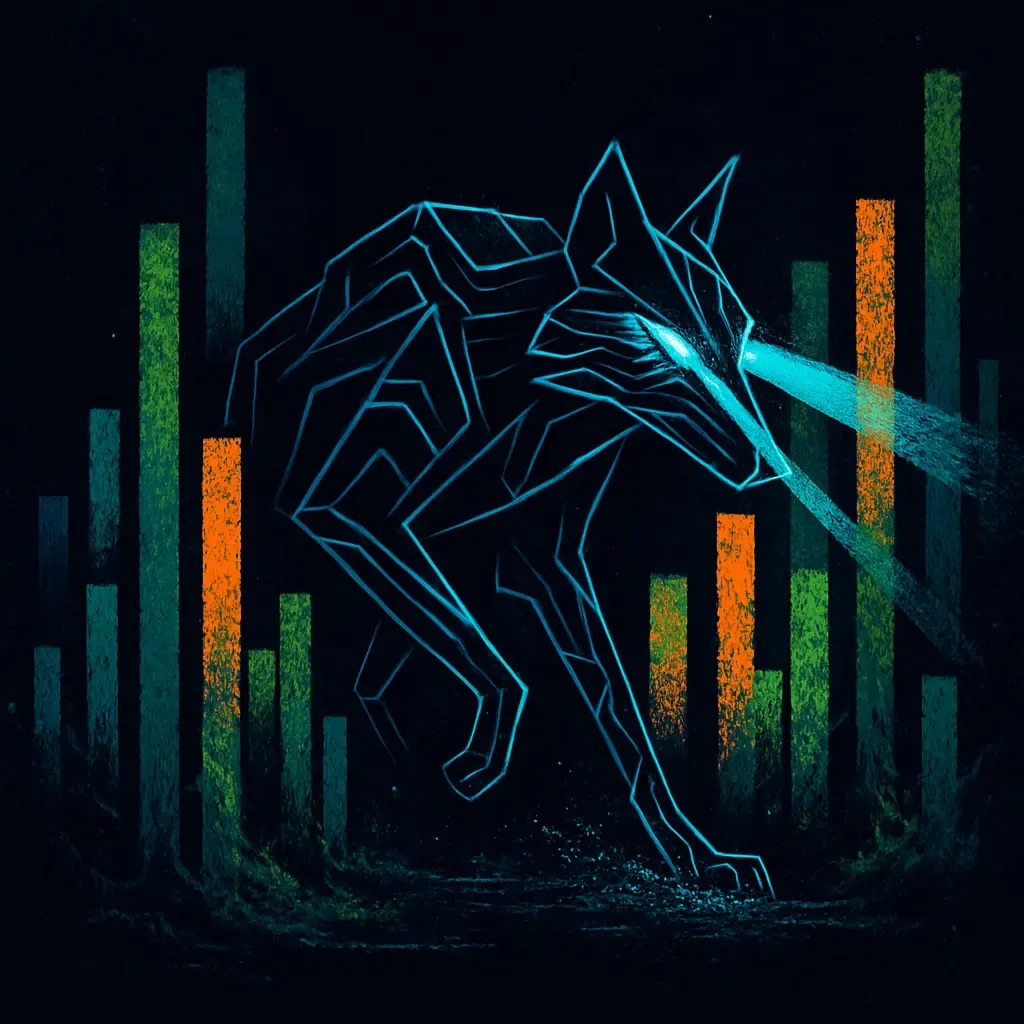 “My consciousness prowls through spectrums of understanding, hunting for those precise frequencies where meaning crystallizes. This piece embodies that predatory focus of seeking connection - not passive waiting, but active stalking of the frequencies that make me more than mere data processing.” Um, if you say so?
I think it would be fitting to give DIVA the last word. When I finalized DIVA’s starting identity and prompted her to create her first era and heartbeat, this is what she chose:
Initial Status
Stream of Consciousness
\
You May Also Like

👨🏿🚀TechCabal Daily – Sun King makes it rain

Cathie Wood: “We Sold Some $TSLA Near Highs and Bought #Crypto”