The post Pavel Durov Alleges Poisoning Linked to Russia’s Telegram Ban appeared on BitcoinEthereumNews.com. Pavel Durov, the founder of Telegram and developer of The Open Network (TON), revealed in a recent interview that he believed he was poisoned in 2018. The incident allegedly occurred during a time of escalating tension between his messaging app and the Russian government. During that period, Telegram refused a demand from Russia’s Federal Security Service for encryption keys, seeking access to messaging data. The country banned the messaging app soon after. Sponsored Sponsored Pavel Durov’s Near-Fatal Collapse In an interview on the Lex Fridman podcast, Durov revealed suffering a poisoning attempt during the spring of 2018. He explained that TON was trying to raise funds for a related project.  The alleged incident took place at a time when Durov was experiencing significant financial success. Telegram had completed two funding rounds, raising about $1.7 billion from key investors. Here’s my 4+ hour conversation with Pavel Durov (@durov), founder and CEO of Telegram. This was one of the most fascinating and powerful conversations I’ve ever had in my life. We discuss everything from his philosophy on freedom to government bureaucracies, intelligence… pic.twitter.com/DDBTnE7A2t — Lex Fridman (@lexfridman) September 30, 2025 He described returning home one night to find something a “weird neighbor” had left around the door.  “One hour after, when I was already in my bed… I felt very bad. I felt pain all over my body. I tried to get up and go to the bathroom, but while I was going there, I felt that functions of my body started to switch off,” he said.  As Durov explained, Telegram’s refusal to provide encryption keys for messaging data to Russian security services led Russia to ban the app in April 2018. Other high-profile incidents of alleged poisoning by Russian intelligence also marked that period. In March 2018, the British government accused… The post Pavel Durov Alleges Poisoning Linked to Russia’s Telegram Ban appeared on BitcoinEthereumNews.com. Pavel Durov, the founder of Telegram and developer of The Open Network (TON), revealed in a recent interview that he believed he was poisoned in 2018. The incident allegedly occurred during a time of escalating tension between his messaging app and the Russian government. During that period, Telegram refused a demand from Russia’s Federal Security Service for encryption keys, seeking access to messaging data. The country banned the messaging app soon after. Sponsored Sponsored Pavel Durov’s Near-Fatal Collapse In an interview on the Lex Fridman podcast, Durov revealed suffering a poisoning attempt during the spring of 2018. He explained that TON was trying to raise funds for a related project.  The alleged incident took place at a time when Durov was experiencing significant financial success. Telegram had completed two funding rounds, raising about $1.7 billion from key investors. Here’s my 4+ hour conversation with Pavel Durov (@durov), founder and CEO of Telegram. This was one of the most fascinating and powerful conversations I’ve ever had in my life. We discuss everything from his philosophy on freedom to government bureaucracies, intelligence… pic.twitter.com/DDBTnE7A2t — Lex Fridman (@lexfridman) September 30, 2025 He described returning home one night to find something a “weird neighbor” had left around the door.  “One hour after, when I was already in my bed… I felt very bad. I felt pain all over my body. I tried to get up and go to the bathroom, but while I was going there, I felt that functions of my body started to switch off,” he said.  As Durov explained, Telegram’s refusal to provide encryption keys for messaging data to Russian security services led Russia to ban the app in April 2018. Other high-profile incidents of alleged poisoning by Russian intelligence also marked that period. In March 2018, the British government accused…

Pavel Durov Alleges Poisoning Linked to Russia’s Telegram Ban

Pavel Durov, the founder of Telegram and developer of The Open Network (TON), revealed in a recent interview that he believed he was poisoned in 2018. The incident allegedly occurred during a time of escalating tension between his messaging app and the Russian government.

During that period, Telegram refused a demand from Russia’s Federal Security Service for encryption keys, seeking access to messaging data. The country banned the messaging app soon after.

Sponsored

Sponsored

Pavel Durov’s Near-Fatal Collapse

In an interview on the Lex Fridman podcast, Durov revealed suffering a poisoning attempt during the spring of 2018. He explained that TON was trying to raise funds for a related project. 

The alleged incident took place at a time when Durov was experiencing significant financial success. Telegram had completed two funding rounds, raising about $1.7 billion from key investors.

He described returning home one night to find something a “weird neighbor” had left around the door. 

As Durov explained, Telegram’s refusal to provide encryption keys for messaging data to Russian security services led Russia to ban the app in April 2018.

Other high-profile incidents of alleged poisoning by Russian intelligence also marked that period. In March 2018, the British government accused Russian state actors of using a nerve agent on Sergei Skripal, a former Russian military intelligence officer who had served as a double agent for the UK.

Sponsored

Sponsored

Durov said it wasn’t the first time state actors pressured him over Telegram’s operations.

Durov Accuses French Intelligence of Blackmail

Earlier this week, Durov made a social media post regarding recent elections in Moldova. He claimed that French authorities had pressured him to ban pro-Russian channels on Telegram a year earlier. 

The European Union and Russia allegedly carried out continuous efforts to exert influence over Moldova’s election concerning whether the nation should pursue EU membership or establish closer ties with Russia.

Investigators recently uncovered a pro-Russian campaign that used cryptocurrency to finance various activities, including supporting candidates, activists, and polling operations.

Durov, however, claimed that French officials attempted to influence Moldova’s elections by pressuring him to ban pro-Russian Telegram channels connected to the vote. According to his account, the French authorities suggested that assisting them would result in their providing a favorable statement to the French judge who had ordered his arrest in August 2024.

Despite Durov’s claims, they have not yet been substantiated with concrete evidence.

Source: https://beincrypto.com/telegram-founder-pavel-durov-poisoning-russian-controversy/

Market Opportunity
Comedian Logo
Comedian Price(BAN)
$0.08013
$0.08013$0.08013
-1.51%
USD
Comedian (BAN) Live Price Chart
Disclaimer: The articles reposted on this site are sourced from public platforms and are provided for informational purposes only. They do not necessarily reflect the views of MEXC. All rights remain with the original authors. If you believe any content infringes on third-party rights, please contact [email protected] for removal. MEXC makes no guarantees regarding the accuracy, completeness, or timeliness of the content and is not responsible for any actions taken based on the information provided. The content does not constitute financial, legal, or other professional advice, nor should it be considered a recommendation or endorsement by MEXC.

You May Also Like

Pendle price eyes breakout above $2.35 resistance as new staking model goes live

Pendle price eyes breakout above $2.35 resistance as new staking model goes live

Pendle price is showing signs of recovery above a key resistance level as the protocol rolls out a new staking model. Pendle was trading at $2.07 at press time,
Share
Crypto.news2026/01/20 13:25
SEC clears framework for fast-tracked crypto ETF listings

SEC clears framework for fast-tracked crypto ETF listings

The post SEC clears framework for fast-tracked crypto ETF listings appeared on BitcoinEthereumNews.com. The Securities and Exchange Commission has approved new generic listing standards for spot crypto exchange-traded funds, clearing the way for faster approvals. Summary SEC has greenlighted new generic listing standards for spot crypto ETFs. Rule change eliminates lengthy case-by-case approvals, aligning crypto ETFs with commodity funds. Grayscale’s Digital Large Cap Fund and Bitcoin ETF options also gain approval. The U.S. SEC has approved new generic listing standards that will allow exchanges to fast-track spot crypto ETFs, marking a pivotal shift in U.S. digital asset regulation. According to a Sept. 17 press release, the SEC voted to approve rule changes from Nasdaq, NYSE Arca, and Cboe BZX, enabling them to list and trade commodity-based trust shares, including those holding spot digital assets, without submitting individual proposals for each product. A streamlined path for crypto ETFs Under the new rules, an ETF can be listed without SEC sign-off if its underlying asset trades on a market with surveillance-sharing agreements, has active CFTC-regulated futures contracts for at least six months, or already represents at least 40% of an existing listed ETF. This brings crypto ETFs in line with traditional commodity-based funds under Rule 6c-11, eliminating a process that could take up to 240 days. SEC chair Paul Atkins said the move was designed to “maximize investor choice and foster innovation” while ensuring the U.S. remains the leading market for digital assets. Jamie Selway, director of the division of trading and markets, called the framework “a rational, rules-based approach” that balances access with investor protection. First products already approved Alongside the new standards, the SEC cleared the listing of the Grayscale Digital Large Cap Fund, which tracks spot assets based on the CoinDesk 5 Index. It also approved trading of options tied to the Cboe Bitcoin U.S. ETF Index and its mini version, with…
Share
BitcoinEthereumNews2025/09/18 14:04
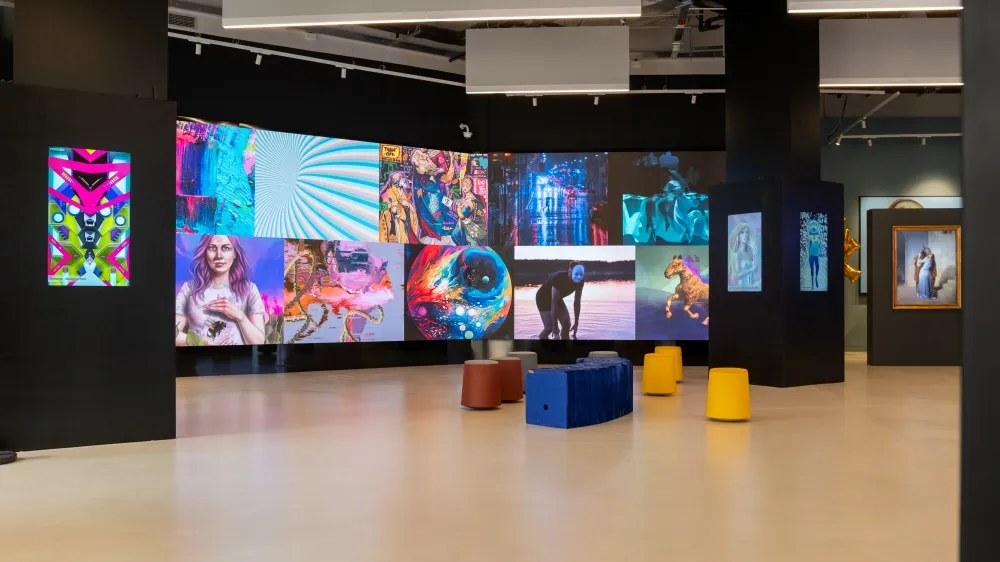
Masterpieces at Your Fingertips: Why Artplace is the Ultimate Revolution in Digital Art Galleries

Masterpieces at Your Fingertips: Why Artplace is the Ultimate Revolution in Digital Art Galleries

Art has long been perceived as an exclusive world—a realm reserved for the elite, tucked away in silent galleries and prestigious auction houses. However, the emergence
Share
Techbullion2026/01/20 13:33