The Polkadot community has opened a vote on a proposal for pUSD, a native stablecoin backed entirely by DOT tokens, through a governance referendum currently underway on the network’s “Wish for Change” track. The proposal, detailed in RFC-155 and authored by Bryan Chen, would deploy the stablecoin on Polkadot Asset Hub using the Honzon protocol previously employed by Acala’s failed aUSD project. At the time of writing, Aye holds 74.62%, while Nay holds 25.40%, against an 80.40% approval threshold.Source: Polkadot Community Split Over Acala’s Technical Legacy The initiative seeks to reduce Polkadot’s dependence on USDT and USDC, which currently dominate the ecosystem with a combined market cap of $74.05 million, with USDC at 56.79% dominance.Source: DefiLlama The proposal has generated strong controversy due to its connection with Acala, whose aUSD stablecoin collapsed following a 2022 exploit that damaged trust across the ecosystem. Multiple prominent community members have voted against the proposal, specifically citing concerns about Acala’s involvement. TheGlobedotters stated that “no one from Acala should be involved with any stablecoin in the ecosystem, especially a strategic one like this, ever again,” while noting that aUSD’s failure stemmed from liquidity pool misconfiguration rather than Honzon protocol flaws. The White Rabbit shared similar concerns, voting against the proposal while supporting the concept of a native stablecoin in principle. The voter outlined two conditions for potential support. First, a clear assurance that no Acala team members would be involved in development; second, explicit Technical Fellowship oversight of governance and risk management. Another community member noted that “Acala is dead because of AUSD” and warned that rushing implementation could damage Polkadot’s reputation. Gavin Wood Pushes Multi-Track Stablecoin Strategy On September 10, Polkadot founder Gavin Wood outlined his vision for the ecosystem’s stablecoin approach, which preceded the pUSD proposal. Wood emphasized that “Polkadot would be remiss not to have its own native stablecoin” and specified requirements including full DOT collateralization, Polkadot governance control, and DAI-level security guarantees. He expressed support for Hydration’s upcoming HOLLAR stablecoin while maintaining that a protocol-level DOT-backed stablecoin remains strategically necessary. Wood also introduced the concept of a “stable-ish” DOT asset that would accept some volatility while avoiding massive collateral requirements. This middle-ground approach between hyper-volatile DOT and strict dollar pegs would seek to “soften volatility” for users seeking partial stability without full collateralization costs. Until a pure DOT stablecoin exists, Wood indicated a preference for HOLLAR over USDT and USDC, though he acknowledged that centralized stablecoins may still be needed for validator payouts and practical integrations. The pUSD proposal arrives as Polkadot implements major tokenomics changes, having approved a 2.1 billion DOT hard cap in September through Referendum 1710 with 81% support. The network is shifting from its inflationary model of 120 million annual DOT issuance to a declining schedule that will reduce minting to below 20 million by the early 2030s. The current circulating supply stands at 1.6 billion DOT, with the total supply projected to stabilize near 1.91 billion by 2040 under the new framework. Global Stablecoin Market Exceeds $300B as Regulatory Framework Solidifies The pUSD debate unfolds against surging global stablecoin adoption, with total market capitalization surpassing $300 billion for the first time in September.Source: DefiLlama During this time, Circle’s NYSE debut saw shares rise 400% post-IPO, valuing the USDC issuer at $30 billion, while Tether introduced a U.S.-compliant stablecoin and is seeking $500 billion in funding. Given the fast-paced growth of the sector, Treasury Secretary Scott Bessent projects that the sector will reach $3 trillion by 2028 as stablecoins integrate into global payments and decentralized finance. Citigroup also forecasts a stablecoin market cap between $1.6 trillion and $3.7 trillion by 2030, driven by clearer regulation and institutional participation. The bank warned that leading issuers could become among the largest U.S. Treasury holders by the end of the decade, potentially disrupting traditional banking through deposit substitution. The GENIUS Act, signed in July, has provided federal oversight for stablecoin issuers, which has largely aided this growth. Meanwhile, a consortium of nine European banks, including ING, UniCredit, and Deutsche Bank, is exploring a euro-denominated stablecoin launch to compete with dollar dominance. As Mark Aruliah of Elliptic stated, European banks need to “move quickly to adopt and scale credible euro-denominated stablecoins” or risk ceding ground to U.S. and Asian competitorsThe Polkadot community has opened a vote on a proposal for pUSD, a native stablecoin backed entirely by DOT tokens, through a governance referendum currently underway on the network’s “Wish for Change” track. The proposal, detailed in RFC-155 and authored by Bryan Chen, would deploy the stablecoin on Polkadot Asset Hub using the Honzon protocol previously employed by Acala’s failed aUSD project. At the time of writing, Aye holds 74.62%, while Nay holds 25.40%, against an 80.40% approval threshold.Source: Polkadot Community Split Over Acala’s Technical Legacy The initiative seeks to reduce Polkadot’s dependence on USDT and USDC, which currently dominate the ecosystem with a combined market cap of $74.05 million, with USDC at 56.79% dominance.Source: DefiLlama The proposal has generated strong controversy due to its connection with Acala, whose aUSD stablecoin collapsed following a 2022 exploit that damaged trust across the ecosystem. Multiple prominent community members have voted against the proposal, specifically citing concerns about Acala’s involvement. TheGlobedotters stated that “no one from Acala should be involved with any stablecoin in the ecosystem, especially a strategic one like this, ever again,” while noting that aUSD’s failure stemmed from liquidity pool misconfiguration rather than Honzon protocol flaws. The White Rabbit shared similar concerns, voting against the proposal while supporting the concept of a native stablecoin in principle. The voter outlined two conditions for potential support. First, a clear assurance that no Acala team members would be involved in development; second, explicit Technical Fellowship oversight of governance and risk management. Another community member noted that “Acala is dead because of AUSD” and warned that rushing implementation could damage Polkadot’s reputation. Gavin Wood Pushes Multi-Track Stablecoin Strategy On September 10, Polkadot founder Gavin Wood outlined his vision for the ecosystem’s stablecoin approach, which preceded the pUSD proposal. Wood emphasized that “Polkadot would be remiss not to have its own native stablecoin” and specified requirements including full DOT collateralization, Polkadot governance control, and DAI-level security guarantees. He expressed support for Hydration’s upcoming HOLLAR stablecoin while maintaining that a protocol-level DOT-backed stablecoin remains strategically necessary. Wood also introduced the concept of a “stable-ish” DOT asset that would accept some volatility while avoiding massive collateral requirements. This middle-ground approach between hyper-volatile DOT and strict dollar pegs would seek to “soften volatility” for users seeking partial stability without full collateralization costs. Until a pure DOT stablecoin exists, Wood indicated a preference for HOLLAR over USDT and USDC, though he acknowledged that centralized stablecoins may still be needed for validator payouts and practical integrations. The pUSD proposal arrives as Polkadot implements major tokenomics changes, having approved a 2.1 billion DOT hard cap in September through Referendum 1710 with 81% support. The network is shifting from its inflationary model of 120 million annual DOT issuance to a declining schedule that will reduce minting to below 20 million by the early 2030s. The current circulating supply stands at 1.6 billion DOT, with the total supply projected to stabilize near 1.91 billion by 2040 under the new framework. Global Stablecoin Market Exceeds $300B as Regulatory Framework Solidifies The pUSD debate unfolds against surging global stablecoin adoption, with total market capitalization surpassing $300 billion for the first time in September.Source: DefiLlama During this time, Circle’s NYSE debut saw shares rise 400% post-IPO, valuing the USDC issuer at $30 billion, while Tether introduced a U.S.-compliant stablecoin and is seeking $500 billion in funding. Given the fast-paced growth of the sector, Treasury Secretary Scott Bessent projects that the sector will reach $3 trillion by 2028 as stablecoins integrate into global payments and decentralized finance. Citigroup also forecasts a stablecoin market cap between $1.6 trillion and $3.7 trillion by 2030, driven by clearer regulation and institutional participation. The bank warned that leading issuers could become among the largest U.S. Treasury holders by the end of the decade, potentially disrupting traditional banking through deposit substitution. The GENIUS Act, signed in July, has provided federal oversight for stablecoin issuers, which has largely aided this growth. Meanwhile, a consortium of nine European banks, including ING, UniCredit, and Deutsche Bank, is exploring a euro-denominated stablecoin launch to compete with dollar dominance. As Mark Aruliah of Elliptic stated, European banks need to “move quickly to adopt and scale credible euro-denominated stablecoins” or risk ceding ground to U.S. and Asian competitors

Polkadot Community Backs Proposal for DOT-Backed Algorithmic Stablecoin pUSD

The Polkadot community has opened a vote on a proposal for pUSD, a native stablecoin backed entirely by DOT tokens, through a governance referendum currently underway on the network’s “Wish for Change” track.

The proposal, detailed in RFC-155 and authored by Bryan Chen, would deploy the stablecoin on Polkadot Asset Hub using the Honzon protocol previously employed by Acala’s failed aUSD project.

At the time of writing, Aye holds 74.62%, while Nay holds 25.40%, against an 80.40% approval threshold.
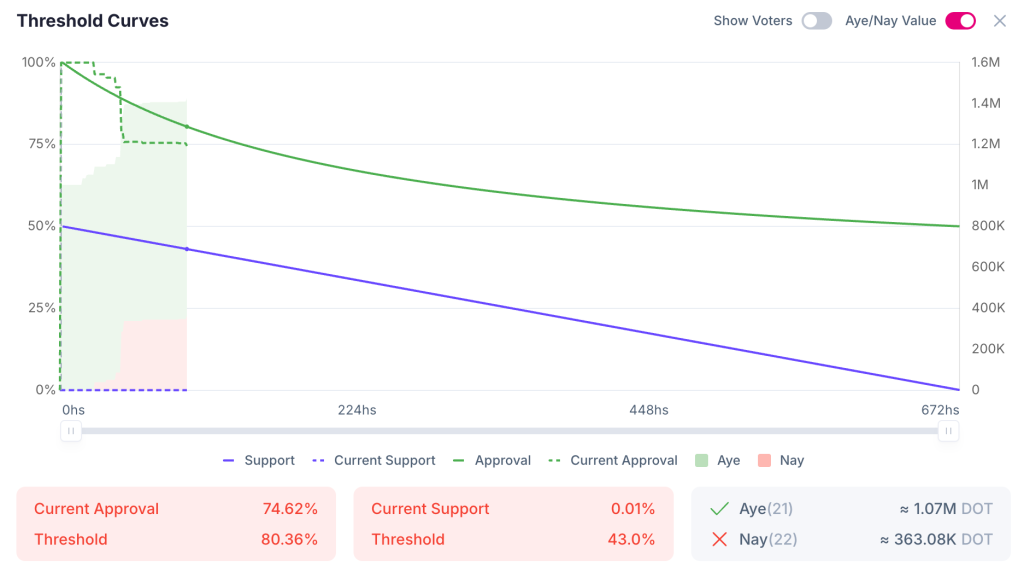
Polkadot Community Backs Proposal for DOT-Backed Algorithmic Stablecoin pUSDSource: Polkadot

Community Split Over Acala’s Technical Legacy

The initiative seeks to reduce Polkadot’s dependence on USDT and USDC, which currently dominate the ecosystem with a combined market cap of $74.05 million, with USDC at 56.79% dominance.

Polkadot Community Backs Proposal for DOT-Backed Algorithmic Stablecoin pUSDSource: DefiLlama

The proposal has generated strong controversy due to its connection with Acala, whose aUSD stablecoin collapsed following a 2022 exploit that damaged trust across the ecosystem.

Multiple prominent community members have voted against the proposal, specifically citing concerns about Acala’s involvement.

TheGlobedotters stated that “no one from Acala should be involved with any stablecoin in the ecosystem, especially a strategic one like this, ever again,” while noting that aUSD’s failure stemmed from liquidity pool misconfiguration rather than Honzon protocol flaws.

The White Rabbit shared similar concerns, voting against the proposal while supporting the concept of a native stablecoin in principle.

The voter outlined two conditions for potential support. First, a clear assurance that no Acala team members would be involved in development; second, explicit Technical Fellowship oversight of governance and risk management.

Another community member noted that “Acala is dead because of AUSD” and warned that rushing implementation could damage Polkadot’s reputation.

Gavin Wood Pushes Multi-Track Stablecoin Strategy

On September 10, Polkadot founder Gavin Wood outlined his vision for the ecosystem’s stablecoin approach, which preceded the pUSD proposal.

Wood emphasized that “Polkadot would be remiss not to have its own native stablecoin” and specified requirements including full DOT collateralization, Polkadot governance control, and DAI-level security guarantees.

He expressed support for Hydration’s upcoming HOLLAR stablecoin while maintaining that a protocol-level DOT-backed stablecoin remains strategically necessary.

Wood also introduced the concept of a “stable-ish” DOT asset that would accept some volatility while avoiding massive collateral requirements.

This middle-ground approach between hyper-volatile DOT and strict dollar pegs would seek to “soften volatility” for users seeking partial stability without full collateralization costs.

Until a pure DOT stablecoin exists, Wood indicated a preference for HOLLAR over USDT and USDC, though he acknowledged that centralized stablecoins may still be needed for validator payouts and practical integrations.

The pUSD proposal arrives as Polkadot implements major tokenomics changes, having approved a 2.1 billion DOT hard cap in September through Referendum 1710 with 81% support.

The network is shifting from its inflationary model of 120 million annual DOT issuance to a declining schedule that will reduce minting to below 20 million by the early 2030s.

The current circulating supply stands at 1.6 billion DOT, with the total supply projected to stabilize near 1.91 billion by 2040 under the new framework.

Global Stablecoin Market Exceeds $300B as Regulatory Framework Solidifies

The pUSD debate unfolds against surging global stablecoin adoption, with total market capitalization surpassing $300 billion for the first time in September.

Polkadot Community Backs Proposal for DOT-Backed Algorithmic Stablecoin pUSDSource: DefiLlama

During this time, Circle’s NYSE debut saw shares rise 400% post-IPO, valuing the USDC issuer at $30 billion, while Tether introduced a U.S.-compliant stablecoin and is seeking $500 billion in funding.

Given the fast-paced growth of the sector, Treasury Secretary Scott Bessent projects that the sector will reach $3 trillion by 2028 as stablecoins integrate into global payments and decentralized finance.

Citigroup also forecasts a stablecoin market cap between $1.6 trillion and $3.7 trillion by 2030, driven by clearer regulation and institutional participation.

The bank warned that leading issuers could become among the largest U.S. Treasury holders by the end of the decade, potentially disrupting traditional banking through deposit substitution.

The GENIUS Act, signed in July, has provided federal oversight for stablecoin issuers, which has largely aided this growth.

Meanwhile, a consortium of nine European banks, including ING, UniCredit, and Deutsche Bank, is exploring a euro-denominated stablecoin launch to compete with dollar dominance.

As Mark Aruliah of Elliptic stated, European banks need to “move quickly to adopt and scale credible euro-denominated stablecoins” or risk ceding ground to U.S. and Asian competitors.

Market Opportunity
Polkadot Logo
Polkadot Price(DOT)
$1.862
$1.862$1.862
+1.52%
USD
Polkadot (DOT) Live Price Chart
Disclaimer: The articles reposted on this site are sourced from public platforms and are provided for informational purposes only. They do not necessarily reflect the views of MEXC. All rights remain with the original authors. If you believe any content infringes on third-party rights, please contact [email protected] for removal. MEXC makes no guarantees regarding the accuracy, completeness, or timeliness of the content and is not responsible for any actions taken based on the information provided. The content does not constitute financial, legal, or other professional advice, nor should it be considered a recommendation or endorsement by MEXC.

You May Also Like

Unexpected Developments Shake the Financial Sphere

Unexpected Developments Shake the Financial Sphere

The post Unexpected Developments Shake the Financial Sphere appeared on BitcoinEthereumNews.com. Japan’s recent move to hike its interest rate to 0.75 ahead of
Share
BitcoinEthereumNews2025/12/19 22:07
Foreigner’s Lou Gramm Revisits The Band’s Classic ‘4’ Album, Now Reissued

Foreigner’s Lou Gramm Revisits The Band’s Classic ‘4’ Album, Now Reissued

The post Foreigner’s Lou Gramm Revisits The Band’s Classic ‘4’ Album, Now Reissued appeared on BitcoinEthereumNews.com. American-based rock band Foreigner performs onstage at the Rosemont Horizon, Rosemont, Illinois, November 8, 1981. Pictured are, from left, Mick Jones, on guitar, and vocalist Lou Gramm. (Photo by Paul Natkin/Getty Images) Getty Images Singer Lou Gramm has a vivid memory of recording the ballad “Waiting for a Girl Like You” at New York City’s Electric Lady Studio for his band Foreigner more than 40 years ago. Gramm was adding his vocals for the track in the control room on the other side of the glass when he noticed a beautiful woman walking through the door. “She sits on the sofa in front of the board,” he says. “She looked at me while I was singing. And every now and then, she had a little smile on her face. I’m not sure what that was, but it was driving me crazy. “And at the end of the song, when I’m singing the ad-libs and stuff like that, she gets up,” he continues. “She gives me a little smile and walks out of the room. And when the song ended, I would look up every now and then to see where Mick [Jones] and Mutt [Lange] were, and they were pushing buttons and turning knobs. They were not aware that she was even in the room. So when the song ended, I said, ‘Guys, who was that woman who walked in? She was beautiful.’ And they looked at each other, and they went, ‘What are you talking about? We didn’t see anything.’ But you know what? I think they put her up to it. Doesn’t that sound more like them?” “Waiting for a Girl Like You” became a massive hit in 1981 for Foreigner off their album 4, which peaked at number one on the Billboard chart for 10 weeks and…
Share
BitcoinEthereumNews2025/09/18 01:26
Adoption Leads Traders to Snorter Token

Adoption Leads Traders to Snorter Token

The post Adoption Leads Traders to Snorter Token appeared on BitcoinEthereumNews.com. Largest Bank in Spain Launches Crypto Service: Adoption Leads Traders to Snorter Token Sign Up for Our Newsletter! For updates and exclusive offers enter your email. Leah is a British journalist with a BA in Journalism, Media, and Communications and nearly a decade of content writing experience. Over the last four years, her focus has primarily been on Web3 technologies, driven by her genuine enthusiasm for decentralization and the latest technological advancements. She has contributed to leading crypto and NFT publications – Cointelegraph, Coinbound, Crypto News, NFT Plazas, Bitcolumnist, Techreport, and NFT Lately – which has elevated her to a senior role in crypto journalism. Whether crafting breaking news or in-depth reviews, she strives to engage her readers with the latest insights and information. Her articles often span the hottest cryptos, exchanges, and evolving regulations. As part of her ploy to attract crypto newbies into Web3, she explains even the most complex topics in an easily understandable and engaging way. Further underscoring her dynamic journalism background, she has written for various sectors, including software testing (TEST Magazine), travel (Travel Off Path), and music (Mixmag). When she’s not deep into a crypto rabbit hole, she’s probably island-hopping (with the Galapagos and Hainan being her go-to’s). Or perhaps sketching chalk pencil drawings while listening to the Pixies, her all-time favorite band. This website uses cookies. By continuing to use this website you are giving consent to cookies being used. Visit our Privacy Center or Cookie Policy. I Agree Source: https://bitcoinist.com/banco-santander-and-snorter-token-crypto-services/
Share
BitcoinEthereumNews2025/09/17 23:45