Stablecoins

Stablecoins are digital assets pegged to a stable reserve, such as the US Dollar or Gold, to minimize price volatility. Serving as the primary medium of exchange in Web3, tokens like USDT, USDC, and PYUSD facilitate global payments and DeFi liquidity. In 2026, the focus has shifted toward yield-bearing stablecoins and compliant stablecoin frameworks under global regulations like MiCA. This tag covers the intersection of traditional finance (TradFi) and crypto through stable on-chain liquidity solutions.

30698 Articles
Created: 2026/02/02 18:52
Updated: 2026/02/02 18:52

Adrian Wall Advocates Stablecoin at UN Assembly

Adrian Wall Advocates Stablecoin at UN Assembly

The post Adrian Wall Advocates Stablecoin at UN Assembly appeared on BitcoinEthereumNews.com. Key Highlights Adrian Wall from the Digital Sovereignty Alliance (DSA) addressed a major UN gathering on October 23 To boost financial inclusion in the world, Wall highlighted the potential of blockchain-based innovations like stablecoins However, he mentioned that financial inclusion without financial literacy is a bridge to nowhere At a major United Nations meeting, Adrian Wall from the Digital Sovereignty Alliance (DSA) argued that for a fairer future, people must control their digital identities and finances.  For the digital asset community, the key highlight of this discussion was Adrian Wall’s push to use stablecoin and blockchain technology to accelerate financial inclusion. According to the World Economic Forum, approximately 1.7 billion people are living without any access to banks. To resolve this issue and provide accessibility to financial services, he pointed to blockchain and stablecoins.  Wall, Managing Director of the Digital Sovereignty Alliance (DSA), spoke at a major UN gathering focused on building a better future by bringing true freedom in terms of having control over money.  In the United Nations General Assembly Roundtable at the UN Headquarters in New York on October 22,  he attended a meeting with 48 global leaders to discuss sustainable development. The meeting brought together top experts from around the world, including representatives from Google, the World Bank, and the Malala Fund, to address major issues.  According to the press release, the meeting was held to “advance dialogue on developing inclusive policy frameworks to address some of the world’s most pressing challenges, including climate resilience, equitable economic growth, and responsible technological innovation, with the shared goal of building a fairer and more sustainable future.” However, Wall warned that just getting access to digital money is not enough. He argued that people must also own their digital identities. He stated, “Financial inclusion without financial literacy is a…

Author: BitcoinEthereumNews
Revolut Secures MiCA License in Cyprus—Is a Stablecoin Next?

Revolut Secures MiCA License in Cyprus—Is a Stablecoin Next?

The post Revolut Secures MiCA License in Cyprus—Is a Stablecoin Next? appeared on BitcoinEthereumNews.com. In brief Neobank Revolut has secured a Markets in Crypto-Assets (MiCA) license in Cyprus. The license enables Revolut to provide and market crypto-asset services across all 30 markets in the EEA under MiCA legislation The move opens a path for Revolut to issue its own stablecoin, with the company having been in conversation with at least one crypto-native company regarding the venture, sources told Decrypt in June 2025. Revolut, one of Europe’s most popular digital banks, has obtained a Markets in Crypto-Assets (MiCA) licence from the Cyprus Securities and Exchange Commission (CySEC). The licence could allow Revolut to provide and market crypto-asset services across all 30 markets in the European Economic Area (EEA) under the MiCA legislation, through a provision known as “passporting,” though it could still need to undergo additional scrutiny from individual EU states. In addition, Revolut announced it is set to launch “1:1 conversion between stablecoins and USD,” without spreads (the difference between the buy and sell prices for currencies.) Costas Michael, CEO of Revolut Digital Assets Europe, said that receiving the licence “is a significant step in our journey, reflecting CySEC’s confidence in our commitment to regulatory compliance in crypto.” He added: “It’s no secret that we have ambitious plans for the crypto sector in the future, and our MiCA licence is fundamental to all of that.” The neobank has been providing crypto trading since 2017 in some regions, but the crypto services it offers customers have expanded steadily since then. In November 2024, it launched Revolut X, a standalone crypto exchange, across all 30 European Economic Area countries, giving users the ability to trade 200 cryptocurrencies via its desktop-based platform. It’s not just Revolut that is using Cyprus as its gateway to MiCA approval. Back in January, Coinbase acquired the Cyprus-based unit of BUX, rebranding…

Author: BitcoinEthereumNews
Fidelity Adds Solana Trading Amid Growing Interest in Network as Internet Capital Hub

Fidelity Adds Solana Trading Amid Growing Interest in Network as Internet Capital Hub

The post Fidelity Adds Solana Trading Amid Growing Interest in Network as Internet Capital Hub appeared on BitcoinEthereumNews.com. COINOTAG recommends • Exchange signup 💹 Trade with pro tools Fast execution, robust charts, clean risk controls. 👉 Open account → COINOTAG recommends • Exchange signup 🚀 Smooth orders, clear control Advanced order types and market depth in one view. 👉 Create account → COINOTAG recommends • Exchange signup 📈 Clarity in volatile markets Plan entries & exits, manage positions with discipline. 👉 Sign up → COINOTAG recommends • Exchange signup ⚡ Speed, depth, reliability Execute confidently when timing matters. 👉 Open account → COINOTAG recommends • Exchange signup 🧭 A focused workflow for traders Alerts, watchlists, and a repeatable process. 👉 Get started → COINOTAG recommends • Exchange signup ✅ Data‑driven decisions Focus on process—not noise. 👉 Sign up → Fidelity has integrated Solana (SOL) trading into its platforms, enabling institutional and retail clients to buy, sell, and trade the token. This move highlights growing institutional adoption of Solana as a high-speed blockchain for digital assets, bridging traditional finance with crypto markets. Solana trading now available on Fidelity Crypto, IRAs, wealth management, and institutional platforms. This addition supports Fidelity’s long-term strategy for digital asset infrastructure, similar to traditional investments. Solana’s market cap exceeds $104 billion, ranking it as the sixth-largest cryptocurrency by capitalization, per CoinMarketCap data. Discover how Fidelity’s addition of Solana trading opens new doors for investors. Explore SOL’s role in internet capital markets and tokenized assets for enhanced liquidity. Stay ahead in crypto—read more now! How Does Fidelity’s Solana Trading Integration Benefit Investors? Fidelity Solana trading allows clients to access the SOL token directly through multiple Fidelity platforms, including retail crypto services and institutional digital asset solutions. This integration provides seamless buying, selling, and trading options, reducing barriers for both institutional and individual investors entering the Solana ecosystem. By incorporating SOL, Fidelity underscores the maturation of cryptocurrencies…

Author: BitcoinEthereumNews
European Union Blocks Russian Ruble Stablecoin A7A5

European Union Blocks Russian Ruble Stablecoin A7A5

The post European Union Blocks Russian Ruble Stablecoin A7A5 appeared on BitcoinEthereumNews.com. EU to ban ruble-backed A7A5 stablecoin on Nov. 25 to block Russian crypto transaction routes. A7A5 linked to Promsvyazbank and Ilan Shor handled $68B in transactions before new sanctions. Ruble-backed flows form only 2.37% of EU Bitcoin trades, limiting impact on crypto liquidity. The European Union is preparing to ban the trading and use of A7A5, a Ruble-backed stablecoin with ties to Russia’s sanctioned Promsvyazbank (PSB). Effective November 25, the EU A7A5 stablecoin ban aims to shut down a significant pathway used to convert Russian Rubles into cryptocurrency and move funds, potentially circumventing existing sanctions. The move prohibits EU-based financial institutions and Virtual Asset Service Providers (VASPs) from handling transactions involving the A7 token, issued by payment firm A7. Why the EU Moves to Ban Ruble Stablecoin A7A5 on Nov 25 The ban targets a specific mechanism used to bypass financial restrictions imposed on Russia. A7A5 facilitates the conversion of Rubles into digital tokens, often processed through exchanges in jurisdictions like Kyrgyzstan (e.g., Grinex), before being swapped for mainstream stablecoins like USDT on networks such as Ethereum and Tron. These funds can then potentially enter the broader European crypto market. Regulators identified A7A5’s links to PSB and sanctioned Moldovan figure Ilan Shor as critical factors. Both A7 and the Russia-based exchange Garantex have faced prior sanctions from Western authorities for enabling illicit cross-border transfers involving restricted entities. This ban represents a tightening of the net. Related: EU’s Concern of Trump’s Pro-Crypto Policies To Undermine Euro Stability A7A5’s Mechanism: Linking Rubles, Crypto, and Sanctioned Entities A7A5 serves as a bridge asset. Users convert Rubles into A7A5 tokens. These tokens are then moved, often via intermediary exchanges outside direct EU oversight, and swapped for globally accessible stablecoins like USDT. Data cited in reports indicated over 41 billion A7A5 tokens were circulating by…

Author: BitcoinEthereumNews
Tether’s Volume Hits $170B+ Is Anything Safe Now?

Tether’s Volume Hits $170B+ Is Anything Safe Now?

The post Tether’s Volume Hits $170B+ Is Anything Safe Now? appeared on BitcoinEthereumNews.com. Crypto News Tether’s volume just smashed $170B in 24 hours! See why USDT leads in daily trades and how this affects your crypto portfolio. Insider insights included. When the Tether(USDT) is generating over  $170 billion in just one day, it’s very natural to question, “Which coin has the most crypto volume in the last 24 hours, Tether?” Such drastic results will naturally be talked about more and more, and may influence sentiment in the broader crypto market. Tether’s rise to almost $190 billion on October 22, 2025, feels like the big dog barking at the moon,  given that the entire cryptocurrency market is humming at $225 billion in daily trades. Although stablecoins like USDT are meant to be calming moorings in choppy waters, their recent volume explosion raises the question of whether anything in cryptocurrency is really safe anymore. 1. What Kicked Off Tether’s Highest Volume Fireworks? In a single day, Tether’s trading increased by roughly 40%. Why? Market jitters worldwide. Traders flocked to USDT like it was the last lifeboat on the Titanic, stock markets shook, and there were rumours of new crypto regulations in the US. This is a legitimate request, not a bug. More quickly than you change TV channels during commercials, traders come and go from Tether. Bitcoin aspires to be the digital equivalent of gold, but Tether moves money effectively by handling the grunt work. When chaos breaks out, the market seeks stability, which is why Tether’s highest volume surged. 2. Crown Confirmed: Which Coin Has the Most Crypto Volume Last 24 Hours, Tether? You’re looking at the obvious winner if you’ve recently typed in “which coin has the most crypto volume in the last 24 hours, Tether.” Tether surpasses both Bitcoin and Ethereum combined in terms of trade volume, with $189 billion. Similar to…

Author: BitcoinEthereumNews
EU Announces Its First Official Crypto Sanction

EU Announces Its First Official Crypto Sanction

The post EU Announces Its First Official Crypto Sanction appeared on BitcoinEthereumNews.com. The European Union adopted its 19th sanctions package against Russia — the first to target a cryptocurrency. The bloc banned the ruble-backed stablecoin A7A5 as part of a wider crackdown on energy and financial networks funding the war in Ukraine. Sponsored Sponsored Brussels Expands Measures to Stablecoin and LNG According to the Council’s statement, the EU will prohibit all A7A5 transactions across the bloc starting November 25. The coin, issued in Kyrgyzstan and backed by deposits at PSB Bank, had been used by Russian firms to settle cross-border trade and sidestep SWIFT restrictions. The EU also sanctioned its developer and the operator of the trading platform. “It is becoming increasingly difficult for Putin to finance his war. Every euro we deny Russia is one it cannot spend on aggression. The 19th package will not be the last.” — Kaja Kallas, EU High Representative for Foreign Affairs and Security Policy The Council also tightened restrictions on Rosneft and Gazprom Neft and banned Russian liquefied-natural-gas imports from 2027. Yet the spotlight fell on digital assets. Officials described A7A5 as a “shadow ruble system” created to bypass Western controls. Before the ban, the token’s daily turnover reached several hundred million dollars, making it the largest non-dollar stablecoin in Eurasia. EU officials warned that such coins pose systemic risks by letting sanctioned states build parallel payment networks outside the dollar and euro zones. Brussels also extended sanctions to Chinese and Gulf intermediaries involved in Russian oil exports. It barred European institutions from interacting with Moscow’s “Mir” and “Fast Payments” systems. By targeting both fiat and blockchain channels, the EU aims to shut down the remaining routes financing the Kremlin’s war economy. Sponsored Sponsored Moscow Legalizes Cross-Border Crypto as EU Closes Loopholes In response, Moscow moved to legalize crypto for international settlements while criminalizing unlicensed…

Author: BitcoinEthereumNews
Federal Council opens FIA consultation

Federal Council opens FIA consultation

The post Federal Council opens FIA consultation appeared on BitcoinEthereumNews.com. The Swiss Federal Council launched a consultation proposing amendments to the Financial Institutions Act to tighten swiss crypto regulation and clarify oversight for digital-asset providers. What does the switzerland crypto consultation propose? The consultation, opened on 23 October 2025, seeks to expand the scope of the Financial Institutions Act to cover a broader range of crypto-asset activities. It targets market integrity, consumer protection and clearer issuer responsibilities. The process runs for a 106-day consultation period until 6 February 2026, giving market participants a defined window to respond. stablecoin regulatory framework? Proposals specifically address stablecoins, aiming for a formal stablecoin regulatory framework that would require issuers to meet capital and custody standards. Details on reserves and redemption rights remain to be defined as of 23 October 2025. FINMA has emphasised reserve transparency and robust custody arrangements, principles reflected in the consultation’s focus on redemption mechanics and reserve attestation. How will the financial institutions act change crypto service oversight? Regulators propose clearer licensing paths and stronger supervision of custodians, exchanges and other service providers. The draft would enhance crypto service oversight and impose conduct and reporting duties closer to those required of traditional banks. Industry feedback is invited on proportionality and implementation timing. Will crypto firms need a banking licence or follow swiss aml rules? The paper contemplates tighter anti‑money laundering measures and a possible route for crypto firms to apply for a banking licence, though eligibility thresholds are open to consultation. It asks whether certain business models should trigger banking-equivalent requirements or specific AML obligations. Note: key thresholds and timelines are not final (deadline 6 February 2026). What are the implications for swiss financial centre competitiveness? In brief: Proponents say clearer rules will boost legal certainty and attract institutional capital while preserving innovation. They argue that alignment with established financial standards…

Author: BitcoinEthereumNews
Aave Labs Acquires Stable Finance to Bolster Consumer DeFi Services

Aave Labs Acquires Stable Finance to Bolster Consumer DeFi Services

The post Aave Labs Acquires Stable Finance to Bolster Consumer DeFi Services appeared on BitcoinEthereumNews.com. COINOTAG recommends • Exchange signup 💹 Trade with pro tools Fast execution, robust charts, clean risk controls. 👉 Open account → COINOTAG recommends • Exchange signup 🚀 Smooth orders, clear control Advanced order types and market depth in one view. 👉 Create account → COINOTAG recommends • Exchange signup 📈 Clarity in volatile markets Plan entries & exits, manage positions with discipline. 👉 Sign up → COINOTAG recommends • Exchange signup ⚡ Speed, depth, reliability Execute confidently when timing matters. 👉 Open account → COINOTAG recommends • Exchange signup 🧭 A focused workflow for traders Alerts, watchlists, and a repeatable process. 👉 Get started → COINOTAG recommends • Exchange signup ✅ Data‑driven decisions Focus on process—not noise. 👉 Sign up → Aave Labs has acquired Stable Finance, a San Francisco-based firm offering a mobile app for earning yield on stablecoins through decentralized lending. This move expands Aave’s consumer-facing services while integrating key talent to bridge traditional finance and onchain ecosystems, announced on Thursday with undisclosed financial terms. Aave Labs’ acquisition of Stable Finance enhances its retail onchain offerings by incorporating a user-friendly mobile app for stablecoin yields. The deal includes Stable Finance’s founder Mario Baxter Cabrera and engineering team joining Aave Labs to drive innovation in everyday finance. Aave’s total value locked stands at over $37.25 billion, per DefiLlama data, underscoring its dominant position in DeFi lending. Aave Labs acquires Stable Finance to boost consumer onchain services—discover how this deal integrates mobile yield earning and institutional tools for seamless crypto finance. Explore impacts today. What is the Aave Labs Acquisition of Stable Finance? Aave Labs acquisition of Stable Finance marks a strategic expansion into consumer-oriented onchain services for the leading DeFi lending protocol. Founded in 2023, Stable Finance provides a mobile application that enables users to deposit funds from bank…

Author: BitcoinEthereumNews
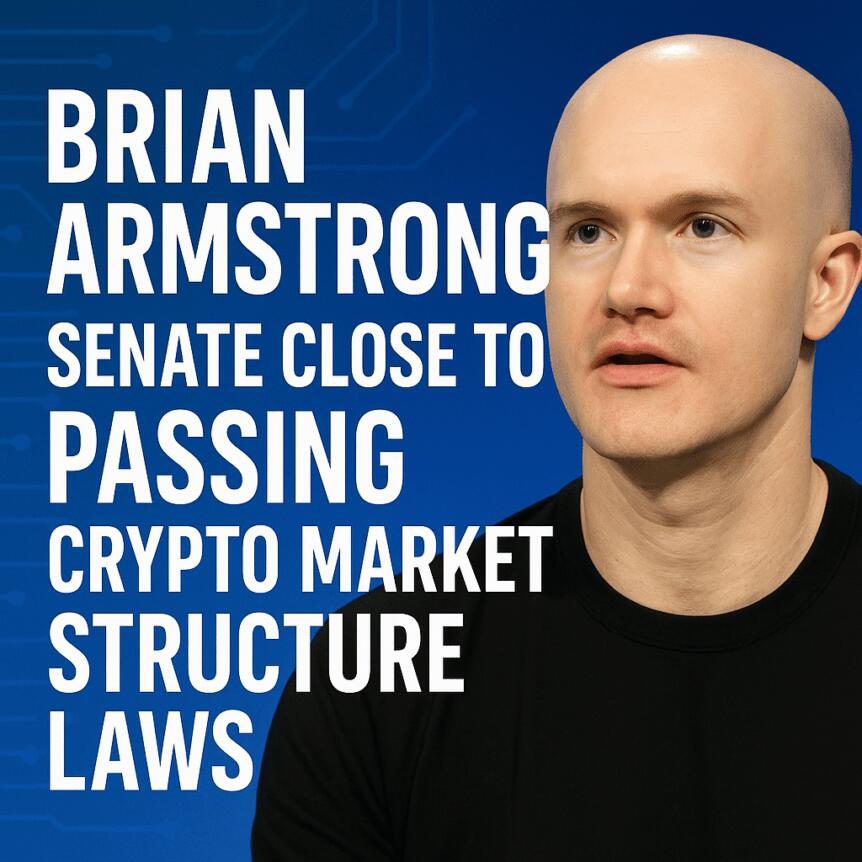
Brian Armstrong: Senate Close to Passing Crypto Market Structure Laws

Brian Armstrong: Senate Close to Passing Crypto Market Structure Laws

Amid ongoing discussions in the U.S. Senate on cryptocurrency market regulation, Coinbase CEO Brian Armstrong expresses optimism about the bipartisan progress on key legislation expected to advance by Thanksgiving. With most of the legislative framework nearly finalized, focus now shifts to nuanced issues such as DeFi regulations and stablecoin protections, amid pushback from traditional banking [...]

Author: Crypto Breaking News
Aave Moves Into Retail DeFi With Stable Finance Acquisition

Aave Moves Into Retail DeFi With Stable Finance Acquisition

The move signals Aave’s intent to bring decentralized lending into mainstream mobile banking experiences. Stable Finance, founded in 2023 by […] The post Aave Moves Into Retail DeFi With Stable Finance Acquisition appeared first on Coindoo.

Author: Coindoo