BitcoinWorld Urgent: SOL Whale Deposit Sparks Market Concerns for Solana The cryptocurrency market is often a fascinating landscape of rapid movements and significant transactions. Recently, the Solana ecosystem witnessed a notable event that has captured the attention of many: a substantial SOL whale deposit. This kind of activity, involving large holders moving their assets, frequently signals potential shifts in market dynamics. What Does This SOL Whale Deposit Mean for Solana? According to reports from blockchain analytics firm Lookonchain, two distinct whale addresses recently deposited a staggering 277,000 SOL tokens to various exchanges. To put this into perspective, this amount is valued at approximately $54.23 million. Such large transfers are not just mere transactions; they are often interpreted by the market as a precursor to selling activity. When a significant amount of a cryptocurrency is moved from cold storage or a private wallet to an exchange, it typically increases the supply available for trading. This heightened supply, especially if met with consistent or reduced demand, can exert downward pressure on the asset’s price. For Solana, a project known for its high-speed transactions and growing ecosystem, a substantial SOL whale deposit can naturally lead to investor apprehension. Increased Selling Pressure: Whales often move assets to exchanges when they intend to liquidate a portion or all of their holdings. Market Sentiment Shift: Such moves can trigger a negative sentiment among smaller investors, potentially leading to further selling. Price Volatility: The sudden influx of supply can cause short-term price fluctuations for SOL. Understanding the Behavior of Crypto Whales Who are these ‘whales’ we often talk about in the crypto space? Essentially, they are individuals or entities holding massive amounts of a particular cryptocurrency. Their movements, whether buying, selling, or simply transferring, can have a disproportionate impact on market prices due to the sheer volume of their holdings. Tracking a SOL whale deposit, therefore, becomes a crucial aspect of market analysis. Why do whales make such moves? The reasons can be varied: Profit-Taking: After significant price appreciation, whales might decide to realize their gains. Portfolio Rebalancing: They might be shifting assets to invest in other projects or stablecoins. Market Speculation: Some whales anticipate future market downturns and move assets to exchanges to sell before a potential dip. It’s important to remember that not every deposit to an exchange automatically leads to a sell-off. Sometimes, whales might move funds for other reasons, such as participating in staking pools offered by exchanges, or preparing for large OTC (Over-The-Counter) deals that don’t directly impact spot exchange prices. However, the immediate market interpretation leans towards potential selling, given the history of such large transfers. What Should Solana Investors Watch For? For current and prospective Solana investors, this recent SOL whale deposit highlights the importance of vigilance. While it’s impossible to predict exact market movements, paying attention to on-chain data and whale activity can provide valuable insights. Here are a few actionable insights: Monitor Trading Volume: A significant increase in SOL’s trading volume alongside a price drop could confirm selling pressure. Observe Order Books: Keep an eye on the buy and sell walls on major exchanges to gauge market depth and potential support/resistance levels. Analyze Funding Rates: In the derivatives market, funding rates can offer clues about market sentiment and future price expectations. Stay Informed: Follow reliable blockchain analytics platforms and news outlets for real-time updates on whale movements and market sentiment. While the immediate reaction to a large SOL whale deposit is often one of caution, it’s also an opportunity for the market to absorb these tokens. The resilience of Solana’s ecosystem, its ongoing development, and increasing adoption will ultimately play a larger role in its long-term price trajectory. Short-term volatility is a natural part of the crypto landscape, and understanding its drivers helps investors navigate it more effectively. In conclusion, the recent movement of 277,000 SOL to exchanges by two whale addresses is a significant event that warrants attention. While typically signaling potential selling pressure and market concerns, it also underscores the dynamic nature of the cryptocurrency market. Investors are encouraged to stay informed and consider various market indicators before making any decisions. Frequently Asked Questions (FAQs) What is a crypto whale? A crypto whale is an individual or entity that holds a very large amount of a particular cryptocurrency, enough to potentially influence its market price with their trades. Why is a SOL whale deposit to an exchange significant? Depositing a large amount of SOL to an exchange typically suggests an intention to sell, which can increase the available supply on the market and potentially lead to downward price pressure. Does every whale deposit lead to a price crash? Not necessarily. While often interpreted as a selling signal, whales might move funds for other reasons like staking, OTC deals, or portfolio rebalancing. However, the market usually reacts cautiously. How can I track SOL whale activity? You can track whale activity using blockchain analytics platforms like Lookonchain, Whale Alert, or Nansen, which monitor large transactions on various blockchains. What impact does this have on Solana’s long-term prospects? While a large SOL whale deposit can cause short-term volatility, Solana’s long-term prospects are more influenced by its technological development, ecosystem growth, and overall adoption rather than individual whale movements. Did you find this analysis helpful? Share this article with your network to help others understand the implications of significant crypto whale movements! To learn more about the latest crypto market trends, explore our article on key developments shaping Solana price action. This post Urgent: SOL Whale Deposit Sparks Market Concerns for Solana first appeared on BitcoinWorld.BitcoinWorld Urgent: SOL Whale Deposit Sparks Market Concerns for Solana The cryptocurrency market is often a fascinating landscape of rapid movements and significant transactions. Recently, the Solana ecosystem witnessed a notable event that has captured the attention of many: a substantial SOL whale deposit. This kind of activity, involving large holders moving their assets, frequently signals potential shifts in market dynamics. What Does This SOL Whale Deposit Mean for Solana? According to reports from blockchain analytics firm Lookonchain, two distinct whale addresses recently deposited a staggering 277,000 SOL tokens to various exchanges. To put this into perspective, this amount is valued at approximately $54.23 million. Such large transfers are not just mere transactions; they are often interpreted by the market as a precursor to selling activity. When a significant amount of a cryptocurrency is moved from cold storage or a private wallet to an exchange, it typically increases the supply available for trading. This heightened supply, especially if met with consistent or reduced demand, can exert downward pressure on the asset’s price. For Solana, a project known for its high-speed transactions and growing ecosystem, a substantial SOL whale deposit can naturally lead to investor apprehension. Increased Selling Pressure: Whales often move assets to exchanges when they intend to liquidate a portion or all of their holdings. Market Sentiment Shift: Such moves can trigger a negative sentiment among smaller investors, potentially leading to further selling. Price Volatility: The sudden influx of supply can cause short-term price fluctuations for SOL. Understanding the Behavior of Crypto Whales Who are these ‘whales’ we often talk about in the crypto space? Essentially, they are individuals or entities holding massive amounts of a particular cryptocurrency. Their movements, whether buying, selling, or simply transferring, can have a disproportionate impact on market prices due to the sheer volume of their holdings. Tracking a SOL whale deposit, therefore, becomes a crucial aspect of market analysis. Why do whales make such moves? The reasons can be varied: Profit-Taking: After significant price appreciation, whales might decide to realize their gains. Portfolio Rebalancing: They might be shifting assets to invest in other projects or stablecoins. Market Speculation: Some whales anticipate future market downturns and move assets to exchanges to sell before a potential dip. It’s important to remember that not every deposit to an exchange automatically leads to a sell-off. Sometimes, whales might move funds for other reasons, such as participating in staking pools offered by exchanges, or preparing for large OTC (Over-The-Counter) deals that don’t directly impact spot exchange prices. However, the immediate market interpretation leans towards potential selling, given the history of such large transfers. What Should Solana Investors Watch For? For current and prospective Solana investors, this recent SOL whale deposit highlights the importance of vigilance. While it’s impossible to predict exact market movements, paying attention to on-chain data and whale activity can provide valuable insights. Here are a few actionable insights: Monitor Trading Volume: A significant increase in SOL’s trading volume alongside a price drop could confirm selling pressure. Observe Order Books: Keep an eye on the buy and sell walls on major exchanges to gauge market depth and potential support/resistance levels. Analyze Funding Rates: In the derivatives market, funding rates can offer clues about market sentiment and future price expectations. Stay Informed: Follow reliable blockchain analytics platforms and news outlets for real-time updates on whale movements and market sentiment. While the immediate reaction to a large SOL whale deposit is often one of caution, it’s also an opportunity for the market to absorb these tokens. The resilience of Solana’s ecosystem, its ongoing development, and increasing adoption will ultimately play a larger role in its long-term price trajectory. Short-term volatility is a natural part of the crypto landscape, and understanding its drivers helps investors navigate it more effectively. In conclusion, the recent movement of 277,000 SOL to exchanges by two whale addresses is a significant event that warrants attention. While typically signaling potential selling pressure and market concerns, it also underscores the dynamic nature of the cryptocurrency market. Investors are encouraged to stay informed and consider various market indicators before making any decisions. Frequently Asked Questions (FAQs) What is a crypto whale? A crypto whale is an individual or entity that holds a very large amount of a particular cryptocurrency, enough to potentially influence its market price with their trades. Why is a SOL whale deposit to an exchange significant? Depositing a large amount of SOL to an exchange typically suggests an intention to sell, which can increase the available supply on the market and potentially lead to downward price pressure. Does every whale deposit lead to a price crash? Not necessarily. While often interpreted as a selling signal, whales might move funds for other reasons like staking, OTC deals, or portfolio rebalancing. However, the market usually reacts cautiously. How can I track SOL whale activity? You can track whale activity using blockchain analytics platforms like Lookonchain, Whale Alert, or Nansen, which monitor large transactions on various blockchains. What impact does this have on Solana’s long-term prospects? While a large SOL whale deposit can cause short-term volatility, Solana’s long-term prospects are more influenced by its technological development, ecosystem growth, and overall adoption rather than individual whale movements. Did you find this analysis helpful? Share this article with your network to help others understand the implications of significant crypto whale movements! To learn more about the latest crypto market trends, explore our article on key developments shaping Solana price action. This post Urgent: SOL Whale Deposit Sparks Market Concerns for Solana first appeared on BitcoinWorld.

Urgent: SOL Whale Deposit Sparks Market Concerns for Solana

2025/09/27 00:40
5 min read

BitcoinWorld

Urgent: SOL Whale Deposit Sparks Market Concerns for Solana

The cryptocurrency market is often a fascinating landscape of rapid movements and significant transactions. Recently, the Solana ecosystem witnessed a notable event that has captured the attention of many: a substantial SOL whale deposit. This kind of activity, involving large holders moving their assets, frequently signals potential shifts in market dynamics.

What Does This SOL Whale Deposit Mean for Solana?

According to reports from blockchain analytics firm Lookonchain, two distinct whale addresses recently deposited a staggering 277,000 SOL tokens to various exchanges. To put this into perspective, this amount is valued at approximately $54.23 million. Such large transfers are not just mere transactions; they are often interpreted by the market as a precursor to selling activity.

When a significant amount of a cryptocurrency is moved from cold storage or a private wallet to an exchange, it typically increases the supply available for trading. This heightened supply, especially if met with consistent or reduced demand, can exert downward pressure on the asset’s price. For Solana, a project known for its high-speed transactions and growing ecosystem, a substantial SOL whale deposit can naturally lead to investor apprehension.

  • Increased Selling Pressure: Whales often move assets to exchanges when they intend to liquidate a portion or all of their holdings.
  • Market Sentiment Shift: Such moves can trigger a negative sentiment among smaller investors, potentially leading to further selling.
  • Price Volatility: The sudden influx of supply can cause short-term price fluctuations for SOL.

Understanding the Behavior of Crypto Whales

Who are these ‘whales’ we often talk about in the crypto space? Essentially, they are individuals or entities holding massive amounts of a particular cryptocurrency. Their movements, whether buying, selling, or simply transferring, can have a disproportionate impact on market prices due to the sheer volume of their holdings. Tracking a SOL whale deposit, therefore, becomes a crucial aspect of market analysis.

Why do whales make such moves? The reasons can be varied:

  • Profit-Taking: After significant price appreciation, whales might decide to realize their gains.
  • Portfolio Rebalancing: They might be shifting assets to invest in other projects or stablecoins.
  • Market Speculation: Some whales anticipate future market downturns and move assets to exchanges to sell before a potential dip.

It’s important to remember that not every deposit to an exchange automatically leads to a sell-off. Sometimes, whales might move funds for other reasons, such as participating in staking pools offered by exchanges, or preparing for large OTC (Over-The-Counter) deals that don’t directly impact spot exchange prices. However, the immediate market interpretation leans towards potential selling, given the history of such large transfers.

What Should Solana Investors Watch For?

For current and prospective Solana investors, this recent SOL whale deposit highlights the importance of vigilance. While it’s impossible to predict exact market movements, paying attention to on-chain data and whale activity can provide valuable insights. Here are a few actionable insights:

  • Monitor Trading Volume: A significant increase in SOL’s trading volume alongside a price drop could confirm selling pressure.
  • Observe Order Books: Keep an eye on the buy and sell walls on major exchanges to gauge market depth and potential support/resistance levels.
  • Analyze Funding Rates: In the derivatives market, funding rates can offer clues about market sentiment and future price expectations.
  • Stay Informed: Follow reliable blockchain analytics platforms and news outlets for real-time updates on whale movements and market sentiment.

While the immediate reaction to a large SOL whale deposit is often one of caution, it’s also an opportunity for the market to absorb these tokens. The resilience of Solana’s ecosystem, its ongoing development, and increasing adoption will ultimately play a larger role in its long-term price trajectory. Short-term volatility is a natural part of the crypto landscape, and understanding its drivers helps investors navigate it more effectively.

In conclusion, the recent movement of 277,000 SOL to exchanges by two whale addresses is a significant event that warrants attention. While typically signaling potential selling pressure and market concerns, it also underscores the dynamic nature of the cryptocurrency market. Investors are encouraged to stay informed and consider various market indicators before making any decisions.

Frequently Asked Questions (FAQs)

What is a crypto whale?

A crypto whale is an individual or entity that holds a very large amount of a particular cryptocurrency, enough to potentially influence its market price with their trades.

Why is a SOL whale deposit to an exchange significant?

Depositing a large amount of SOL to an exchange typically suggests an intention to sell, which can increase the available supply on the market and potentially lead to downward price pressure.

Does every whale deposit lead to a price crash?

Not necessarily. While often interpreted as a selling signal, whales might move funds for other reasons like staking, OTC deals, or portfolio rebalancing. However, the market usually reacts cautiously.

How can I track SOL whale activity?

You can track whale activity using blockchain analytics platforms like Lookonchain, Whale Alert, or Nansen, which monitor large transactions on various blockchains.

What impact does this have on Solana’s long-term prospects?

While a large SOL whale deposit can cause short-term volatility, Solana’s long-term prospects are more influenced by its technological development, ecosystem growth, and overall adoption rather than individual whale movements.

Did you find this analysis helpful? Share this article with your network to help others understand the implications of significant crypto whale movements!

To learn more about the latest crypto market trends, explore our article on key developments shaping Solana price action.

This post Urgent: SOL Whale Deposit Sparks Market Concerns for Solana first appeared on BitcoinWorld.

Market Opportunity
Solana Logo
Solana Price(SOL)
$85,61
$85,61$85,61
-1,10%
USD
Solana (SOL) Live Price Chart
Disclaimer: The articles reposted on this site are sourced from public platforms and are provided for informational purposes only. They do not necessarily reflect the views of MEXC. All rights remain with the original authors. If you believe any content infringes on third-party rights, please contact [email protected] for removal. MEXC makes no guarantees regarding the accuracy, completeness, or timeliness of the content and is not responsible for any actions taken based on the information provided. The content does not constitute financial, legal, or other professional advice, nor should it be considered a recommendation or endorsement by MEXC.

You May Also Like

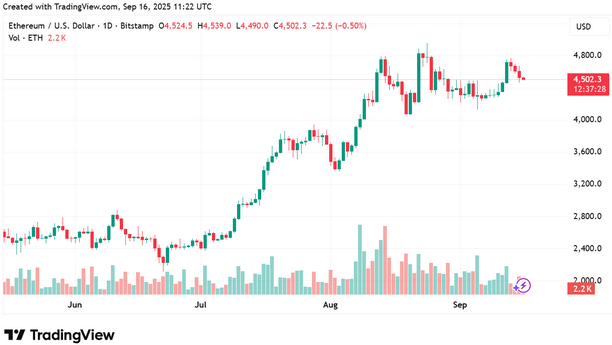
Ethereum Price Prediction: ETH Targets $10,000 In 2026 But Layer Brett Could Reach $1 From $0.0058
Ethereum Price Prediction: ETH Targets $10,000 In 2026 But Layer Brett Could Reach $1 From $0.0058

Ethereum price predictions are turning heads, with analysts suggesting ETH could climb to $10,000 by 2026 as institutional demand and network upgrades drive growth. While Ethereum remains a blue-chip asset, investors looking for sharper multiples are eyeing Layer Brett (LBRETT). Currently in presale at just $0.0058, the Ethereum Layer 2 meme coin is drawing huge [...] The post Ethereum Price Prediction: ETH Targets $10,000 In 2026 But Layer Brett Could Reach $1 From $0.0058 appeared first on Blockonomi.
Share
Blockonomi2025/09/17 23:45
Whales Dump 200 Million XRP in Just 2 Weeks – Is XRP’s Price on the Verge of Collapse?

Whales Dump 200 Million XRP in Just 2 Weeks – Is XRP’s Price on the Verge of Collapse?

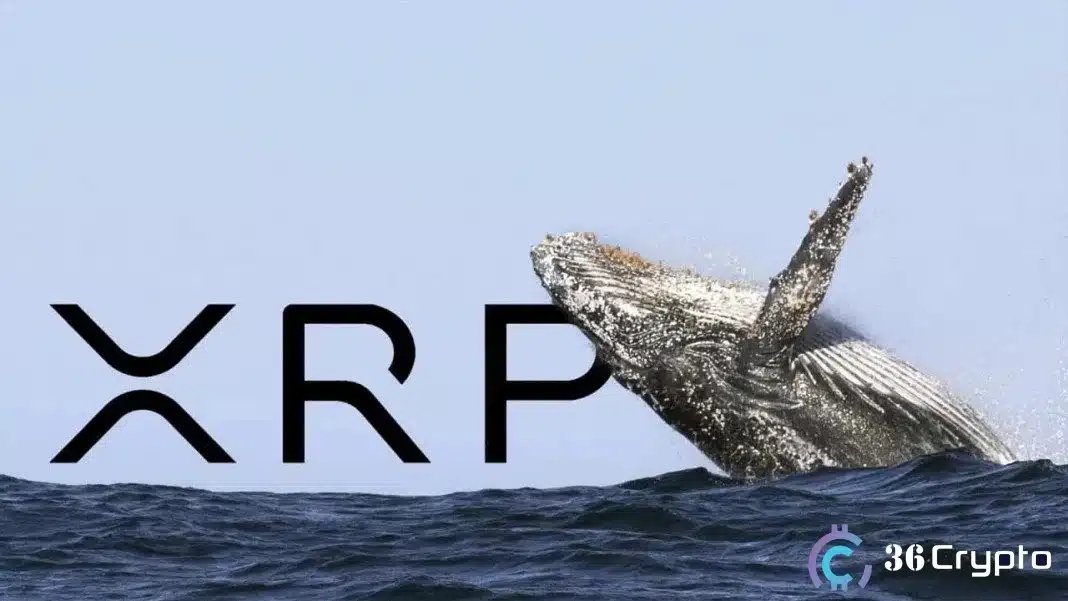
Whales offload 200 million XRP leaving market uncertainty behind. XRP faces potential collapse as whales drive major price shifts. Is XRP’s future in danger after massive sell-off by whales? XRP’s price has been under intense pressure recently as whales reportedly offloaded a staggering 200 million XRP over the past two weeks. This massive sell-off has raised alarms across the cryptocurrency community, as many wonder if the market is on the brink of collapse or just undergoing a temporary correction. According to crypto analyst Ali (@ali_charts), this surge in whale activity correlates directly with the price fluctuations seen in the past few weeks. XRP experienced a sharp spike in late July and early August, but the price quickly reversed as whales began to sell their holdings in large quantities. The increased volume during this period highlights the intensity of the sell-off, leaving many traders to question the future of XRP’s value. Whales have offloaded around 200 million $XRP in the last two weeks! pic.twitter.com/MiSQPpDwZM — Ali (@ali_charts) September 17, 2025 Also Read: Shiba Inu’s Price Is at a Tipping Point: Will It Break or Crash Soon? Can XRP Recover or Is a Bigger Decline Ahead? As the market absorbs the effects of the whale offload, technical indicators suggest that XRP may be facing a period of consolidation. The Relative Strength Index (RSI), currently sitting at 53.05, signals a neutral market stance, indicating that XRP could move in either direction. This leaves traders uncertain whether the XRP will break above its current resistance levels or continue to fall as more whales sell off their holdings. Source: Tradingview Additionally, the Bollinger Bands, suggest that XRP is nearing the upper limits of its range. This often points to a potential slowdown or pullback in price, further raising concerns about the future direction of the XRP. With the price currently around $3.02, many are questioning whether XRP can regain its footing or if it will continue to decline. The Aftermath of Whale Activity: Is XRP’s Future in Danger? Despite the large sell-off, XRP is not yet showing signs of total collapse. However, the market remains fragile, and the price is likely to remain volatile in the coming days. With whales continuing to influence price movements, many investors are watching closely to see if this trend will reverse or intensify. The coming weeks will be critical for determining whether XRP can stabilize or face further declines. The combination of whale offloading and technical indicators suggest that XRP’s price is at a crossroads. Traders and investors alike are waiting for clear signals to determine if the XRP will bounce back or continue its downward trajectory. Also Read: Metaplanet’s Bold Move: $15M U.S. Subsidiary to Supercharge Bitcoin Strategy The post Whales Dump 200 Million XRP in Just 2 Weeks – Is XRP’s Price on the Verge of Collapse? appeared first on 36Crypto.
Share
Coinstats2025/09/17 23:42
SUI Price Eyes Breakout, Targets $11 Says Analyst

SUI Price Eyes Breakout, Targets $11 Says Analyst

The post SUI Price Eyes Breakout, Targets $11 Says Analyst appeared on BitcoinEthereumNews.com. SUI price shows a technical setup for a macro breakout with analyst Dan Gambardello targeting $10-$11 levels. Recent partnership with Google’s Agentic Payments Protocol adds fundamental support to the technical analysis as SUI moves closer to potential breakout levels. SUI Price Analysis Points to $10-$11 Breakout Target Dan Gambardello has identified a clear ascending triangle formation on SUI price daily chart with upside targets around $10.79. The analyst simplified this target range to $10-$11 for practical trading purposes. The pattern shows sustained higher lows meeting resistance at current levels before a potential breakout. VanEck maintains more aggressive SUI crypto targets ranging from $13-$25 according to Gambardello’s research. SUI Price Analysis | Source: Dan Gambardello, X The $10 level is a more conservative higher high area for the current cycle. Midterm targets point to $7.50 in the 1.618 Fibonacci extension zone before longer-term objectives. The monthly RSI shows extreme compression that Gambardello describes as “screaming for a macro breakout to the upside.” This momentum oscillator behavior typically precedes major price movements in the crypto market. SUI crypto risk model currently sits at 51 and matches pre-bull market levels seen in coins like Ethereum. Gambardello compared this to Ethereum’s December 2020 reading of 51 before its major breakout. The March 2017 Ethereum reading of 53 preceded that cycle’s parabolic move. The analyst also noted that SUI price trades near the same levels from almost a year ago in November 2024. Bollinger Bands Signal Historic Compression CryptoBullet has identified the tightest Bollinger Bands in SUI’s entire trading history on the weekly chart. The BBW indicator compression reached levels that were historically followed by major price movements. This setup mirrors conditions before SUI’s previous major rallies. Historical data shows SUI price delivered +253% gains between December 2023 and March 2024 following similar compression. SUI…
Share
BitcoinEthereumNews2025/09/18 11:32