The post What Ripple XRP News Isn’t Telling You About the Real Opportunity in XRPL DeFi appeared on BitcoinEthereumNews.com. The crypto market’s attention is fixed on a single narrative: the imminent launch of the first XRP exchange-traded fund. The filing submitted by Canary Capital has fueled expectations that the Nasdaq will list the XRPC spot ETF within days. For many, this event marks a milestone on par with Bitcoin and Ethereum ETF approvals in 2024. The excitement is understandable. A publicly traded XRP fund lowers the barrier to entry for traditional investors who have never opened a crypto wallet. It enables exposure through mainstream brokerages like E*Trade or Fidelity, signaling heightened institutional recognition. However, while headlines focus on the ETF, they overlook an emerging development that may ultimately carry far greater long-term significance: the expansion of XRPL-based DeFi. XRP ETF Headlines Ignore the Larger Structural Shift The XRPC ETF will certainly influence liquidity. Canary Capital will need to purchase XRP to supply the fund, generating additional demand. Once listed, the ETF’s 0.5% management fee and retail accessibility could broaden market participation. Still, ETFs — whether for Bitcoin, Ethereum, or XRP — do not transform network utility. They serve as indirect exposure vehicles, not engines of innovation. ETF investors do not own XRP. They own shares of a fund that tracks it. They cannot interact with the ledger, earn yield, or participate in ecosystem development. The ETF may lift sentiment, but it does not expand the XRPL’s economic capabilities. That expansion comes from applications and infrastructure built directly on the network. And it is precisely this layer — XRPL-native DeFi — that remains largely absent from mainstream coverage. While ETF news dominates social feeds, people are overlooking the foundational shift taking place inside the XRPL ecosystem. Developers are now constructing income systems, governance models, and yield mechanics that the ledger has never had. For investors with longer time horizons, this… The post What Ripple XRP News Isn’t Telling You About the Real Opportunity in XRPL DeFi appeared on BitcoinEthereumNews.com. The crypto market’s attention is fixed on a single narrative: the imminent launch of the first XRP exchange-traded fund. The filing submitted by Canary Capital has fueled expectations that the Nasdaq will list the XRPC spot ETF within days. For many, this event marks a milestone on par with Bitcoin and Ethereum ETF approvals in 2024. The excitement is understandable. A publicly traded XRP fund lowers the barrier to entry for traditional investors who have never opened a crypto wallet. It enables exposure through mainstream brokerages like E*Trade or Fidelity, signaling heightened institutional recognition. However, while headlines focus on the ETF, they overlook an emerging development that may ultimately carry far greater long-term significance: the expansion of XRPL-based DeFi. XRP ETF Headlines Ignore the Larger Structural Shift The XRPC ETF will certainly influence liquidity. Canary Capital will need to purchase XRP to supply the fund, generating additional demand. Once listed, the ETF’s 0.5% management fee and retail accessibility could broaden market participation. Still, ETFs — whether for Bitcoin, Ethereum, or XRP — do not transform network utility. They serve as indirect exposure vehicles, not engines of innovation. ETF investors do not own XRP. They own shares of a fund that tracks it. They cannot interact with the ledger, earn yield, or participate in ecosystem development. The ETF may lift sentiment, but it does not expand the XRPL’s economic capabilities. That expansion comes from applications and infrastructure built directly on the network. And it is precisely this layer — XRPL-native DeFi — that remains largely absent from mainstream coverage. While ETF news dominates social feeds, people are overlooking the foundational shift taking place inside the XRPL ecosystem. Developers are now constructing income systems, governance models, and yield mechanics that the ledger has never had. For investors with longer time horizons, this…

What Ripple XRP News Isn’t Telling You About the Real Opportunity in XRPL DeFi

The crypto market’s attention is fixed on a single narrative: the imminent launch of the first XRP exchange-traded fund. The filing submitted by Canary Capital has fueled expectations that the Nasdaq will list the XRPC spot ETF within days. For many, this event marks a milestone on par with Bitcoin and Ethereum ETF approvals in 2024.

The excitement is understandable. A publicly traded XRP fund lowers the barrier to entry for traditional investors who have never opened a crypto wallet. It enables exposure through mainstream brokerages like E*Trade or Fidelity, signaling heightened institutional recognition. However, while headlines focus on the ETF, they overlook an emerging development that may ultimately carry far greater long-term significance: the expansion of XRPL-based DeFi.

XRP ETF Headlines Ignore the Larger Structural Shift

The XRPC ETF will certainly influence liquidity. Canary Capital will need to purchase XRP to supply the fund, generating additional demand. Once listed, the ETF’s 0.5% management fee and retail accessibility could broaden market participation. Still, ETFs — whether for Bitcoin, Ethereum, or XRP — do not transform network utility. They serve as indirect exposure vehicles, not engines of innovation.

ETF investors do not own XRP. They own shares of a fund that tracks it. They cannot interact with the ledger, earn yield, or participate in ecosystem development. The ETF may lift sentiment, but it does not expand the XRPL’s economic capabilities. That expansion comes from applications and infrastructure built directly on the network. And it is precisely this layer — XRPL-native DeFi — that remains largely absent from mainstream coverage.

While ETF news dominates social feeds, people are overlooking the foundational shift taking place inside the XRPL ecosystem. Developers are now constructing income systems, governance models, and yield mechanics that the ledger has never had. For investors with longer time horizons, this is where the real opportunity sits.

XRPL DeFi is the Market’s Overlooked Growth Engine

The XRP Ledger has historically been famous for reliability, settlement efficiency, and institutional-grade design. What it has not offered is DeFi. Unlike competing networks, XRPL never provided native staking, on-chain yield pathways, or ecosystem-level income opportunities. For years, XRP holders could not earn yield directly tied to XRPL infrastructure.

That gap is beginning to close. Upgrades around automated market makers and ledger-level programmability have opened the door for builders to create the first wave of XRPL-based financial applications. These upgrades do more to expand XRP’s economic potential than an ETF ever will. ETFs track an asset; DeFi transforms it.

This shift is attracting early ecosystem builders who focus on developing income models that leverage XRPL’s structural reliability. Among these emerging systems, one project has moved from proof-of-concept into a fully verified presale with a clear economic design: XRP Tundra.

XRP Tundra Becomes the First Major DeFi System Built Around the Ledger

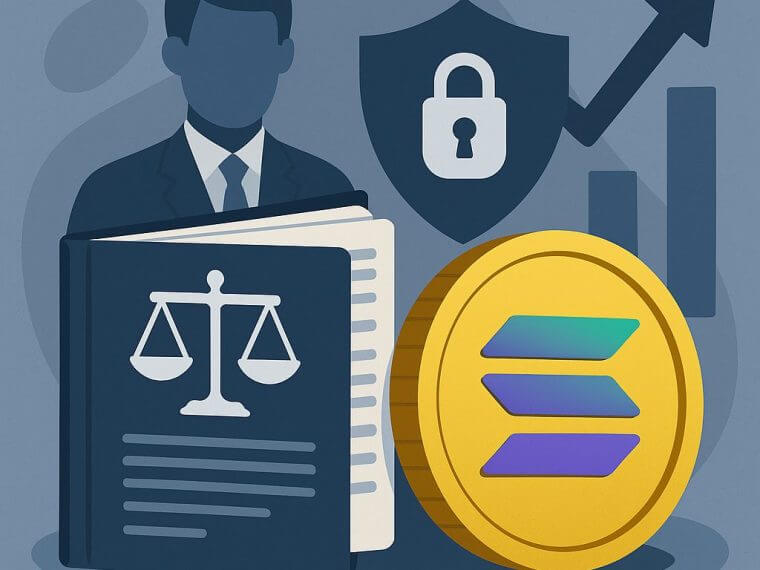
XRP Tundra introduces a dual-chain model engineered for accessible yield generation while remaining anchored to XRPL governance. Its system splits functions between two networks. TUNDRA-S, deployed on Solana, supports staking, yield distribution, and performance-heavy operations. TUNDRA-X, issued on the XRP Ledger, manages governance, reserves, and oversight.

This design allows the project to deliver staking income without violating XRPL’s native architecture. Solana’s speed handles execution; XRPL safeguards governance and on-chain verification. A recent feature by Crypto League reviewed this framework, calling it one of the first credible attempts to combine XRPL reliability with a modern DeFi income engine.

The model stands out because it introduces mechanics the XRPL ecosystem has lacked: accessible staking, yield tiers, and a transparent reserve structure. While ETF investors will gain price exposure, XRPL DeFi participants will gain functional utility — something historically absent from XRP’s investment profile.

Staking Income Turns XRPL Participation Into Real Yield

The heart of XRP Tundra’s system is its Cryo Vault staking architecture. Instead of validator exclusivity or custodial intermediaries, the vaults provide three income profiles that accommodate different strategies.

The liquid vault is perfect for users who want immediate flexibility. It delivers annual yields between 4% and 6% with no lock requirements. Tokens can be withdrawn at any time, offering a simple entry point for participants who want steady returns without long commitments.

For those seeking a stronger balance between yield and liquidity, the balanced tier introduces a 30-day cycle. Annual returns fall within the 8% to 12% range, and funds unlock automatically at the end of the period. This structure appeals to users who want predictable income while maintaining regular access to their capital.

The premium tier serves long-term participants. With a 90-day duration and yields ranging from 15% to 20% annually, it offers the highest return potential in the system. Tokens become available at the end of the commitment, providing a clear and verifiable income schedule. All rewards are issued through transparent, on-chain logic—a critical distinction from custodial staking services.

These vaults represent the first meaningful opportunity for XRPL-aligned participants to earn yield through a system connected to the ledger’s governance layer. This is a fundamentally different value proposition than ETF exposure.

Presale Strength and Full Verification Highlight the Real Opportunity

XRP Tundra’s presale continues through Phase 11, where TUNDRA-S is priced at $0.183 with a 9% token bonus applied to each purchase. Buyers also receive an equal allocation of TUNDRA-X at its $0.0915 reference value, giving investors exposure across both the performance and governance layers. Confirmed listing prices — $2.50 for TUNDRA-Sand $1.25 for TUNDRA-X — outline a clear growth framework. The presale has already surpassed $2.5 million raised.

Verification is extensive. Smart contract audits are publicly available through Cyberscope, Solidproof, and FreshCoins. Identity oversight is provided via Vital Block’s KYC certificate. For readers evaluating is XRP Tundra legit, these records offer the transparency most presales lack.

ETF headlines dominate for now, but the larger narrative is unfolding inside XRPL’s newly emerging DeFi layer. Early participation in that layer — not ETF exposure — may prove to be the real opportunity.

Secure your Phase 11 allocation and take your position in the first wave of XRPL DeFi.

Buy Tundra Now: official XRP Tundra website
How to Buy Tundra: step-by-step guide
Security and Trust: Cyberscope audit

Source: https://www.thecoinrepublic.com/2025/11/14/what-ripple-xrp-news-isnt-telling-you-about-the-real-opportunity-in-xrpl-defi/

Market Opportunity
XRP Logo
XRP Price(XRP)
$2.1572
$2.1572$2.1572
+2.79%
USD
XRP (XRP) Live Price Chart
Disclaimer: The articles reposted on this site are sourced from public platforms and are provided for informational purposes only. They do not necessarily reflect the views of MEXC. All rights remain with the original authors. If you believe any content infringes on third-party rights, please contact [email protected] for removal. MEXC makes no guarantees regarding the accuracy, completeness, or timeliness of the content and is not responsible for any actions taken based on the information provided. The content does not constitute financial, legal, or other professional advice, nor should it be considered a recommendation or endorsement by MEXC.

You May Also Like

FCA komt in 2026 met aangepaste cryptoregels voor Britse markt

FCA komt in 2026 met aangepaste cryptoregels voor Britse markt

De Britse financiële waakhond, de FCA, komt in 2026 met nieuwe regels speciaal voor crypto bedrijven. Wat direct opvalt: de toezichthouder laat enkele klassieke financiële verplichtingen los om beter aan te sluiten op de snelle en grillige wereld van digitale activa. Tegelijkertijd wordt er extra nadruk gelegd op digitale beveiliging,... Het bericht FCA komt in 2026 met aangepaste cryptoregels voor Britse markt verscheen het eerst op Blockchain Stories.
Share
Coinstats2025/09/18 00:33
Crypto Market Cap Edges Up 2% as Bitcoin Approaches $118K After Fed Rate Trim

Crypto Market Cap Edges Up 2% as Bitcoin Approaches $118K After Fed Rate Trim

The global crypto market cap rose 2% to $4.2 trillion on Thursday, lifted by Bitcoin’s steady climb toward $118,000 after the Fed delivered its first interest rate cut of the year. Gains were measured, however, as investors weighed the central bank’s cautious tone on future policy moves. Bitcoin last traded 1% higher at $117,426. Ether rose 2.8% to $4,609. XRP also gained, rising 2.9% to $3.10. Fed Chair Jerome Powell described Wednesday’s quarter-point reduction as a risk-management step, stressing that policymakers were in no hurry to speed up the easing cycle. His comments dampened expectations of more aggressive cuts, limiting enthusiasm across risk assets. Traders Anticipated Fed Rate Trim, Leaving Little Room for Surprise Rally The Federal Open Market Committee voted 11-to-1 to lower the benchmark lending rate to a range of 4.00% to 4.25%. The sole dissent came from newly appointed governor Stephen Miran, who pushed for a half-point cut. Traders were largely prepared for the move. Futures markets tracked by the CME FedWatch tool had assigned a 96% probability to a 25 basis point cut, making the decision widely anticipated. That advance positioning meant much of the potential boost was already priced in, creating what analysts described as a “buy the rumour, sell the news” environment. Fed Rate Decision Creates Conditions for Crypto, But Traders Still Hold Back Andrew Forson, president of DeFi Technologies, said lower borrowing costs would eventually steer more money toward digital assets. “A lower cost of capital indicates more capital flows into the digital assets space because the risk hurdle rate for money is lower,” he noted. He added that staking products and blockchain projects could become attractive alternatives to traditional bonds, offering both yield and appreciation. Despite the cut, crypto markets remained calm. Open interest in Bitcoin futures held steady and no major liquidation cascades followed the Fed’s decision. Analysts pointed to Powell’s language and upcoming economic data as the key factors for traders before building larger positions. Powell’s Caution Tempers Immediate Impact of Fed Rate Move on Crypto Markets History also suggests crypto rallies after rate cuts often take time. When the Fed eased in Dec. 2024, Bitcoin briefly surged 5% cent before consolidating, with sustained gains arriving only weeks later. This time, market watchers are bracing for a similar pattern. Powell’s insistence on caution, combined with uncertainty around inflation and growth, has kept short-term volatility muted even as sentiment for risk assets improves. BitMine’s Tom Lee this week predicted that Bitcoin and Ether could deliver “monster gains” in the next three months if the Fed continues on an easing path. His view echoes broader expectations that liquidity-sensitive assets will outperform once the cycle gathers pace. For now, the crypto sector has digested the Fed’s move with restraint. Traders remain focused on signals from the central bank’s October meeting to determine whether Wednesday’s step marks the beginning of a broader policy shift or just a one-off adjustment
Share
CryptoNews2025/09/18 13:14
US Senate Releases Draft Crypto Bill Establishing Clear Regulatory Framework for Digital Assets

US Senate Releases Draft Crypto Bill Establishing Clear Regulatory Framework for Digital Assets

TLDR: Bill resolves SEC-CFTC conflict by assigning clear regulatory authority over securities and commodities respectively. Ancillary assets category exempts network
Share
Blockonomi2026/01/14 04:57