

2026-01-14 Wednesday
Crypto News
Indulge in the Hottest Crypto News and Market Updates
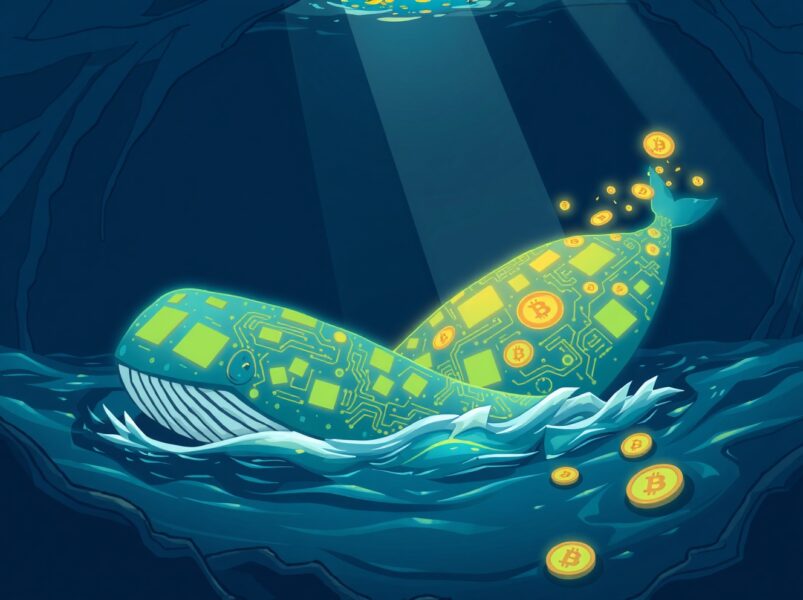
Stunning Bitcoin Whale Awakening: Dormant Addresses Move $178M After 13 Years
BitcoinWorld Stunning Bitcoin Whale Awakening: Dormant Addresses Move $178M After 13 Years In a stunning move that has sent ripples through the cryptocurrency community, two legendary Bitcoin whale addresses have awoken from a 13-year slumber. According to data from Onchain-Lenz, these digital vaults, untouched since the early days of Bitcoin, transferred a colossal 2,000 BTC—worth approximately $178.29 million—to a new address. This event is not just a […] This post Stunning Bitcoin Whale Awakening: Dormant Addresses Move $178M After 13 Years first appeared on BitcoinWorld.
Share
Author: bitcoinworld2025/12/06 08:40

14-Year Slumber Ends With $89 Million Transfer
The post 14-Year Slumber Ends With $89 Million Transfer appeared on BitcoinEthereumNews.com. Dormant Bitcoin Whale Awakens: 14-Year Slumber Ends With $89 Million Transfer Skip to content Home Crypto News Dormant Bitcoin Whale Awakens: 14-Year Slumber Ends with $89 Million Transfer Source: https://bitcoinworld.co.in/dormant-bitcoin-whale-awakens-transfer/
Share
Author: BitcoinEthereumNews2025/12/06 08:30

BlackRock CEO sets the tone: Tokenization is reshaping the global financial order
Author: Larry Fink (BlackRock CEO) & Rob Goldstein (BlackRock COO) Original title: Larry Fink and Rob Goldstein on how tokenization could transform finance Fifty years ago, funds needed to be mailed to get around. Twenty years ago, cross-border transactions would take "a few days". Today, transactions at the millisecond level are no longer something to boast about. The real change is not about speed, but about reshaping "the way assets exist". BlackRock CEO Larry Fink and COORob Goldstein offered a sober assessment of this era: In the future, stocks, bonds, real estate, funds, and even currencies will all become "a line of code on the blockchain." This is not a crypto story; this is a “restructuring moment” for finance. Fifty years ago, money moved as slowly as mail. When one of us (Larry) started his career in 1976, transactions were conducted by telephone and settled with paper receipts sent by courier. In 1977, a technology called SWIFT enabled standardized electronic messaging between banks, reducing transaction times from days to minutes. Today, transactions between New York and London are executed within milliseconds. The financial industry is now entering the next major evolution of market infrastructure—an evolution that will allow assets to be transferred faster and more securely than the systems that have served investors for decades. It began in 2009 when a developer using the pseudonym Satoshi Nakamoto launched Bitcoin, a shared digital ledger that records transactions without intermediaries. A few years later, the same technology—blockchain—has given rise to something even more transformative: tokenization. Tokenization involves recording ownership on a digital ledger. It allows virtually any asset, from real estate to corporate debt or currency, to exist on a single digital record that participants can independently verify. Initially, the financial world—including us—struggled to grasp this grand idea. Tokenization was intertwined with the crypto craze, which often appeared speculative. But in recent years, traditional finance has seen what lies beneath the hype: tokenization can dramatically expand the world of investable assets, going beyond the currently dominant listed stocks and bonds. Tokenized assets offer two major benefits. First, they provide the potential for instant settlement of transactions. Today's markets operate on different settlement timelines, exposing buyers and sellers to the risk that one party may be unable to fulfill its obligations. Standardizing instant settlement in global markets would be another leap forward, surpassing what SWIFT has already achieved. Secondly, private equity assets remain heavily reliant on paper transactions—manual processes, custom settlements, and a track record that has failed to keep pace with other parts of the financial industry. Tokenization can replace paper with code, reducing the friction that makes asset transactions costly and slow. It can transform large, unlisted holdings such as real estate or infrastructure into smaller, more accessible units, thereby expanding market participation that has long been dominated by large institutions. Technology alone cannot eliminate all obstacles. Regulation and investor protection remain crucial. However, by reducing costs and complexity, tokenization can provide more investors with more ways to diversify their investments. Early signs of progress are already emerging. Tokens representing traditional “real-world” financial assets (stocks, bonds, etc.) still represent a small share of the global stock and fixed-income markets, but are growing rapidly—up by approximately 300% in the past 20 months. Much of early adoption occurred in the developing world, where banking services were limited. Nearly three-quarters of cryptocurrency holders reside outside the West. Meanwhile, the economies that built modern finance—the US, UK, and EU—are lagging behind, at least in terms of where transactions take place. Admittedly, many of the companies most likely to lead the transformation of the tokenized financial system, including the dominant players in the stablecoin space, are US companies. But this early advantage is not to be taken for granted. If history is any guide, today's tokenization is roughly equivalent to the internet in 1996—when Amazon sold only $16 million worth of books, and three of today's "Big Seven" tech giants haven't even been established yet. Tokenization may develop at the pace of the internet—faster than most people expect, achieving tremendous growth in the coming decades. It won't replace the existing financial system anytime soon. Instead, it can be seen as a bridge being built simultaneously from both sides of a river, converging in the middle. On one side are traditional institutions. On the other side are digital-first innovators: stablecoin issuers, fintech companies, and public blockchains. Rather than competing, the two are learning how to interoperate. In the future, people won't put stocks and bonds in one portfolio and cryptocurrencies in another. One day, various assets will be able to be bought, sold, and held through a single digital wallet. The task of policymakers and regulators is clear: to help build this bridge quickly and safely. The best approach is not to create a completely new rulebook for digital markets, but to update our existing rules so that traditional markets and tokenized markets can work together. We've already seen the power of this connectivity. The first emerging market exchange-traded funds (ETFs) linked stock markets from more than 20 countries into a single fund, making global investing much easier. Bond ETFs did the same for fixed income, connecting dealer markets with public exchanges, enabling investors to trade more efficiently. Now there are spot Bitcoin ETFs, and even digital assets are on traditional exchanges. Every innovation is building bridges. The same principle applies to tokenization. Regulators should strive for consistency: risk should be judged by its nature, not by how it is packaged. Even if a bond exists on the blockchain, it is still a bond. But innovation needs "guardrails": clear buyer protection measures to ensure that tokenized products are safe and transparent; strong counterparty risk standards to prevent shocks from spreading to the platform; and digital identity verification systems so that those who want to trade and invest can have the same confidence as when swiping a card or making a wire transfer. In his new book about the 1929 stock market crash, Andrew Ross Sorkin revisits the failures that led to the birth of the modern financial system. Some were technical: on "Black Tuesday," stock tickers lagged behind by hours, unable to keep up with the surge in trading volume. Others were institutional: a financial system that developed faster than its security guarantees could keep pace. Tokenization can modernize the infrastructure that still makes parts of the financial system slow and expensive, bringing more people into the world's most powerful engine of wealth creation: the markets. However, as we learned in 1929, every step towards increased participation must be accompanied by updated security safeguards. Tokenization must achieve two things: faster growth and secure growth, while simultaneously building trust.
Share
Author: PANews2025/12/06 08:28

Why MOBU, TON, and AVAX Stand Out?
The post Why MOBU, TON, and AVAX Stand Out? appeared on BitcoinEthereumNews.com. Crypto Projects Discover the best 100x altcoins to invest in, featuring MoonBull, TON, and AVAX. Learn about the crypto investment opportunities. Crypto markets are buzzing with fresh headlines about undervalued altcoins finding strength while the major players wobble. AVAX is showing signs of a possible rebound, Toncoin appears to be consolidating around solid support, and presale buzz around MoonBull is fueling chatter among early‑stage investors eyeing big upside. In times like these, investors scramble to catch the next breakout before the rocket launches. Those hunting the best 100x altcoins want early‑stage picks that still have room to run. Among them, MoonBull’s presale traction, Toncoin’s consolidation, and AVAX’s technical bounce are grabbing attention and could be early signals of what’s coming next. MoonBull ($MOBU): A Hidden Gem in the Best 100x Altcoins Race The cryptocurrency scene has witnessed an explosion of new tokens, but none are capturing the community’s attention quite like MoonBull ($MOBU). This token is currently rocking the meme coin market with its thrilling presale event and immense community-driven features. MoonBull’s focus on fairness, transparency, and sustainable growth is shaping its future to be one of the best 100x altcoins. This token not only appeals to meme coin lovers but also offers strong utility features like auto-liquidity, reflections for holders, and supply burns, making it a viable contender for growth. One of MoonBull’s most compelling features is its structured 23-stage presale. Each stage is designed to build organic demand while gradually raising the token price. This creates an exciting opportunity for early investors, who can secure their $MOBU tokens at a lower price before they inevitably rise as the presale progresses. Investors who jump in at earlier stages stand to see a significant return as the token’s price increases with each successive stage. The excitement surrounding MoonBull is palpable.…
Share
Author: BitcoinEthereumNews2025/12/06 08:16

Bitcoin treasury firm Strive urges MSCI to "let the market decide" whether to remove it from the index.
PANews reported on December 6th that, according to The Block, in a letter to MSCI CEO Henry Fernandez this week, Strive, a Bitcoin treasury firm, stated that MSCI's removal of DAT companies such as Strategy from its indices would "deviate from the principle of index neutrality" and requested that index providers "let the market decide" how to handle companies with a high proportion of Bitcoin holdings on their balance sheets. According to Strive's disclosures, the company currently holds over 7,500 Bitcoins, ranking 14th among publicly disclosed corporate Bitcoin holders.
Share
Author: PANews2025/12/06 08:14

Solana FOMO? Apeing Offers the Next 1000x Crypto Play
The post Solana FOMO? Apeing Offers the Next 1000x Crypto Play appeared on BitcoinEthereumNews.com. Crypto Projects If Solana FOMO hit you hard, Apeing might be your reset button. Discover how early whitelist access could unlock the next 1000x crypto move. Apeing ($APEING) is quickly becoming one of the most talked-about contenders for the next 1000x crypto, and the excitement around it is spreading fast. The energy feels raw, unfiltered, and perfectly timed for anyone who watched Solana’s chart run without taking action. This project is tapping into that primal, fearless instinct the degen community loves, the instinct to move early while everyone else hesitates. With its whitelist window closing soon, many see this as the kind of early entry moment people regret skipping later. Solana became the breakout star of its cycle by delivering high speed, low fees, and a massive revival in developer activity. Many saw the surge coming but waited too long, hoping for dips that never arrived. That hesitation turned into the kind of FOMO that bites hard. Because of that, the arrival of something fresh, early, accessible, and community-driven is now getting a lot of attention. For many traders, what Solana did last season is exactly why they’re watching Apeing this season. Apeing: The Early-Stage Rocket Everyone Wants a Seat On Apeing has entered the watchlist of traders who look for high-momentum, community-powered launches with massive upside potential. Its early narrative builds around simple mechanics, fast entry, and a growing wave of interest as more traders search for the next breakout alt to watch. Many analysts expect early entries to benefit most if community traction rises, especially in launches driven by hype cycles. The demand for potential meme-driven tokens keeps expanding across crypto communities, and projects that capture attention early often experience accelerated growth. Apeing fits into that lane with timing, scarcity, and a fast-building ecosystem of supporters. If interest…
Share
Author: BitcoinEthereumNews2025/12/06 07:48
CryptoAppsy: Your Essential Tool for Real-Time Cryptocurrency Insights
In the bustling arena of cryptocurrencies, where price volatility is a constant, quick access to current data can be a significant advantage. Enter CryptoAppsy, a cutting-edge assistant crafted for enthusiasts and traders in the crypto world.Continue Reading:CryptoAppsy: Your Essential Tool for Real-Time Cryptocurrency Insights
Share
Author: Coinstats2025/12/06 07:05
CryptoAppsy Delivers Real-Time Data as Your Crypto Guardian
CryptoAppsy provides real-time updates every 5 seconds for thousands of cryptocurrencies. The app offers tailored news, smart alerts, and comprehensive portfolio management. Continue Reading:CryptoAppsy Delivers Real-Time Data as Your Crypto Guardian The post CryptoAppsy Delivers Real-Time Data as Your Crypto Guardian appeared first on COINTURK NEWS.
Share
Author: Coinstats2025/12/06 07:00

Dogecoin’s Big Reset? Active Wallets Rise, Bulls Fortify Territory
The top dog memecoin is striving towards retesting the $0.20 resistance line, where 11.72 billion Dogecoin tokens were accumulated. If the tokens located around this area turn into a major demand zone, Dogecoin’s (DOGE) September rally could be mimicked - two months ago, DOGE spiked to $0.30, producing a higher wick than a similar rally in July, 2025. https://twitter.com/ali_charts/status/1996631334064689411 Right now, the price still remains around the $0.14 range, but the rising active wallet count hints at something bigger brewing. According to research by Ali Martinez, a whopping 71,589 wallets were active on December 3, 2025, the largest quarterlyContinue reading on DailyCoin.
Share
Author: Coinstats2025/12/06 06:58

So You Think You've Been Shadowbanned on Instagram, Huh? How to Check and What to Do
The Markup investigated whether Instagram practices shadowbanning. If you think you’ve been shadowbanned on Instagram, here’s what you can do. Check your Account Status to see what features Instagram has banned.
Share
Author: Hackernoon2025/12/06 06:00