

[BIG INTERVIEW] Innovation, job creation, and IIT Madras for all: Padma Shri V Kamakoti’s vision for the premier institution
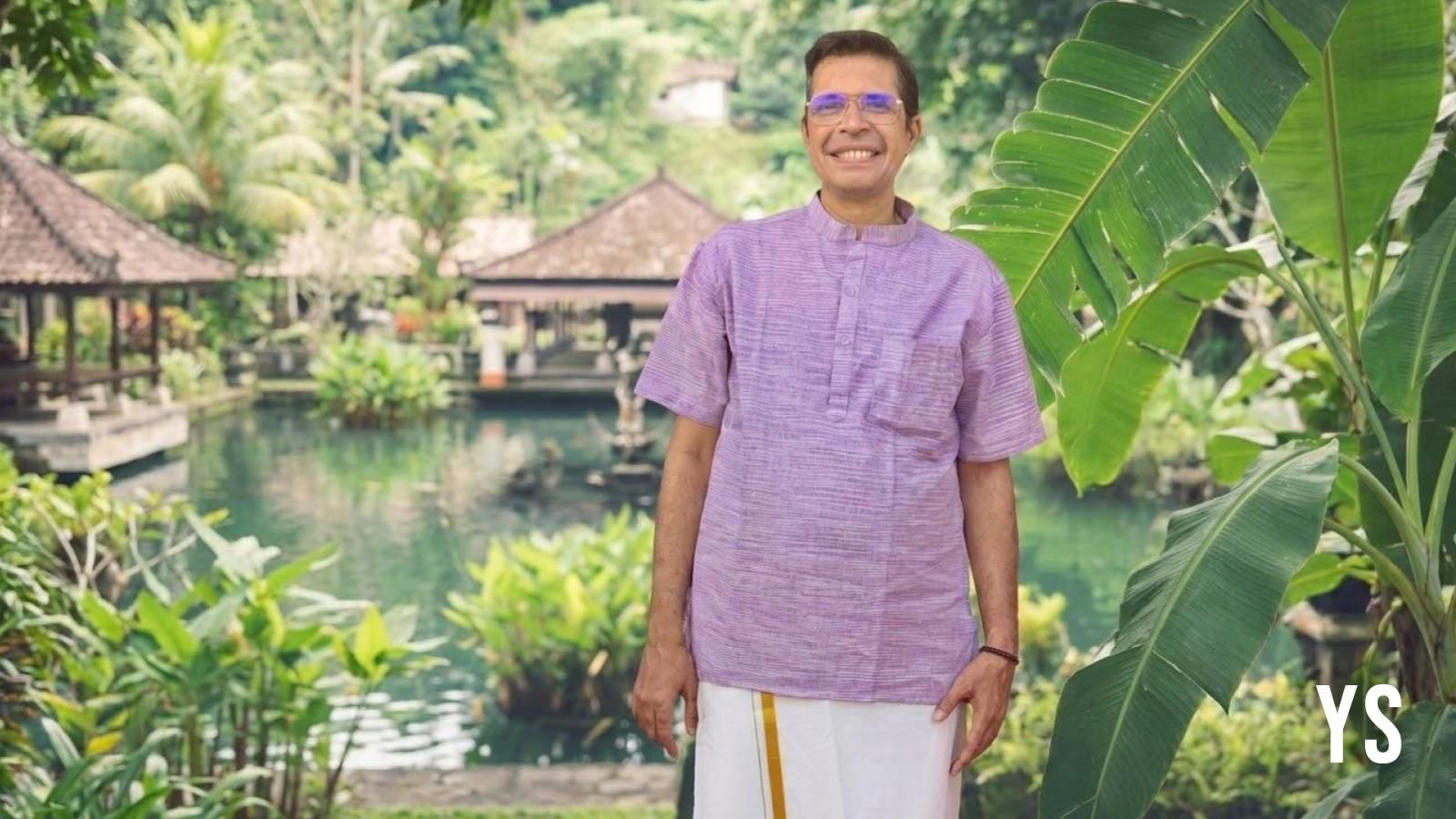
Professor V Kamakoti, Director of Indian Institute of Management Madras, is a man in a hurry though his calm disposition seems to suggest otherwise.
Behind his unflappable demeanour and simplicity lies a man who knows exactly what he wants for the institution and what has to be done to achieve it.
A rapid-action plan has been set in motion, and, unsurprisingly, innovation and entrepreneurship (I&E) is a core focus area.
The institution’s targets for 2021-27 include nurturing 100 deeptech startups annually and leveraging the 10x programme of IITM Research Park (a grand vision for the current decade) to incubate, every year, at least 5 ‘blockbuster’ companies/technologies that create high-value IPR. IITM is also establishing an I&E fund of Rs 100 crore to support new initiatives.
There are already results to show. 104 startups were incubated in FY25 by the IIM Incubation Cell. ‘A patent a day’ is a successful initiative driven by Kamakoti to boost innovation, which resulted in 417 patents filed in FY25.
Most importantly, beyond these numbers and targets, Kamakoti—who took over the reins of the premier institute in 2022—wants IITM to take the lead in job creation and steer the nation forward. He puts it bluntly: “India wants to create jobs. And if IIT Madras doesn’t create jobs, who else will?”
Nation always comes first to Kamakoti, who has been conferred the Padma Shri award for 2026. An IIT Madras alumnus himself, he has been recognised for his significant contributions in the fields of computer science, systems engineering, and interdisciplinary research.
His vision for IITM is all-encompassing—he wants to make quality IIT education accessible to everyone.
“Anaivarukkam (‘everyone’ in Tamil) IIT Madras. IIT Madras for all—this is our motto now. We are opening up all our expertise to everyone. Democratisation of education and opportunity is extremely important,” says Kamakoti Veezhinathan, in an interview to YourStory, which was done earlier this month, before the announcement of the Padma awards.
Towards this end, IITM has introduced two Bachelor of Science online courses, in data science and electronic systems. Both are accessible without JEE (joint entrance exam) and feature a unique qualifier process, no upper age limit, flexible online learning, and in-person exams in many cities. Targeted at students and working professionals, the courses are self-paced and offer multiple exit points. More such online courses are in the offing.
“Positive impact to society” is the only success metric Kamakoti lives by. He is confident India will make important strides in AI, and believes more Indians will become job creators, employers, and startup founders/CEOs in the days to come.
Excerpts from the interview....
YourStory (YS): IITM has consistently retained top position in the National Institutional Ranking Framework ranking. What sets the institute apart?
Professor V. Kamakoti (VK): We are doing a lot of projects of national importance, and that gives us a lot of contentment. We are the national coordinators for Swayam and Swayam Plus (national online education platform for free, high-quality courses from top institutions).
We also run massive online courses in data science and electronic systems. We will be starting a couple of more online courses.
We are the first to start the sports excellence and fine arts excellence admission, where we give more credit to people who pursue sports and fine arts, which are not very easy things to do.
We believe these students will become very successful engineers because sports and fine arts teach these three things: attention to detail, teamwork, and accepting instantaneous success and instantaneous failure in the same platform. So, this gives a lot of maturity to students. These are all important disciplines in life to become successful. And we believe engineering needs these type of people. It also adds a lot more diversity to the campus.
Then we have the IIT campus in Zanzibar.
We also run a very large school education programme called Vidya Shakti, from Class 2 to Class 12. These are rural interaction centres with internet connected TV, and we talk to the kid in the mother language. It is not a parallel school but it is an augmentation to the school, and we motivate them to pursue higher education.
We have more than 500 incubated companies valued at Rs 53,000 crore (combined). We are incubating more and more. Of course, a patent a day is very common now; we may touch very good numbers (patents) in this financial year.
So, we have both innovation and entrepreneurship—a very unique stack that converts an idea into a successful startup.
YS: AI has come in and changed many things we took for granted. But we keep hearing that India has not performed as expected in the initial phase of AI.
VK: We have lot of work going on in AI—fundamental work that builds AI systems, a lot of users of AI, a lot of papers from India are being published in AI.
We have a lot of domain specific models coming up. BharatGen is there, there is AI4Bharat. Sarvam is doing extremely well. Perplexity is our kid. So, the perception that AI is not there in India—I do not agree with it.
Sovereignty will come. We will have our own models, and we should use them carefully.
Even if you look at other models, they have all used public data. They made models that answer questions, but the data is fed from all of the internet.
The models are developed based on publicly available data, whatever has been published. They are making revenue out of it. Nobody objected, but that’s fine. But every person of the public has a stake in it because they have contributed to that knowledge.
Meanwhile, what is India trying to do? Large-scale GPUs are not available. But then these non-availabilities actually make us start working on frugal AI. This necessity actually is the mother of invention, where we start looking at how to do AI in a very cheap, very effective, but very light way.
About large language models… I don't know why you should be jack of all trades. It is not necessary.
So, we are basically looking at what you call as ‘domain specific language models’. This domain specific model may not require that (large) level of GPU. It can be trained with lesser things. Once that’s trained, I think we are in a good shape. India will have a lot of domain specific language models which will be sovereign.
YS: Many deeptech startups and breakthroughs are struggling to reach commercialisation. What can be done to bridge this gap?
VK: I talk about the valley of hope, not the valley of death for startups. A startup needs to go from pre-series A to A, B, C. We want to provide those things.
IIT Madras is carefully looking to create an alternative VC fund, which will help startups go to the next stage.
We enrol startups to a large extent. We give them space, we give them a lab, we help them patent their idea, and license it back to them in exchange for equity. So, they don't actually shell out money from their pockets. That's how it has worked.
YS: How is the curriculum at IITM evolving to meet the demands of entrepreneurship?
VK: We have courses on systems thinking, systems building, and entrepreneurship. We also have economics type of courses which will help with pricing and other things, such as what is the total addressable market, how do you pitch, and how do you basically go about things...
I am motivating management people and technology people to join hands. I would love to have startups with one management person and one B. Tech person as co-founders.
That way the startup will be focused and properly guided. If the startup is a properly guided missile, it will rock. ‘Properly guided missile’ in the sense that it should have a focused target and hit the target. It should be very vibrant, and put on the correct direction.
YS: What is the role of data in the future of education and entrepreneurship?
VK: We have the AI Centre of Excellence for Education at IIT Madras. This AI COE will start looking at how to use AI for education. It can be a co-pilot. It can assess every student and ensure the total well-being of the student.
There will be certain responsible co-pilots which can be fine-tuned to the syllabus of a particular education board. The same thing can be put at the college level for different kinds of syllabus.
So, breaking the language barrier, being a co-pilot in assisting in school education, higher education, skilling, and research—these things are possible (with data). There can be good large language models for this.
On the entrepreneurship side, a lot of testbeds can be created. These testbeds or sandboxes can be used by the startups to grow, patent their ideas, and prove their efficiency. Large-scale databases can be used for both training and testing.
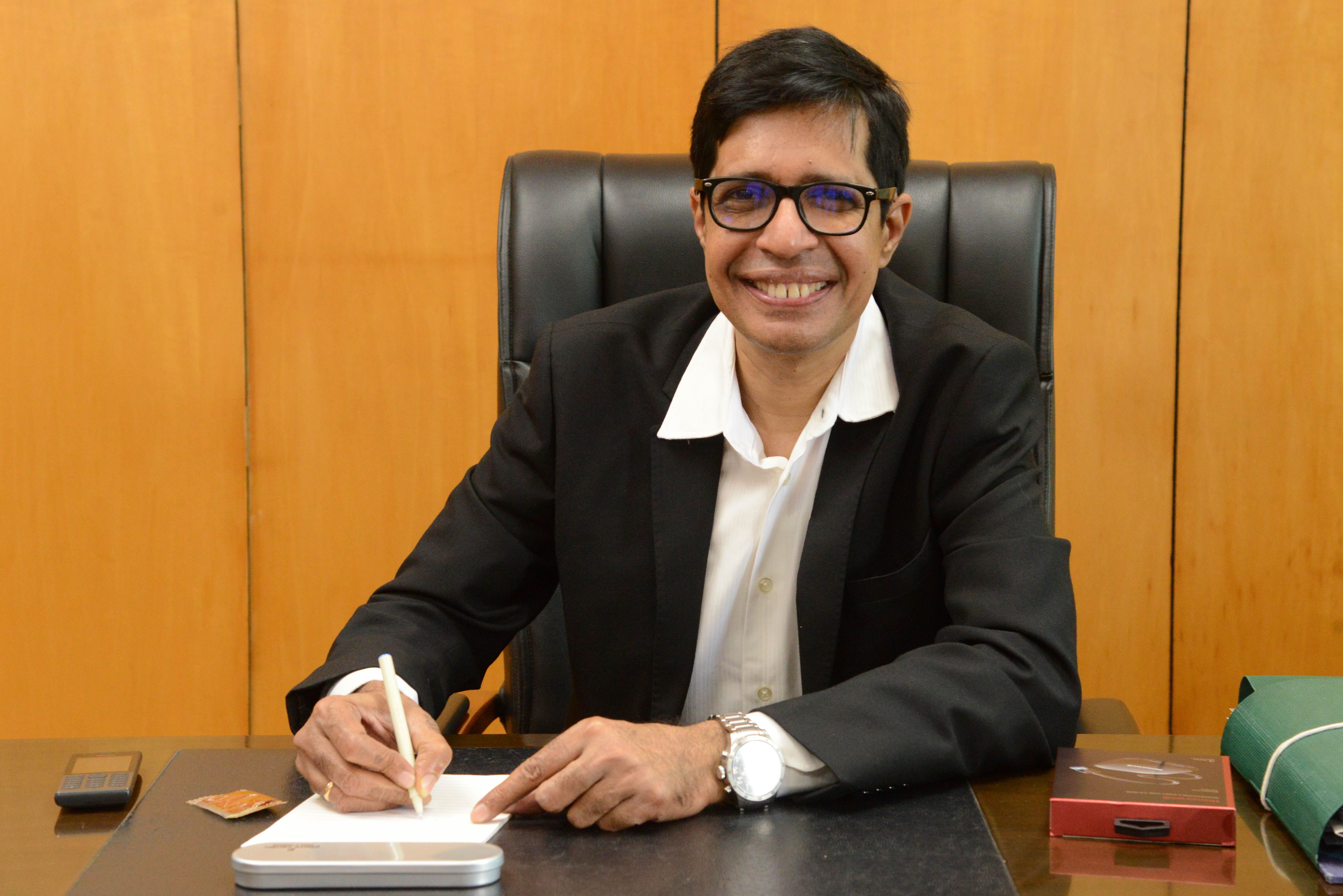
"IIT Madras for all—this is our motto now. We are opening up all our expertise to everyone. Democratisation of education and opportunity is extremely important,” says Kamakoti Veezhinathan.
YS: Sometime ago, you’d mentioned that only 5% of IITM graduates go abroad. Do you see more people staying back in India or coming back to the country after a stint abroad?
VK: With all the things happening today—visa restrictions and other things—maybe they will. A lot of people are missing India, a lot of people are missing the democracy, the freedom that we enjoy, the culture and diversity we have.
Opportunities are here (in India). When you study well, opportunity is there. When you work well, opportunity is there.
YS: So, have the conversations shifted from annual packages and placements abroad?
VK: Packages have always been there but, at some point of time, we started having issues (with this approach). With just a package, what will people do?
People want interesting jobs. They also want a stable job. Today, a civil engineering job at a company like L&T is almost like a government job in terms of stability. And there is a need for good civil engineers and mechanical engineers today.
The type of training and exposure a company like L&T can give you, nobody else can give you—be it building roads, buildings, bridges, metros, what not.
So people must start looking at these types of companies—core companies—rather than just running behind money. This is something I have been trying to tell students, and many of them are listening.
A lot of people are also getting into startups—as employers rather than employees. India wants to create jobs. And if IIT Madras doesn’t create jobs, who else will create?
YS: A lot of your alumni work in the deeptech space. Is there a reason why this happened?
VK: It is natural because we have been set by Germans. So, the German culture is still there. There were German professors as late as 1973, and they continued to hold the mantle. The entire notion of precision in whatever we do came from the Germans.
YS: IITM has set up a Global Research Foundation. Is this a sign of things to come? Is collaboration the way to go in future?
VK: Interdependence is the way world order can be established. But there should be equal interdependence. If you ask me for X, you should give me X. If I ask X from you, you should ask X from me. Then it is a balance.
The world is looking at India for a lot more technologies. And we do it. Almost all of our technologies are very trusted. We expect a lot more foreign countries to take our technology.
We have established that reliability. We have established that we are not interested in anyone unless they are interested in us.
I think that is one of the biggest selling points for India. We go as a very respectable partner; maybe not with sophisticated technology like some of the developed countries. But we do go with a lot of goodwill. We are seen with a lot of respect. So, given this, we thought let us have a Global Research Foundation at IIT Madras.
The foundation will do a few things. One, it will take our startups’ solutions globally and see if they can get a market there. We are also looking at whether any foreign direct investments can come to startups here so that they can accelerate and grow.
IIT Madras has several technologies. We want to see if we could do some technology transfer.
YS: You have one of the highest percentages of faculty who work with startups. How did you go about achieving this?
VK: We have been promoting translational research. We tell faculty to patent their ideas and see if we could get a startup (out of the idea). This repeated messaging has helped.
We also support them by giving them whatever possible. We may not have that much money. But we give them all the support so that they can go experiment the technology… And then start building on it. There will be an equity to IIT Madras for that. So, that is the way we work.
YS: You have evolved with the times. But how do you ensure that you change without losing your leadership position? A leader finds it difficult to disrupt because he does not want to disrupt things that are going good. How do you tackle the innovator’s dilemma?
VK: I believe in one thing which my guru Shankaracharya of Kanchi Kamakoti Peetham has told me. Progress is a real goal, a good goal. If you are going in the direction of reaching the sun, the shadow will follow you even if you don’t want it to. But if you leave the sun and try to catch the shadow, the shadow will go away. So, have a good goal and just keep going.
Money, power and fame will just keep following you like the shadow, even if you don’t want them. But if you leave your goal and start catching any one of these, it will go away.
We (IITM) have very well defined goals and a strategic plan. We have worked on the strategic plan in a united manner.
For us, the students’ interest is always the priority. They are young. They have a career in front of them. So, we always have a student-first approach. That's what we have ensured so far.
And we have very clear goals in terms of entrepreneurship. I motivate students by telling them that all of them should be CEOs. Because if you are an employer, it gives you much more prosperity.
YS: Any message to entrepreneurs and startups founders?
VK: Patience is very important. Not only for the startup founder, but also for the VC. It took Ather (an IITM alumnus) almost 13 years to come to this stage. If you are patient, then you will get quite a significant amount of money.
YS: What advice would you give to students aspiring to join a premier institute like IIT Madras?
VK: Don't look at money, don't look at pay package. Look at technology, look at what you can do for the country. Nation first... Because these young students will be the leaders for Viksit Bharat 2047. 20247 is the year when we need to have independence as a technology superpower.
YS: How do you define 'success'?
VK: Success is something that will create a very positive impact on society. That is success. I am very clear about it.
Ayrıca Şunları da Beğenebilirsiniz

Tokyo’s Metaplanet Launches Miami Subsidiary to Amplify Bitcoin Income

XRP vs Pepeto: XRP Ledger Expands But Pepeto Presale is the Clear Winner for 2026


