

Strait of Hormuz Crisis: Macron’s Urgent Call to Restore Vital Freedom of Navigation

BitcoinWorld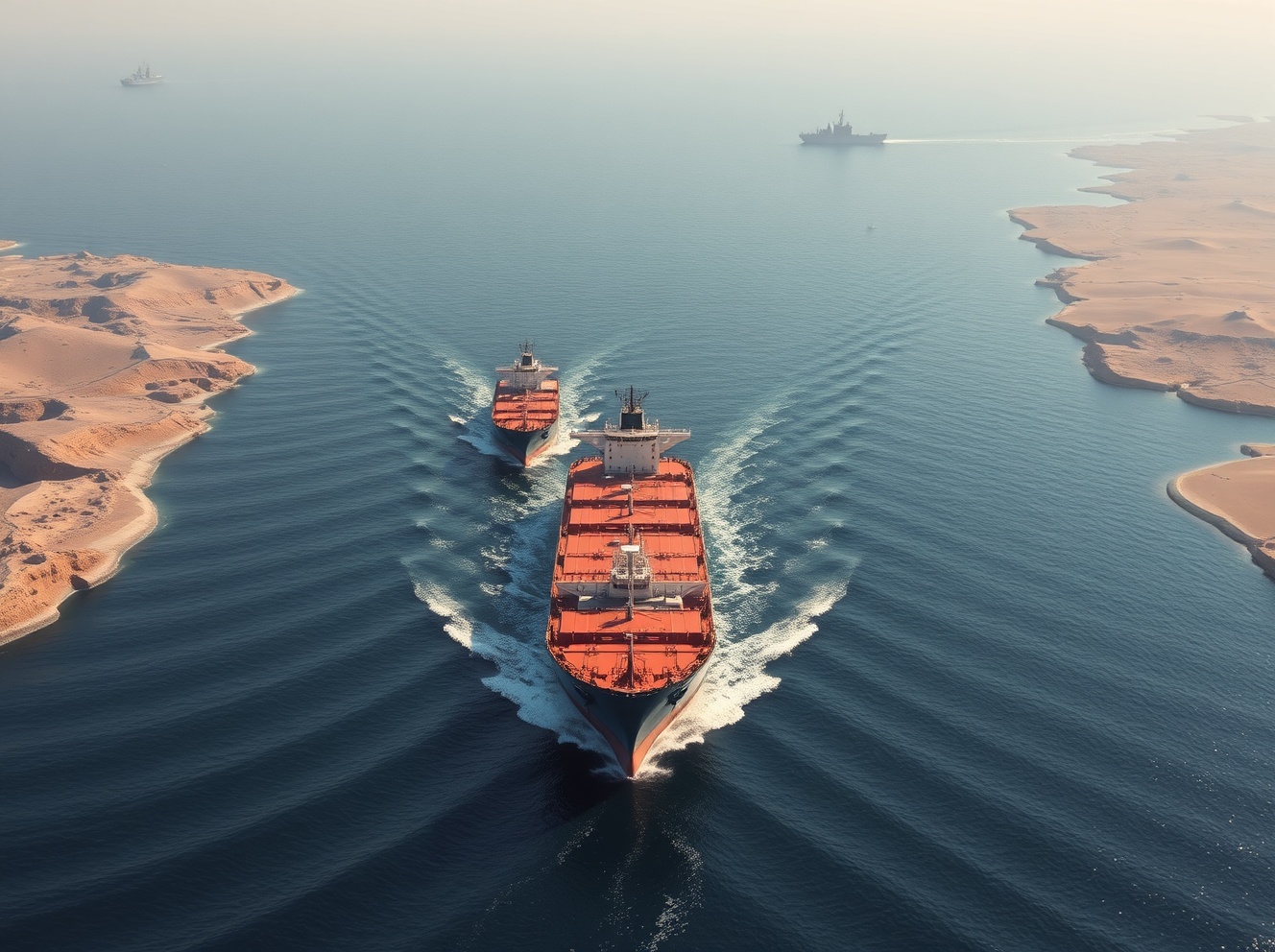
Strait of Hormuz Crisis: Macron’s Urgent Call to Restore Vital Freedom of Navigation
PARIS, March 2025 – French President Emmanuel Macron has issued a decisive statement calling for the immediate restoration of freedom of navigation through the Strait of Hormuz, emphasizing the critical importance of this strategic waterway for global energy security and international trade stability. This declaration comes amid escalating tensions in the region that threaten one of the world’s most vital maritime chokepoints.
Strait of Hormuz: The World’s Most Critical Maritime Chokepoint
The Strait of Hormuz represents a geographical bottleneck of immense strategic significance. This narrow waterway connects the Persian Gulf with the Gulf of Oman and the Arabian Sea, serving as the primary transit route for approximately 21 million barrels of oil daily. Furthermore, this represents about 21% of global petroleum liquids consumption and 30% of all seaborne traded oil. The strait’s geographical constraints make navigation particularly challenging, with its width narrowing to just 21 nautical miles at its narrowest point.
Maritime experts consistently highlight several key characteristics of this critical passage. The shipping lanes within the strait are just two miles wide in each direction, separated by a two-mile buffer zone. Additionally, over 85% of the crude oil passing through the strait goes to Asian markets, with China, India, Japan, and South Korea being the largest recipients. The United States Energy Information Administration maintains that any disruption to traffic through the Strait of Hormuz would trigger immediate global economic consequences.
Macron’s Diplomatic Position on Maritime Security
President Macron’s statement represents France’s firm commitment to maintaining international maritime law and the principles of freedom of navigation. The French leader emphasized that unrestricted passage through international straits constitutes a fundamental right under the United Nations Convention on the Law of the Sea (UNCLOS). France has historically maintained a strong naval presence in the region, participating in various international maritime security initiatives.
The French position aligns with broader European Union concerns about energy security. Europe imports approximately 20% of its crude oil from Middle Eastern producers who rely on the Strait of Hormuz for exports. Any sustained disruption could potentially increase energy prices across European economies already facing inflationary pressures. Macron’s statement specifically referenced the need for diplomatic solutions while maintaining the right to protect commercial shipping interests.
Historical Context of Strait of Hormuz Tensions
Recent tensions in the Strait of Hormuz have historical precedents that inform current security calculations. The 2019 tanker attacks, the 2021 seizure of the MV Asphalt Princess, and periodic encounters between naval forces and commercial shipping have created an environment of persistent risk. International responses have included the establishment of coordinated maritime security frameworks.
The following table outlines key international maritime security initiatives in the region:
| Initiative | Participating Nations | Primary Focus |
|---|---|---|
| International Maritime Security Construct (IMSC) | US, UK, Australia, Bahrain | Surveillance and intelligence sharing |
| European-led Maritime Awareness Mission (EMASoH) | France, Germany, Netherlands, others | De-escalation and diplomatic engagement |
| Combined Maritime Forces (CMF) | 38-nation coalition | Counter-terrorism and piracy operations |
Economic Implications of Navigation Disruptions
Any restriction on freedom of navigation through the Strait of Hormuz carries immediate and severe economic consequences. Global oil markets demonstrate particular sensitivity to supply disruptions from this region. Insurance premiums for vessels transiting the area typically increase by 300-400% during periods of heightened tension. Shipping companies often face difficult decisions about route alternatives when security deteriorates.
Alternative routes present significant logistical and economic challenges. The pipeline infrastructure bypassing the Strait of Hormuz has limited capacity compared to tanker traffic. The East-West Pipeline across Saudi Arabia can transport approximately 5 million barrels per day, while the Abu Dhabi Crude Oil Pipeline carries about 1.5 million barrels daily. These alternatives cannot compensate for a complete closure of the waterway.
Energy analysts identify several potential economic impacts of sustained disruption:
- Immediate oil price spikes of 30-50% in global benchmark prices
- Increased transportation costs for rerouted shipments around Africa
- Strategic petroleum reserve releases by consuming nations
- Accelerated energy transition investments in alternative sources
International Legal Framework and Navigation Rights
The legal foundation for freedom of navigation through international straits is firmly established in international law. The United Nations Convention on the Law of the Sea, ratified by 168 countries including France, provides specific protections for transit passage through straits used for international navigation. Article 38 of UNCLOS guarantees all ships and aircraft the right of transit passage through such straits.
Legal experts emphasize that this right cannot be suspended by coastal states. The convention specifically states that transit passage cannot be impeded or hampered. This legal framework supports Macron’s position that freedom of navigation must be preserved regardless of regional tensions. The International Maritime Organization has repeatedly affirmed these principles in its resolutions and guidance to member states.
Regional Perspectives and Security Dynamics
Regional powers maintain varying positions on Strait of Hormuz security. Iran, which controls the northern shore of the strait, has repeatedly asserted its right to monitor and regulate traffic through what it considers its territorial waters. Meanwhile, Gulf Cooperation Council members, particularly the United Arab Emirates and Oman, have invested significantly in port infrastructure and maritime security capabilities to ensure uninterrupted trade flows.
Oman’s Duqm Port and the UAE’s Fujairah terminal provide important logistical alternatives outside the Persian Gulf. These facilities allow for some crude oil storage and transshipment capabilities that could partially mitigate disruption impacts. However, their capacity remains insufficient to handle the volume typically transiting the Strait of Hormuz during normal operations.
Technological and Monitoring Solutions
Advanced monitoring technologies play an increasingly important role in ensuring Strait of Hormuz security. Satellite surveillance, automated identification systems (AIS), and unmanned surface vessels provide enhanced situational awareness for naval forces and commercial operators. The International Maritime Organization has mandated specific security measures for vessels operating in high-risk areas.
Commercial shipping companies have implemented additional protective measures:
- Enhanced bridge security protocols during transit
- Increased armed security team deployments on vulnerable vessels
- Real-time intelligence sharing with naval forces
- Alternative routing planning for contingency scenarios
Conclusion
President Macron’s call to restore freedom of navigation through the Strait of Hormuz addresses a fundamental requirement for global economic stability and energy security. This narrow waterway remains indispensable to international trade patterns and energy markets. The international community faces ongoing challenges in balancing diplomatic engagement with maritime security requirements. Maintaining uninterrupted transit through this critical chokepoint requires sustained multilateral cooperation, adherence to international law, and investment in security frameworks that protect commercial shipping while promoting regional stability. The Strait of Hormuz will continue to demand international attention as geopolitical dynamics evolve in the coming years.
FAQs
Q1: Why is the Strait of Hormuz so important for global oil markets?
The Strait of Hormuz is the world’s most important oil transit chokepoint, with about 21 million barrels of oil passing through daily. This represents approximately 21% of global petroleum consumption and 30% of all seaborne traded oil, making it critical for energy supplies to Asia, Europe, and beyond.
Q2: What legal protections exist for freedom of navigation through international straits?
The United Nations Convention on the Law of the Sea (UNCLOS) guarantees transit passage rights through straits used for international navigation. Article 38 specifically protects the right of all ships and aircraft to transit through such straits, and coastal states cannot suspend or impede this right.
Q3: What alternative routes exist if the Strait of Hormuz closes?
Alternative options include pipelines across Saudi Arabia (5 million barrels/day capacity) and the UAE (1.5 million barrels/day), or rerouting tankers around Africa’s Cape of Good Hope. However, these alternatives have limited capacity and significantly increase transit time and costs.
Q4: How have international forces responded to security challenges in the Strait?
Multiple international initiatives operate in the region, including the International Maritime Security Construct (led by the US and UK), the European-led Maritime Awareness Mission, and the 38-nation Combined Maritime Forces coalition focused on surveillance and de-escalation.
Q5: What economic impacts would a Strait of Hormuz closure create?
A closure would likely cause immediate oil price spikes of 30-50%, increased shipping insurance premiums by 300-400%, higher transportation costs for rerouted shipments, potential strategic petroleum reserve releases, and accelerated investment in alternative energy sources.
This post Strait of Hormuz Crisis: Macron’s Urgent Call to Restore Vital Freedom of Navigation first appeared on BitcoinWorld.
Ayrıca Şunları da Beğenebilirsiniz

Spot Demand Rises as Bull Flag Breaks

XRP Stabilizes After Correction While Open Interest Cools
