

For years, the biggest names in banking treated stablecoins the way a cat treats a bathtub, with deep suspicion and a healthy distance. That era just ended. On September 1, 2026, a coalition of 21 gloFor years, the biggest names in banking treated stablecoins the way a cat treats a bathtub, with deep suspicion and a healthy distance. That era just ended. On September 1, 2026, a coalition of 21 glo

For years, the biggest names in banking treated stablecoins the way a cat treats a bathtub, with deep suspicion and a healthy distance. That era just ended. On September 1, 2026, a coalition of 21 global financial institutions, including Bank of America, Citi, Goldman Sachs, Wells Fargo, UBS, Deutsche Bank, Santander, and Fidelity Investments, confirmed they’re teaming up to build a company whose sole purpose is issuing a U.S. dollar-backed stablecoin. It’s not a whitepaper or a “we’re exploring options” press release. It’s a real venture, with a real roadmap, and a launch window in the first half of 2027.
What makes this moment worth paying attention to isn’t just the size of the names involved, it’s what their arrival signals about where the money is actually going.
1.How We Got Here
This isn’t a sudden pivot. The project quietly began back in October 2025 as a research effort among ten banks. Over the following months, membership nearly doubled to 21 institutions spanning North America, Europe, East Asia, the Middle East, and Africa. That slow build matters, because it shows this wasn’t a knee-jerk reaction to a single headline, it was banks methodically testing whether a jointly-owned stablecoin made sense before committing real capital and reputational weight to it.
The formal announcement turns that year-long feasibility study into something concrete: a company is expected to be established in the second half of 2026, pending standard closing conditions, with the dollar stablecoin solution going to market sometime in the first half of 2027. If that timeline holds, it would put the launch in the same broader period as the new U.S. stablecoin regulatory framework. The consortium says the initiative intends to be compliant with the GENIUS Act and MiCA, as applicable.
2.What Is Driving Banks Into Stablecoins?
For most of the crypto era, stablecoins were something banks watched from the sidelines, mildly alarmed. Tether and Circle built enormous businesses moving dollar-pegged tokens across public blockchains, largely without banks getting a cut. That dynamic has started to look less like a niche crypto product and more like a genuine threat to core banking revenue.
Bank of America’s own CEO has pointed out that trillions of dollars in deposits could eventually migrate toward stablecoin-based alternatives if banks don’t offer something competitive. That’s the defensive half of the story, and it’s why many of these same institutions are also pushing tokenized deposit products to keep existing customers locked into their own ecosystems.
But the joint stablecoin venture is a different animal, it’s offensive, not defensive. Tokenized deposits are useful, but they’re siloed within each bank’s own infrastructure, which limits how freely that money can move. Stablecoins on public blockchains don’t have that limitation; they’re built to travel. By building a shared, interoperable dollar token, the consortium is trying to compete directly with Tether and Circle on their own turf, using the trust, compliance infrastructure, and client relationships that traditional banks have spent decades building.
3.The Notable Holdout
Not every major bank is on board, and the absence is telling. JPMorgan, one of the largest banks in the world, isn’t part of this consortium. Rather than joining the shared public-blockchain venture, JPMorgan has continued investing in its own proprietary infrastructure, including Kinexys and JPM Coin. That’s a fundamentally different bet: instead of joining a shared, interoperable rail that other banks and platforms can plug into, JPMorgan appears to be betting that a closed, bank-controlled system offers more value and control over the long run.
Whether that turns out to be the smarter strategic move or an expensive miscalculation will likely take years to play out, but it does illustrate that even the biggest players in finance aren’t in agreement on how digital dollars should actually work.
4.What’s Actually at Stake
The most interesting part of this story isn’t the stablecoin itself, plenty of dollar-pegged tokens already exist. It’s the fight over who controls the plumbing underneath digital money. Right now, that infrastructure is dominated by crypto-native firms like Tether and Circle, alongside Visa building out payment rails and BlackRock moving into tokenized cash and reserve management.
If stablecoins become a mainstream part of how money moves globally, whoever controls issuance, backing, settlement, and compliance stands to gain enormous leverage over the future of payments. That’s precisely why the market reaction is worth watching: Circle’s stock fell following the announcement, reflecting investor concern that a bank-backed alternative could potentially chip away at USDC’s position.
This consortium also isn’t operating in a vacuum. A separate 37-institution group called Qivalis is working on a euro-denominated stablecoin, and a broader alliance of more than 140 companies is developing something called Open USD. The digital dollar space, in other words, is quickly becoming crowded, and increasingly institutional.
Conclusion
Twenty-one of the world’s largest financial institutions stepping into the stablecoin arena marks a genuine shift in tone from traditional finance. What was once viewed as a threat to be monitored is now being treated as a market to be won. Whether this consortium successfully challenges Tether and Circle, or simply adds another player to an already crowded field, its launch will be a real test of whether banks can bring their scale and regulatory credibility to a space built by crypto-native companies, and whether customers actually want their dollars there.
Disclaimer: This article is for informational purposes only and does not constitute financial or investment advice. Cryptocurrency and digital assets involve risks, and readers should conduct their own research before making any investment decisions.
市场机遇
Major实时价格 (MAJOR)
--
----
USD
Major (MAJOR) 实时价格图表
本页面分享的文章均源自公开平台,仅供参考。该内容不代表 MEXC 的立场或观点。所有版权归 Mubashir 所有。如果您认为任何内容侵犯了第三方的权益,请联系 [email protected] 以便及时删除。 MEXC 不保证任何内容的准确性、完整性或及时性,且不对基于所提供信息而采取的任何行动负责。本内容不构成财务、法律或其他专业建议,亦不应被解释为 MEXC 的推荐或认可。如需专家见解和深入分析,请造访 MEXC 学院。
Major 最新动态
查看更多
MEXC 链上观察日报: 7月1日MiCA全面生效
2026/06/30

MEXC 链上观察日报: Visa等机构据称将联合推出稳定币OUSD
2026/07/01
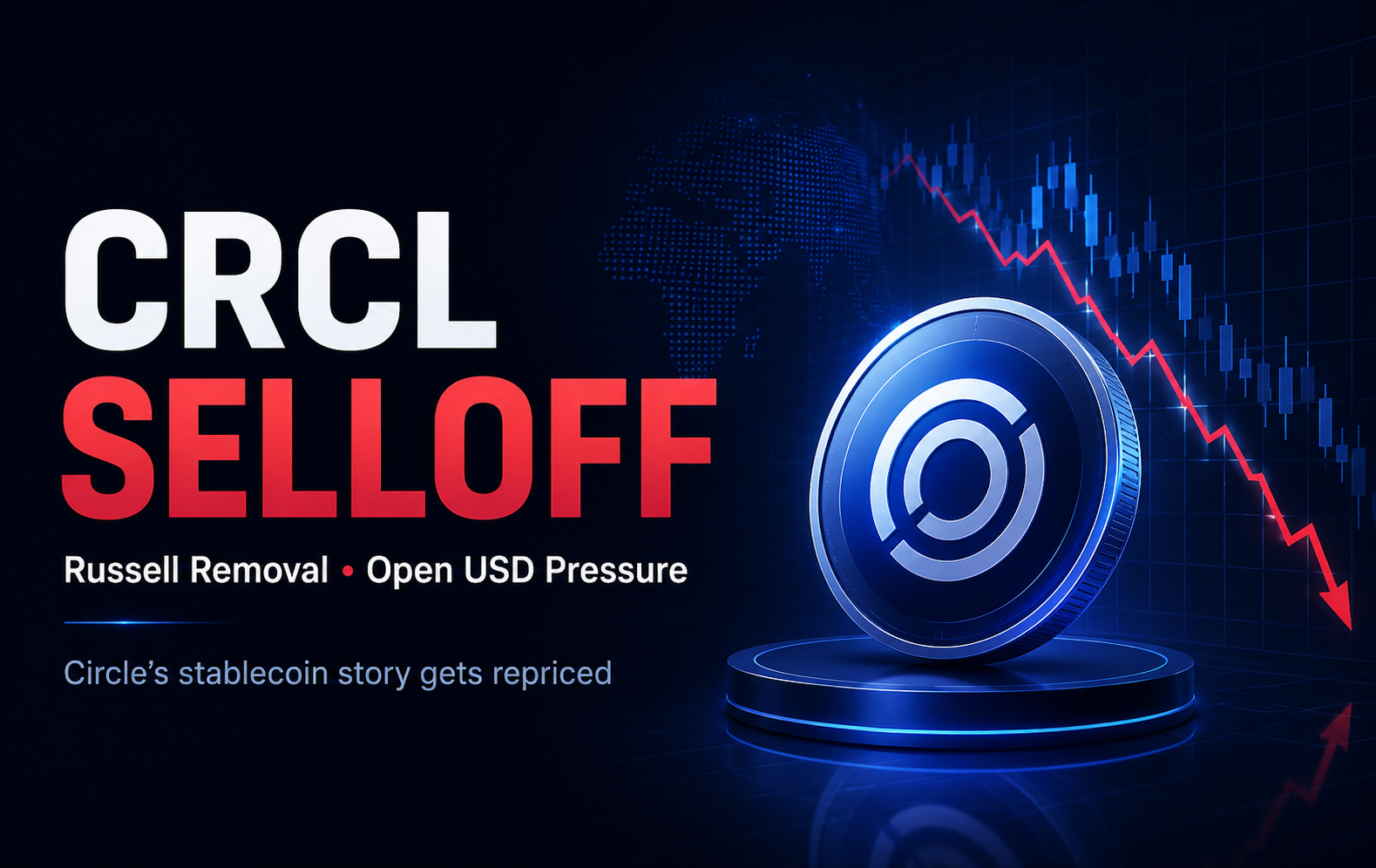
CRCL 拋售解析:羅素成長指數剔除與 Open USD 壓力重塑 Circle 的穩定幣敘事
Circle Internet Group ($CRCL) 在最新的羅素指數重組中被多個羅素成長相關基準指數剔除後,股價面臨壓力。這一指數變動之所以重要,是因為許多被動基金、基準追蹤投資組合以及基於規則的機構授權,都將羅素指數作為其投資組合構建的一部分。當一隻股票離開廣受關注的基準指數時,部分投資者可能需要重新平衡風險敞口,即使他們對該公司的長期看法並未改變。
但羅素指數的調整只是故事的一部分。更深層次的問題是,市場正在重新評估 Circle 作為上市公司的身份:CRCL 究竟仍被視為高增長的加密基礎設施領導者,還是市場開始將其視為一家經濟效益依賴於利率、儲備收入、穩定幣分銷和競爭壓力的金融基礎設施公司?
隨著 Open USD 的推出,這場爭論變得更加緊迫。Open USD 是一個由 Visa、Mastercard 和 Coinbase 等主要支付和加密參與者組成的聯盟所支持的新穩定幣計劃。據路透社報導,Open Standard 匯集了 140 多家企業,計劃發行與美元掛鉤的穩定幣 Open USD,預計將於今年稍晚時候上線。
對於交易員而言,關鍵問題在於近期 CRCL 的拋售主要是受技術性指數相關壓力影響,還是標誌著市場對這家首個主要穩定幣股票的更廣泛估值重置。
2026/07/02


热门
目前热门备受市场关注的加密货币
加密货币价格
按交易量计算交易量最大的加密货币