

Key TakeawaysIgloo Inc., the company behind Pudgy Penguins, announced on October 6, 2026 that it is winding down Abstract, its Ethereum Layer 2, with the network ceasing operations permanently on DeceKey TakeawaysIgloo Inc., the company behind Pudgy Penguins, announced on October 6, 2026 that it is winding down Abstract, its Ethereum Layer 2, with the network ceasing operations permanently on Dece
Abstract Chain Winding Down: Igloo Inc. Pulls the Plug After "Eight-Figure" Losses, Focus Returns to Pudgy Penguins

Key Takeaways
Igloo Inc., the company behind Pudgy Penguins, announced on October 6, 2026 that it is winding down Abstract, its Ethereum Layer 2, with the network ceasing operations permanently on December 15, 2026 and any assets left on it after that date becoming inaccessible. CEO Luca Netz disclosed losses in the tens of millions across two years, stating that even after losing eight figures the company could have launched a token or run an ICO and decided against it, on the reasoning that a token only works when something drives demand to it and launching one without conviction would do the community a disservice. Abstract processed 325 million transactions, created 4 million Global Wallets, cleared $6 billion in cumulative DEX volume and generated $40 million in ecosystem revenue across 144 deployed applications, while the chain itself earned roughly $1 million annualised against infrastructure costs that required about 3.2 times that revenue to break even before team expenses. Abstract carried $237 of DeFi TVL per active address against Base's $19,756, a gap of roughly 83 times. L2BEAT lists $47.9 million in total value secured on the network, of which DefiLlama attributes only about $9.6 million to DeFi protocols. Abstract is the third Layer 2 to announce a wind-down this year, following Botanix in June and Paradigm-backed Blast on October 2.
Overview
Abstract was built on the most attractive thesis in consumer crypto: that a brand with genuine mainstream reach could solve the distribution problem every blockchain struggles with, and that distribution would convert into a sustainable network. Netz described the bet in those terms when announcing the wind-down, writing that when Igloo acquired Frame in the summer of 2024 the vision was to build the blockchain for consumer crypto, that Pudgy Penguins had shown the team what it meant to reach the masses, and that they believed they could bring that same approach to building a chain. Igloo built Abstract on the ZK Stack, launched mainnet in January 2025, shipped the Portal and the Abstract Global Wallet, and brought in Disney and Red Bull Racing as partners who funnelled more than 400,000 users onto the network.
Twenty-one months later, the chain is closing and the company is absorbing the loss on its own balance sheet. Netz's announcement opens by stating that Abstract is winding down, and only then says that all of Igloo's focus will go toward Pudgy Penguins, Pudgy NFTs and PENGU. What makes the post-mortem instructive is that Abstract did not fail at the thing it was supposed to be bad at. It onboarded users at a rate most Layer 2s never approach, shipped a smart contract wallet that worked, and attracted brand partners no other chain had. Instead It failed on the economics underneath all of that.
1. The Metrics That Looked Like Success
The network processed 325 million transactions. It created 4 million Abstract Global Wallets, the smart contract account system that let users transact without managing seed phrases, which stands among the larger smart-account deployments any chain has achieved. Cumulative decentralised exchange volume passed $6 billion. The ecosystem built on top of it generated $40 million in revenue across 144 deployed applications. Partnerships with Disney and Red Bull Racing brought more than 400,000 users onto the chain through brand channels that had nothing to do with crypto-native marketing. Measured against the problem consumer crypto says it is solving, that is a record of success. Most Layer 2s never onboard a user who did not already own crypto. Abstract onboarded hundreds of thousands of them through a toy brand and a Formula 1 team.
2. The Ratio That Closed It
Abstract generated roughly $1 million in annualised chain revenue, working out to about $2,876 per day in sequencer income. Against the infrastructure it had to run, the chain needed approximately 3.2 times that revenue to break even using cost structures comparable to other rollups, and that calculation sits before team salaries and operating expenses. Set the $40 million in ecosystem revenue against the $1 million the chain itself earned, and the structural problem resolves into a single number. Applications on Abstract captured value at forty times the rate the network underneath them did. A chain that hosts a thriving ecosystem and collects two and a half percent of what that ecosystem earns is subsidising its tenants, and Igloo was paying the difference every month.
The capital efficiency comparison is where the gap becomes stark. Abstract carried roughly $237 of DeFi TVL per active address. Base carries approximately $19,756 per address, a difference of about 83 times, both chains have users, but only one has users who leave meaningful capital on it. That ratio explains every item on Abstract's own list of failures. Stagnant growth, thin liquidity, a restricted DeFi ecosystem and limited institutional adoption all describe the same condition from different angles: the chain attracted people who came to mint, play and trade small amounts, and it never attracted the lending markets, yield venues and liquidity routers that convert visitors into deposits. Abstract's own summary of the position was that operating a chain focused exclusively on consumer crypto proved unsustainable as a standalone model.
3. Eighteen Months on Igloo's Balance Sheet
The sequence started in June 2024 with the acquisition of Frame, a rollup framework the company folded into the Abstract effort. The chain was built on the ZK Stack and reached mainnet in January 2025. Netz's accounting covers roughly two years of spending and lands in eight figures, meaning tens of millions of dollars moved from a profitable consumer intellectual property business into an infrastructure business that never covered its own costs. The choice leadership faced was between continuing to drain the operating company and closing the chain, and the decision went to capital discipline. Igloo's revenue comes from toys, licensing and brand partnerships, and every month Abstract ran at a loss was a month that revenue funded sequencer infrastructure, data availability, RPC provisioning and a dedicated engineering team instead of the business that produced it.
4. The Token Refusal
The most consequential decision in the announcement is the one Igloo did not make; Netz addressed it directly, stating that even after losing eight figures the company could have launched a token or pursued an ICO, and that it ultimately decided against this. His reasoning was that a token only works if there is something driving demand to it, and that launching a token the team did not have conviction in would have been a disservice to the community.
The alternative was available and well-worn. A struggling network issues a governance token, markets it to the users who have been farming points for a year, books the proceeds, and transfers the balance-sheet problem to secondary market buyers. The chain's economics do not improve, and the loss moves off the company's books and onto retail holders. Enough projects have run this play that it functions as the default exit for an unviable network. Refusing it cost Igloo real money and cost a segment of its community something too. Users who transacted on Abstract, held native memecoins, paid gas and generated activity under the expectation of an eventual ABS airdrop received nothing for that participation.
5. $47.9 Million and a December 15 Deadline
L2BEAT lists Abstract with approximately $47.9 million in total value secured, and that is the capital users have roughly ten weeks to move. DefiLlama attributes only about $9.6 million to capital locked in Abstract DeFi protocols, around 20% of the total secured value. The remaining four-fifths sits in wallets, NFTs and bridged balances that generate no fees and no lending demand, which is the on-chain signature of a network people hold assets on without putting those assets to work. Two exit routes are currently open; The official Migration Hub at migrate.abs.xyz handles the process directly, and the native bridge at native-bridge.abs.xyz remains available with an expected withdrawal delay of roughly three hours. Abstract's engineering team is coordinating with the 144 deployed projects on migration to alternative Layer 1 and Layer 2 networks.
By December 15th, the sequencer stops, and assets still on the network at that point become inaccessible. The holders most at risk are the ones the chain was built to serve, since a user who arrived through a Disney promotion and has not opened a wallet in months is unlikely to see a shutdown notice, and NFTs minted through brand campaigns are precisely the assets whose owners are least engaged with crypto infrastructure.
6. Abstract Is the Third
What makes this a sector story is that Abstract is the third Layer 2 to announce a wind-down in 2026, and all three gave the same reason. Botanix went first, shutting down its Bitcoin Layer 2 by July 9 after four years building toward Bitcoin DeFi, with a post-mortem concluding that fee income never approached what the infrastructure cost and that demand for the category had not materialised. Blast followed on October 2, four days ahead of Abstract. Blast raised $20 million in November 2023 led by Paradigm and Standard Crypto, peaked at $2 billion in TVL in February 2024, and announced its wind-down with $32 million left, stating that the ongoing costs of maintaining Blast exceed the revenue generated by the L2 and that it saw no credible path to making the chain economically sustainable. Its withdrawal deadline runs to October 26, after which users must interact with bridge contracts directly. The BLAST token fell 17% on the announcement to a market capitalization near $23 million.
Botanix was tokenless and built for Bitcoin DeFi. Blast was venture-funded with a token and a yield-native pitch. Abstract was corporate-funded, consumer-facing and brand-distributed. One of them had the strongest venture backing in crypto, one had the strongest consumer brand, and the economics closed all three inside four months. The common factor here is what rollups earn. A Layer 2 monetises the spread between what it charges users and what it pays Ethereum for data availability and settlement, and that spread compressed sharply after EIP-4844 introduced blobs in March 2024 and again as blob capacity expanded. Cheaper fees for users meant thinner margins for sequencers, and a chain without enough volume to compensate through sheer throughput was left running fixed infrastructure costs against a shrinking take. Blast's $2 billion to $32 million collapse and Abstract's $237 per address describe the same shortfall arriving by different routes.
7. What Igloo Returns To
The wind-down redirects all of Igloo's capital, engineering and executive attention back to Pudgy Penguins, the Pudgy NFT collections and the PENGU ecosystem. Pudgy Toys had passed $13 million in retail sales across more than 10,000 locations by mid-2025, including Walmart, Target and GameStop, reaching 3,100 Walmart stores and 2,000 Walgreens stores, with the company on its fourth Walmart reorder. Every unit sold licenses intellectual property from NFT holders, which makes the retail business one of the few structures in the sector that routes mainstream consumer revenue back to token-adjacent holders. Set against the chain's losses; A toy business that has generated $13 million in retail sales was funding a blockchain that lost tens of millions, and the eighteen months of subsidy consumed more than the flagship product line has sold at retail since launch.
PENGU reflects the strain. The token trades near $0.008912 with a market capitalization around $560 million, down 5.8% over 24 hours and 9.2% over the week, and roughly 87% below its all-time high of $0.06845. It fell on the shutdown news, which indicates the market had been reading Abstract as an asset attached to PENGU's value. Canary Capital's filing for an ETF holding PENGU and Pudgy Penguins NFTs, the first NFT-inclusive fund proposed in the United States, remains under SEC review after the agency extended its decision window on the Cboe BZX listing proposal. The strategy Igloo returns to is coherent. Licensing, retail distribution and brand partnerships are businesses with known unit economics, and they are what the company was good at before it bought a rollup framework.
8. What the Wave Says
Three Layer 2s announcing wind-downs inside four months, each citing costs that outran revenue, settles a question the sector has been deferring since the rollup-centric roadmap became consensus. The assumption underneath hundreds of chain launches was that distribution is the scarce resource and infrastructure is the commodity, so a project that could reliably acquire users would find its way to sustainability. Abstract tested that assumption under close to ideal conditions. It had a brand with mainstream recognition, partners in Disney and Red Bull Racing, a smart account system that removed the usual onboarding friction, 400,000 users who arrived through non-crypto channels, and a parent company willing to absorb losses for a year and a half. The distribution worked, but the economics did not follow from it.
What the failures establish is that a chain monetises deposited capital, not activity, and the two are only loosely related. The lending markets, perpetuals venues, yield strategies and liquidity routing that make capital stay are the infrastructure that generates fees worth collecting, and they are built by developers who go where capital already is. A new chain asking them to come first faces a problem that brand recognition does not solve and incentive campaigns only postpone.
Frequently Asked Questions
Why is Abstract shutting down?
Igloo Inc. concluded that operating a standalone consumer blockchain was economically unsustainable. The chain generated roughly $1 million in annualised revenue against infrastructure costs requiring about 3.2 times that figure to break even before team expenses, and Igloo absorbed losses in the tens of millions over two years while funding it. Abstract cited stagnant growth, thin liquidity, a restricted DeFi ecosystem and limited institutional adoption.
When is the deadline to withdraw funds from Abstract?
December 15, 2026. Assets remaining on the network after that date will become permanently inaccessible once the sequencer stops. L2BEAT currently lists approximately $47.9 million in total value secured on the chain.
How do users migrate assets off Abstract?
Two routes are available: the official Migration Hub at migrate.abs.xyz, and the native bridge at native-bridge.abs.xyz, which carries an expected withdrawal delay of roughly three hours.
Will there be an ABS token or airdrop?
No. Luca Netz stated that even after losing eight figures the company could have launched a token or pursued an ICO and decided against it, reasoning that a token only works if something drives demand to it and that launching one without conviction would be a disservice to the community. Users who farmed XP on the chain receive no distribution.
How successful was Abstract before it closed?
By activity measures it performed well, processing 325 million transactions, creating 4 million Global Wallets, clearing $6 billion in cumulative DEX volume, generating $40 million in ecosystem revenue across 144 applications, and onboarding more than 400,000 users through partnerships with Disney and Red Bull Racing. The chain itself captured roughly $1 million of that $40 million in ecosystem revenue, and carried $237 of DeFi TVL per active address against Base's $19,756.
Is Abstract the only Layer 2 shutting down?
No. Botanix wound down its Bitcoin Layer 2 by July 9, 2026 after four years, citing fee income that never covered costs. Blast announced its wind-down on October 2, four days before Abstract, with a withdrawal deadline of October 26. Blast raised $20 million led by Paradigm and Standard Crypto, peaked at $2 billion in TVL in February 2024 and closed with $32 million, stating it saw no credible path to economic sustainability.
What happens to Igloo Inc. and Pudgy Penguins now?
Igloo is consolidating capital, engineering and executive focus around the Pudgy Penguins brand, Pudgy NFTs and the PENGU ecosystem. Pudgy Toys had passed $13 million in retail sales across more than 10,000 locations by mid-2025, including 3,100 Walmart stores and 2,000 Walgreens stores, with NFT holders licensing the intellectual property behind each unit sold.
Disclaimer: This article is for informational purposes only and does not constitute financial, investment, or trading advice. Digital assets are volatile and you may lose capital. Users holding funds on any network are responsible for meeting published migration deadlines. Conduct your own research before making any decision.
市场机遇
4实时价格 (4)
$0.016418
$0.016418$0.016418
USD
4 (4) 实时价格图表
本页面分享的文章均源自公开平台,仅供参考。该内容不代表 MEXC 的立场或观点。所有版权归 Emmanuel Olamiye 所有。如果您认为任何内容侵犯了第三方的权益,请联系 [email protected] 以便及时删除。 MEXC 不保证任何内容的准确性、完整性或及时性,且不对基于所提供信息而采取的任何行动负责。本内容不构成财务、法律或其他专业建议,亦不应被解释为 MEXC 的推荐或认可。如需专家见解和深入分析,请造访 MEXC 学院。
4 最新动态
查看更多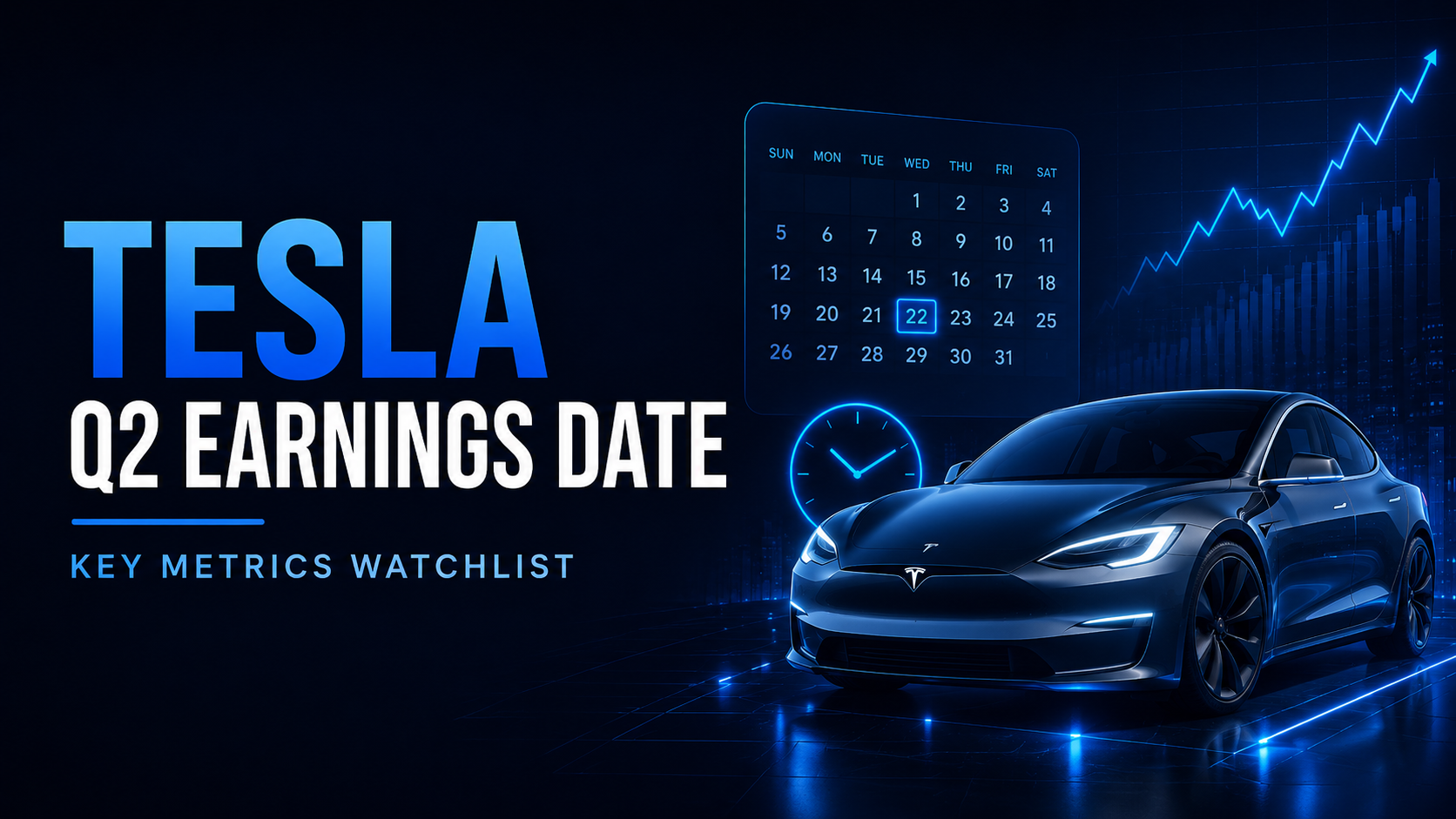
特斯拉2026年第二季度财报日期:发布时间、网络直播及关键指标
特斯拉2026年第二季度财报定于2026年7月22日(星期三)美国股市收盘后发布,管理层计划于美国中部时间下午4:30 / 东部时间下午5:30主持实时Q&A网络直播。第二季度的更新和网络直播将通过特斯拉的投资者关系网站提供,并在电话会议后提供存档重播。
这不仅仅是另一个普通的特斯拉财报日。特斯拉已经报告了超预期的交付季度:在2026年第二季度,公司生产了451,758辆汽车,交付了480,126辆汽车,并部署了13.5 GWh的储能产品。
对于交易员来说,关键问题不再是特斯拉是否交付了更多汽车,这部分已经是已知事实。真正的问题是,这些交付是否足够盈利,储能业务的增长是否能支撑特斯拉更宏大的愿景,以及管理层能否证明其在人工智能、自动驾驶和Robotaxi(无人驾驶出租车)领域的投资正从“叙事”走向可衡量的业务进展。
2026/07/06
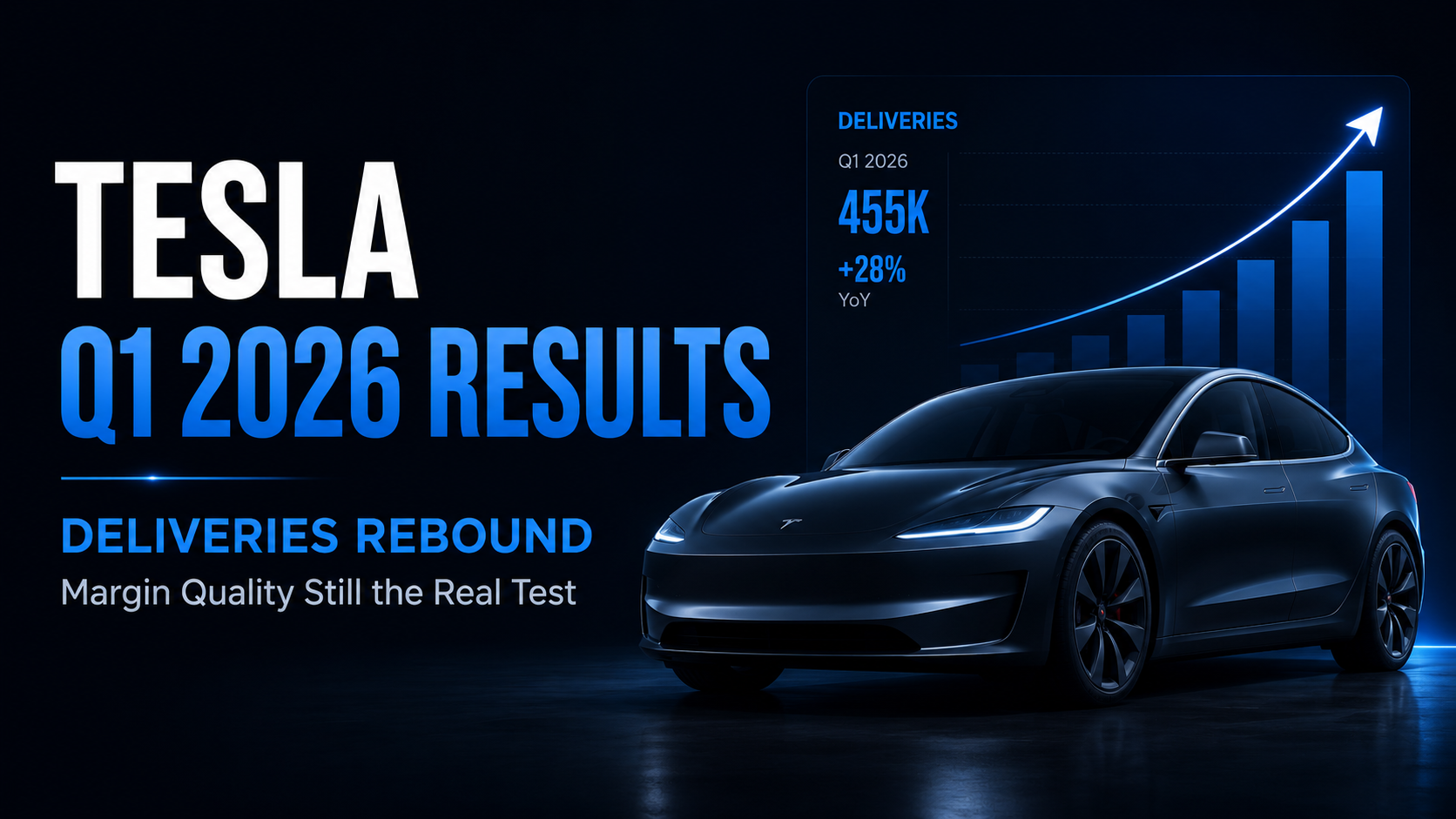
特斯拉2026年第一季度财报回顾:交付量反弹,但利润率质量仍是真正的考验
特斯拉于2026年4月22日美国股市收盘后公布了其2026年第一季度的财务业绩。该公司本季度交付了358,023辆汽车,创造了224亿美元的总营收,并报告归属于普通股股东的GAAP净利润为4.77亿美元。总GAAP毛利率提升至21.1%,而营业利润率达到4.2%。
核心信号不仅在于特斯拉的交付量从去年同期的疲软基数中恢复。更重要的问题是:更高的交付量、FSD相关营收、更低的单车成本以及改善的汽车毛利率,能否重建市场对特斯拉盈利能力的信心。对于寻找下一次TSLA财报日期或关注特斯拉财报的投资者来说,第一季度的表现为第二季度设立了一个关键考验:即销量的增长能否可持续地转化为更高质量的收益。
2026/07/09
苹果 2026 财年第二季度财报回顾:iPhone 营收与服务业务增长维持 EPS 预期
苹果于 2026 年 4 月 30 日发布了 2026 财年第二季度财报,涵盖截至 2026 年 3 月 28 日的季度。总营收达到 1112 亿美元,同比增长 17%,摊薄后每股收益(EPS)增长 22% 至 2.01 美元。苹果表示,该季度创下了公司 3 月份季度的总营收、iPhone 营收和 EPS 纪录,同时服务业务营收也创下历史新高。
这不仅仅是一份常规的硬件周期财报。苹果第二季度的业绩证明,iPhone 需求、服务业务增长以及积极的资本回报计划仍在共同支撑着该公司强大的 EPS 增长故事。对于寻找下一个苹果财报或 AAPL 财报更新的投资者而言,未来的关键问题是,在市场等待更强劲的 AI 和产品周期催化剂之际,苹果能否维持其溢价估值。
2026/07/09


您可能也会喜欢
热门
目前热门备受市场关注的加密货币
加密货币价格
按交易量计算交易量最大的加密货币