

Cardano has integrated x402, an internet-native payment standard that allows AI agents and automated applications to pay for access to APIs, data, computing resources, and digital services directly whCardano has integrated x402, an internet-native payment standard that allows AI agents and automated applications to pay for access to APIs, data, computing resources, and digital services directly wh
Cardano Integrates x402: AI Agents Can Pay With ADA and Cardano Tokens

Cardano has integrated x402, an internet-native payment standard that allows AI agents and automated applications to pay for access to APIs, data, computing resources, and digital services directly while they operate.
Cardano support is now available within the x402 ecosystem through the @x402/cardano package, while the Cardano Foundation has also developed a facilitator and developer templates. Current testing shows that the payment flow can support both ADA and native assets on Cardano.
What makes this development notable is that Cardano is entering an increasingly competitive market. Solana, EVM networks, XRP Ledger, Bitcoin Lightning, and other payment networks are also being connected to x402, showing how blockchains are positioning themselves as payment infrastructure for a new generation of AI agents capable of executing transactions autonomously.
Key Takeaways
Cardano has integrated x402, a standard that allows applications and AI agents to execute payments directly within HTTP requests.
Developers can use the @x402/cardano package to build applications that support Cardano-based payment flows.
x402 on Cardano supports ADA and can also use Cardano native assets such as stablecoins.
Official templates have tested payments using test ADA and test USDM on the Preprod network.
The Cardano Foundation has developed an x402 facilitator that verifies and submits transactions already signed by users or AI agents.
The facilitator does not hold private keys and does not sign transactions on behalf of users.
The infrastructure has currently been tested on Preprod, while full production deployment on mainnet remains an important factor to monitor.
Cardano is joining Solana, EVM networks, XRP Ledger, and other networks in the competition to build payment rails for AI agents.
What Happened? Cardano Integrates x402 for AI Agent Payments
Cardano has added x402 support to its developer infrastructure, allowing applications to build payment flows in which an AI agent can automatically pay to access digital resources.
x402 uses HTTP 402 “Payment Required” to allow a server to indicate that a resource must be paid for before access is granted.
Instead of requiring users to open a checkout page, enter card information, or log into an account, the payment requirement can be handled directly between software systems.
How Can an AI Agent Pay Using Cardano?
An x402 payment flow can work as follows:
First, the AI agent sends a request to access an API or digital resource.
If the resource requires payment, the server returns the payment requirements.
The agent checks the supported asset type, amount, and network.
The agent’s wallet creates and signs the payment authorization.
The facilitator or server verifies the payment and performs settlement.
Once the payment is accepted, the server provides the resource requested by the agent.
The entire process can be automated through software.
This is particularly suitable for AI agents because they may need to purchase multiple types of resources while completing a task without requiring the user to approve every individual transaction.
Cardano x402 Supports ADA and Native Assets
The Cardano implementation is not limited to ADA.
Developers can build payment flows using native assets on Cardano, including stablecoins.
Official templates currently include examples of payments using 1 tADA and 0.10 tUSDM on Cardano Preprod.
This is important for agentic commerce.
ADA can be used directly as a payment asset, while stablecoins may be more suitable for services that need to maintain stable pricing denominated in U.S. dollars.
Cardano x402 Facilitator
The Cardano Foundation has also developed an x402 facilitator to handle verification and settlement.
The facilitator acts as a technical intermediary between the resource server and the Cardano blockchain.
When it receives a signed transaction, the facilitator checks whether the payment satisfies the required conditions before submitting the transaction to the network.
One notable feature is that the facilitator does not hold private keys and does not sign transactions on behalf of the payer.
The transaction must first be signed by the client’s or AI agent’s wallet.
This design reduces the facilitator’s control over user funds and helps limit certain custody-related risks.
Background / Context
What Is x402?
x402 is an open payment standard designed to make payments a native part of the internet.
In the traditional web model, authentication and payment are usually separate systems.
An API may require users to create an account, generate an API key, select a subscription, and pay before using the service.
x402 aims to introduce a different model.
A resource server can directly indicate that the current request requires payment. The client can then provide the corresponding payment authorization and continue accessing the resource.
The resource could include:
An API call.
Data.
Paid content.
Computational resources.
AI services.
RPC services.
Files or other internet resources.
This approach is especially suitable for machine-to-machine commerce, where both buyers and sellers can be software.
x402 Is Designed for a Multi-Chain Environment
x402 was not built specifically for a single blockchain.
The protocol architecture is designed to support multiple networks, tokens, and payment schemes.
This allows individual blockchains to build their own implementations while operating within the same payment standard.
EVM networks and Solana already have implementations within the x402 ecosystem. XRP Ledger has also developed x402 infrastructure, while Bitcoin Lightning has been added as a payment rail for BTC.
Cardano is therefore not building an entirely separate AI payment system.
Instead, the network is joining a shared standard in which multiple blockchains compete to become settlement layers for machine payments.
How Far Has Cardano Progressed?
Cardano already has several important components required to build x402 applications.
Developers can now use @x402/cardano, starter templates, and the facilitator developed by the Cardano Foundation.
The Express Starter allows developers to build APIs that charge per request and enable clients to automatically execute payments.
The Next.js template provides examples using both ADA and Cardano native assets.
The payment flows have been demonstrated on Cardano Preprod.
However, it is important to distinguish between SDK- and specification-level support and fully verified production infrastructure running on mainnet.
The Cardano x402 Facilitator repository states that the previous version had operated on Preprod, while the current upgraded version has not yet been confirmed as fully live-verified on mainnet.
Cardano has therefore moved beyond the initial concept and prototype stage, but mainnet production readiness remains an important factor to monitor.
Why It Matters
AI Agents Need Different Payment Infrastructure From Humans
AI agents can automatically search for information, call APIs, use software, and perform multiple steps to complete a task.
However, when an agent encounters a paid service, traditional payment systems can become a bottleneck.
An AI agent cannot operate fully autonomously if every API or data purchase requires a human to open a checkout page and manually approve the payment.
x402 attempts to solve this problem by making payments part of the communication process between clients and servers.
An agent can receive payment requirements, evaluate the transaction conditions, and make the payment within limits authorized by its owner.
Micropayments Could Become an Important Part of Agentic Commerce
Transactions between AI agents may look very different from traditional e-commerce transactions.
An agent may need only:
An API call worth a few cents.
A small piece of data.
A few seconds of compute.
An inference from another AI model.
A specialized task performed by another agent.
These transactions may have very small values but occur at high frequency.
As a result, AI-focused payment rails need low costs, sufficient speed, and the ability to integrate directly into software.
Blockchain is becoming one of the approaches being explored for this problem.
Cardano Has Several Characteristics That May Suit Machine Payments
Cardano uses the eUTxO model and offers highly deterministic transaction behavior.
Developers can determine transaction structure and fees before the transaction is signed.
For AI agents, predictable costs can be particularly important.
An agent operating under a limited budget needs to know how much it will spend before executing a transaction to ensure that the payment does not violate its spending policy.
Cardano also supports native assets directly at the ledger level.
This allows ADA, stablecoins, and other tokens to be used within the same payment infrastructure without necessarily relying on a separate smart contract token for each asset.
Impact
Impact on Cardano
x402 introduces a new use case for Cardano beyond DeFi, NFTs, or traditional payments: machine-to-machine payments.
Under this model, software itself can become the entity generating transactions.
If AI agents begin purchasing APIs, data, and services using Cardano assets, the network could gain a new source of transaction demand.
However, having the infrastructure does not automatically mean adoption will follow.
The actual impact on Cardano will depend on how many developers build x402 applications, how many APIs support Cardano, and how much transaction volume AI agents generate.
Impact on ADA
ADA could play several roles in this ecosystem.
First, ADA can be used directly to pay for APIs or digital resources.
Cardano’s test templates have already demonstrated this payment flow using test ADA.
In addition, ADA remains Cardano’s native asset and is used to pay transaction fees when activity is settled on the blockchain.
If x402 generates meaningful real-world activity, it could provide another source of network usage for Cardano.
However, there is not yet enough data to determine whether this would have a significant impact on the price of ADA.
Impact on Stablecoins on Cardano
Stablecoins could play a more important role than ADA in certain payment use cases.
For example, an API charging a fixed fee of $0.10 per request would be easier to price using a stablecoin than an asset with a fluctuating market value.
Cardano’s native asset model allows stablecoins to be integrated into payment flows in the same way as other native assets.
The fact that x402 templates already use test USDM provides an example of this potential implementation.
If agentic payments grow on Cardano, stablecoin demand could become a more important factor than demand for ADA alone as a payment medium.
Impact on Developers
Developers are among the groups that could benefit most directly from the x402 standard.
Instead of building an entire payment, authentication, and blockchain settlement system from scratch, developers can use existing SDKs, middleware, and facilitators.
This could lower the barrier to building:
Paid APIs.
Data marketplaces.
AI services that charge per request.
Computational marketplaces.
Agent-to-agent services.
Premium content.
However, production deployment will still require careful management of security, wallet authorization, and spending policies.
Impact on the AI Agent Economy
If AI agents become increasingly autonomous, payments could become an important infrastructure layer for the AI ecosystem.
An agent may need to interact with multiple services while completing a single task.
It might purchase data from one provider, rent computing resources from another, and pay a specialized AI model or agent to handle part of the task.
x402 attempts to create a shared standard so that these payment interactions do not need to be rebuilt from scratch for every service.
Cardano’s support for x402 expands the number of settlement options available to developers and agents.
Impact on Competition Between Blockchains
Cardano’s appearance within x402 also reflects a broader trend.
Blockchains are increasingly competing not only in DeFi or tokenization but also in machine payments.
Solana has advantages in throughput and its payments ecosystem.
EVM networks have a large developer base and mature tooling.
Bitcoin Lightning focuses on BTC micropayments.
XRP Ledger is expanding its infrastructure for x402 and agentic payments.
Cardano brings its eUTxO model, native asset support, and predictable transaction structure into the competition.
However, supporting x402 is only a prerequisite for participating in this market.
Long-term advantages will depend on factors such as:
Transaction costs.
Settlement speed.
Stablecoin liquidity.
Developer tooling.
Wallet support.
Facilitator availability.
The number of merchants and APIs integrated.
Actual transaction volume.
The blockchain that develops a larger ecosystem with meaningful real-world usage will have a clearer advantage than one that only has technical-level integration.
What Happens Next?
The most important factor to monitor for Cardano x402 is production adoption.
Technical components such as the SDK, templates, and facilitator already exist, but the next step is to see whether they are widely deployed beyond testnet environments.
Several important indicators include:
Whether the Cardano Foundation confirms that the facilitator has completed live mainnet testing.
Whether an official hosted facilitator is deployed in production.
How many developers use @x402/cardano.
How many APIs accept payments through Cardano.
Whether ADA or stablecoins become the more popular payment asset.
Whether transaction volume generated by x402 increases significantly.
Which AI platforms integrate Cardano payments.
How Cardano competes with Solana, EVM networks, XRP Ledger, and Bitcoin Lightning.
If x402 remains limited to demos and experiments, its impact on the Cardano network will remain limited.
If real paid APIs and AI agents begin using Cardano for settlement, x402 could create an additional source of on-chain activity for the ecosystem.
FAQ
What Is Cardano x402?
Cardano x402 is an implementation of the x402 payment standard on Cardano. It allows APIs, applications, and AI agents to process payments using Cardano assets within a standardized HTTP payment flow.
Can AI Agents Pay With ADA Through x402?
Yes. Implementations and templates on Cardano have tested payment flows using test ADA on the Preprod network. An AI agent with an appropriate wallet and signing mechanism can create transactions to pay for resources that support Cardano x402.
Does Cardano x402 Support Tokens Other Than ADA?
Yes. Cardano supports native assets, and the x402 implementation can use these assets as payment methods. Stablecoins such as USDM are one example used in developer templates.
Is Cardano x402 Already Running on Mainnet?
Cardano already has support at the specification, SDK, and developer infrastructure levels. Payment flows have been tested on Preprod, but the production mainnet status of the facilitator still needs to be distinguished from technical mainnet configuration capability.
Do AI Agents Need an Account or Credit Card to Use x402?
Not necessarily. x402 allows payments to be made directly as part of a request without requiring a traditional checkout page or account. However, the agent still needs a wallet, assets, and appropriate transaction-signing permissions.
Could Cardano x402 Affect ADA?
x402 could add another use case for ADA and generate additional network activity if agentic payments achieve broad adoption. However, there is not yet enough data to determine any significant impact on the price of ADA, and the actual outcome will depend on the number of applications, developers, and transactions generated.
Disclaimer: The information provided here is for informational purposes only and should not be considered financial, investment, legal, or professional advice. Always conduct your own research, consider your financial situation, and, if necessary, consult with a licensed professional before making any decisions.
市场机遇
Gensyn实时价格 (AI)
$0.01991
$0.01991$0.01991
USD
Gensyn (AI) 实时价格图表
本页面分享的文章均源自公开平台,仅供参考。该内容不代表 MEXC 的立场或观点。所有版权归 Nguyen Rin Hoang 所有。如果您认为任何内容侵犯了第三方的权益,请联系 [email protected] 以便及时删除。 MEXC 不保证任何内容的准确性、完整性或及时性,且不对基于所提供信息而采取的任何行动负责。本内容不构成财务、法律或其他专业建议,亦不应被解释为 MEXC 的推荐或认可。如需专家见解和深入分析,请造访 MEXC 学院。
Gensyn 最新动态
查看更多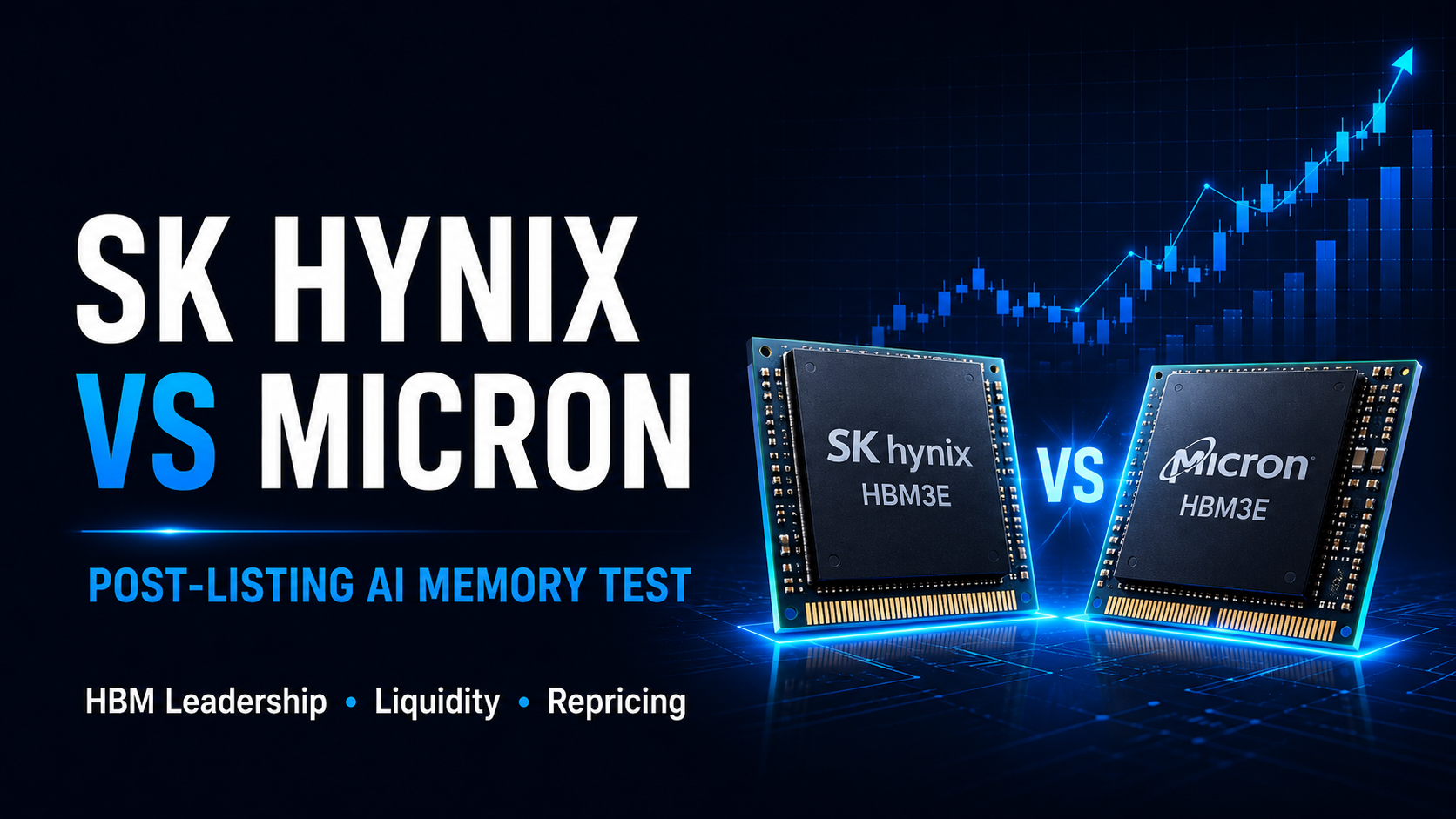
海力士SK Hynix与美光Micron:即将到来的SKHY上市将如何重估AI存储与HBM领导地位
SK Hynix 备受瞩目的纳斯达克上市(股票代码:SKHY)势必将重塑美国投资者评估 AI 存储股票的方式。多年来,Micron(MU)一直是美国上市的默认选择,供投资者交易 DRAM、NAND 以及 AI 驱动的数据中心需求。与此同时,SK Hynix 巩固了其在超宽带内存(HBM)领域的主导地位,但其主要在韩国上市,使得海外投资者的交易渠道不够直接。
随着 SKHY ADR 的推出,这一准入差距正在迅速缩小。这不仅仅是一个处于早期增长阶段的公司进入市场——SK Hynix 携强大的 HBM 叙事,是在一波巨大的 AI 上涨行情之后登场的。对于交易员来说,真正的问题不仅仅是哪家公司“更好”,而是要找出哪支股票具备更强的上涨结构:市场是会奖励 SK Hynix 的 HBM 统治力和新获得的流动性,还是会坚持选择拥有美国市场成熟准入和创纪录盈利表现的 Micron?
2026/07/08
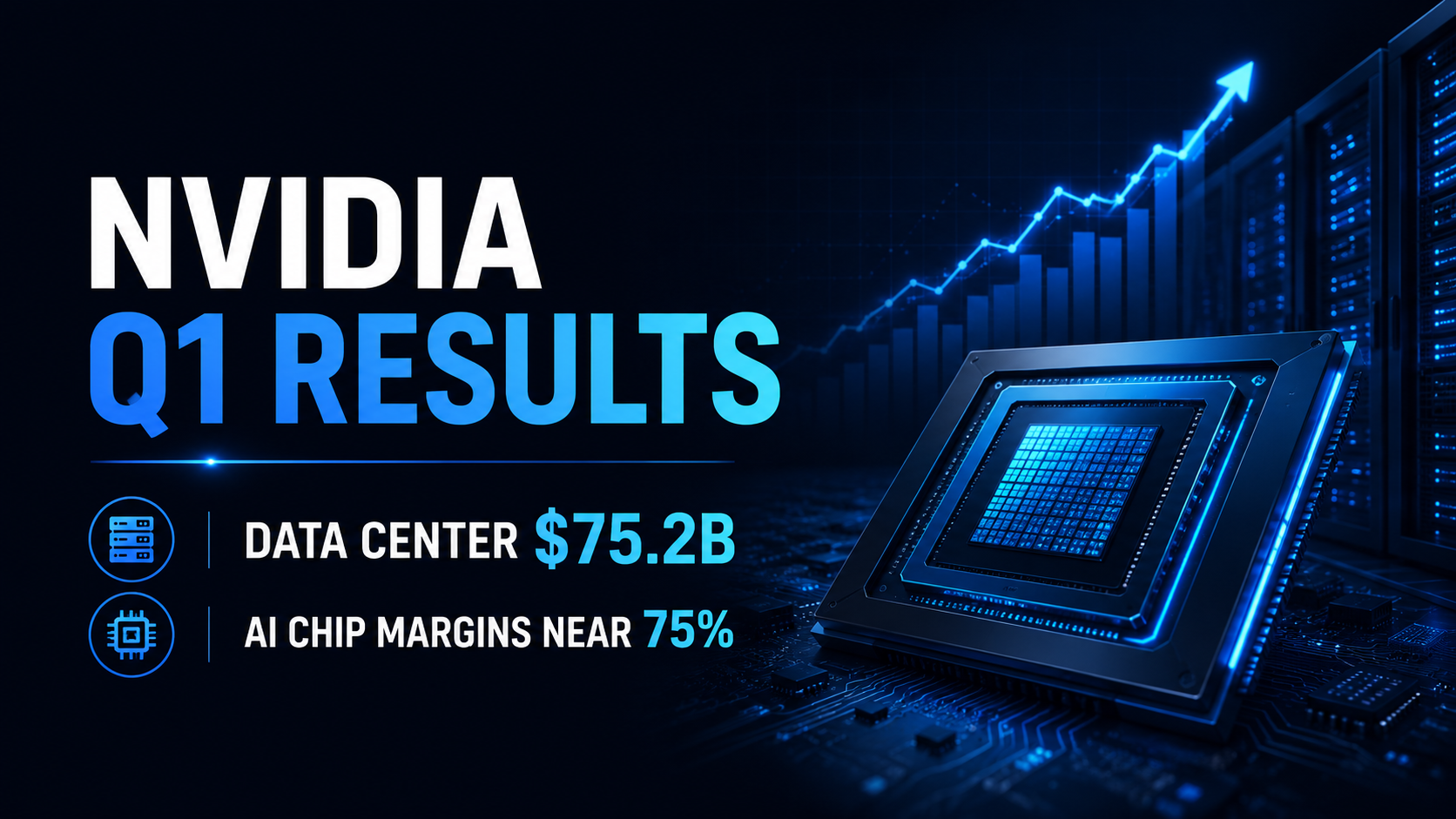
Nvidia FY2027 Q1 财报评析:数据中心营收达 752 亿美元,AI 芯片毛利率稳超 75%
为核心增长引擎的数据中心业务更是一马当先,斩获 752 亿美元营收,较去年同期暴增 92%。尽管面临产能大规模扩张的压力,Nvidia 的定价权依然稳如磐石,GAAP 和非 GAAP 毛利率分别保持在惊人的 74.9% 和 75.0%。
这不仅是一份强劲的财报,更向市场释放了一个清晰的信号:全球对 AI 的强劲需求正以极高的利润率加速转化为真金白银。对于密切关注这一赛道并寻找 Nvidia 最新财报动向的投资者而言,第一季度的强劲表现为接下来的第二季度设定了极高的基准,市场也将继续考验其 AI 基础设施在面对供应链扩产压力及地缘政治溢价时,能否继续保持如此恐怖的扩张步伐。
2026/07/09
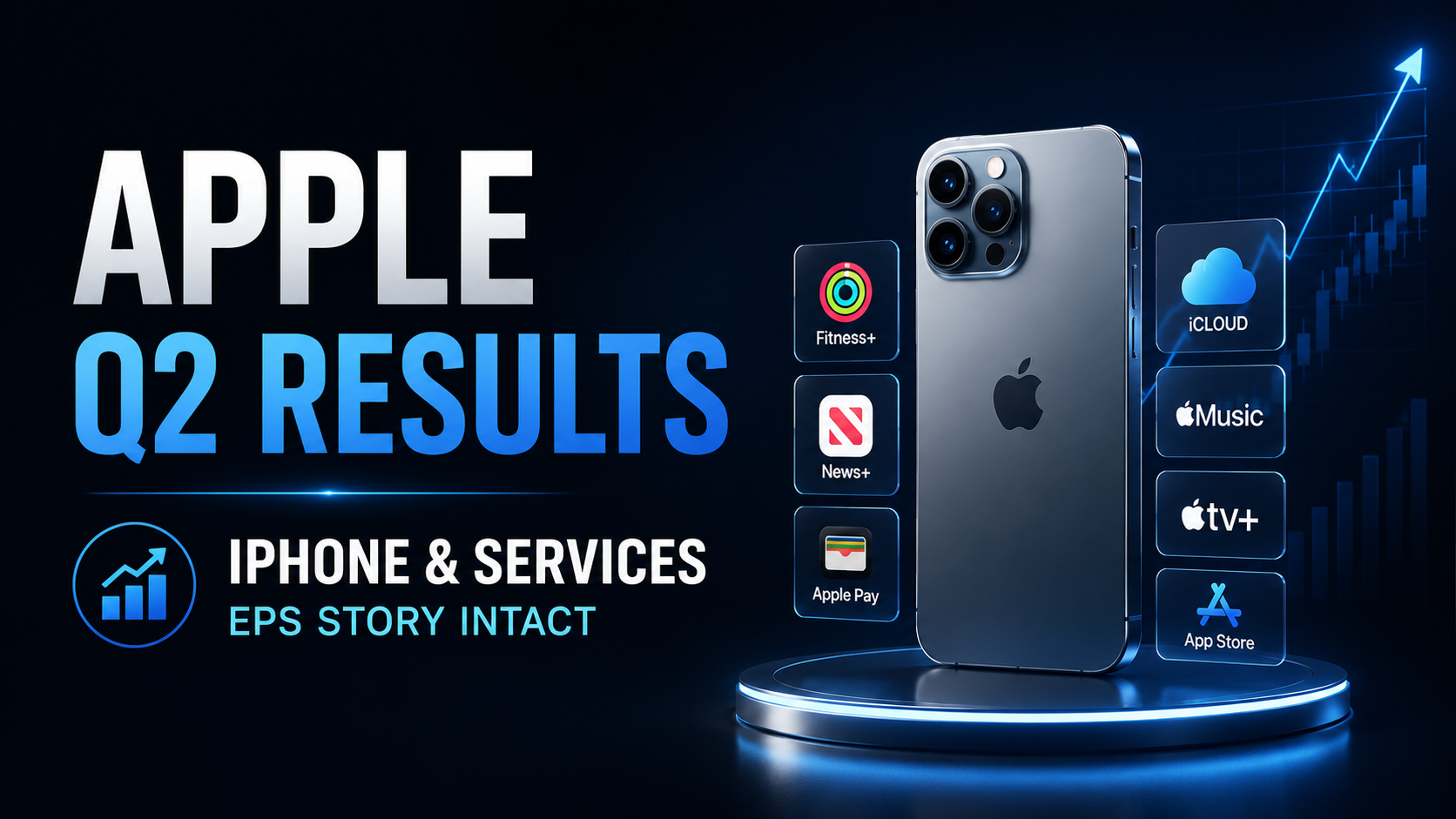
苹果 2026 财年第二季度财报回顾:iPhone 营收与服务业务增长维持 EPS 预期
苹果于 2026 年 4 月 30 日发布了 2026 财年第二季度财报,涵盖截至 2026 年 3 月 28 日的季度。总营收达到 1112 亿美元,同比增长 17%,摊薄后每股收益(EPS)增长 22% 至 2.01 美元。苹果表示,该季度创下了公司 3 月份季度的总营收、iPhone 营收和 EPS 纪录,同时服务业务营收也创下历史新高。
这不仅仅是一份常规的硬件周期财报。苹果第二季度的业绩证明,iPhone 需求、服务业务增长以及积极的资本回报计划仍在共同支撑着该公司强大的 EPS 增长故事。对于寻找下一个苹果财报或 AAPL 财报更新的投资者而言,未来的关键问题是,在市场等待更强劲的 AI 和产品周期催化剂之际,苹果能否维持其溢价估值。
2026/07/09


您可能也会喜欢
热门
目前热门备受市场关注的加密货币
加密货币价格
按交易量计算交易量最大的加密货币