

Circle Internet Group (NYSE: CRCL), the issuer of USD Coin (USDC), has signed a definitive agreement to acquire Singapore-based cross-border payments infrastructure provider Tazapay in an all-stock trCircle Internet Group (NYSE: CRCL), the issuer of USD Coin (USDC), has signed a definitive agreement to acquire Singapore-based cross-border payments infrastructure provider Tazapay in an all-stock tr

Circle Internet Group (NYSE: CRCL), the issuer of USD Coin (USDC), has signed a definitive agreement to acquire Singapore-based cross-border payments infrastructure provider Tazapay in an all-stock transaction valued at approximately $400 million. The acquisition hands Circle direct access to Tazapay’s extensive payment infrastructure, banking relationships, and local payout capabilities across international markets. According to a regulatory filing with the U.S. Securities and Exchange Commission (SEC), the transaction is expected to close in 2027, subject to customary closing conditions and regulatory approvals, including approval from the Monetary Authority of Singapore (MAS).
Under the terms disclosed in the SEC filing, Circle will complete the transaction using its Class A common stock, with the final share count determined by Circle’s 20-day volume-weighted average price (VWAP) prior to closing. To maintain operational alignment during the multi-year closing window, the deal structure incorporates an indemnity holdback reserve as well as $25 million in long-term retention incentives in the form of restricted stock units (RSUs) for key personnel. Following the announcement on September 8, Circle shares dipped roughly 3% to trade near $98.81 as public equity markets digested the transaction’s extended closing timeline.
1.Tazapay Adds the Local Payment Layer Circle Needs
The acquisition addresses an important limitation in cross-border stablecoin payments. Although USDC can be transferred instantly across public blockchain networks, businesses still need access to local banking systems, foreign exchange services, and domestic payment clearinghouses to complete transactions. A merchant receiving USDC must routinely convert those funds into local currency and deposit them into traditional bank accounts, meaning blockchain settlement is only one part of the overall payment lifecycle.
Tazapay operates across more than 100 payout markets and maintains a network of over 60 banking and fintech partners. Its core offerings include B2B payment collection, foreign exchange management, and local disbursements. Circle disclosed that Tazapay currently processes over $25 billion in annualized transaction volume, up from $10 billion a year earlier. Crucially, approximately 60% of Tazapay’s transaction volume already involves stablecoins, giving Circle access to an established payments business where digital assets are actively used in commercial trade.
For Circle, this infrastructure provides turnkey settlement capacity in Asia-Pacific (APAC) and emerging markets. Rather than establishing independent banking relationships and regulatory licenses market by market, Circle can integrate Tazapay’s existing network directly into its ecosystem, enabling businesses to execute settlement via USDC while counterparties receive local fiat through established banking rails.
2.An Acquisition Built on an Existing Partnership
The transaction formalizes a long-standing working relationship between the two companies. Tazapay has served as a design partner for the Circle Payments Network since 2025, allowing both teams to test integrated stablecoin payout workflows prior to the acquisition.
Circle leadership views the acquisition as a catalyst for mainstream stablecoin usage. “Stablecoin settlement is becoming core infrastructure in the global economy, and combining USDC with Tazapay’s world-class banking relationships, local payout rails, and institutional customer base will accelerate worldwide USDC adoption,” stated Jeremy Allaire, Co-Founder, CEO, and Chairman of Circle. Irfan Ganchi, Senior Vice President of Payments at Circle, added that the deal strengthens the firm’s capacity to originate and terminate transactions globally on a 24/7 basis.
Tazapay’s executive team framed the deal as a natural step toward scaling digital cross-border trade. “We built Tazapay to make payments faster, remove friction, and streamline dependency on banking rails that don’t operate at the speed of global commerce,” said Rahul Shinghal, Co-Founder and CEO of Tazapay. “Circle has the dollar infrastructure in USDC and the regulatory standing to take what we’ve built further than we could alone.”
3.Why Circle Is Paying $400 Million for Tazapay
The $400 million transaction represents a major capital deployment into underlying payment rails. Utilizing equity rather than cash preserves Circle’s balance sheet while granting it immediate access to payment connections that would take years to build independently.
The transaction also reflects a broader shift across the stablecoin industry. Historically, stablecoin activity was dominated by cryptocurrency trading, decentralized finance (DeFi), and digital asset liquidity. However, industry focus has rapidly migrated toward real-world commercial execution, including global payroll, supplier invoicing, B2B trade, and treasury management.
Because stablecoins alone cannot eliminate the need for foreign exchange, compliance screening, or fiat conversion, Tazapay acts as the operational bridge between public ledgers and domestic banking networks.
4.Regulatory Approval and the Road to 2027
Despite its strategic rationale, the acquisition faces a multi-year execution path. Circle and Tazapay must secure regulatory clearances across multiple jurisdictions, most notably from Singapore’s MAS. Regulators continue to maintain close oversight on non-bank institutions offering fiat-to-digital-asset conversions, cross-border settlement, and anti-money laundering (AML) controls.
The 2027 closing target provides both organizations time to navigate regulatory requirements and align software stacks. During this interim period, Tazapay will continue operating as an independent business, with Circle confirming there will be no disruption to Tazapay’s existing customer APIs, fee structures, or support services.
Conclusion
Circle’s agreement to acquire Tazapay highlights a broader trend in global finance: stablecoin issuers are increasingly building directly onto traditional financial infrastructure rather than trying to displace it. By pairing USDC settlement with local payout channels, Circle is positioning its digital dollar as an underlying layer for mainstream commercial transactions.
If regulatory approvals are secured and technical integration proceeds smoothly, Tazapay could serve as a primary growth engine for USDC outside the United States. The $400 million acquisition stands as a clear signal that the future of cross-border payments may rely on hybrid models, combining the speed of blockchain networks with the local reach of established commercial banking systems.
Disclaimer:This content is for educational and reference purposes only and does not constitute any investment advice. Digital asset investments carry high risk. Please evaluate carefully and assume full responsibility for your own decisions.
市场机遇
4实时价格 (4)
--
----
USD
4 (4) 实时价格图表
本页面分享的文章均源自公开平台,仅供参考。该内容不代表 MEXC 的立场或观点。所有版权归 Mubashir 所有。如果您认为任何内容侵犯了第三方的权益,请联系 [email protected] 以便及时删除。 MEXC 不保证任何内容的准确性、完整性或及时性,且不对基于所提供信息而采取的任何行动负责。本内容不构成财务、法律或其他专业建议,亦不应被解释为 MEXC 的推荐或认可。如需专家见解和深入分析,请造访 MEXC 学院。
4 最新动态
查看更多
特斯拉2026年第二季度财报日期:发布时间、网络直播及关键指标
特斯拉2026年第二季度财报定于2026年7月22日(星期三)美国股市收盘后发布,管理层计划于美国中部时间下午4:30 / 东部时间下午5:30主持实时Q&A网络直播。第二季度的更新和网络直播将通过特斯拉的投资者关系网站提供,并在电话会议后提供存档重播。
这不仅仅是另一个普通的特斯拉财报日。特斯拉已经报告了超预期的交付季度:在2026年第二季度,公司生产了451,758辆汽车,交付了480,126辆汽车,并部署了13.5 GWh的储能产品。
对于交易员来说,关键问题不再是特斯拉是否交付了更多汽车,这部分已经是已知事实。真正的问题是,这些交付是否足够盈利,储能业务的增长是否能支撑特斯拉更宏大的愿景,以及管理层能否证明其在人工智能、自动驾驶和Robotaxi(无人驾驶出租车)领域的投资正从“叙事”走向可衡量的业务进展。
2026/07/06
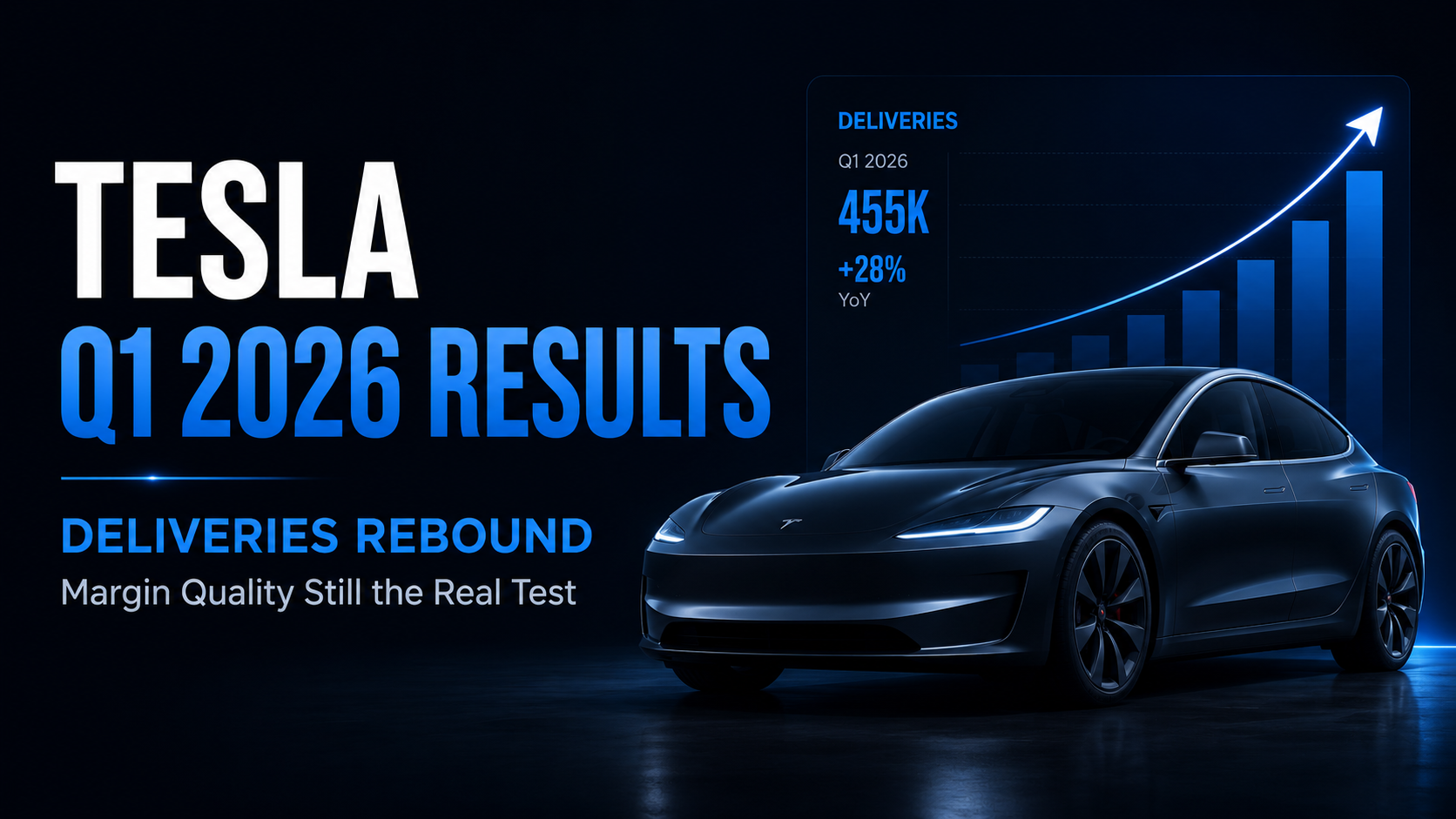
特斯拉2026年第一季度财报回顾:交付量反弹,但利润率质量仍是真正的考验
特斯拉于2026年4月22日美国股市收盘后公布了其2026年第一季度的财务业绩。该公司本季度交付了358,023辆汽车,创造了224亿美元的总营收,并报告归属于普通股股东的GAAP净利润为4.77亿美元。总GAAP毛利率提升至21.1%,而营业利润率达到4.2%。
核心信号不仅在于特斯拉的交付量从去年同期的疲软基数中恢复。更重要的问题是:更高的交付量、FSD相关营收、更低的单车成本以及改善的汽车毛利率,能否重建市场对特斯拉盈利能力的信心。对于寻找下一次TSLA财报日期或关注特斯拉财报的投资者来说,第一季度的表现为第二季度设立了一个关键考验:即销量的增长能否可持续地转化为更高质量的收益。
2026/07/09
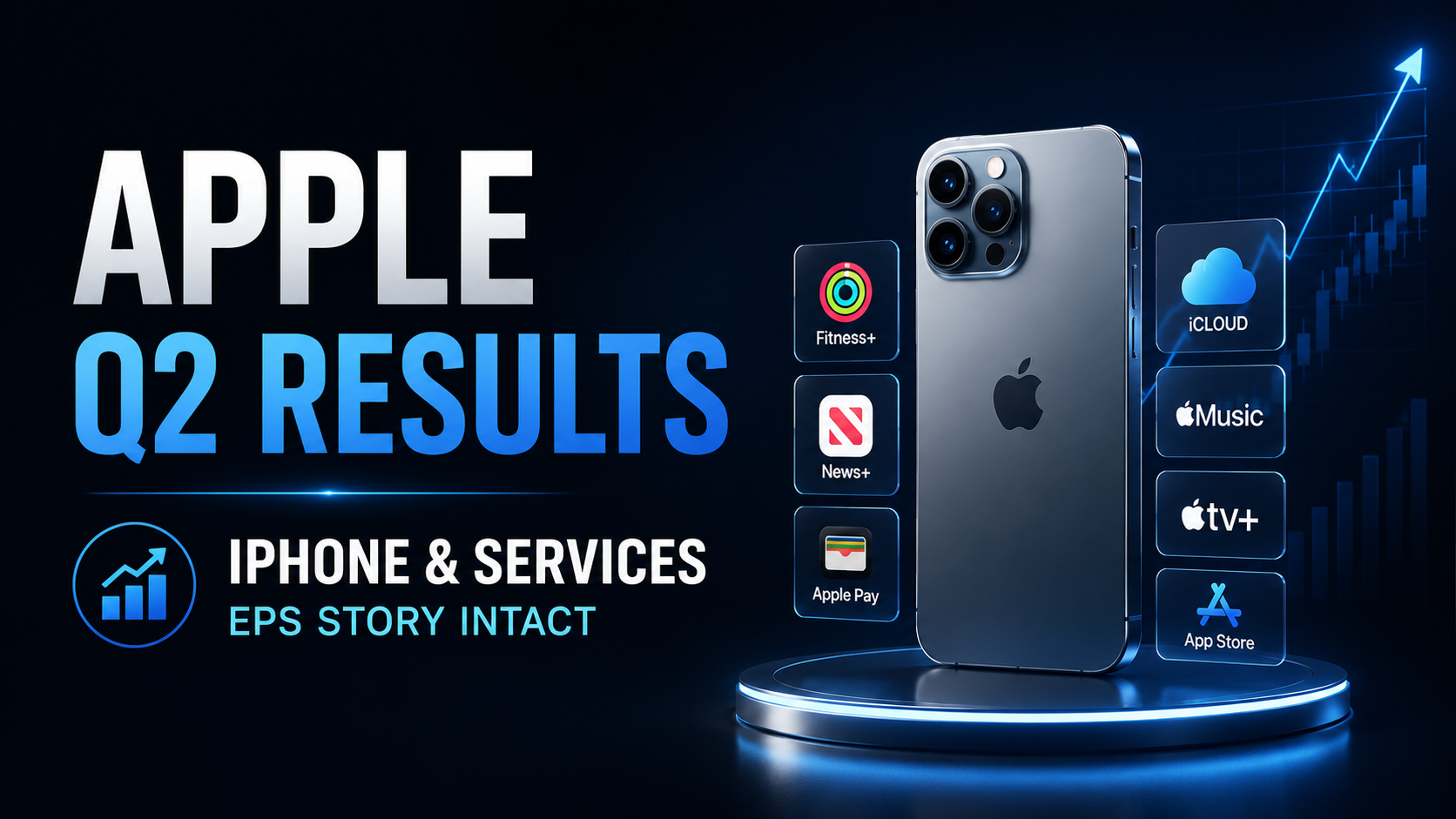
苹果 2026 财年第二季度财报回顾:iPhone 营收与服务业务增长维持 EPS 预期
苹果于 2026 年 4 月 30 日发布了 2026 财年第二季度财报,涵盖截至 2026 年 3 月 28 日的季度。总营收达到 1112 亿美元,同比增长 17%,摊薄后每股收益(EPS)增长 22% 至 2.01 美元。苹果表示,该季度创下了公司 3 月份季度的总营收、iPhone 营收和 EPS 纪录,同时服务业务营收也创下历史新高。
这不仅仅是一份常规的硬件周期财报。苹果第二季度的业绩证明,iPhone 需求、服务业务增长以及积极的资本回报计划仍在共同支撑着该公司强大的 EPS 增长故事。对于寻找下一个苹果财报或 AAPL 财报更新的投资者而言,未来的关键问题是,在市场等待更强劲的 AI 和产品周期催化剂之际,苹果能否维持其溢价估值。
2026/07/09


热门
目前热门备受市场关注的加密货币
加密货币价格
按交易量计算交易量最大的加密货币