

Executive SummaryDell Technologies Inc. (NYSE:DELL) jumped roughly 8% to 10% after hours on September 1, 2026, following a fiscal second-quarter report that blew past Wall Street's expectationsThe comExecutive SummaryDell Technologies Inc. (NYSE:DELL) jumped roughly 8% to 10% after hours on September 1, 2026, following a fiscal second-quarter report that blew past Wall Street's expectationsThe com

Executive Summary
- Dell Technologies Inc. (NYSE:DELL) jumped roughly 8% to 10% after hours on September 1, 2026, following a fiscal second-quarter report that blew past Wall Street's expectations
- The company booked a record $60.9 billion in AI server orders during the quarter and exited with a record $95 billion AI backlog, up from $51.3 billion just three months earlier
- Dell raised its full-year fiscal 2027 revenue guidance from $167 billion to $192 billion, nearly 70% year-over-year growth, and lifted adjusted EPS guidance from $17.90 to $25.50
- Quarterly revenue hit a record $47 billion, up 58% year over year, with adjusted EPS of $7.04, up 203% and well ahead of the $4.97 consensus estimate
- The stock touched a fresh 52-week high in the days following the report, extending a run that had already produced an all-time closing high of $494.51 in mid-August
- A wave of price-target increases followed, including JPMorgan to $635 and Raymond James to $617, while Deutsche Bank maintained a Hold rating even while raising its target to $520
Dell delivered one of the more emphatic earnings reports of the AI infrastructure buildout this week, and the market's reaction reflected it. After three straight days of losses heading into the print, shares reversed hard, and the scale of the beat, on both current results and forward guidance, gave investors a reason to treat this as more than a one-quarter pop. The real question now is whether a stock that has already run this far can keep pace with a backlog that just kept growing.
What Dell Actually Reported
Dell's fiscal second-quarter results, released after market close on September 1, 2026, showed revenue of $47 billion, up 58% year over year and a company record. Net income came in at $4.6 billion, up 189%, on operating income of $5.9 billion. Adjusted earnings per share reached $7.04, up 203% from a year earlier and well above the $4.97 analysts had expected, while GAAP EPS of $6.34 marked a 273% increase.
The headline driver was AI infrastructure. Dell booked $60.9 billion in AI server orders during the quarter alone, of which $16.4 billion was recognized as revenue, roughly double the prior year's figure. The company exited the quarter with a record $95 billion AI backlog, up sharply from $51.3 billion just one quarter earlier, and its AI customer base surpassed 6,500. Trailing-twelve-month AI server orders have now exceeded $130 billion. Infrastructure Solutions Group revenue hit a record $31.8 billion, made up of $10.5 billion in traditional servers and networking, up 122% year over year, and $4.9 billion in storage, up 26%. Client Solutions Group, which includes Dell's PC business, contributed $15 billion in revenue, up 20%.
Management didn't just beat the quarter, it raised guidance for a second consecutive quarter. Dell now expects fiscal 2027 revenue of roughly $192 billion, up from a prior forecast of $167 billion and well ahead of the roughly $174 billion Street consensus, representing growth of nearly 70% year over year. Adjusted EPS guidance rose to $25.50 from $17.90. The company's AI server revenue outlook for the year was lifted to $74 billion, up from $60 billion previously and representing roughly 200% growth. For the third quarter, Dell guided to revenue of approximately $49 billion and adjusted EPS of $6.50, both comfortably ahead of the roughly $41 billion and $4.50 in EPS the Street had been modeling. CEO Jeff Clarke said the company was "raising our expectations across every line of business" given accelerating AI momentum and expanding opportunity across its portfolio.
Why the Stock Jumped
The size of the guidance raise is what separated this report from a routine beat. Dell's $95 billion backlog is now more than twice the company's quarterly revenue, giving investors multi-year visibility into demand that is running well ahead of what the company can currently ship. That backlog effectively functions as a floor under future revenue, and when management raises full-year guidance by $25 billion in a single quarter, second time running, it forces analysts and quantitative models to meaningfully re-rate the stock rather than simply nudge estimates higher.
Context matters too. Heading into the report, Dell shares had fallen roughly 6.8% over three consecutive trading days, closing at $425 on September 1 just ahead of the release, following a period of technical weakness even as the broader AI trade remained strong. That setup left the stock coiled for a sharp reaction in either direction, and the scale of the beat resolved it decisively higher, with shares jumping toward $467 in premarket trading and continuing to extend gains to fresh highs in the sessions that followed.
The comparison to peers reinforced the scale of what Dell delivered. Rival Super Micro Computer booked more than $60 billion in new orders across the entirety of its fiscal 2026; Dell captured a similar figure in three months. Peers Hewlett Packard Enterprise and Super Micro both moved higher in sympathy on the read-through, with HPE, already up over 100% year to date, gaining further on the news.
Not every signal in the report was unambiguously clean. Free cash flow fell to $986 million, down 47% year over year, as building this volume of AI hardware consumes inventory and requires supplier prepayments well ahead of when customers actually pay. Nvidia separately flagged extreme pricing conditions in memory chips on its own earnings call, a dynamic that hits Dell's cost base before it can be passed through to customers, and Dell also carries negative shareholders' equity of roughly $1.4 billion, a long-standing feature of its post-EMC capital structure rather than a new concern. None of these fully offset the scale of the demand story, but they represent the counterweights bulls will need to watch as the AI server business scales.
The Technical Picture
Dell shares fell to a close of $425 on September 1 ahead of the report, extending a three-day, roughly 6.8% pre-earnings slide, before surging in premarket
trading to around $467 once the results and guidance hit the tape. That move reclaimed the stock's 50-day moving average and pushed shares back toward the resistance zone technical analysts had flagged around $464 to $473, a level tied to the stock's recent consolidation range. According to Zacks, Dell was trading above both its 50-day and 200-day moving averages in the days following the report, a bullish technical setup that aligns with the stock's broader trend over the past year.
The stock's 52-week range runs from $110.22 to roughly $469, though shares have already pushed into fresh 52-week-high territory in the sessions following the earnings beat, extending toward and past the prior all-time closing high of $494.51 set in mid-August. Clearing the $464 to $473 resistance zone on strong volume opened the door for a run toward $500, according to technical commentary published in the days after the report, while a failure to hold above the $447 area, the stock's reclaimed moving average, would risk a retest of the $425 gap support left behind by the pre-earnings selloff.
Valuation metrics show the stock trading at a premium to peers, with a forward price-to-earnings ratio around 23.7x against a sector average near 20.6x, and Super Micro Computer trading at a considerably lower 8.27x by comparison. Dell's PEG ratio of 0.76, however, suggests the stock's growth rate may still justify that premium, and Zacks assigns the stock its top Rank of 1, Strong Buy, based on favorable earnings estimate revisions following the report.
Competing Interpretations: Durable AI Infrastructure Leader Versus Priced-for-Perfection Risk
The bull case rests on the sheer size and growth rate of Dell's AI backlog relative to its ability to convert that demand into recognized revenue over time. A $95 billion backlog against roughly $47 billion in quarterly revenue provides years of visibility, and management's decision to raise full-year guidance for a second straight quarter, by $25 billion this time, signals confidence that the current pace of demand is durable rather than a one-time spike. With AI server revenue now guided to triple year over year and the stock's PEG ratio still below 1, some investors see room for the multiple to expand further as Dell converts backlog into recognized, profitable revenue.
The bear case focuses on execution risk and the gap between orders and cash generation. Free cash flow fell nearly 47% even as revenue set records, reflecting how capital-intensive it is to build this volume of AI hardware ahead of customer payment. Rising memory chip costs, flagged by Nvidia on its own call, could compress margins on the AI server business before Dell can fully pass those costs through, and the company's negative shareholders' equity, while not a near-term solvency concern, limits how aggressively management can lean into working capital without adding debt. With the stock already trading at a premium to peers and pushing to fresh all-time highs, some of this quarter's good news may already be reflected in the price, leaving less room for error on execution in the quarters ahead.
Risk Implications for Traders
Traders should recognize that Dell's backlog, while a genuine positive for revenue visibility, is not the same as recognized, cash-generating revenue. The pace at which that $95 billion converts into shipped, billed, and collected business depends on GPU, memory, and networking supply availability, as well as customer-side power and deployment readiness, all of which remain constraints even as demand outstrips them. Any signs of slower-than-expected backlog conversion in coming quarters, or further deterioration in free cash flow, could weigh on a stock that has already priced in a great deal of optimism.
The $464 to $473 resistance zone and the $447 moving-average support level are the technical lines most likely to determine near-term direction, with a clean break in either direction likely to attract momentum flows given how closely this stock is now being watched as a bellwether for the broader AI infrastructure trade. Position sizing should account for the stock's premium valuation relative to peers and the binary nature of how the market could react to any signs that memory-cost inflation is compressing AI server margins faster than expected.
Conclusion
Dell's blowout quarter and aggressive guidance raise have reinforced its position as one of the most important stocks in the AI infrastructure buildout, but the stock's rapid ascent to fresh highs means the bar for future quarters keeps rising alongside it. Whether Dell can continue converting its record backlog into profitable, cash-generating revenue at this pace will determine whether the current rally has more room to run or whether the market has already priced in the best of the good news. Do you see Dell's AI backlog as durable, multi-year revenue visibility, or a stock that has run too far ahead of its ability to convert that demand into cash?
Frequently Asked Questions About DELL Stock
Q: Why did Dell stock jump after its fiscal second-quarter earnings? A: Dell shares jumped roughly 8% to 10% after the company reported record revenue of $47 billion, booked $60.9 billion in AI server orders, and raised its full-year fiscal 2027 revenue guidance from $167 billion to $192 billion.
Q: How large is Dell's AI server backlog? A: Dell exited its fiscal second quarter with a record $95 billion AI server backlog, up from $51.3 billion just three months earlier, with trailing-twelve-month AI server orders exceeding $130 billion.
Q: What is Dell's updated guidance for fiscal 2027? A: Dell raised its full-year revenue guidance to approximately $192 billion, up from $167 billion, and lifted adjusted EPS guidance to $25.50 from $17.90, with AI server revenue now expected to reach $74 billion.
Q: What is Dell's 52-week trading range? A: Dell's 52-week range spans from a low of $110.22 to a high near $469, with shares pushing to fresh 52-week highs in the days following the September 1 earnings report.
Q: What price targets have analysts set for Dell after this report? A: Multiple analysts raised price targets following the report, including JPMorgan to $635 and Raymond James to $617, while Deutsche Bank raised its target to $520 but maintained a Hold rating.
Source- here!
市场机遇
Gensyn实时价格 (AI)
--
----
USD
Gensyn (AI) 实时价格图表
本页面分享的文章均源自公开平台,仅供参考。该内容不代表 MEXC 的立场或观点。所有版权归 MEXC 所有。如果您认为任何内容侵犯了第三方的权益,请联系 [email protected] 以便及时删除。 MEXC 不保证任何内容的准确性、完整性或及时性,且不对基于所提供信息而采取的任何行动负责。本内容不构成财务、法律或其他专业建议,亦不应被解释为 MEXC 的推荐或认可。如需专家见解和深入分析,请造访 MEXC 学院。
Gensyn 最新动态
查看更多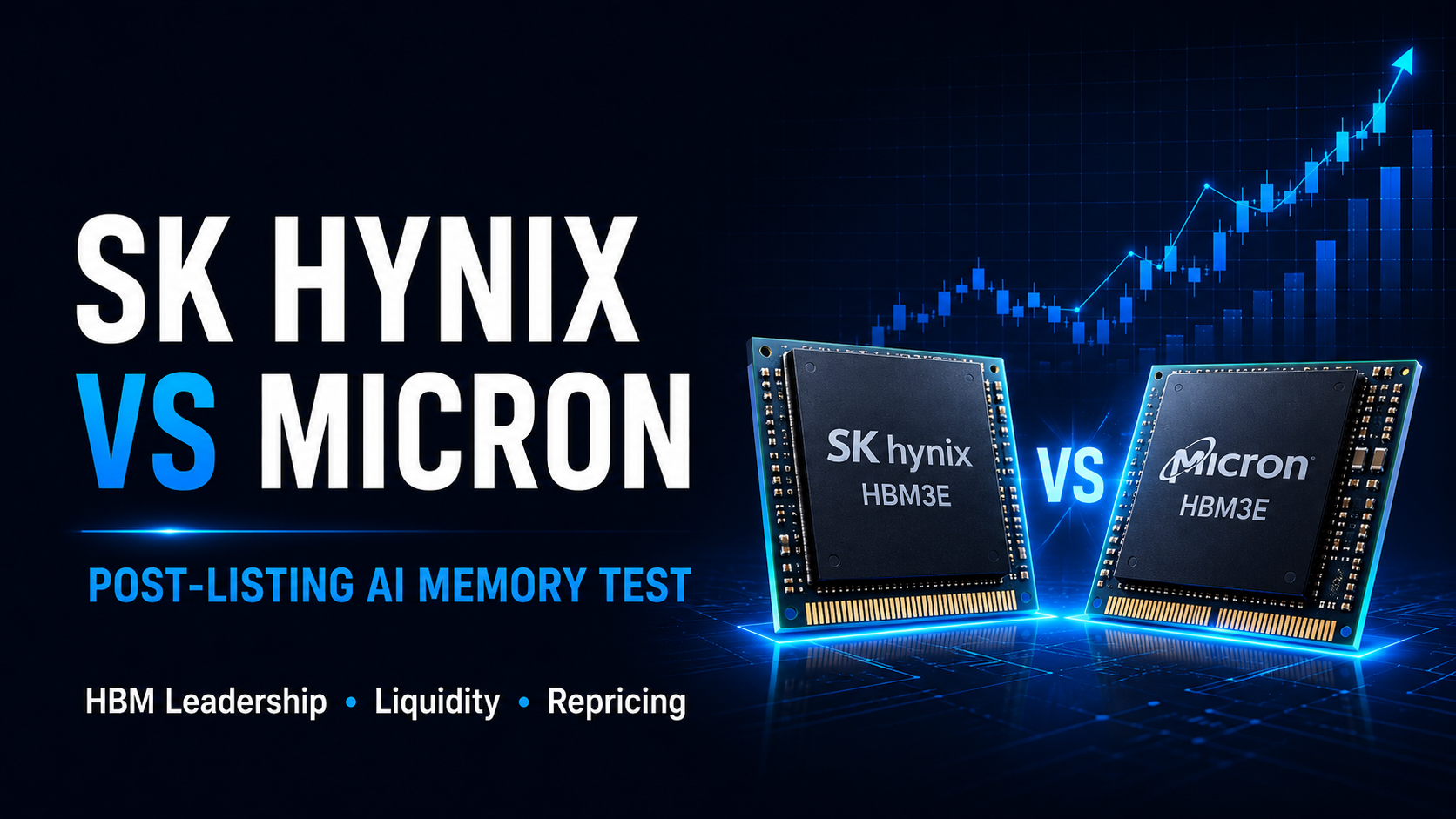
海力士SK Hynix与美光Micron:即将到来的SKHY上市将如何重估AI存储与HBM领导地位
SK Hynix 备受瞩目的纳斯达克上市(股票代码:SKHY)势必将重塑美国投资者评估 AI 存储股票的方式。多年来,Micron(MU)一直是美国上市的默认选择,供投资者交易 DRAM、NAND 以及 AI 驱动的数据中心需求。与此同时,SK Hynix 巩固了其在超宽带内存(HBM)领域的主导地位,但其主要在韩国上市,使得海外投资者的交易渠道不够直接。
随着 SKHY ADR 的推出,这一准入差距正在迅速缩小。这不仅仅是一个处于早期增长阶段的公司进入市场——SK Hynix 携强大的 HBM 叙事,是在一波巨大的 AI 上涨行情之后登场的。对于交易员来说,真正的问题不仅仅是哪家公司“更好”,而是要找出哪支股票具备更强的上涨结构:市场是会奖励 SK Hynix 的 HBM 统治力和新获得的流动性,还是会坚持选择拥有美国市场成熟准入和创纪录盈利表现的 Micron?
2026/07/08
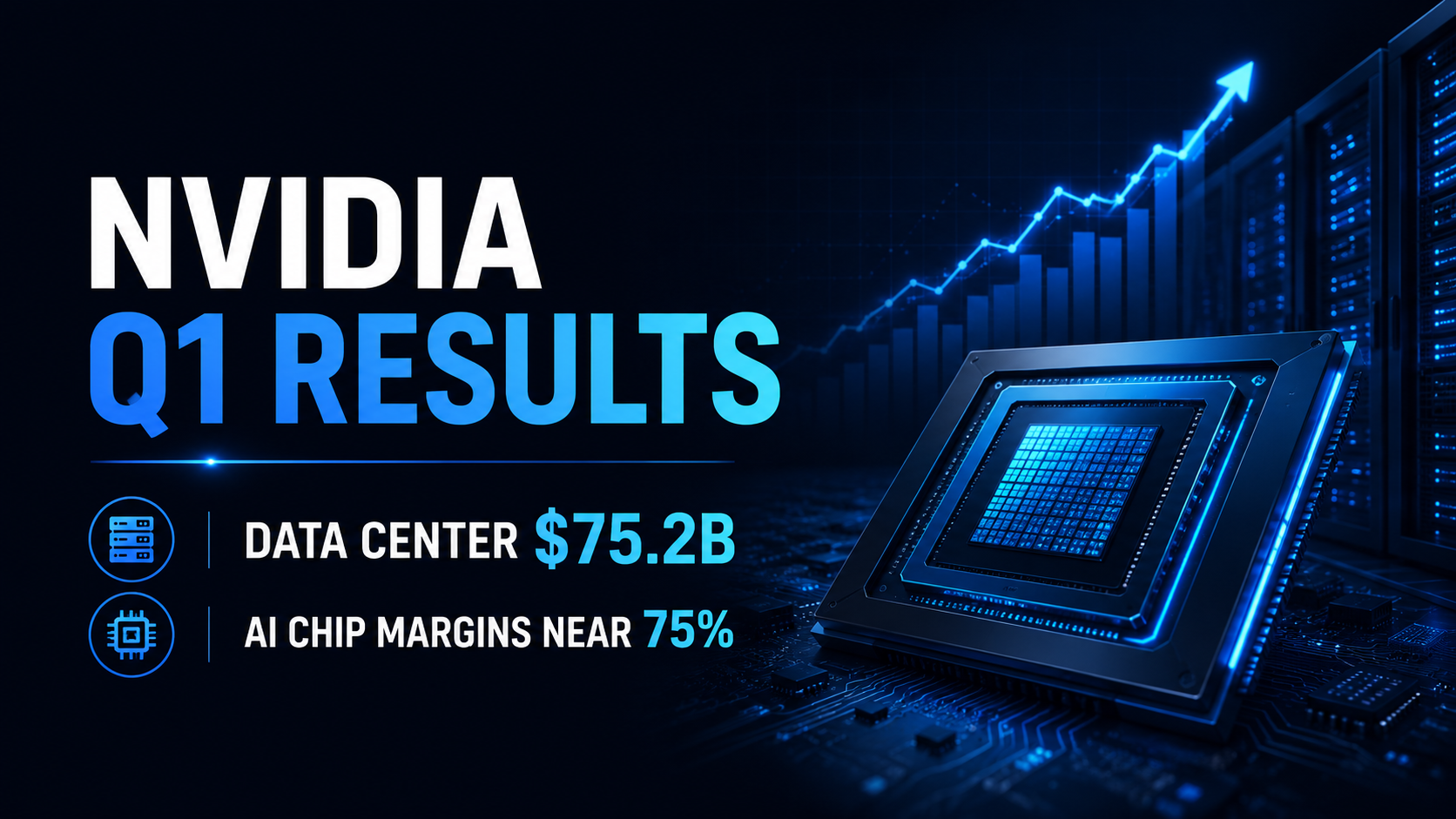
Nvidia FY2027 Q1 财报评析:数据中心营收达 752 亿美元,AI 芯片毛利率稳超 75%
为核心增长引擎的数据中心业务更是一马当先,斩获 752 亿美元营收,较去年同期暴增 92%。尽管面临产能大规模扩张的压力,Nvidia 的定价权依然稳如磐石,GAAP 和非 GAAP 毛利率分别保持在惊人的 74.9% 和 75.0%。
这不仅是一份强劲的财报,更向市场释放了一个清晰的信号:全球对 AI 的强劲需求正以极高的利润率加速转化为真金白银。对于密切关注这一赛道并寻找 Nvidia 最新财报动向的投资者而言,第一季度的强劲表现为接下来的第二季度设定了极高的基准,市场也将继续考验其 AI 基础设施在面对供应链扩产压力及地缘政治溢价时,能否继续保持如此恐怖的扩张步伐。
2026/07/09
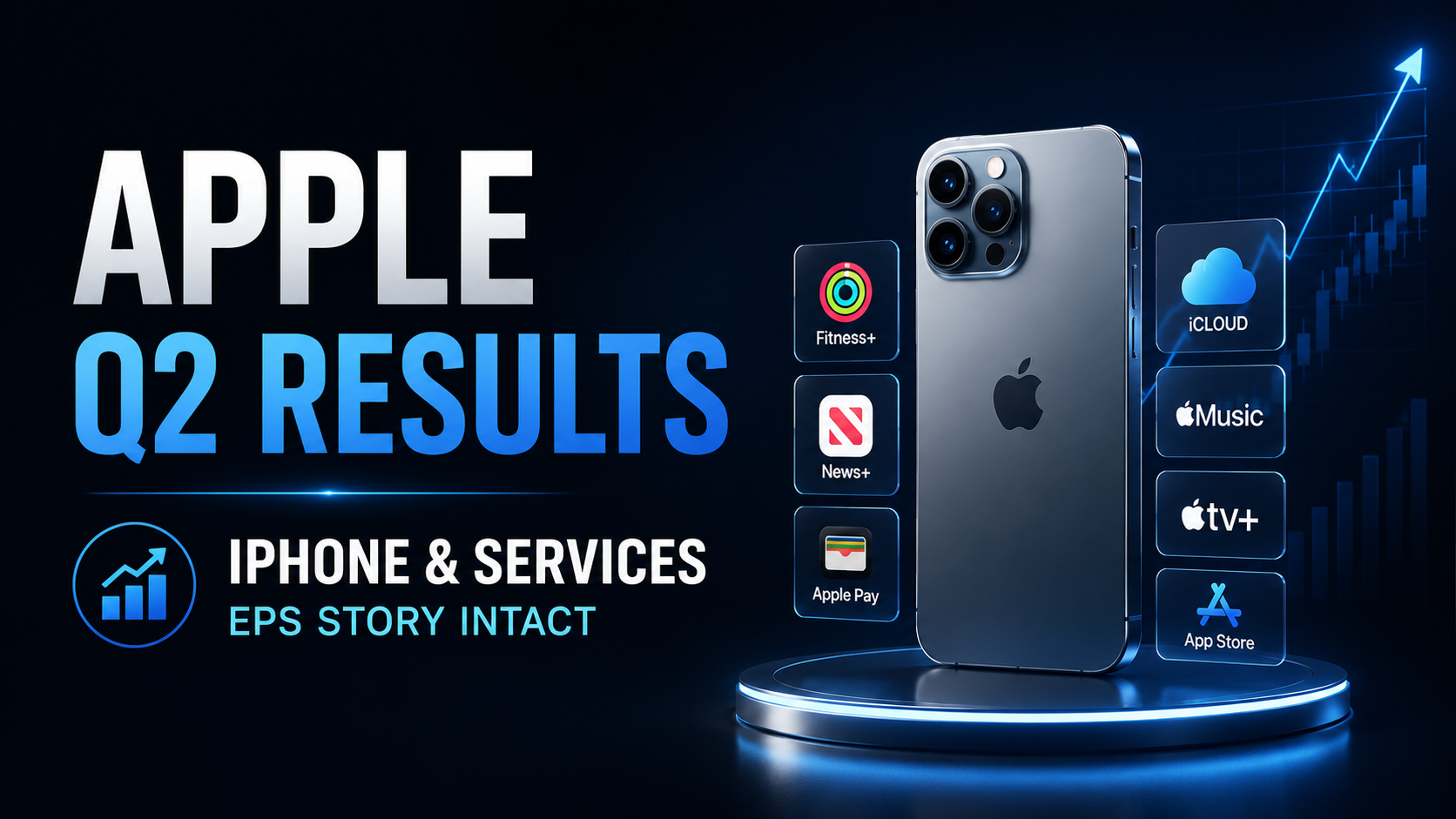
苹果 2026 财年第二季度财报回顾:iPhone 营收与服务业务增长维持 EPS 预期
苹果于 2026 年 4 月 30 日发布了 2026 财年第二季度财报,涵盖截至 2026 年 3 月 28 日的季度。总营收达到 1112 亿美元,同比增长 17%,摊薄后每股收益(EPS)增长 22% 至 2.01 美元。苹果表示,该季度创下了公司 3 月份季度的总营收、iPhone 营收和 EPS 纪录,同时服务业务营收也创下历史新高。
这不仅仅是一份常规的硬件周期财报。苹果第二季度的业绩证明,iPhone 需求、服务业务增长以及积极的资本回报计划仍在共同支撑着该公司强大的 EPS 增长故事。对于寻找下一个苹果财报或 AAPL 财报更新的投资者而言,未来的关键问题是,在市场等待更强劲的 AI 和产品周期催化剂之际,苹果能否维持其溢价估值。
2026/07/09


热门
目前热门备受市场关注的加密货币
加密货币价格
按交易量计算交易量最大的加密货币