

Key TakeawaysThe Ethereum Foundation's Protocol cluster published a firm target on Monday, September 7, 2026: make Ethereum's base layer resistant to quantum computing attacks across its execution, coKey TakeawaysThe Ethereum Foundation's Protocol cluster published a firm target on Monday, September 7, 2026: make Ethereum's base layer resistant to quantum computing attacks across its execution, co
Ethereum's 2029 Quantum Deadline Explained: Q-Day, Five Hard Forks, and Whether Your ETH Is at Risk

作者:OoJae
分享
Key Takeaways
The Ethereum Foundation's Protocol cluster published a firm target on Monday, September 7, 2026: make Ethereum's base layer resistant to quantum computing attacks across its execution, consensus and data layers by December 2029.
The plan assumes Q-day, the point at which a quantum computer could break today's public key cryptography, could arrive as early as 2030, a deliberately aggressive assumption that matches migration timelines set independently by Google, Cloudflare and Microsoft.
Reaching full readiness requires five hard forks after the 2027 Hegota upgrade, about one every 7.2 months, which would have to overlap rather than ship in sequence, the most aggressive development cadence in Ethereum's history.
The exposure is real but not immediate: roughly 65% of all ETH sits in addresses that would be vulnerable to a sufficiently powerful quantum computer, and about 42.4 million staked ETH relies on BLS signatures, yet no quantum machine today comes close to the required capability.
Nothing changes for holders now. The deadline is treated as non negotiable until January 2027, when outside experts will reassess how fast quantum computing is actually progressing.
What the Foundation Announced
For years, quantum computing has been the threat crypto discussed in the abstract. On Monday, the Ethereum Foundation gave it a date. In a protocol priorities post published alongside its grading of 62 improvement proposals for the Hegota upgrade, the Protocol cluster committed to making Ethereum quantum resistant across all three of its layers by December 2029: the execution layer where users sign transactions, the consensus layer where validators agree on the chain, and the data stored on chain. The post describes planning for a Q-day in 2030 as a deliberately aggressive assumption that front runs most credible forecasts, and says the deadline will be treated as fixed at least until a January 2027 review with outside experts.
The date is not arbitrary. Google, Cloudflare and Microsoft have each set their own post quantum migration targets around 2029, and NIST finalized the first official post quantum cryptographic standards in 2024, giving developers concrete algorithms to build with. The urgency increased in March 2026, when research from Google Quantum AI dramatically lowered the estimated resources needed to break 256 bit elliptic curve cryptography to roughly 1,200 logical qubits. The Foundation had already stood up a dedicated post quantum security team in January.
Why Q-Day Threatens Blockchains
Every Ethereum account and every Bitcoin wallet is protected by the same basic mathematics: a private key generates a public key, and deriving the private key from the public one is computationally infeasible for classical computers. A sufficiently large quantum computer running Shor's algorithm could reverse that relationship, letting an attacker forge signatures and move funds from any address whose public key is visible on chain. On Ethereum the exposure runs through two channels: the signatures users make to send transactions, built on the secp256k1 curve the network has used since launch, and the BLS signatures validators use to reach consensus, which secure roughly 42.4 million staked ETH.
The scale of the problem is why the deadline matters. Roughly 65% of all ETH currently sits in addresses that would be vulnerable to a capable quantum machine, and migrating that value is not something that can be done in a weekend. Critically, none of this is a threat today: existing quantum computers are nowhere near powerful enough, and the whole point of a 2029 target is to finish the work before the risk becomes real rather than after.
The Roadmap: Hegota and Five Forks
The Foundation was blunt that the 2027 Hegota upgrade will not itself make Ethereum quantum safe. Its role is to keep the later work on schedule; the Foundation called it the fork that decides whether the post quantum forks happen on time. Hegota carries the enabling pieces, including Frame Transactions, identified as a must ship item that creates a path for new signature schemes, two proposals that let accounts drop secp256k1 as their master key, and a third that begins retiring validator withdrawal credentials still tied to it. Glamsterdam is slated for December 2026 first.
After Hegota, five additional hard forks must land to reach what the Foundation labels full quantum readiness. Hitting December 2029 works out to one fork roughly every 7.2 months, and because that is faster than Ethereum has ever shipped, the forks will need to be developed in parallel rather than one after another. A contingency path exists with a slower cadence of about 12 months per fork, but it would miss the deadline. Skeptics point to history: the Merge, Ethereum's transition to proof of stake, shipped years behind its original projections, and the Foundation is now promising the most aggressive cadence in its existence with little margin for error.
Is Your ETH at Risk, and What About Bitcoin?
For holders, the honest answer is not now, and probably not for years. There is no action to take today, and no wallet migration exists yet to perform. The practical implication is longer term: when post quantum account types ship, moving funds to them will eventually become basic hygiene, particularly for addresses whose public keys are already exposed on chain. The staking layer will migrate through protocol upgrades that validators adopt, rather than through user action.
The announcement also sharpens a comparison. Ethereum can coordinate a multi year roadmap through its Foundation and client teams; Bitcoin, with no central coordinator and a governance process that struggles to activate even minor changes, as the failed BIP-110 fork showed this summer, faces a far harder path to any post quantum transition. That gap is likely to become a recurring argument in the years ahead, and it is one reason Monday's post drew attention well beyond the Ethereum community.
What It Means for Traders on MEXC
Quantum headlines tend to generate short bursts of fear that fade quickly, and this one should be read as reassuring rather than alarming: the network with the largest smart contract economy just put a date and a plan on the risk. Traders can follow ETH/USDT on MEXC, treat future quantum computing announcements as sentiment events rather than immediate threats, and watch the January 2027 reassessment and the Hegota scope decisions as the real milestones.
Disclaimer: This content is for educational and reference purposes only and does not constitute any investment advice. Digital asset investments carry high risk. Please evaluate carefully and assume full responsibility for your own decisions.
市场机遇
Quack AI实时价格 (Q)
--
----
USD
Quack AI (Q) 实时价格图表
本页面分享的文章均源自公开平台,仅供参考。该内容不代表 MEXC 的立场或观点。所有版权归 OoJae 所有。如果您认为任何内容侵犯了第三方的权益,请联系 [email protected] 以便及时删除。 MEXC 不保证任何内容的准确性、完整性或及时性,且不对基于所提供信息而采取的任何行动负责。本内容不构成财务、法律或其他专业建议,亦不应被解释为 MEXC 的推荐或认可。如需专家见解和深入分析,请造访 MEXC 学院。
Quack AI 最新动态
查看更多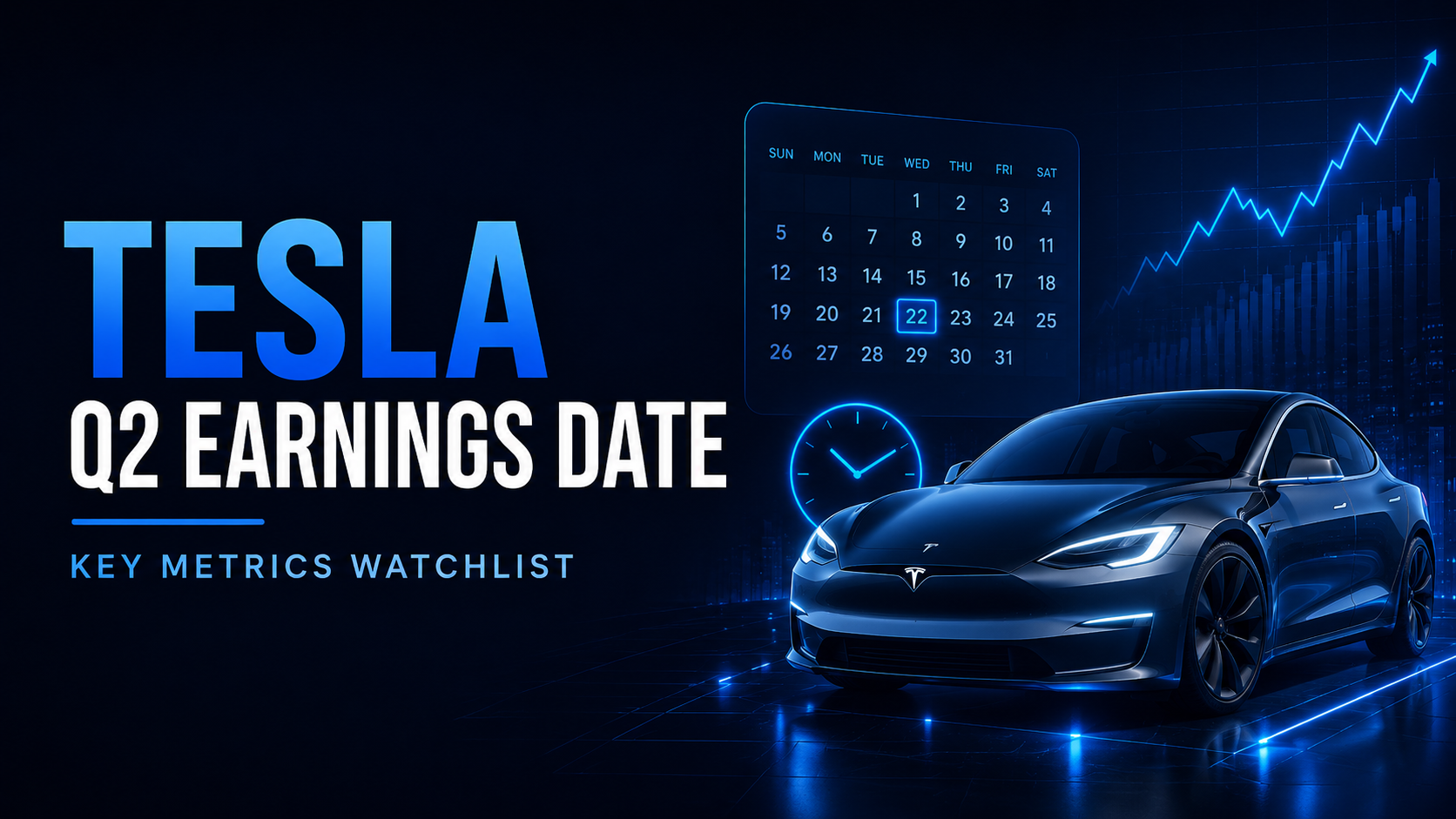
特斯拉2026年第二季度财报日期:发布时间、网络直播及关键指标
特斯拉2026年第二季度财报定于2026年7月22日(星期三)美国股市收盘后发布,管理层计划于美国中部时间下午4:30 / 东部时间下午5:30主持实时Q&A网络直播。第二季度的更新和网络直播将通过特斯拉的投资者关系网站提供,并在电话会议后提供存档重播。
这不仅仅是另一个普通的特斯拉财报日。特斯拉已经报告了超预期的交付季度:在2026年第二季度,公司生产了451,758辆汽车,交付了480,126辆汽车,并部署了13.5 GWh的储能产品。
对于交易员来说,关键问题不再是特斯拉是否交付了更多汽车,这部分已经是已知事实。真正的问题是,这些交付是否足够盈利,储能业务的增长是否能支撑特斯拉更宏大的愿景,以及管理层能否证明其在人工智能、自动驾驶和Robotaxi(无人驾驶出租车)领域的投资正从“叙事”走向可衡量的业务进展。
2026/07/06
Bitget 将退出日本:面向日本居民的服务将于 2026 年 12 月 31 日终止
Bitget 将于 2026 年 12 月 31 日终止对日本用户的服务。受影响的用户必须在截止日期前平仓并提取资产。
2026/08/04

万事达完成对BVNK的收购,交易金额高达18亿美元——稳定币进入全球支付核心
万事达于2026年8月3日完成了对稳定币基础设施提供商BVNK的收购,此前已于三月宣布该交易。
2026/08/04


热门
目前热门备受市场关注的加密货币
加密货币价格
按交易量计算交易量最大的加密货币