

U.S. Treasury yields have moved to the center of the market narrative as investors reassess inflation, government borrowing and the Federal Reserve’s interest-rate path. On August 18, the 30-year TreaU.S. Treasury yields have moved to the center of the market narrative as investors reassess inflation, government borrowing and the Federal Reserve’s interest-rate path. On August 18, the 30-year Trea

U.S. Treasury yields have moved to the center of the market narrative as investors reassess inflation, government borrowing and the Federal Reserve’s interest-rate path. On August 18, the 30-year Treasury yield rose to about 5.28% after briefly moving above 5.3%, reaching levels last seen around 2007, while the 10-year yield remained near 4.7%. The move coincided with weakness in U.S. equities, particularly technology stocks, while gold also declined. Bitcoin remained sensitive to the broader shift in risk appetite.
1.What Are Bond Yields and Why Do They Matter?
A bond yield represents the return investors demand for holding a bond. Treasury yields are especially important because U.S. government debt is widely used as a benchmark for borrowing and asset pricing. Bond prices and yields move in opposite directions: when existing bonds are sold, their prices fall and their yields rise. TreasuryDirect explains that a bond’s market price depends partly on its yield to maturity and coupon rate.
Higher yields can tighten financial conditions by making government debt more attractive relative to riskier investments, raising borrowing costs and increasing the discount rate used to value future corporate earnings. Federal Reserve research notes that higher long-term Treasury yields raise the cost of long-term credit and can affect valuations across financial markets.
2.Scenario 1: Yields Rise Because Inflation Stays High
Imagine inflation remains stubborn because energy prices rise and businesses continue facing higher costs. Investors may conclude that the Federal Reserve will keep interest rates restrictive for longer, pushing Treasury yields higher.
Stocks: Higher discount rates reduce the present value of future earnings, making expensive growth companies particularly sensitive. Technology and AI shares can therefore face greater valuation pressure.
Bitcoin: Bitcoin can face a similar headwind because it is generally treated as a high-volatility risk asset. If Treasury securities offer more attractive returns with lower perceived risk, some capital may move away from speculative assets.
Gold: Gold can also come under pressure because it does not pay interest. The key measure is the real yield, the return after inflation. When real yields increase, the opportunity cost of holding gold rises. However, geopolitical risk and central-bank demand can offset some of that pressure.
3.Scenario 2: Yields Rise Because Economic Growth Is Strong
Now consider a healthier setup. Economic growth accelerates, corporate earnings improve and investors expect stronger demand. Treasury yields rise because markets believe the economy can support higher rates.
Stocks: This does not necessarily mean equities will fall across the board. High-growth stocks can still face valuation pressure from higher discount rates, but stronger economic activity can support earnings and reduce the damage to the broader market.
Bitcoin: Crypto can respond more positively than it would during an inflation-driven yield surge. Strong growth can sustain risk appetite and liquidity, allowing investors to remain willing to hold volatile assets. Rising yields are therefore not automatically bearish for Bitcoin.
Gold: Gold would likely face a tougher backdrop if stronger growth pushes real yields higher and reduces demand for defensive assets. Investors may prefer assets that generate earnings or interest.
4.Scenario 3: Yields Fall Because Inflation Cools
The picture changes when inflation falls sustainably. If price pressures ease, investors may expect lower policy rates, causing Treasury yields to decline.
Stocks: Lower yields generally support equity valuations because the discount rate applied to future earnings falls. Growth and technology companies can benefit disproportionately because more of their valuation is tied to future profits.
Bitcoin: Falling yields can improve the relative attractiveness of risk assets if financial conditions become easier. A weaker dollar can provide another supportive factor for dollar-priced digital assets.
Gold: Gold often benefits when real yields decline. With less income sacrificed by holding bullion instead of interest-bearing assets, demand can improve. Easier monetary-policy expectations can strengthen that effect.
5.Scenario 4: Yields Fall Because the Economy Weakens
If yields decline because investors fear a significant economic slowdown, lower borrowing costs may be overwhelmed by concerns about earnings and financial stability.
Stocks: Companies can face pressure because weaker economic activity threatens revenues and profits. Defensive sectors may hold up better than cyclical industries.
Bitcoin: Bitcoin could also decline in a recessionary risk-off environment. Although lower yields are normally supportive, investors may reduce exposure to volatile assets when liquidity becomes scarce or uncertainty rises.
Gold: Gold may have the strongest relative position. Falling yields, weaker growth and demand for defensive assets can create a favorable combination.
6.The Current Market Setup
As of August 19, 2026, long-term Treasury yields are a major market focus. Reuters reported that the 30-year Treasury yield had reached its highest level in nearly two decades, with investors weighing inflation risks, government borrowing needs, energy prices and expectations for Federal Reserve policy. The Federal Reserve kept its target federal funds range at 3.50%–3.75% at the July 28–29 meeting. Minutes from that meeting are scheduled for release on August 19, offering investors a closer look at the policy debate.
Federal Reserve research published in 2026 also found that higher expected government debt can raise longer-run interest rates, adding another channel through which fiscal conditions can affect Treasury yields.
7.What Should Investors Watch?
The key question is not simply whether yields are rising or falling, but why they are moving. Inflation expectations, real yields, the U.S. dollar, oil prices, economic-growth data and Federal Reserve guidance can all change the interpretation.
For stocks, the 10-year Treasury yield is an important benchmark because it influences valuation models and financing costs. For Bitcoin, Treasury yields, dollar strength and overall risk appetite provide useful context. For gold, real yields, central-bank demand and geopolitical risk are particularly important.
8.Conclusion
Bond yields are a crucial link between monetary policy and financial markets. Rising yields can pressure stocks, Bitcoin and gold, but the impact depends on the underlying cause. Inflation-driven increases are generally more difficult for risk assets, growth-driven increases can be more manageable, and falling yields can be supportive unless they signal a serious economic slowdown.
The current market shows why this relationship deserves attention. With the U.S. 30-year Treasury yield around the 5.3% area and investors awaiting fresh insight from the Federal Reserve, the next move in yields could help determine whether weakness in stocks, gold and Bitcoin develops into a deeper repricing or remains a temporary adjustment.
Disclaimer:This content is for educational and reference purposes only and does not constitute any investment advice. Digital asset investments carry high risk. Please evaluate carefully and assume full responsibility for your own decisions.
市场机遇
4实时价格 (4)
--
----
USD
4 (4) 实时价格图表
本页面分享的文章均源自公开平台,仅供参考。该内容不代表 MEXC 的立场或观点。所有版权归 Mubashir 所有。如果您认为任何内容侵犯了第三方的权益,请联系 [email protected] 以便及时删除。 MEXC 不保证任何内容的准确性、完整性或及时性,且不对基于所提供信息而采取的任何行动负责。本内容不构成财务、法律或其他专业建议,亦不应被解释为 MEXC 的推荐或认可。如需专家见解和深入分析,请造访 MEXC 学院。
4 最新动态
查看更多
特斯拉2026年第一季度财报回顾:交付量反弹,但利润率质量仍是真正的考验
特斯拉于2026年4月22日美国股市收盘后公布了其2026年第一季度的财务业绩。该公司本季度交付了358,023辆汽车,创造了224亿美元的总营收,并报告归属于普通股股东的GAAP净利润为4.77亿美元。总GAAP毛利率提升至21.1%,而营业利润率达到4.2%。
核心信号不仅在于特斯拉的交付量从去年同期的疲软基数中恢复。更重要的问题是:更高的交付量、FSD相关营收、更低的单车成本以及改善的汽车毛利率,能否重建市场对特斯拉盈利能力的信心。对于寻找下一次TSLA财报日期或关注特斯拉财报的投资者来说,第一季度的表现为第二季度设立了一个关键考验:即销量的增长能否可持续地转化为更高质量的收益。
2026/07/09
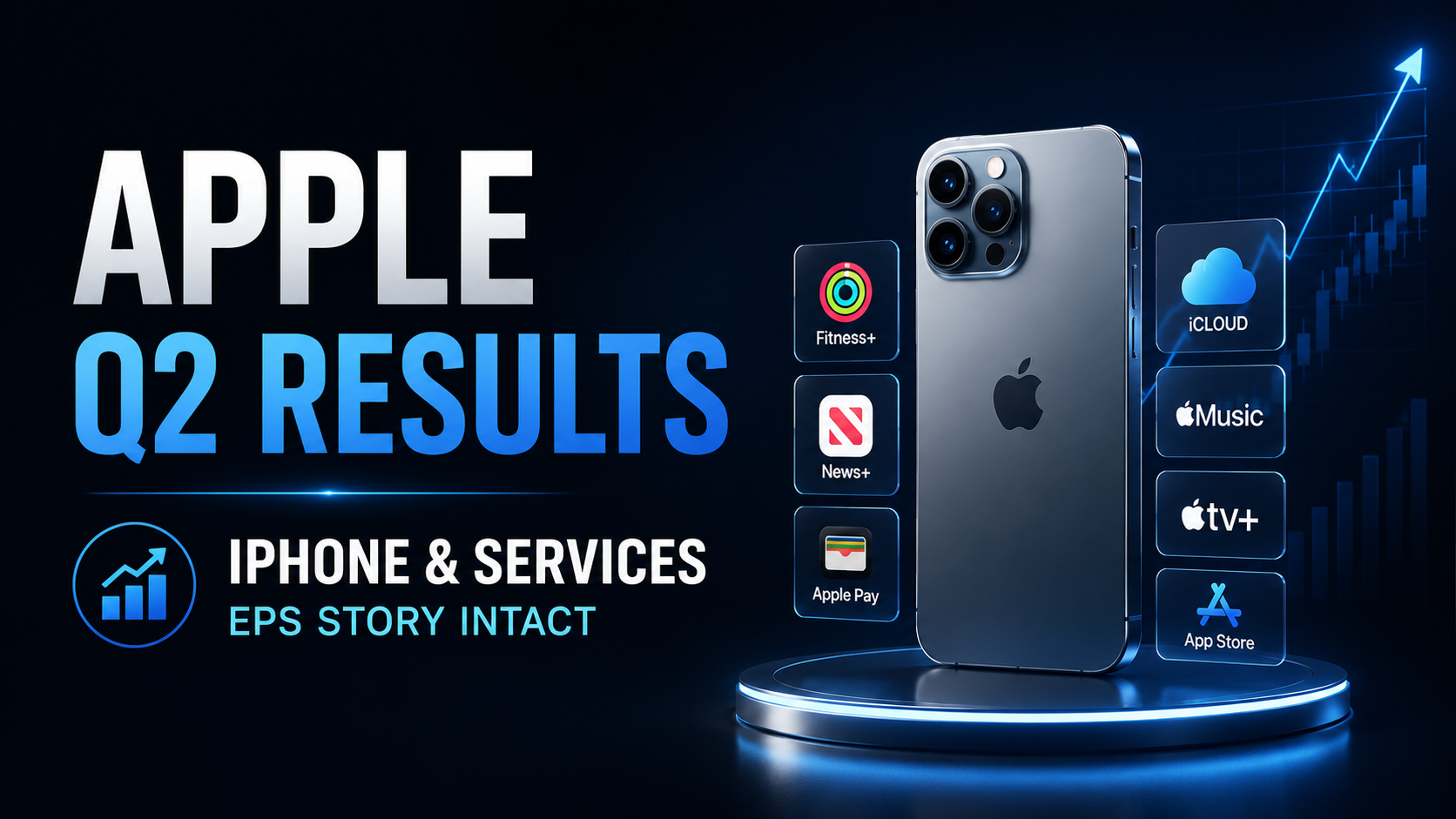
苹果 2026 财年第二季度财报回顾:iPhone 营收与服务业务增长维持 EPS 预期
苹果于 2026 年 4 月 30 日发布了 2026 财年第二季度财报,涵盖截至 2026 年 3 月 28 日的季度。总营收达到 1112 亿美元,同比增长 17%,摊薄后每股收益(EPS)增长 22% 至 2.01 美元。苹果表示,该季度创下了公司 3 月份季度的总营收、iPhone 营收和 EPS 纪录,同时服务业务营收也创下历史新高。
这不仅仅是一份常规的硬件周期财报。苹果第二季度的业绩证明,iPhone 需求、服务业务增长以及积极的资本回报计划仍在共同支撑着该公司强大的 EPS 增长故事。对于寻找下一个苹果财报或 AAPL 财报更新的投资者而言,未来的关键问题是,在市场等待更强劲的 AI 和产品周期催化剂之际,苹果能否维持其溢价估值。
2026/07/09
Hyperliquid 未平仓合约达 115 亿美元:链上永续合约是否正扩展至美国股市?
Hyperliquid的未平仓合约量已达到约115亿美元,创下2026年新高,其中HIP-3市场贡献了近40亿美元。与标普500指数挂钩的合约已成为最大的HIP-3市场,而追踪SK海力士和美光科技的合约则反映了对人工智能和半导体相关敞口需求的不断增长。
2026/07/28
热门
目前热门备受市场关注的加密货币
加密货币价格
按交易量计算交易量最大的加密货币