

OverviewRobinhood Chain, the Ethereum Layer-2 network built on Arbitrum technology, has become the highest-revenue L2 in the Ethereum ecosystem less than two months after launch. Robinhood launched thOverviewRobinhood Chain, the Ethereum Layer-2 network built on Arbitrum technology, has become the highest-revenue L2 in the Ethereum ecosystem less than two months after launch. Robinhood launched th
How Robinhood's Strategy to Bring Private Wealth On-Chain Created Ethereum's Most Profitable L2

Overview
Robinhood Chain, the Ethereum Layer-2 network built on Arbitrum technology, has become the highest-revenue L2 in the Ethereum ecosystem less than two months after launch. Robinhood launched the public mainnet on July 1, 2026 at a London event, alongside Stock Tokens, agentic trading, and a broader DeFi product suite. In July, its first full month of operation, the network generated approximately $3.6 million in revenue according to Blockworks Research data, placing it ahead of Polygon PoS at $2.7 million and Coinbase's Base at roughly $2.1 million, and above what Base and Arbitrum One earned combined. On the tokenization side, the chain has surpassed 420,000 real-world asset holders, meaning a retail brokerage now operates the most popular destination for tokenized RWAs on any blockchain.
This result reframes the Layer-2 competition, and it reopens an older, more uncomfortable question because the same network that dominates L2 revenue has paid Ethereum a fraction of one percent of what its users spend. This article breaks down how Robinhood's RWA strategy produced these numbers, where the revenue actually flows, what the shift means for Base and the wider corporate-chain land grab, and which parts of the growth curve rest on foundations that expire in September.
Key Takeaways:
Robinhood Chain generated roughly $3.6 million in July 2026, its first full month live, making it the highest-revenue Ethereum Layer-2 ahead of Polygon PoS at $2.7 million and Coinbase's Base at $2.1 million, while crossing 420,000 real-world asset holders to lead every network on RWA holder count. CEO Vlad Tenev's stated endgame is tokenizing the assets that sit in high-net-worth portfolios, beginning with private companies and extending toward art, collectibles, and real estate. Yet the network pays Ethereum a fraction of one percent of what it earns, reopening the industry's sharpest argument over whether the base layer captures enough value from the rollups it secures, and the growth itself carries caveats: memecoins have driven more than 80% of trading volume, US users still cannot access Stock Tokens, and the free-gas subsidy underpinning adoption expires around late September 2026.
1. Tokenizing the 1%: The RWA Strategy Behind the Numbers
Robinhood is not positioning its chain as a crypto trading venue. Tenev has spent two years arguing that tokenization is the most significant capital-markets innovation in over a decade, and that the technology's real prize is opening up assets retail investors have historically been locked out of. He has described a roadmap in which users worldwide access US equities around the clock and eventually add traditionally hard-to-reach holdings such as art, real estate, and private equity to ordinary portfolios. The company has already floated tokenized exposure to private companies including SpaceX and OpenAI, a move OpenAI publicly disavowed.
Robinhood Chain is the infrastructure that thesis requires; It is a permissionless Ethereum Layer-2 built on Arbitrum's Orbit stack, purpose-built for on-chain finance involving tokenized equities. The structural difference from Robinhood's existing brokerage is that assets live as ERC-20 tokens capable of interacting with DeFi protocols rather than sitting in a custodial account. Morpho, the lending protocol, integrated during the launch phase, letting users borrow against tokenized stock positions, which means posting NVIDIA exposure as collateral in a permissionless lending market with no margin account involved. Morpho deposits on the chain reached $222 million after a 74% weekly surge.
The adoption metrics have followed that architecture closely; The chain reached roughly 328,000 to 330,000 RWA holders by late July across about 97 tokenized assets, with tokenized NVIDIA and Apple among the most widely held, before crossing 420,000 by August 10. Total value locked climbed from about $39 million at launch to $1.3 billion at the six-week mark, roughly a 33x increase; DefiLlama recorded DeFi TVL nearer $480 million in early August, with bridged TVL above $1.4 billion, so the headline number reflects bridged capital rather than protocol deposits. What makes the growth unusual is that none of it was bought, Robinhood Chain has no native token, and most Layer-2s bootstrap early TVL through incentive programs and airdrop farming, so 420,000 wallets holding RWAs with nothing to farm is a cleaner demand signal than most crypto metrics offer.
2. Ethereum's Highest-Revenue L2: The $3.6 Million Month
Blockworks Research data placed Robinhood Chain first among Ethereum Layer-2s by July revenue at approximately $3.6 million. The rest of the table shows how wide the gap opened, with Polygon PoS second at $2.7 million, Base third at roughly $2.1 million, Arbitrum One collecting around $533,000, Starknet close to $137,000, Celo about $119,000, and OP Mainnet finishing just under $39,000. Robinhood Chain's total exceeded Base and Arbitrum One combined and represented an estimated 38% of all major-L2 fee revenue for the month, with some measures putting its share as high as 56% depending on which networks are counted in the denominator.
The chain processed over 52 million transactions and cleared more than $3 billion in volume within weeks, with cumulative DEX volume reaching the $8 billion to $9 billion range and a 24-hour peak of $877.6 million on July 12 that briefly lifted it above both Base and Ethereum on DefiLlama's volume rankings. Where that revenue goes is defined by the Arbitrum Expansion Program. Under the licensing structure, Robinhood directs 10% of net protocol revenue back into the Arbitrum ecosystem, split as 8% to the DAO treasury and 2% to ecosystem developers, retaining roughly 90% for itself. The chain also uses first-come, first-served sequencing rather than an auction, so unlike some sequencers it does not capture additional revenue from transaction ordering or MEV.
3. The Value-Capture Problem: Why Ethereum Earns Pennies
Robinhood Chain settles on Ethereum and uses ETH as its native gas token, so more activity should in principle mean more value for the base layer. The measured flows tell a different story. ARK Invest's Lorenzo Valente traced roughly $816,000 in cumulative chain revenue through July 13 and found that Robinhood retained about 89%, Arbitrum took 10% as middleware provider, and Ethereum received $1,538 for settlement, or about 0.15%. Valente described the network as the cleanest available case study of what has happened to ETH's economics over time. A later analysis found the same shape at larger scale, with under 1% of roughly $1.94 million in gross fee revenue reaching Ethereum for data availability and security.
The mechanism is not a loophole, EIP-4844 blob transactions let rollups batch-settle enormous transaction volumes onto the base layer at a small fraction of mainnet gas costs, which is precisely what the scaling roadmap was designed to achieve. The consequence is that the execution layer becomes the lucrative business while the base layer becomes a low-cost security provider.
Ethereum co-founder Joseph Lubin defended the design directly, writing that L1 revenue fees should stay low in order to foster growth. The bull case holds that Ethereum captures value holistically rather than transactionally, since ETH functions as gas, collateral, staking capital, and settlement money across every network built above it, and that routing millions of mainstream users toward on-chain finance is worth more than sequencer fees. Valente himself framed the arrangement as constructive for anyone whose thesis is that ETH is money.
Analysts at Motley Fool argued the launch is bearish for ETH precisely because success at the L2 layer no longer translates into base-layer income, noting that the fee floor introduced by the Fusaka upgrade sits too low to close the gap at Robinhood Chain's economics. Bitwise's Max Shannon has suggested that closing it would require a wholesale change in developer mindset and in ETH's tokenomics, an overhaul not currently on the table. Ambire CEO Ivo Georgiev, meanwhile, cautioned against over-reading a single chain, arguing that ETH serving as the default fee token signals industry maturity but is not by itself the driver of a narrative shift for Layer-2s.
4. The Corporate L2 War: Robinhood, Base, and the Land Grab
Robinhood Chain has taken visible bites out of Base. It surpassed Base in daily active users on July 21, with Artemis recording roughly 324,000 against Base's 274,500, and held that lead into late July. On application revenue, one reading put Robinhood Chain at 3.2 times Base's 24-hour figure, helped by its PONS token launchpad capturing close to 69% of daily token deployments at its peak.
Base's DeFi TVL of roughly $4.64 billion is around 15 times Robinhood Chain's DefiLlama figure, and Base has cited 187.8 million x402 payments alongside a planned Base-native tokenized-stock product structured as a 1:1 share-backed model, though without a confirmed launch date. Base leadership has already conceded that earlier product bets underperformed, and the network spent 2026 refocusing on trading, stablecoin payments, and AI agents. Claims circulating that Base's economics have collapsed to a historic low, or that Coinbase will be forced to issue a native Base token in Q4 2026 or Q1 2027, remain market speculation rather than anything the company has signalled.
The larger pattern is the one worth watching; Base, Stripe's Tempo, and now Robinhood Chain represent a shift toward corporate-backed networks, with payments and brokerage firms building their own rails instead of deploying on neutral, developer-led ecosystems. Markets have rewarded the operators, since Coinbase's valuation carries Base, HOOD rallied 8% on its chain launch, and Tempo priced at a $5 billion private valuation with only months of history. The critique is that crypto's credibly neutral middle gets squeezed between corporate rails above and commodity security below. Robinhood Chain's success makes it considerably more likely that other brokerages and institutions follow, which sharpens both the opportunity and the concern.
5. What the Headline Numbers Leave Out
Four caveats belong alongside the growth story; The first is composition. More than 80% of the chain's roughly $9 billion in DEX turnover came from memecoin speculation rather than the tokenized equities the network was built for. Tokenized equities accounted for about 4% of activity early on, rising roughly fivefold by July 25 but remaining a small share of the total. Tenev leaned into the mismatch rather than deflecting it, posting on July 8 that while the chain is built for RWAs, it works great for memes too. The gap was stark in mid-July, when RWA market cap sat at $12.66 million while a single cat-themed memecoin peaked at $156 million.
The second is access; Offering tokenized securities to domestic retail investors triggers SEC registration, disclosure, and custody requirements that Robinhood has not met, so roughly 23 million US funded accounts cannot touch Stock Tokens. Canada, the UK, Switzerland, and the UAE are excluded as well. Tenev submitted a 42-page framework proposal to the SEC in 2025, but no framework has yet materialised, which means the product defining the chain's identity is unavailable to the core of Robinhood's own customer base.
The third is the subsidy; Robinhood has covered all transaction fees since the July 1 launch under a 90-day program expiring around late September 2026. Zero-cost gas is a meaningful driver of the user and transaction counts that produced the July headline, and the post-subsidy retention curve is the real test of what has been built.
The fourth is momentum; Daily DEX volume averaged about $553 million in the final full week of July, down 27% week-over-week, while daily active accounts slipped 7% to around 275,000 after peaking at 323,969 on July 21. Turnover, measured as the ratio of DEX volume to TVL, fell from 9.25x in mid-July to 1.68x. Deposits kept climbing regardless, driven substantially by the roughly 7% annualised yield on USDG through Robinhood Earn, which is a yield-chasing inflow rather than a trading one. None of this negates the revenue result, It does mean the durable question is whether tokenized assets keep growing after the memecoin traffic rotates elsewhere and the subsidy lapses.
Frequently Asked Questions
What is Robinhood Chain?
Robinhood Chain is a permissionless Ethereum Layer-2 network built on Arbitrum's Orbit stack, launched to public mainnet on July 1, 2026. It is designed for on-chain finance involving tokenized real-world assets, particularly tokenized equities, alongside DeFi applications. It uses ETH as its gas token and has no native chain token.
Is Robinhood Chain really the highest-revenue Ethereum L2?
Yes, for July 2026. Blockworks Research data put its revenue at approximately $3.6 million for the month, ahead of Polygon PoS at $2.7 million and Base at roughly $2.1 million, and greater than Base and Arbitrum One combined.
Does Robinhood Chain benefit Ethereum?
Partially, the chain settles on Ethereum and uses ETH for gas, which supports demand for the asset. But direct fee payments to Ethereum have been very small, at roughly $1,538, or about 0.15% of cumulative revenue, through mid-July according to ARK Invest analysis.
Is there a Robinhood Chain token?
No. Robinhood has not issued a native token for the chain, and transaction fees are paid in ETH. Because anyone can deploy tokens on the network, impersonation tokens claiming official status have circulated, so any asset marketed as an official Robinhood chain coin should be treated with caution unless confirmed through Robinhood's own channels.
Can US investors use Robinhood Stock Tokens?
Not currently. Offering tokenized securities to US retail investors requires an SEC framework that does not yet exist, so roughly 23 million US funded accounts are excluded, along with users in Canada, the UK, Switzerland, and the UAE. The Robinhood Earn USDG lending product is rolling out to eligible US users separately.
How is Robinhood Chain affecting Base?
It overtook Base in daily active users on July 21 and has led on some application-revenue measures. Base remains far larger by DeFi TVL, at roughly 15 times Robinhood Chain's figure, and has responded by refocusing on trading, payments, and AI agents while preparing a Base-native tokenized-stock product.
Disclaimer: This article is for informational purposes only and does not constitute financial, investment, or trading advice. Digital assets are volatile and you may lose capital. Conduct your own research before making any decision.
市场机遇
4实时价格 (4)
--
----
USD
4 (4) 实时价格图表
本页面分享的文章均源自公开平台,仅供参考。该内容不代表 MEXC 的立场或观点。所有版权归 Emmanuel Olamiye 所有。如果您认为任何内容侵犯了第三方的权益,请联系 [email protected] 以便及时删除。 MEXC 不保证任何内容的准确性、完整性或及时性,且不对基于所提供信息而采取的任何行动负责。本内容不构成财务、法律或其他专业建议,亦不应被解释为 MEXC 的推荐或认可。如需专家见解和深入分析,请造访 MEXC 学院。
4 最新动态
查看更多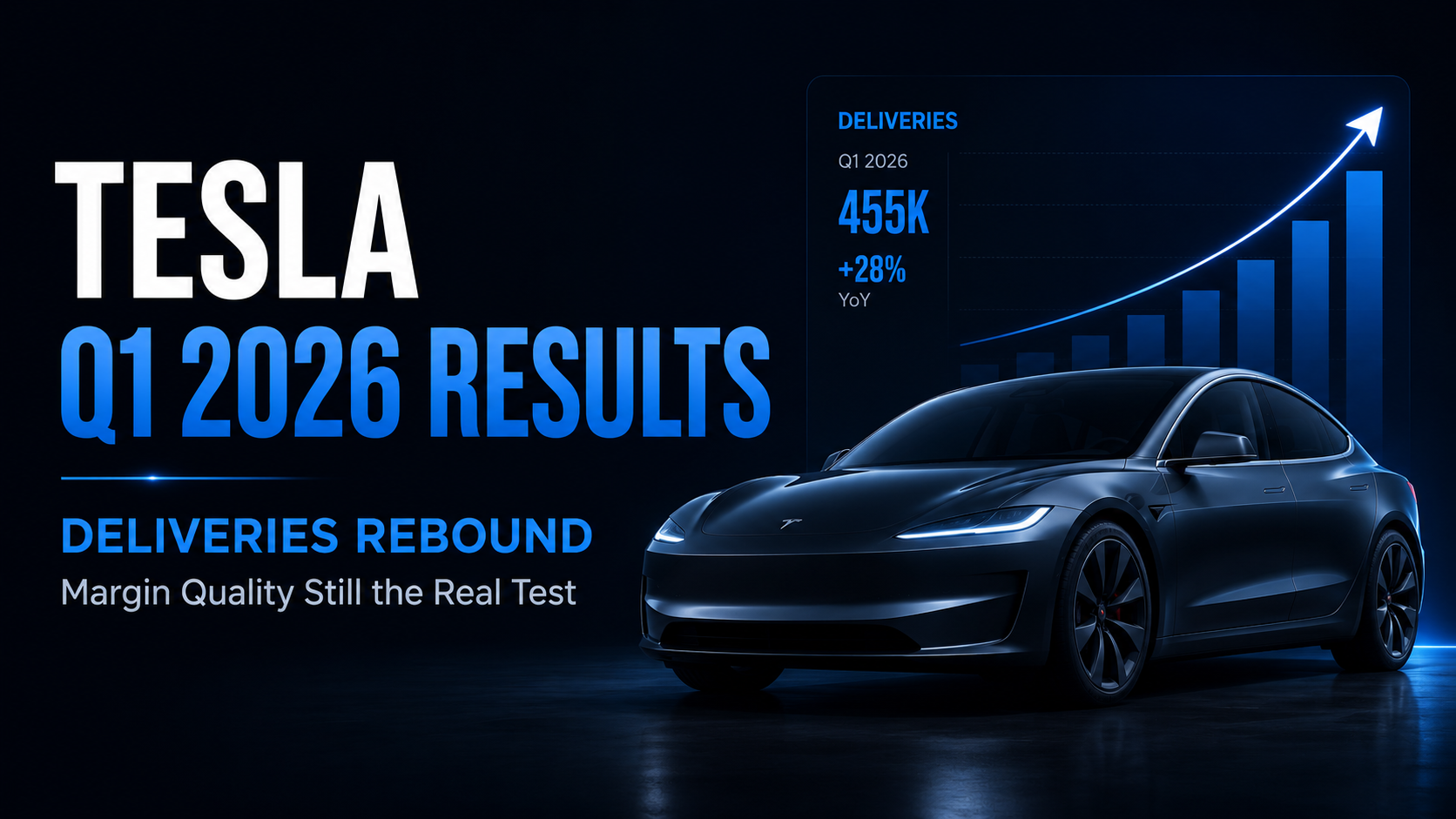
特斯拉2026年第一季度财报回顾:交付量反弹,但利润率质量仍是真正的考验
特斯拉于2026年4月22日美国股市收盘后公布了其2026年第一季度的财务业绩。该公司本季度交付了358,023辆汽车,创造了224亿美元的总营收,并报告归属于普通股股东的GAAP净利润为4.77亿美元。总GAAP毛利率提升至21.1%,而营业利润率达到4.2%。
核心信号不仅在于特斯拉的交付量从去年同期的疲软基数中恢复。更重要的问题是:更高的交付量、FSD相关营收、更低的单车成本以及改善的汽车毛利率,能否重建市场对特斯拉盈利能力的信心。对于寻找下一次TSLA财报日期或关注特斯拉财报的投资者来说,第一季度的表现为第二季度设立了一个关键考验:即销量的增长能否可持续地转化为更高质量的收益。
2026/07/09
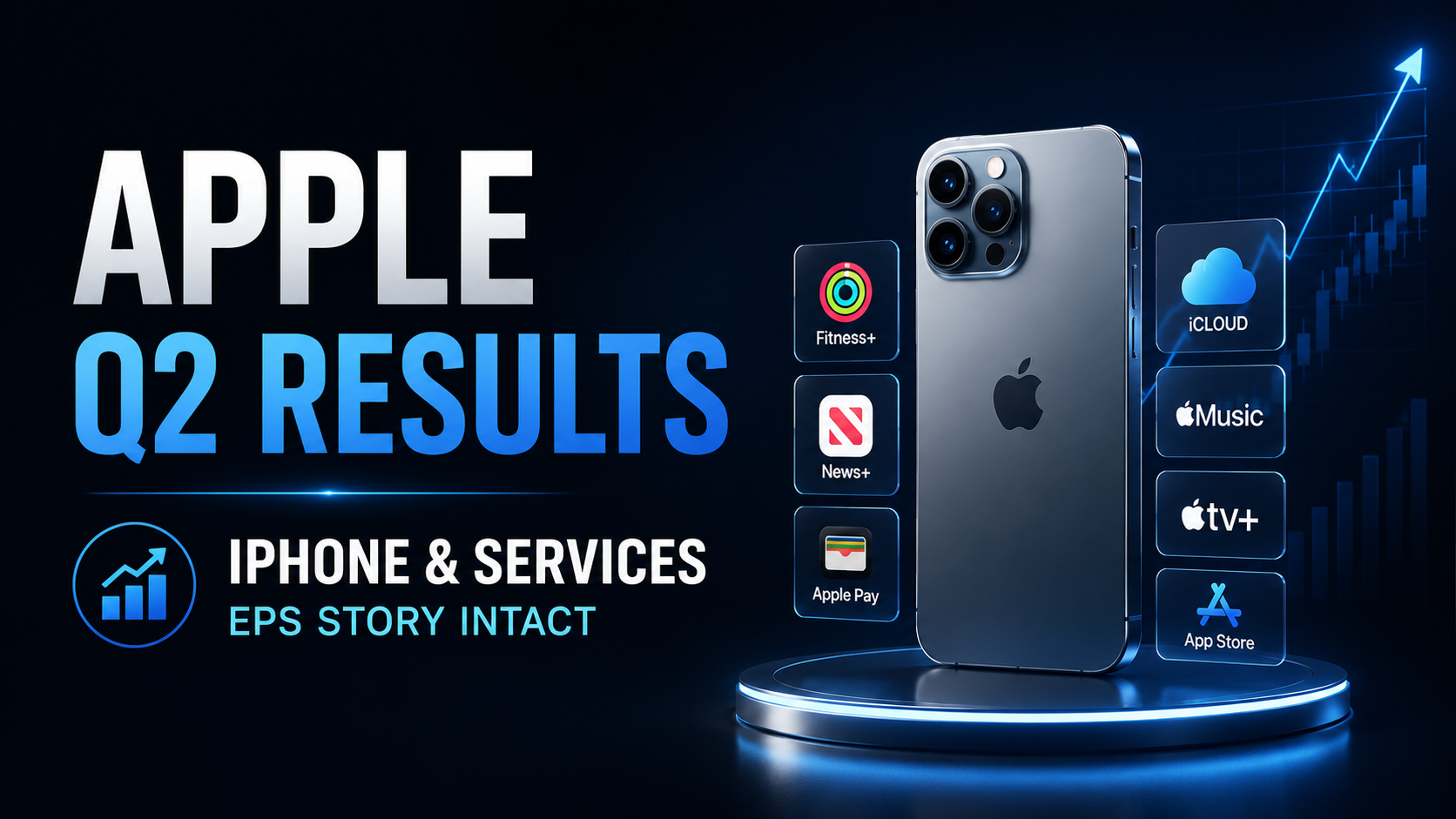
苹果 2026 财年第二季度财报回顾:iPhone 营收与服务业务增长维持 EPS 预期
苹果于 2026 年 4 月 30 日发布了 2026 财年第二季度财报,涵盖截至 2026 年 3 月 28 日的季度。总营收达到 1112 亿美元,同比增长 17%,摊薄后每股收益(EPS)增长 22% 至 2.01 美元。苹果表示,该季度创下了公司 3 月份季度的总营收、iPhone 营收和 EPS 纪录,同时服务业务营收也创下历史新高。
这不仅仅是一份常规的硬件周期财报。苹果第二季度的业绩证明,iPhone 需求、服务业务增长以及积极的资本回报计划仍在共同支撑着该公司强大的 EPS 增长故事。对于寻找下一个苹果财报或 AAPL 财报更新的投资者而言,未来的关键问题是,在市场等待更强劲的 AI 和产品周期催化剂之际,苹果能否维持其溢价估值。
2026/07/09
Hyperliquid 未平仓合约达 115 亿美元:链上永续合约是否正扩展至美国股市?
Hyperliquid的未平仓合约量已达到约115亿美元,创下2026年新高,其中HIP-3市场贡献了近40亿美元。与标普500指数挂钩的合约已成为最大的HIP-3市场,而追踪SK海力士和美光科技的合约则反映了对人工智能和半导体相关敞口需求的不断增长。
2026/07/28
热门
目前热门备受市场关注的加密货币
加密货币价格
按交易量计算交易量最大的加密货币