

Executive SummaryIntel (NASDAQ:INTC) dropped 4.06% on Monday, August 10, 2026, closing at $97.52 after announcing a $15 billion underwritten public stock offering.The stock gapped down roughly 5% in pExecutive SummaryIntel (NASDAQ:INTC) dropped 4.06% on Monday, August 10, 2026, closing at $97.52 after announcing a $15 billion underwritten public stock offering.The stock gapped down roughly 5% in p
Intel Stock Falls 4% After $15 Billion Share Offering: Is INTC's Breakout Above $100 Over?

作者:MEXC
分享
Executive Summary
- Intel (NASDAQ:INTC) dropped 4.06% on Monday, August 10, 2026, closing at $97.52 after announcing a $15 billion underwritten public stock offering.
- The stock gapped down roughly 5% in premarket trading, touching an intraday low of $96.31 before recovering slightly into the close.
- Reports emerging Tuesday suggest Intel could upsize the deal to nearly $20 billion, raising the dilution stakes further.
- Technically, INTC is now trading below its 5-day and 20-day moving averages and sitting almost exactly on its 50-day moving average (around $97 to $98), the first real test of that line since its late-July rebound began.
- The $95 and $90 levels stand as the next tests of support, while $100 and $105 have flipped into overhead resistance.
- The 14-day RSI sits at 42.35, a neutral-to-mildly-oversold reading that leaves room for the stock to move in either direction depending on how the market digests the dilution.
Intel just handed traders a textbook case of good news for the company clashing with bad news for the stock. On Monday, before the opening bell, Intel Corporation (NASDAQ:INTC) announced a $15 billion underwritten public offering of common stock, a move management framed as a way to fund its AI buildout and foundry expansion while protecting its investment-grade credit rating. Shareholders, unsurprisingly, read it differently. The stock fell 4.06% to close at $97.52, and the reaction only intensified afterward, with reports surfacing that Intel may be looking to push the raise as high as $20 billion. For a stock that had just spent two weeks clawing its way back toward triple digits, the timing could hardly have been worse.
The Setup: A Wild 2026 for Intel Stock
To understand why this offering hit the stock so hard, it helps to zoom out on the year Intel has already had. Shares are up roughly 175% year-to-date in 2026, fueled by a combination of AI infrastructure demand, progress on the company's 18A manufacturing node, and a 10% U.S. government equity stake that helped restore investor confidence in Intel's turnaround story. That rally carried the stock to an all-time closing high of $140.94 on June 22, 2026, with an intraday 52-week high of $142.35 printed just days later.
What followed was a sharp reversal. INTC tumbled from those highs and bottomed at $81.88 on July 29, 2026, wiping out a large chunk of the year's gains in a matter of sessions. From that pivot low, the stock staged an aggressive recovery, rallying roughly 19% off the low and reclaiming the century mark by early August. By August 7, INTC had closed at $101.65, up 1.84% on the day, and momentum traders were beginning to talk about a full reclaim of the $140 highs.
Then came Monday's offering announcement, and the story flipped again.
It is worth pausing on just how unusual this round trip has been. Going from an all-time high near $141 to a low near $82 and back above $100 in the span of about six weeks is the kind of volatility usually reserved for small-cap biotech names, not a mega-cap semiconductor company with a market capitalization north of $500 billion. That volatility has been a magnet for both retail momentum traders and options activity, and it has left Intel's chart littered with levels that used to matter and may matter again. The $82 zone that marked the July floor, the 50-day moving average around $97 to $98, and the $140 area near the June highs are all reference points that traders are now watching as the stock works through this latest shock.
Why the Timing of the Offering Matters
Companies raise equity capital for all kinds of reasons, and the market's reaction often has less to do with the dollar amount than with the timing. Had Intel announced this same $15 billion offering back when the stock was trading in the $80s, coming off the July lows, the dilution math would have required issuing meaningfully more shares to raise the same amount of cash, an outcome management presumably wanted to avoid. Announcing it instead after a 19% rally, with the stock flirting with the century mark, let Intel issue shares at a materially higher price, reducing the percentage of the company being sold off to fund the same capital need.
From a pure corporate finance standpoint, that is a defensible, even shareholder-friendly, sequencing decision: raise capital when your stock is expensive, not when it is cheap. The problem for near-term traders is that the announcement itself becomes a headwind precisely because it lands during a rally, since it signals to the market that management views current prices as an attractive level to sell new shares, which can read as a mild vote of no confidence in further near-term upside even if the underlying growth story remains intact.
Breaking Down the $15 Billion Offering
Intel's offering is structured as an underwritten public sale of common stock, with J.P. Morgan, Goldman Sachs, Morgan Stanley, and Citigroup acting as joint book-running managers. As of the initial announcement, the deal's price and exact share count had not been set, a detail that itself added uncertainty for traders trying to model the dilution impact. Underwriters were also granted a 30-day option to purchase an additional $2.25 billion in shares, meaning the total raise could stretch well past the headline $15 billion figure even before accounting for the reported push toward $20 billion.
Management's stated rationale centers on funding general corporate purposes, including capital expenditures and working capital, while preserving Intel's investment-grade credit rating as it ramps spending. The company recently raised its 2026 capital spending forecast to more than $20 billion, with management signaling that figure could climb again in 2027. Intel's foundry business, still the centerpiece of the turnaround narrative, grew revenue 31% year-over-year to roughly $5.8 billion last quarter, though external foundry customers still account for only about 5% of that total (roughly $293 million). In other words, the foundry bet is progressing, but it remains capital-hungry, and Monday's raise is Intel telling the market it plans to keep spending aggressively rather than slow down.
The math on dilution is real but not enormous on its own. A $15 billion raise at recent prices would increase Intel's share count by somewhere in the neighborhood of 3%, a manageable figure in isolation. What spooked the market more was the combination of dilution risk, an unresolved final price and share count, and now speculation that management wants to raise even more than originally disclosed. Intel entered the announcement with $29.7 billion in cash and short-term investments against $48.5 billion in total debt, giving the company a reasonable, if not overwhelming, balance sheet cushion heading into this raise.
Technical Picture: A Rally Meets a Wall
This is where the technical story gets interesting. Before Monday's news, INTC's recovery off the July 29 low had it trading back above its short-term averages, and the stock looked poised to test the $105 to $110 zone. The offering announcement erased that setup almost instantly.
As of Monday's close, INTC is trading below its 5-day and 20-day simple moving averages, and the stock is now sitting almost exactly on top of its 50-day moving average, which has flattened out around $97 to $98, essentially the same level as Monday's close. That matters because this average had been trending upward through the July rebound, and price is now testing it directly rather than riding comfortably above it. A close that holds below this line in the coming sessions would mark a genuine breakdown; a bounce off it would suggest the average is still functioning as support.
Momentum readings back up the "stalled, not collapsed" read. The 14-day RSI sits at 42.35, comfortably below the overbought territory the stock flirted with earlier in the year but not yet deep into oversold conditions either. That leaves the setup genuinely two-sided. Key support now sits at $95, with a secondary floor at $90, both of which held during Monday's intraday low of $96.31. Resistance has flipped to the $100 and $105 levels, the same zone that used to be a floor during the post-earnings rally in late July and early August.
Volume told part of the story too. Trading activity picked up meaningfully on the sell-off, with roughly 100 million shares changing hands, close to Intel's average daily volume but notably heavier given the size of the single-day decline. That is generally read as a sign that institutional money, not just retail momentum chasers, was actively repositioning around the dilution news, rather than the drop being a low-conviction, thin-volume air pocket.
Competing Interpretations: Dilution Risk vs. Funded Growth
There are two reasonable ways to read this setup, and traders are currently split between them.
The bearish case treats the offering as confirmation that Intel's turnaround still needs external capital to function, more than a year into the government stake and well after the 18A node reached production. Under this view, the stalemate right at the 50-day moving average is the technical confirmation of a fundamental concern: the stock ran too far, too fast off the July low, and the offering gave the market a convenient excuse to lock in gains. If Intel does push the deal toward $20 billion as reported, dilution could approach or exceed 4% of shares outstanding, and a repeat test of the $90 support level, or even a retest of the $82 lows from late July, would not be a shock in this scenario.
The bullish case points to the fact that Intel is raising capital from a position of relative strength rather than desperation. The company is funding growth, specifically capital expenditures tied to AI-driven foundry demand, rather than plugging an operating cash shortfall. Foundry revenue growing 31% year-over-year and a capital spending plan that keeps expanding rather than contracting are both consistent with a company leaning into demand it does not want to leave on the table. Under this read, the pullback to the $95 to $96 range is a buyable dip within the broader recovery that began July 29, and a hold above $90 would keep the higher-low structure from that rebound intact.
Risk Implications for Traders
Anyone considering a position around this setup should treat the unresolved pricing and share count of the offering as the dominant near-term risk. Until the deal is priced, headline risk around the final terms, and any further reports about the deal being upsized toward $20 billion, could produce outsized single-session moves independent of the technical levels above. A confirmed close back above $100 on strong volume would suggest the market has absorbed the dilution and the July rebound is intact. A decisive break below $90, particularly on rising volume, would be the more concerning signal, opening the door back toward the low-$80s territory the stock visited just weeks ago. Given Intel's negative trailing earnings and elevated valuation multiples relative to its semiconductor peers, this remains a stock where technical levels are doing a lot of the work that fundamentals alone cannot yet support.
Options positioning around the announcement adds another layer worth watching. Sentiment in the options market has reportedly stayed more constructive than the price action itself, a divergence that often shows up when a stock sells off on a structural event like a share offering rather than on a fundamental earnings miss. That kind of split, bearish price action paired with steadier options sentiment, can resolve in either direction, but it is generally a sign that the market has not yet reached consensus on whether Monday's drop was a healthy reset or the start of something larger. Traders sizing positions here should treat the coming week, likely the window in which Intel prices the offering and finalizes the share count, as the point where that ambiguity gets resolved one way or the other.
There is also a broader sector context to weigh. Intel is not raising capital in a vacuum. AI-driven capital expenditure across the semiconductor and cloud infrastructure space has been climbing all year, and peers from AMD to Micron to Taiwan Semiconductor have all had to make their own calls about how aggressively to fund expansion. A raise of this size from Intel specifically could put a spotlight on how the rest of the sector is financed, and any read-through, positive or negative, to peer names is worth monitoring alongside INTC's own price action in the days ahead.
Conclusion
Intel's $15 billion offering is not, by itself, a company-threatening event. It is a capital raise from a business that is spending aggressively to chase AI-driven demand, backed by a balance sheet that can absorb it. But the timing landed at the worst possible technical moment, right as INTC was pressing into the exact moving average it needed to clear to validate its recovery off the July lows. With the stock now sitting almost exactly on its 50-day moving average and support pegged at $95 and $90, the next few sessions should clarify whether this was a shakeout within an intact uptrend or the start of a deeper retracement. Do you think Intel's fundamentals can absorb this dilution and hold the $90 to $95 zone, or is this the first crack in the July rebound?
Frequently Asked Questions About INTC Stock
Q: Why did Intel stock drop after the $15 billion offering announcement?
A: The offering raises Intel's share count, diluting existing shareholders' ownership stakes. Combined with an unresolved final price and reports that the deal could grow toward $20 billion, the uncertainty triggered a sell-off, sending shares down 4.06% to $97.52 on the announcement day.
Q: What does INTC testing its 50-day moving average mean?
A: It signals that the short-term uptrend that carried the stock roughly 19% off its July 29 pivot low has stalled right at a key level. INTC closed Monday almost exactly on its 50-day moving average, around $97 to $98, meaning the next few sessions should show whether that average holds as support or gives way to a deeper pullback.
Q: What is the key level that would invalidate Intel's recovery from the July lows?
A: A decisive close below $90 on rising volume would be the clearest warning sign, since it would break the higher-low structure established since the July 29 pivot bottom and open the door back toward the $82 level the stock bottomed at in late July.
Q: Is Intel's 14-day RSI signaling overbought or oversold conditions?
A: Neither extreme. At 42.35, the RSI is in neutral territory, below the overbought readings above 70 the stock has flirted with earlier in the year but well above the oversold threshold of 30. That leaves the setup genuinely two-sided heading into the next few sessions.
Q: How does Intel's situation compare to other semiconductor stocks like AMD or Micron?
A: Unlike AMD or Micron (MU), which have largely funded growth from operating cash flow and existing balance sheets, Intel is turning to the public equity markets to bankroll its foundry buildout, on top of an existing 10% U.S. government equity stake. That distinction is central to the bear case, while the bull case notes Intel's capital spending, like TSM's, is scaling alongside real AI-driven demand rather than speculative expansion.
Source- here!
市场机遇
4实时价格 (4)
--
----
USD
4 (4) 实时价格图表
描述:币圈脉动基于 AI 技术与公开信息,第一时间呈现最热代币趋势。如果想了解更多专业解读与深度分析,请访问新手学院。
本页面分享的文章均源自公开平台,仅供参考。该内容不代表 MEXC 的立场或观点。所有版权归 MEXC 所有。如果您认为任何内容侵犯了第三方的权益,请联系 [email protected] 以便及时删除。 MEXC 不保证任何内容的准确性、完整性或及时性,且不对基于所提供信息而采取的任何行动负责。本内容不构成财务、法律或其他专业建议,亦不应被解释为 MEXC 的推荐或认可。如需专家见解和深入分析,请造访 MEXC 学院。
4 最新动态
查看更多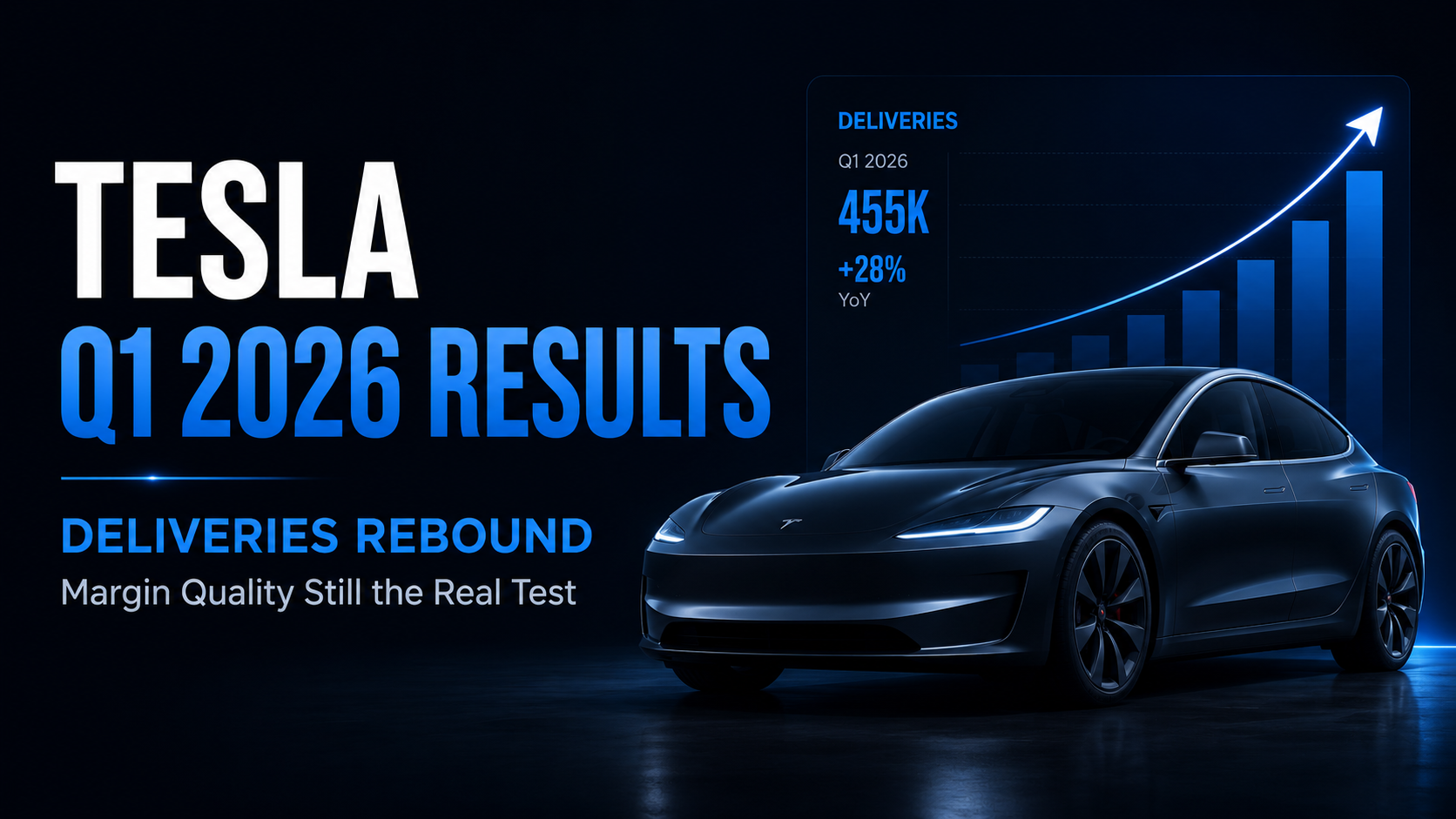
特斯拉2026年第一季度财报回顾:交付量反弹,但利润率质量仍是真正的考验
特斯拉于2026年4月22日美国股市收盘后公布了其2026年第一季度的财务业绩。该公司本季度交付了358,023辆汽车,创造了224亿美元的总营收,并报告归属于普通股股东的GAAP净利润为4.77亿美元。总GAAP毛利率提升至21.1%,而营业利润率达到4.2%。
核心信号不仅在于特斯拉的交付量从去年同期的疲软基数中恢复。更重要的问题是:更高的交付量、FSD相关营收、更低的单车成本以及改善的汽车毛利率,能否重建市场对特斯拉盈利能力的信心。对于寻找下一次TSLA财报日期或关注特斯拉财报的投资者来说,第一季度的表现为第二季度设立了一个关键考验:即销量的增长能否可持续地转化为更高质量的收益。
2026/07/09
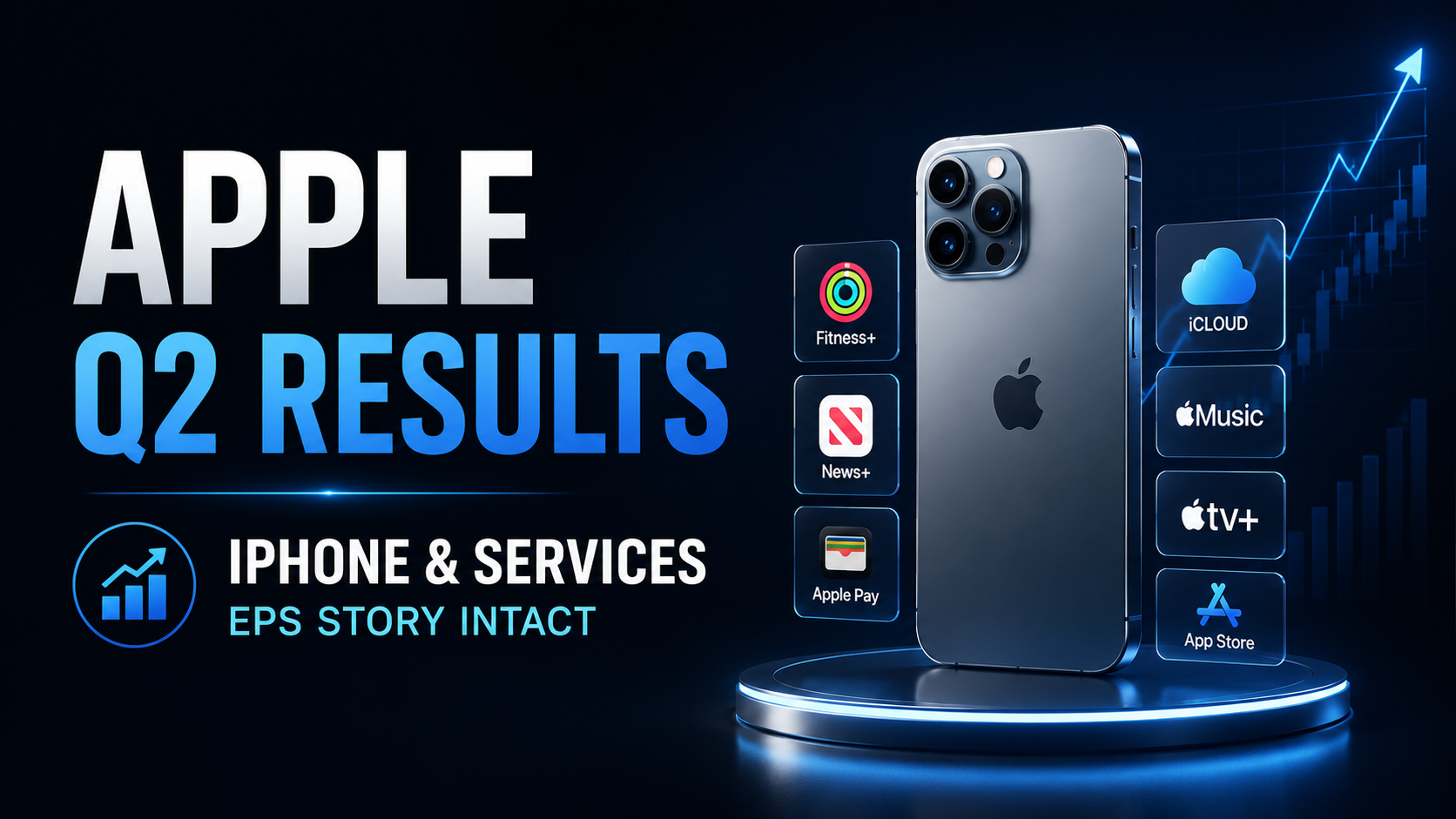
苹果 2026 财年第二季度财报回顾:iPhone 营收与服务业务增长维持 EPS 预期
苹果于 2026 年 4 月 30 日发布了 2026 财年第二季度财报,涵盖截至 2026 年 3 月 28 日的季度。总营收达到 1112 亿美元,同比增长 17%,摊薄后每股收益(EPS)增长 22% 至 2.01 美元。苹果表示,该季度创下了公司 3 月份季度的总营收、iPhone 营收和 EPS 纪录,同时服务业务营收也创下历史新高。
这不仅仅是一份常规的硬件周期财报。苹果第二季度的业绩证明,iPhone 需求、服务业务增长以及积极的资本回报计划仍在共同支撑着该公司强大的 EPS 增长故事。对于寻找下一个苹果财报或 AAPL 财报更新的投资者而言,未来的关键问题是,在市场等待更强劲的 AI 和产品周期催化剂之际,苹果能否维持其溢价估值。
2026/07/09

Hyperliquid 未平仓合约达 115 亿美元:链上永续合约是否正扩展至美国股市?
Hyperliquid的未平仓合约量已达到约115亿美元,创下2026年新高,其中HIP-3市场贡献了近40亿美元。与标普500指数挂钩的合约已成为最大的HIP-3市场,而追踪SK海力士和美光科技的合约则反映了对人工智能和半导体相关敞口需求的不断增长。
2026/07/28
热门
目前热门备受市场关注的加密货币
加密货币价格
按交易量计算交易量最大的加密货币