

Executive SummaryIntel Corporation (NASDAQ:INTC) shares jumped as much as 9.05% on September 8, closing at $104.47, after a DigiTimes report said the company plans to raise personal computer processorExecutive SummaryIntel Corporation (NASDAQ:INTC) shares jumped as much as 9.05% on September 8, closing at $104.47, after a DigiTimes report said the company plans to raise personal computer processor

Executive Summary
- Intel Corporation (NASDAQ:INTC) shares jumped as much as 9.05% on September 8, closing at $104.47, after a DigiTimes report said the company plans to raise personal computer processor prices by roughly 10% starting in early October
- This is Intel's third reported CPU price increase since late 2025, following hikes in the first quarter and again in July 2026
- Northland Securities upgraded the stock to Outperform with a $120 price target, citing "material progress" in Intel's turnaround and tight server CPU supply
- The U.S. government's roughly 9.9% Intel stake, acquired in August 2025, gained an estimated $3.4 billion in paper value in a single session on the news
- Intel's fiscal Q2 2026 revenue rose 25.4% to $16.13 billion, its strongest growth in more than 15 years, with gross margin recovering to 42% from 2.5% a year earlier
- The rally proved fragile: Piper Sandler initiated coverage at Neutral with a $110 target two days later, and shares fell roughly 4% to 5.6% in response
- Management itself has guided 2026 PC unit consumption down low-double-digits, meaning the price hike is arriving alongside falling volume, not rising it
Intel Corporation (NASDAQ:INTC) gave investors a reason to look past a rough summer on September 8, when a supply-chain report from DigiTimes said the company would raise prices on select PC processors by roughly 10% in early October. Shares jumped as much as 9.5% intraday and closed the session up 9.05% at $104.47, their best single day in months. The move fits a pattern investors have been tracking since late 2025: Intel raising prices even as it works to convince the market that its manufacturing turnaround is real. Whether this latest increase reflects genuine pricing power or a temporary supply squeeze is now the central question hanging over the stock, and the answer is not as settled as Tuesday's rally might suggest.
What Actually Happened
DigiTimes reported that Intel is preparing to raise prices on select personal computer processors by approximately 10%, effective early October 2026. It is, by most trade-press counts, the third such increase since late 2025, following hikes in the first quarter and another round in July. Intel has not issued a formal press release confirming the specific magnitude, but the pattern lines up with comments Intel's own executives made months earlier. On the Q2 2026 earnings call, CFO David Zinsner told analysts the client business had already benefited from "like-for-like" pricing changes, made where the company had seen cost inflation and needed to pass it on to the end customer. That framing turns the September report from a rumor into a continuation of something Intel was already doing.
The timing mattered as much as the number. Intel's second-quarter results, reported July 23, showed revenue of $16.13 billion, up 25.4% year over year and the company's strongest growth rate in more than 15 years. Data Center and AI revenue rose 59%, and management described Xeon 6 as one of the fastest-ramping products in company history. Gross margin recovered to 42%, up sharply from just 2.5% a year earlier. CEO Lip-Bu Tan told analysts that "strong demand for our products continue to outpace our growing supply," a line that reads very differently once a price increase follows it a few weeks later. Separately, Intel's role in Elon Musk's roughly $20 billion Terafab chip project surfaced around the same news cycle, adding another data point to the argument that outside customers are taking Intel's manufacturing capacity more seriously than they have in years.
Northland Securities used the moment to upgrade Intel to Outperform with a $120 price target, pointing to tight server CPU supply and what it called material progress in the company's turnaround. The U.S. government's stake in Intel, roughly 433.3 million shares acquired in August 2025, benefited directly: the day's roughly $7.79 per-share gain added an estimated $3.4 billion to the position's paper value in a single session.
Not every part of the quarter supported an unqualified bull case, though. Intel's foundry business, the unit central to the company's long-term turnaround story, posted a $2.1 billion operating loss on $5.8 billion in revenue, with external customer revenue of just $293 million, a reminder that convincing outside chipmakers to trust Intel's fabs remains a work in progress. Management also guided full-year 2026 PC unit consumption down low-double-digits, pressured by rising memory costs, meaning the price hike is landing in a market where unit volume is shrinking, not growing.
The Rally Didn't Last
Intel's September 8 pop proved short-lived. The next day, September 9, Piper Sandler initiated coverage on Intel with a Neutral rating and a $110 price target, roughly 5% below where shares had just closed. Analyst David O'Connor said the stock's rally over the past year left less room for near-term gains, even while projecting Intel could deliver high-teens annual revenue growth through 2030. The firm cited execution risk and data-center competition as reasons the run could stall. Shares fell in response, dropping roughly 4% to 5.6% depending on the session measured, back toward the $100 level.
The stock didn't stay down for long. By September 11, Intel shares were climbing again, up roughly 3% to $103.31 in early trading, as reports of the CPU price hike continued to circulate and investors weighed the news against the Piper Sandler downgrade in sentiment. Stifel analyst Ruben Roy raised his price target from $42 to $65 that same week, a meaningful increase in percentage terms, but one that still leaves his target well below where the stock has actually been trading, an unusually wide gap for a Hold rating and a sign that not every analyst has caught up to the market's enthusiasm.
The Technical Picture
Intel enters this stretch still down roughly 19% from its early-July highs, a reminder that September's price-hike rally is a bounce within a larger pullback, not a fresh breakout to new highs. The September 8 candle is the one to mark first: shares opened at $100.90, ran to an intraday high of $108.00, and closed at $104.47 on volume well above average, a decisive break above the prior Friday's $95.80 close. That $108 intraday high is the first resistance level to watch, since price has not closed above it since the move began. Below that, $104 to $105 marks the breakout close itself and should now act as support on any pullback, a level that was tested and held during the September 10 to 11 stretch.
On the downside, the $100.26 low set on breakout day is the next line of defense. A daily close below that level would suggest the price-hike catalyst has been fully priced in and put the stock back in the range it occupied through most of August. RSI has been sitting in a neutral zone in the high 50s, which leaves room for the stock to run further in either direction without hitting an obviously overbought or oversold signal.
The split in the table above is itself a technical tell. A $120 Outperform target sitting alongside a $65 Hold target on the same stock, with a consensus of 55 analysts landing at $114.88, tells you the market hasn't agreed on a fair multiple for Intel's turnaround, and that disagreement tends to produce exactly the kind of sharp, headline-driven swings the stock showed this week.
Competing Interpretations: Pricing Power Versus Scarcity Rent
The bull case treats the third price increase in under a year as evidence Intel finally has genuine pricing power, not just a company raising prices because it can get away with it once. Server CPU demand outpacing supply, a 59% jump in Data Center and AI revenue, and a gross margin that has gone from 2.5% to 42% in a year all point toward a real operational recovery, not a one-quarter fluke. Northland's $120 target leans on the same read, and the fact that CEO Lip-Bu Tan bought shares personally in August, while the U.S. government's own stake benefited from the rally, adds a layer of insider and institutional alignment behind the bullish story.
The bear case starts with a line from Intel's own guidance: PC unit consumption is expected to fall low-double-digits in 2026 even as prices rise, which is the textbook definition of a company defending revenue on a shrinking base rather than growing it. Piper Sandler's framing, that the rally has already priced in most of the near-term good news, is echoed by Stifel's $65 target, which remains well below the market price despite a recent increase. The foundry business, the piece of the turnaround story that matters most over a multi-year horizon, lost $2.1 billion in the quarter with barely any external customer revenue to show for it. And the broader skeptical case, made by several analysts covering the stock, is that price hikes driven by tight memory and component supply tend to fade once that supply normalizes and rivals like AMD, which is reportedly considering its own price increases for 2027, catch up.
Risk Implications for Traders
Intel's price action this month is a useful case study in how a single supply-chain report can move a stock nearly 10% in a session, and then give roughly half of that move back within 48 hours. Traders should weigh a few specific risks here: the price hike itself has not been confirmed in an official Intel release, meaning the entire catalyst still rests on trade-press sourcing; the foundry business, which represents years of invested capital, continues to lose money with minimal external validation; and management's own PC volume guidance suggests the price increase is partly defensive rather than a sign of accelerating demand. The wide dispersion in analyst targets, from Stifel's $65 to Northland's $120, also argues for tighter risk management around the $100 to $108 range identified above rather than assuming the September 8 breakout has settled the debate.
Conclusion
Intel's reported 10% CPU price hike gave the market a reason to believe the turnaround story is gaining real traction, and the stock's initial 9% jump reflected genuine enthusiasm about pricing power and tight server supply. But the Piper Sandler pullback two days later, the still-unprofitable foundry segment, and management's own guidance for falling PC volumes are reminders that this rally is happening inside a larger, unresolved debate about whether Intel's pricing gains are durable or borrowed from a temporary supply squeeze. Where do you land: does a third price hike in under a year convince you Intel has real pricing power, or does falling PC volume make you want more evidence before buying the rally?
Frequently Asked Questions About INTC Stock
Q: Why did Intel stock jump in September 2026? A: Shares rose as much as 9.5% on September 8 after a DigiTimes report said Intel would raise prices on select PC processors by roughly 10% starting in early October, the company's third such increase since late 2025.
Q: Has Intel confirmed the 10% CPU price hike? A: As of this report, the price increase has been reported by trade publication DigiTimes and other outlets citing supply-chain sources, not confirmed in a formal Intel press release, though Intel executives had already described similar pricing actions on the Q2 2026 earnings call.
Q: What did Intel's Q2 2026 earnings show? A: Revenue rose 25.4% year over year to $16.13 billion, the company's strongest growth rate in more than 15 years, with Data Center and AI revenue up 59% and gross margin recovering to 42% from 2.5% a year earlier. Intel's foundry unit posted a $2.1 billion operating loss on $5.8 billion in revenue.
Q: What are analysts saying about Intel stock after the price-hike news? A: Reaction is split. Northland Securities upgraded Intel to Outperform with a $120 price target, while Piper Sandler initiated coverage at Neutral with a $110 target just two days later, and Stifel raised its target to $65 while keeping a Hold rating, well below the market price.
Q: Is Intel's PC unit volume actually growing? A: No. Management has guided full-year 2026 PC unit consumption to decline by low-double-digit percentages, meaning the reported price increase is arriving alongside falling unit volume rather than rising demand.
Source- here!
市场机遇
4实时价格 (4)
--
----
USD
4 (4) 实时价格图表
本页面分享的文章均源自公开平台,仅供参考。该内容不代表 MEXC 的立场或观点。所有版权归 MEXC 所有。如果您认为任何内容侵犯了第三方的权益,请联系 [email protected] 以便及时删除。 MEXC 不保证任何内容的准确性、完整性或及时性,且不对基于所提供信息而采取的任何行动负责。本内容不构成财务、法律或其他专业建议,亦不应被解释为 MEXC 的推荐或认可。如需专家见解和深入分析,请造访 MEXC 学院。
4 最新动态
查看更多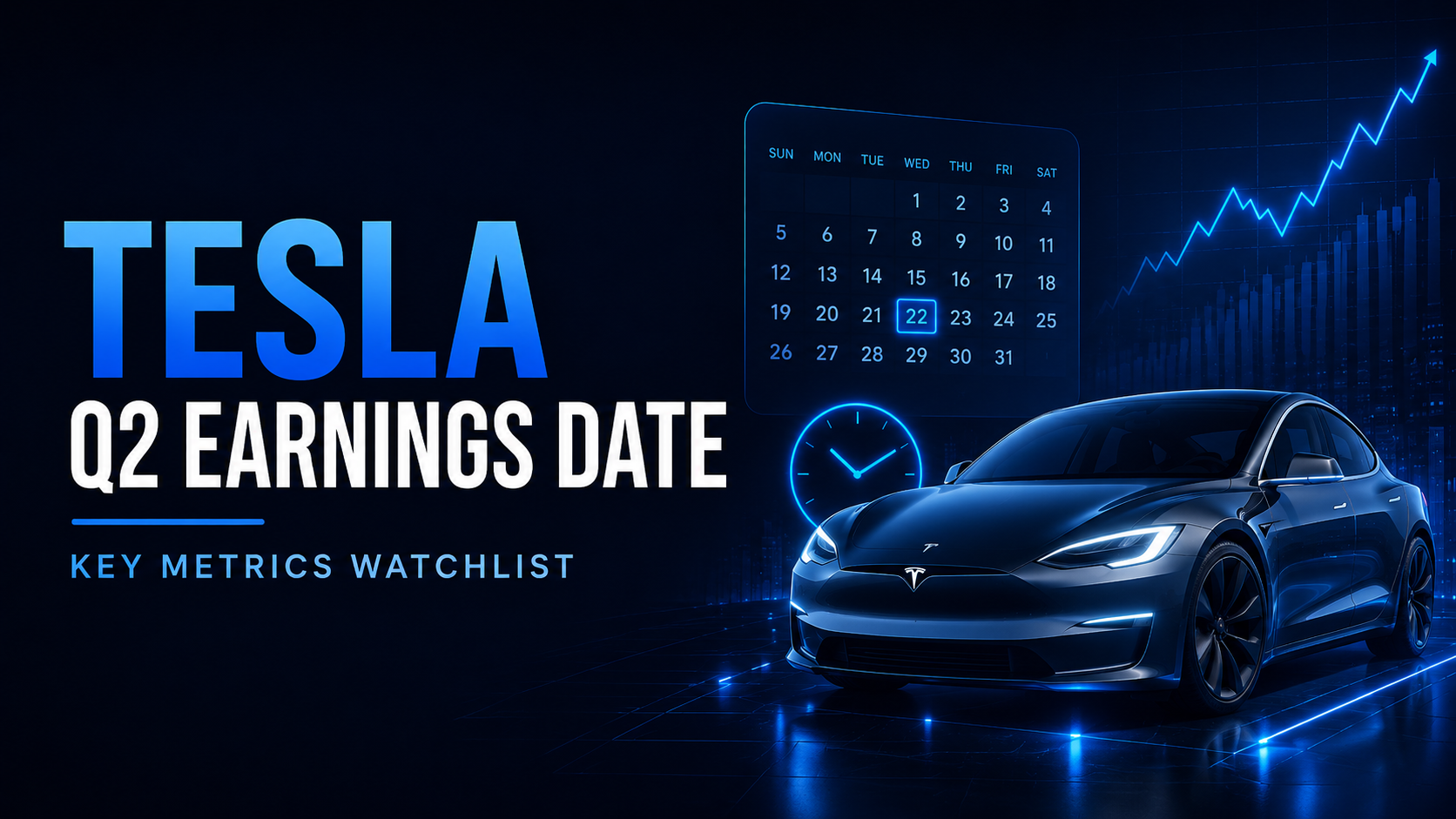
特斯拉2026年第二季度财报日期:发布时间、网络直播及关键指标
特斯拉2026年第二季度财报定于2026年7月22日(星期三)美国股市收盘后发布,管理层计划于美国中部时间下午4:30 / 东部时间下午5:30主持实时Q&A网络直播。第二季度的更新和网络直播将通过特斯拉的投资者关系网站提供,并在电话会议后提供存档重播。
这不仅仅是另一个普通的特斯拉财报日。特斯拉已经报告了超预期的交付季度:在2026年第二季度,公司生产了451,758辆汽车,交付了480,126辆汽车,并部署了13.5 GWh的储能产品。
对于交易员来说,关键问题不再是特斯拉是否交付了更多汽车,这部分已经是已知事实。真正的问题是,这些交付是否足够盈利,储能业务的增长是否能支撑特斯拉更宏大的愿景,以及管理层能否证明其在人工智能、自动驾驶和Robotaxi(无人驾驶出租车)领域的投资正从“叙事”走向可衡量的业务进展。
2026/07/06
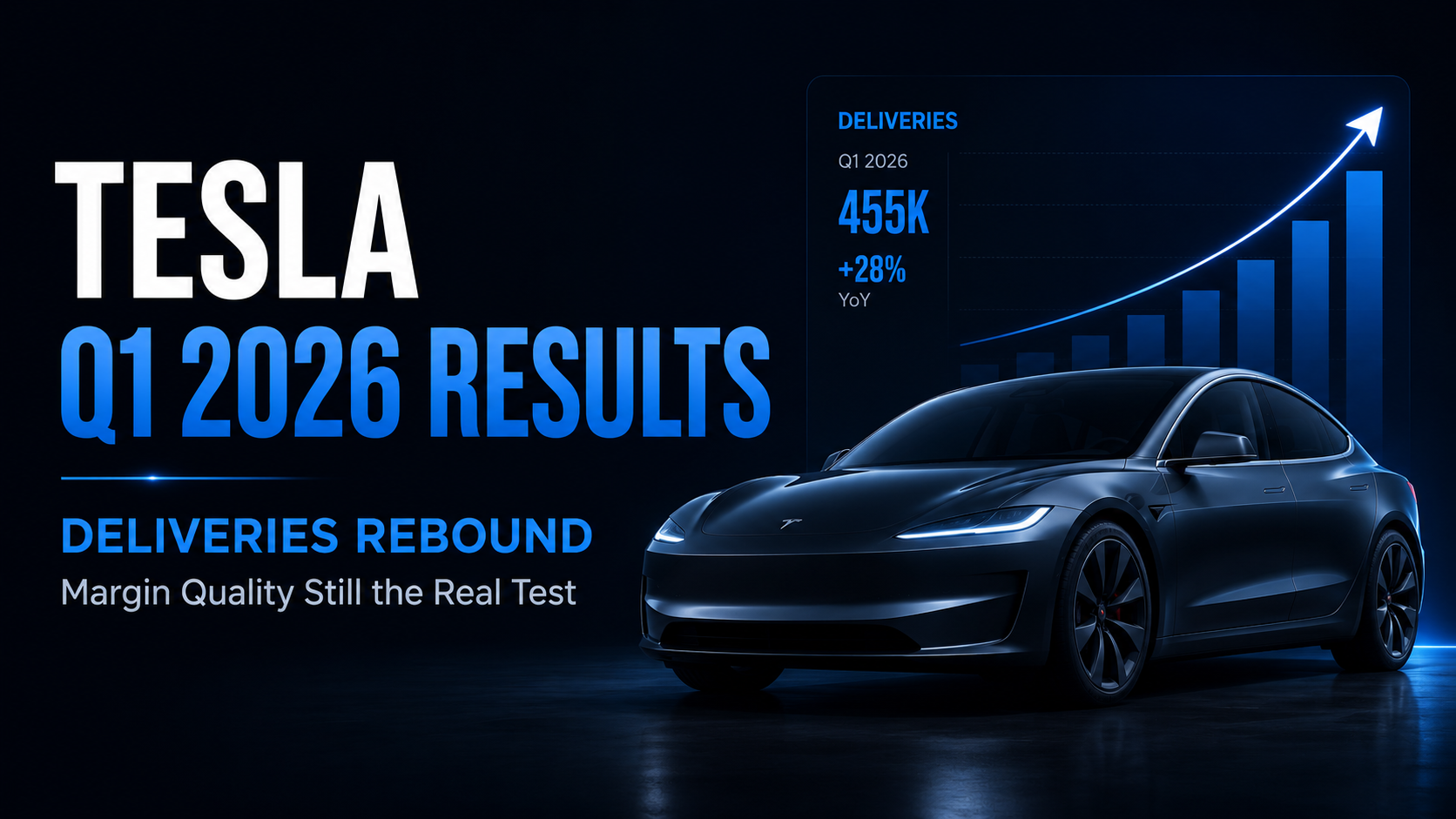
特斯拉2026年第一季度财报回顾:交付量反弹,但利润率质量仍是真正的考验
特斯拉于2026年4月22日美国股市收盘后公布了其2026年第一季度的财务业绩。该公司本季度交付了358,023辆汽车,创造了224亿美元的总营收,并报告归属于普通股股东的GAAP净利润为4.77亿美元。总GAAP毛利率提升至21.1%,而营业利润率达到4.2%。
核心信号不仅在于特斯拉的交付量从去年同期的疲软基数中恢复。更重要的问题是:更高的交付量、FSD相关营收、更低的单车成本以及改善的汽车毛利率,能否重建市场对特斯拉盈利能力的信心。对于寻找下一次TSLA财报日期或关注特斯拉财报的投资者来说,第一季度的表现为第二季度设立了一个关键考验:即销量的增长能否可持续地转化为更高质量的收益。
2026/07/09
苹果 2026 财年第二季度财报回顾:iPhone 营收与服务业务增长维持 EPS 预期
苹果于 2026 年 4 月 30 日发布了 2026 财年第二季度财报,涵盖截至 2026 年 3 月 28 日的季度。总营收达到 1112 亿美元,同比增长 17%,摊薄后每股收益(EPS)增长 22% 至 2.01 美元。苹果表示,该季度创下了公司 3 月份季度的总营收、iPhone 营收和 EPS 纪录,同时服务业务营收也创下历史新高。
这不仅仅是一份常规的硬件周期财报。苹果第二季度的业绩证明,iPhone 需求、服务业务增长以及积极的资本回报计划仍在共同支撑着该公司强大的 EPS 增长故事。对于寻找下一个苹果财报或 AAPL 财报更新的投资者而言,未来的关键问题是,在市场等待更强劲的 AI 和产品周期催化剂之际,苹果能否维持其溢价估值。
2026/07/09


热门
目前热门备受市场关注的加密货币
加密货币价格
按交易量计算交易量最大的加密货币