

The U.S. Securities and Exchange Commission has abruptly postponed the public meeting at which it was expected to unveil “Regulation Crypto,” one of the agency’s major rulemaking efforts for digital aThe U.S. Securities and Exchange Commission has abruptly postponed the public meeting at which it was expected to unveil “Regulation Crypto,” one of the agency’s major rulemaking efforts for digital a
SEC Delays “Regulation Crypto” Proposal Without New Date, Raising Uncertainty for U.S. Crypto Rules

The U.S. Securities and Exchange Commission has abruptly postponed the public meeting at which it was expected to unveil “Regulation Crypto,” one of the agency’s major rulemaking efforts for digital assets. The SEC postponed the Friday meeting in an end-of-day statement on thursday, citing an “unforeseen scheduling issue” as the reason for canceling the meeting.
The meeting had been expected to unveil new plans for digital assets as landmark crypto legislation remains stalled in Congress. The postponement leaves market participants, lawmakers, and the broader crypto industry without a clear timeline for when, or in what form, the rule will move forward.
1.What Was “Regulation Crypto” Supposed to Do
The SEC had scheduled an open meeting for Friday, August 14, at 10 a.m. ET to consider proposing a tailored offering regime for certain investment contracts involving crypto assets, potentially launching a formal rulemaking process on its own. Commissioners were scheduled to vote on whether to publish proposed rules for these investment contracts and begin the formal public-comment process, though the precise details of the rules had not yet been released. Reporting indicated the initiative could create exemptions allowing qualifying crypto startups to raise capital without immediately complying with the full registration framework applied to conventional securities offerings.
Additionally, once a project becomes sufficiently decentralized or its founders stop actively managing it, the new rules might also offer a way out of SEC oversight. The framework has been closely tied to SEC leadership’s broader agenda: Chairman Paul Atkins had described the Reg Crypto rulemaking — a tailored offering regime for certain investment contracts — as one of the central points of his digital assets regulatory plan.
2.Why the Meeting Was Called Off
The regulator announced earlier in the week that it planned to meet to create a tailored offering regime for certain investment contracts involving crypto assets, but that meeting was moved to a later date due to an unforeseen scheduling issue, according to an agency spokesperson. No further explanation has been offered publicly, and the SEC has not yet announced a new date for the vote. Notably, a separate, previously reported delay to the SEC’s tokenization exemption, held up since May over feedback from stock exchanges and other market participants on issues like shareholder rights for tokenized equities, is a distinct matter and does not mean Friday’s crypto meeting itself was originally in doubt for the same reasons; the two initiatives are being handled separately, with the offering-regime item assigned to the Division of Corporation Finance. Commissioner-level discussion has previously floated both safe-harbor concepts and a more tailored startup exemption for digital-asset businesses, meaning the cancellation delays the start of rulemaking rather than rejecting the underlying policy.
3.The Wider Regulatory Backdrop
The SEC’s move, and its sudden reversal, comes against a backdrop of stalled congressional action. The Senate declined to hold a pre-recess vote on the Digital Asset Market CLARITY Act, pushing the bill’s momentum from Congress toward regulators instead. Analysts framed the SEC’s planned action as potentially the first of several rulemakings the agency could pursue to provide regulatory certainty in the wake of the legislative delay.
The delay to the SEC meeting came after the Senate began a five-week recess without voting on the CLARITY Act, a bill that industry groups view as one of their key legislative priorities because it would establish separate federal rules for cryptocurrencies and a clearer legal framework for companies operating in the space. The Senate has since pushed the key CLARITY Act vote to September 15. Separately, the industry’s hope that the CLARITY Act could find Senate success when the chamber briefly returns to work is described as hanging by a thread, with negotiations among lawmakers and the White House uncertain to clear the 60-vote threshold needed.
Meanwhile, other regulators are not standing still: the Commodity Futures Trading Commission is set to convene its own innovation meeting six days later, titled “Crypto’s Regulatory Evolution: From Uncertainty to Clarity,” covering digital assets, autonomous AI agents, and prediction markets.
4.What This Means for the Industry
Crypto insiders had also anticipated the SEC might advance another major initiative, an “innovation exemption” for tokenizing securities, though that effort is also expected to be delayed. The net effect is a widening gap in regulatory clarity: with Congress in recess and the SEC’s own proposal now indefinitely postponed, the industry is left without a firm signal on either the legislative or the administrative track.
Whether the SEC’s eventual rulemaking eases pressure on lawmakers or simply runs alongside a revived congressional effort will likely become clearer only in September, when the Senate returns and the CLARITY vote comes back into view. Until then, companies seeking to raise capital through crypto-linked offerings, or to understand when a project might exit SEC oversight, remain reliant on informal agency guidance rather than a finalized rule.
5.Conclusion
The SEC’s last-minute postponement of its “Regulation Crypto” meeting underscores how unsettled the U.S. digital asset regulatory landscape remains, even as officials signal continued intent to act. With no rescheduled date, a stalled CLARITY Act now pushed to a September Senate vote, and a separate tokenization exemption also delayed, the path toward a durable federal framework for crypto assets is, for now, on hold. Both the SEC and Congress appear positioned to revisit these questions in September, but until concrete dates and text are set, uncertainty, not clarity, remains the defining feature of U.S. crypto policy.
Disclaimer: This article is for informational purposes only and does not constitute financial, legal, or investment advice. Regulatory developments may change, and readers should verify the latest official information before making any decisions.
市场机遇
Major实时价格 (MAJOR)
--
----
USD
Major (MAJOR) 实时价格图表
本页面分享的文章均源自公开平台,仅供参考。该内容不代表 MEXC 的立场或观点。所有版权归 Mubashir 所有。如果您认为任何内容侵犯了第三方的权益,请联系 [email protected] 以便及时删除。 MEXC 不保证任何内容的准确性、完整性或及时性,且不对基于所提供信息而采取的任何行动负责。本内容不构成财务、法律或其他专业建议,亦不应被解释为 MEXC 的推荐或认可。如需专家见解和深入分析,请造访 MEXC 学院。
Major 最新动态
查看更多
玛尔塔·科斯秋克对阵贾斯敏·保利尼预测:2026年温网四分之一决赛前瞻与关键因素
玛尔塔·科斯秋克对阵贾斯敏·保利尼是2026年温布尔登网球公开赛四分之一决赛中最引人注目的WTA比赛之一。科斯秋克代表乌克兰,正追逐她的首个温网半决赛席位;而保利尼代表意大利,凭借2024年温网之旅积累了大满贯决赛经验。
根据路透社的温网前瞻报道,科斯秋克在草地上保持了强劲状态,首次闯入温网八强,并在整个赛事中持续施加破发点压力。与此同时,保利尼展现了高效的发球表现和丰富的大满贯参赛经验。
这一预测取决于科斯秋克能否在避免过度进攻的情况下保持攻势,以及保利尼能否利用其经验化解压力并延长回合。
2026/07/08

今日温网预测:辛纳对阵德约科维奇,弗里茨对阵兹维列夫,科斯秋克对阵保利尼,以及科博利对阵费里
2026年温布尔登网球锦标赛已进入一个阶段,每场比赛都引发巨大的搜索兴趣、预测市场活动以及全球网坛的关注。关键预测对阵包括扬尼克·辛纳对阵诺瓦克·德约科维奇、泰勒·弗里茨对阵亚历山大·兹维列夫、玛尔塔·科斯秋克对阵贾斯敏·保利尼,以及弗拉维奥·科博利对阵阿瑟·费里。
2026/07/08
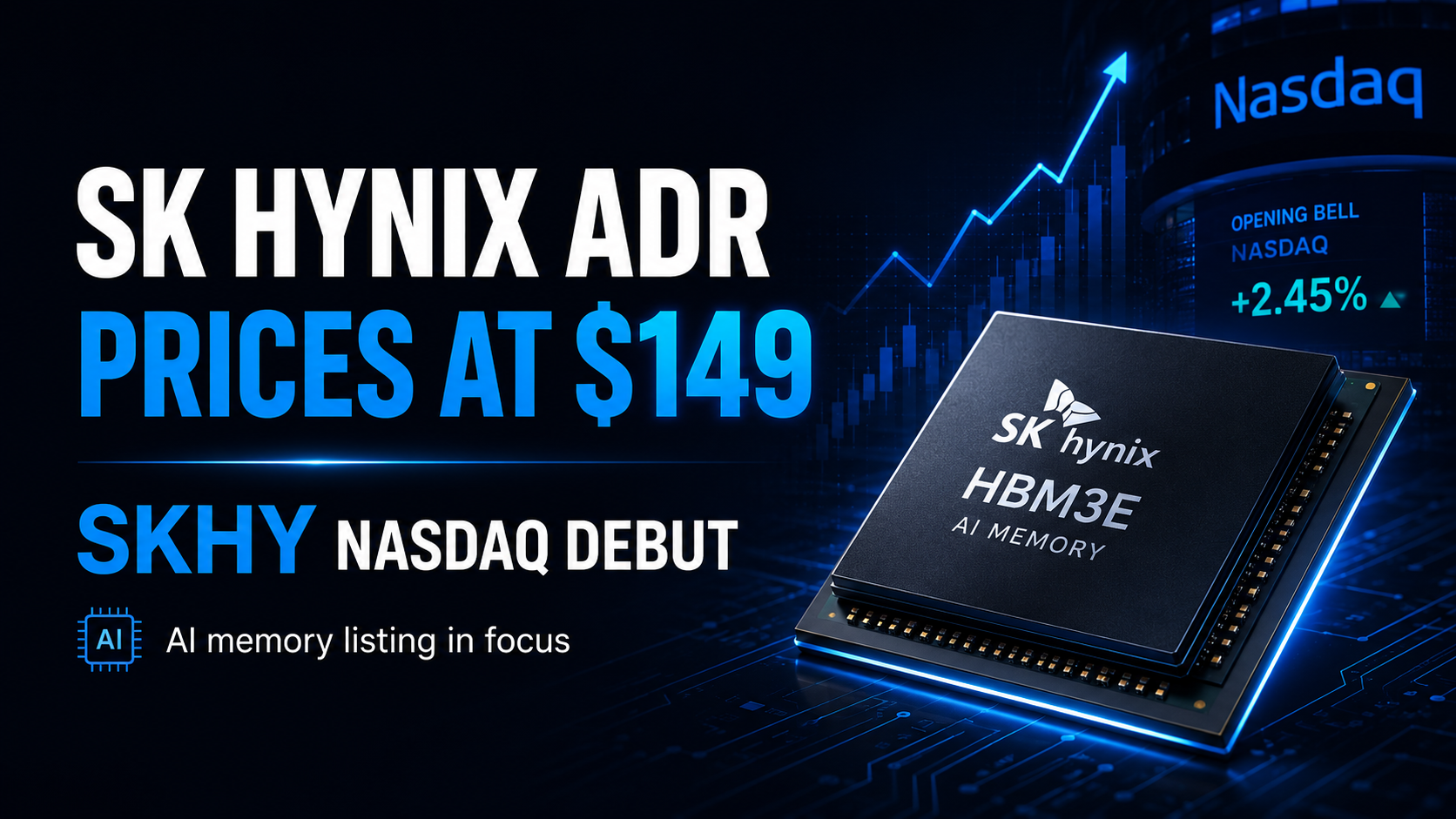
SK海力士ADR定价149美元,SKHY纳斯达克首秀在即
SK海力士(SK Hynix)已正式将其美国存托凭证(ADR)定价为每股149美元,在此次重大的美国发行中筹集了约265亿美元。此举凸显了投资者对AI相关半导体资产的巨大胃口。该ADR定价较其首尔上市股票前三个交易日的平均价格溢价2.7%,释放出强烈的机构兴趣信号。
此次上市绝不仅仅是一次常规的市场首秀。SK海力士已经是全球AI内存供应链中最关键的供应商之一。对于市场而言,核心问题在于,在AI基础设施需求依然是宏观主导主题的当下,这一全新的美国流动性渠道能否帮助投资者重新对SK海力士在高带宽内存(HBM)领域的统治地位进行定价。
2026/07/10
热门
目前热门备受市场关注的加密货币
加密货币价格
按交易量计算交易量最大的加密货币