

Unitree Robotics, one of China's leading robotics companies, officially launched the preliminary consultation process for its IPO on the STAR Market of the Shanghai Stock Exchange on August 5.Before tUnitree Robotics, one of China's leading robotics companies, officially launched the preliminary consultation process for its IPO on the STAR Market of the Shanghai Stock Exchange on August 5.Before t
Unitree Affordable Robots Riding the Trillion-Dollar Robotics Wave, Preparing for a $6 Billion STAR Market IPO

Unitree Robotics, one of China's leading robotics companies, officially launched the preliminary consultation process for its IPO on the STAR Market of the Shanghai Stock Exchange on August 5.
Before the company's shares officially begin trading, crypto investors can also gain exposure to market expectations through Unitree Pre-IPO, a product listed on MEXC. This allows users to trade based on the company's estimated valuation even before its public listing.
Key Takeaways
- Unitree Robotics is a Chinese robotics company founded in 2016, best known for its quadruped robots and humanoid robots.
- The company is the global leader in the quadruped robot market and ranks among the world's leading humanoid robot manufacturers.
- Revenue has grown rapidly, the company became profitable in 2024, and it is now preparing for an IPO on the STAR Market.
- Unitree is well positioned to benefit from the long-term expansion of the humanoid robotics and embodied AI industries.
- Investors can gain early exposure to IPO expectations through the Unitree Pre-IPO product listed on MEXC.
1. Company Overview and Core Value Proposition
Unitree Robotics, officially known as Hangzhou Yushu Technology Co., Ltd., was founded in August 2016 in a modest 50-square-meter office located in Binjiang District, Hangzhou.
The company was founded by Wang Xingxing, born in 1990 in Ningbo. He graduated from Zhejiang Sci-Tech University before earning his master's degree from Shanghai University in 2016. During his university years, Wang independently built the XDog quadruped robot prototype at a cost of only around RMB 20,000.
After spending only a few months at DJI, Wang left the company to devote himself full-time to building Unitree. Today, he serves as Founder, CEO, and CTO, and was recognized in TIME100 AI 2025 for his contributions to the AI industry.
Unitree primarily develops two categories of legged robots:
- Quadruped robots
- Humanoid robots
The company's biggest competitive advantage is its extremely low production cost.
For comparison, a commercial-grade quadruped robot such as Boston Dynamics Spot costs around $75,000, while Unitree Go2 starts at approximately $1,600, making it nearly 47 times cheaper. Meanwhile, the entry-level humanoid robot G1 starts at just $16,000.
This pricing strategy has transformed legged robots from expensive research equipment reserved for elite laboratories into practical tools that universities, factories, developers, and even individual enthusiasts can afford.
The reason Unitree is able to offer such aggressive pricing lies in its vertical integration strategy, which has been in place since the company's early days.
Since actuators account for more than half of a robot's manufacturing cost, Unitree develops and manufactures many critical components in-house, including:
- Motors
- Harmonic reducers
- Encoders
- Controllers
Combined with China's highly efficient manufacturing supply chain and economies of scale, this strategy has reduced the unit production cost of quadruped robots by approximately 46% between 2022 and 2025.
More importantly, lower prices have not come at the expense of performance.
Unitree robots have set multiple world records, including the fastest full-size humanoid robot and the first humanoid robot to perform a hydraulic-free backflip.
The company also gained worldwide attention after its robots appeared during CCTV's 2025 Spring Festival Gala, performing a traditional Yangge dance in front of hundreds of millions of viewers. The performance quickly went viral and significantly boosted Unitree's global brand recognition.
2. Product Portfolio and Revenue Transformation
Unitree currently operates two primary product lines, with its business gradually shifting from quadruped robots toward humanoid robots.
The quadruped business continues to provide a stable revenue base, with flagship products including Laikago (2017), Go1 (2021), Go2, and B2.
As of September 2025, Unitree had shipped more than 30,000 quadruped robots, accounting for approximately 67% to 70% of the global market, making it the clear market leader.
Meanwhile, humanoid robots have emerged as the company's primary growth engine.
Its humanoid lineup includes G1, R1, H2, and H1, with prices ranging from approximately $4,900 to $90,000, serving a wide range of applications from research and education to industrial automation.
In 2025, Unitree shipped more than 5,500 humanoid robots, placing it among the world's leading manufacturers. The company aims to increase shipments to 20,000 units in 2026.
According to the company's prospectus, revenue generated from humanoid robots increased from 1.9% in 2023 to 27.6% in 2024, before reaching 51.5% during the first nine months of 2025, surpassing quadruped robots for the first time.
This milestone indicates that humanoid robots are no longer an experimental business segment. Instead, they have become Unitree's largest revenue source and the company's primary long-term growth driver.
3. Strong Financial Performance and IPO Journey
Unitree is one of the few robotics companies that has already achieved profitability despite an industry where most players continue to burn significant amounts of capital.
According to its draft prospectus dated March 20, 2026, the company's revenue increased from RMB 123 million in 2022 to RMB 159 million in 2023, then surged to RMB 392 million in 2024, before reaching RMB 1.167 billion (approximately US$167 million) during the first nine months of 2025.
Gross margin also improved significantly, rising from 44.2% to nearly 59.5%.
Unitree reported its first annual net profit of RMB 95 million in 2024. During the first nine months of 2025, net profit reached RMB 105 million, while adjusted net profit excluding extraordinary items totaled RMB 431 million.
The difference mainly resulted from approximately RMB 349 million in share-based compensation expenses, which represent non-cash accounting costs rather than actual cash outflows.
Operating cash flow also turned positive, reaching RMB 428 million, while R&D expenses as a percentage of revenue declined from 31.4% in 2023 to 7.7%, reflecting the benefits of economies of scale.
Founder Wang Xingxing remains the controlling shareholder, owning 34.76% of the company's equity while controlling 68.78% of the voting rights through the Weighted Voting Rights (WVR) structure permitted by the STAR Market.
This governance structure allows Wang to retain control after the IPO, although the prospectus also identifies it as a potential governance risk for minority shareholders.
Prior to the IPO, Unitree received investments from several major institutions, including HongShan (formerly Sequoia China), Matrix Partners China, Shenzhen Capital Group, Tencent, and Meituan. Chinese media have also reported participation from Alibaba, Ant Group, China Mobile, and Geely.
The planned STAR Market IPO represents the most significant milestone in Unitree's corporate history.
The company's listing application was accepted on March 20, 2026, and approved by the STAR Market Listing Committee on June 1, 2026, completing the review process in only 73 days, an exceptionally fast timeline for China's A-share market.
According to Chinese media reports, Unitree could become the first humanoid robotics company listed on China's A-share market, with an expected valuation of approximately RMB 42 billion (nearly US$6 billion).
The company plans to issue at least 40.446 million new shares, representing no less than 10% of its post-IPO share capital. The final offering price and total fundraising amount will be determined through the book-building process.
Proceeds from the IPO will primarily be allocated to four strategic areas:
- AI foundation model research for robotics
- Robotics platform research and development
- New product development
- Expansion of manufacturing capacity
The company is expected to begin trading around mid-August 2026.
Its premium valuation reflects strong market confidence in Unitree's leadership position within the rapidly growing embodied AI industry. However, it also raises expectations for the company to sustain its rapid growth and successfully commercialize its products over the coming years.
4. Humanoid Robotics Market and Growth Potential
Embodied AI, the technology that gives artificial intelligence a physical body capable of interacting with the real world, has been described by NVIDIA CEO Jensen Huang as the "ChatGPT moment for robotics."
Humanoid robots are widely regarded as the ideal form factor because modern workplaces and living environments are already designed around the human body. This enables businesses to automate existing workflows without requiring extensive infrastructure modifications.
Major financial institutions all expect the humanoid robotics market to experience substantial growth over the coming decades, although their long-term forecasts vary considerably.
Goldman Sachs projects the market will reach US$38 billion by 2035.
Citi forecasts US$209 billion by 2035, expanding to approximately US$7 trillion by 2050.
Morgan Stanley and ARK Invest estimate the industry's long-term potential at between US$5 trillion and US$24 trillion.
China is also aggressively promoting the robotics industry through a series of supportive government policies.
The Ministry of Industry and Information Technology (MIIT) issued guidance in 2023 targeting mass production of humanoid robots beginning in 2025.
China's 2025 Government Work Report included embodied AI as a national development priority for the first time.
Meanwhile, the 15th Five-Year Plan (2026-2030) elevated humanoid robotics to the level of a national strategic industry, supported by more than RMB 70 billion from regional government investment funds.
The year 2025 is widely viewed as the beginning of the industry's mass production era.
China now has more than 140 companies developing humanoid robots, with a combined portfolio of over 330 products.
Over the next five years, humanoid robots are expected to be deployed primarily in manufacturing and logistics before gradually expanding into commercial services, healthcare, and eventually household applications after 2040.
Manufacturing costs continue to decline rapidly, while China's supply chain maintains a significant cost advantage in robotics components.
Beyond hardware, competition is increasingly shifting toward Vision-Language-Action (VLA) models, AI systems that enable robots to perceive, understand, and interact intelligently with the physical world.
Given its leadership in production scale and manufacturing ecosystem, Unitree is widely regarded as one of the companies best positioned to benefit from this long-term industry transformation.
5. Competition, Risks, and Outlook
Unitree currently holds approximately 67% to 70% of the global quadruped robot market and is also recognized as one of the leading players in the rapidly growing humanoid robotics sector.
Its biggest competitive advantages include aggressive pricing, high shipment volume, early profitability, and a remarkably fast IPO process. However, when it comes to proprietary AI capabilities, Unitree is still generally considered to trail competitors such as Tesla, Figure AI, and Boston Dynamics.
The company's most significant external risk stems from the ongoing geopolitical tensions between the United States and China.
In 2025, Unitree faced scrutiny over data security concerns, while several proposed U.S. bills sought to restrict imports of Chinese-made robots on national security grounds.
On the other hand, commercialization continues to accelerate across many Asian markets. One notable example is the deployment of Unitree's G1 humanoid robot at Haneda Airport in Japan, beginning in 2026.
Beyond geopolitical challenges, Unitree also faces several additional risks, including operational safety concerns, the challenge of maintaining long-term profitability, and the fact that the humanoid robotics industry remains at an early stage with a relatively limited commercial market.
Nevertheless, if the embodied AI industry continues to evolve as expected, Unitree is well positioned to become one of the primary beneficiaries of the global humanoid robotics wave over the next decade.
6. Trading Unitree Pre-IPO on MEXC
After understanding Unitree's business model, financial performance, and IPO plans, users can monitor market sentiment and trade $UNITREE through MEXC's Unitree Pre IPO product.
The Unitree Pre-IPO product allows users to trade based on the expected valuation and price movements of Unitree shares before the company is officially listed on the STAR Market.
This provides investors with a way to gain exposure to market expectations surrounding Unitree's valuation and future prospects without having to wait until the company's shares begin trading on the public stock exchange.
Note: The price of Unitree Pre-IPO may fluctuate rapidly in response to developments such as IPO progress, financial results, valuation updates, and broader trends within the humanoid robotics industry.
Investors should closely follow official announcements from both Unitree and MEXC, while also taking the time to fully understand the product's trading mechanism, settlement process, and applicable terms and conditions before participating.
Conclusion
Unitree is emerging as one of the leading companies driving the embodied AI revolution, supported by its low-cost hardware strategy, early commercialization success, and plans to become the first humanoid robotics company listed on China's STAR Market.
Its expected IPO in mid-August 2026, with an estimated valuation of nearly US$6 billion, will represent a major milestone for the company, providing fresh capital to expand manufacturing capacity and accelerate the development of next-generation AI-powered robotics.
Disclaimer: This content does not constitute investment, tax, legal, financial, or accounting advice. MEXC Blog provides this information for educational purposes only. Always do your own research, understand the risks, and invest responsibly.
市场机遇
4实时价格 (4)
--
----
USD
4 (4) 实时价格图表
本页面分享的文章均源自公开平台,仅供参考。该内容不代表 MEXC 的立场或观点。所有版权归 Van Dat Phan 所有。如果您认为任何内容侵犯了第三方的权益,请联系 [email protected] 以便及时删除。 MEXC 不保证任何内容的准确性、完整性或及时性,且不对基于所提供信息而采取的任何行动负责。本内容不构成财务、法律或其他专业建议,亦不应被解释为 MEXC 的推荐或认可。如需专家见解和深入分析,请造访 MEXC 学院。
4 最新动态
查看更多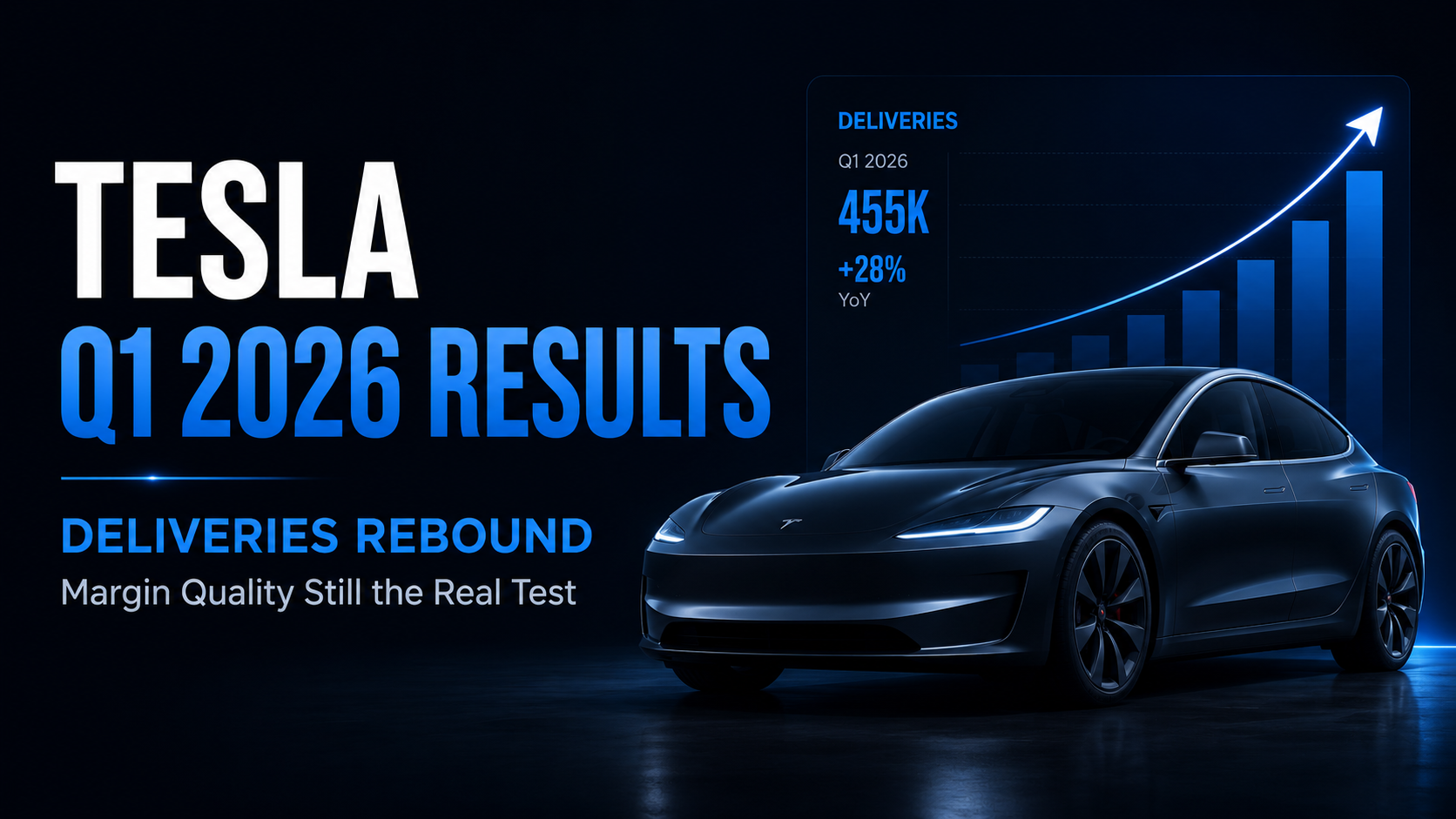
特斯拉2026年第一季度财报回顾:交付量反弹,但利润率质量仍是真正的考验
特斯拉于2026年4月22日美国股市收盘后公布了其2026年第一季度的财务业绩。该公司本季度交付了358,023辆汽车,创造了224亿美元的总营收,并报告归属于普通股股东的GAAP净利润为4.77亿美元。总GAAP毛利率提升至21.1%,而营业利润率达到4.2%。
核心信号不仅在于特斯拉的交付量从去年同期的疲软基数中恢复。更重要的问题是:更高的交付量、FSD相关营收、更低的单车成本以及改善的汽车毛利率,能否重建市场对特斯拉盈利能力的信心。对于寻找下一次TSLA财报日期或关注特斯拉财报的投资者来说,第一季度的表现为第二季度设立了一个关键考验:即销量的增长能否可持续地转化为更高质量的收益。
2026/07/09

苹果 2026 财年第二季度财报回顾:iPhone 营收与服务业务增长维持 EPS 预期
苹果于 2026 年 4 月 30 日发布了 2026 财年第二季度财报,涵盖截至 2026 年 3 月 28 日的季度。总营收达到 1112 亿美元,同比增长 17%,摊薄后每股收益(EPS)增长 22% 至 2.01 美元。苹果表示,该季度创下了公司 3 月份季度的总营收、iPhone 营收和 EPS 纪录,同时服务业务营收也创下历史新高。
这不仅仅是一份常规的硬件周期财报。苹果第二季度的业绩证明,iPhone 需求、服务业务增长以及积极的资本回报计划仍在共同支撑着该公司强大的 EPS 增长故事。对于寻找下一个苹果财报或 AAPL 财报更新的投资者而言,未来的关键问题是,在市场等待更强劲的 AI 和产品周期催化剂之际,苹果能否维持其溢价估值。
2026/07/09

Hyperliquid 未平仓合约达 115 亿美元:链上永续合约是否正扩展至美国股市?
Hyperliquid的未平仓合约量已达到约115亿美元,创下2026年新高,其中HIP-3市场贡献了近40亿美元。与标普500指数挂钩的合约已成为最大的HIP-3市场,而追踪SK海力士和美光科技的合约则反映了对人工智能和半导体相关敞口需求的不断增长。
2026/07/28
热门
目前热门备受市场关注的加密货币
加密货币价格
按交易量计算交易量最大的加密货币