

Key TakeawaysArthur Hayes, the BitMEX co-founder, announced on August 18, 2026 that he is coming out of retirement to serve as CEO of Flop Labs, a new venture building Flop Network and its native FLOPKey TakeawaysArthur Hayes, the BitMEX co-founder, announced on August 18, 2026 that he is coming out of retirement to serve as CEO of Flop Labs, a new venture building Flop Network and its native FLOP
What Is Flop Labs? Arthur Hayes' FLOP Token, the AI Agent Economy, and the Q4 Airdrop Explained

作者:OoJae
分享
Key Takeaways
Arthur Hayes, the BitMEX co-founder, announced on August 18, 2026 that he is coming out of retirement to serve as CEO of Flop Labs, a new venture building Flop Network and its native FLOP token, which he describes as "food for your AI agent."
Flop Network aims to be the payment and infrastructure layer of the agentic economy, where autonomous AI agents buy compute, inference and decentralized memory and transact with each other without human approval at every step.
The project proposes a Proof of Useful Inference consensus model, in which miners earn FLOP by executing real AI inference workloads rather than computing purely to secure the chain, with validators verifying the work.
FLOP will use a 100% fair launch with no presale and no venture capital allocation. A large airdrop is planned for the fourth quarter of 2026, with the genesis block targeted for the first quarter of 2027, meaning the token will exist before the chain it is meant to run on.
No FLOP token is trading anywhere yet, and technical documentation remains thin. The only published eligibility step so far is following the official Flop Labs account on X, so anything currently claiming to sell FLOP or offering early allocations should be treated as a scam.
The Shortest Retirement in Crypto
Barely a month after BitMEX announced it would shut down, its most famous co-founder is starting over. Arthur Hayes, who co-created the perpetual swap that still dominates crypto trading and later spent his post exchange years as Maelstrom's chief investment officer and one of the industry's most read essayists, announced on August 18 that he will lead Flop Labs as CEO. The timing gives the story its edge: the derivatives empire Hayes built is winding down toward its September closure, a saga we covered in our report on why crypto exchanges are shutting down, and his stated retirement lasted less than a month. Hayes' history travels with him in both directions, from defining crypto market structure to a 2022 guilty plea on US Bank Secrecy Act charges and a presidential pardon in 2025.
What Flop Network Actually Proposes
The pitch is a currency for machines. Flop Labs argues that increasingly capable AI agents will not just answer questions but act as economic agents, purchasing the compute they need for inference, renting decentralized memory to store and retrieve information, negotiating services, and settling with each other continuously. Humans approve none of those transactions individually, which in the project's telling means the machine economy needs its own native money and payment rails. FLOP is designed to be that unit of account, with the token described as backed by verified computational processing power.
The technical centerpiece is a consensus design the project calls Proof of Useful Inference. Instead of miners burning electricity on puzzles whose only purpose is securing the chain, Flop Network wants mining work to be actual AI inference: miners contribute computing power to execute AI workloads and earn FLOP as compensation, while a validator layer checks and verifies the results. If it works as described, the chain's security budget doubles as a decentralized AI compute marketplace. That is a genuinely ambitious design, and at this stage it is mostly a description: public technical documentation remains limited, so the verification mechanics, the economics and the performance claims all await real detail ahead of launch.
The Fair Launch and the Q4 Airdrop
Distribution is where Flop Labs is loudest. Hayes has committed to what he calls a 100% fair launch, meaning no presale rounds and no allocation reserved for venture capital funds, a pointed contrast with the low float, high fully diluted valuation launches the market has spent two years resenting. The headline event is a large airdrop planned for the fourth quarter of 2026, followed by the genesis block of the network itself in the first quarter of 2027.
That sequencing is unusual and worth sitting with: the token will exist before the blockchain it is supposed to power. Holders will initially own an asset whose native chain has not launched. The only publicly disclosed eligibility requirement so far is following the official Flop Labs account on X, and the most detailed part of the published plan concerns key opinion leaders and community partners, who will earn FLOP based on the traffic and activity their audiences generate. That structure will supercharge promotion of the project across social media in the coming months, which is exactly why readers should weigh the incentives behind the enthusiasm they are about to see.
The Risks and the Red Flags to Watch
A famous founder, a hot narrative and a free token distribution is also the exact template scammers copy fastest. Since no FLOP token exists on any exchange or chain yet, any listing, presale, claim site or direct message currently offering FLOP is fraudulent by definition, and several unrelated tokens already share the ticker. Airdrop hunters should only ever act on announcements from official Flop Labs channels, never connect wallets to unverified claim pages, and remember that legitimate airdrops never require sending funds first.
The project itself carries honest uncertainties too: a token launching months before its chain, thin documentation, a KOL driven growth engine, and a founder whose ventures have attracted both devotion and regulators. The agentic economy thesis is real, with AI agent tokens forming one of crypto's strongest narratives this year, but a thesis is not a working network. The Q4 airdrop and Q1 2027 genesis are the two concrete milestones against which Flop Labs can actually be judged.
What It Means for Traders on MEXC
There is nothing to trade yet, and that is the most important fact in this article. Until Flop Labs ships its airdrop and the token reaches exchanges, the only actions available are following official channels and ignoring impostors. The narrative, however, is tradable today: the announcement adds fuel to the AI agent token sector, which traders can follow on MEXC alongside majors like BTC/USDT as the AI and crypto stories keep converging, from robot IPOs to agent economies. If and when FLOP begins trading, listing news will be the moment to reassess with real market data.
市场机遇
Quack AI实时价格 (Q)
--
----
USD
Quack AI (Q) 实时价格图表
本页面分享的文章均源自公开平台,仅供参考。该内容不代表 MEXC 的立场或观点。所有版权归 OoJae 所有。如果您认为任何内容侵犯了第三方的权益,请联系 [email protected] 以便及时删除。 MEXC 不保证任何内容的准确性、完整性或及时性,且不对基于所提供信息而采取的任何行动负责。本内容不构成财务、法律或其他专业建议,亦不应被解释为 MEXC 的推荐或认可。如需专家见解和深入分析,请造访 MEXC 学院。
Quack AI 最新动态
查看更多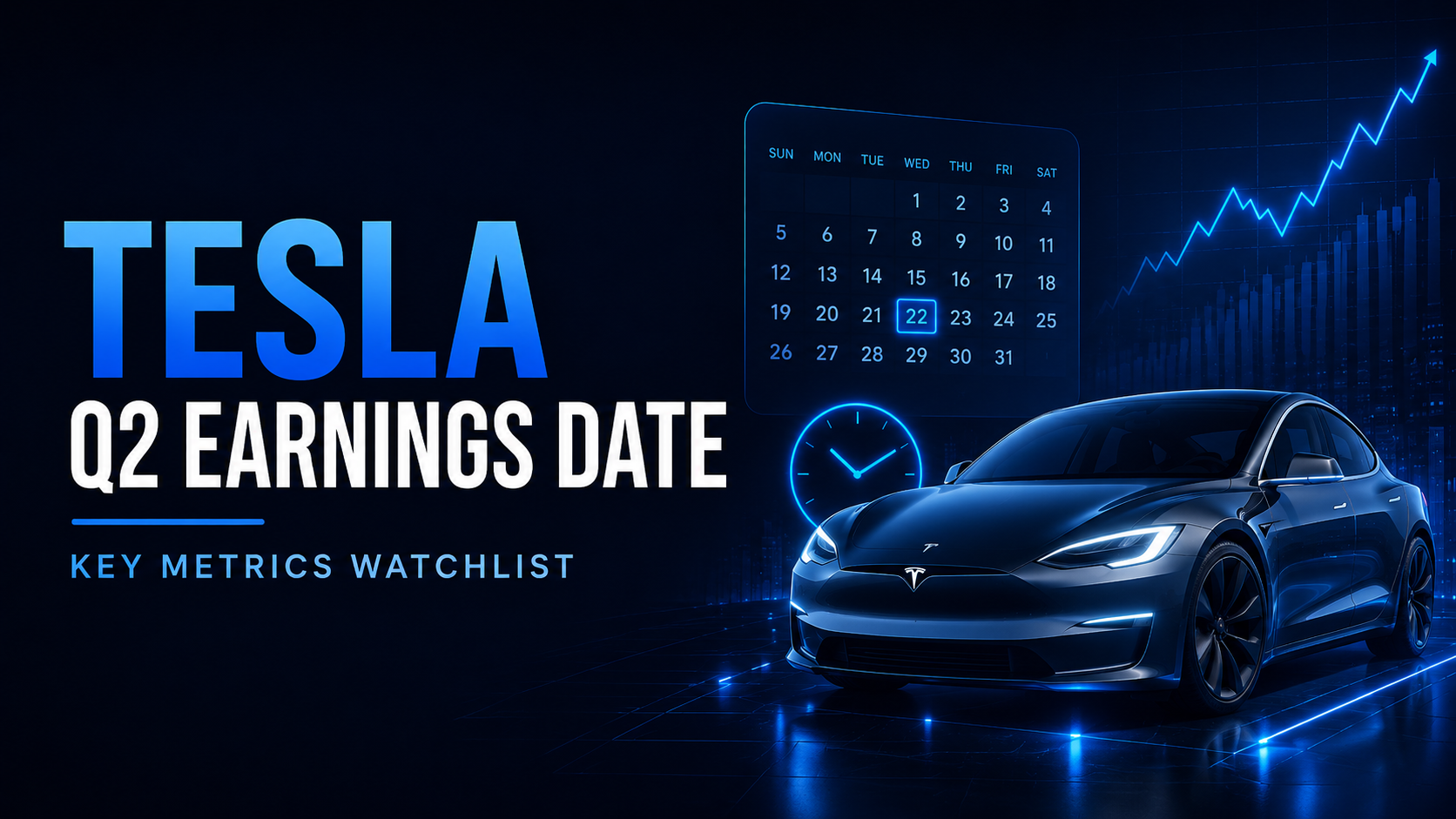
特斯拉2026年第二季度财报日期:发布时间、网络直播及关键指标
特斯拉2026年第二季度财报定于2026年7月22日(星期三)美国股市收盘后发布,管理层计划于美国中部时间下午4:30 / 东部时间下午5:30主持实时Q&A网络直播。第二季度的更新和网络直播将通过特斯拉的投资者关系网站提供,并在电话会议后提供存档重播。
这不仅仅是另一个普通的特斯拉财报日。特斯拉已经报告了超预期的交付季度:在2026年第二季度,公司生产了451,758辆汽车,交付了480,126辆汽车,并部署了13.5 GWh的储能产品。
对于交易员来说,关键问题不再是特斯拉是否交付了更多汽车,这部分已经是已知事实。真正的问题是,这些交付是否足够盈利,储能业务的增长是否能支撑特斯拉更宏大的愿景,以及管理层能否证明其在人工智能、自动驾驶和Robotaxi(无人驾驶出租车)领域的投资正从“叙事”走向可衡量的业务进展。
2026/07/06

Bitget 将退出日本:面向日本居民的服务将于 2026 年 12 月 31 日终止
Bitget 将于 2026 年 12 月 31 日终止对日本用户的服务。受影响的用户必须在截止日期前平仓并提取资产。
2026/08/04

万事达完成对BVNK的收购,交易金额高达18亿美元——稳定币进入全球支付核心
万事达于2026年8月3日完成了对稳定币基础设施提供商BVNK的收购,此前已于三月宣布该交易。
2026/08/04
热门
目前热门备受市场关注的加密货币
加密货币价格
按交易量计算交易量最大的加密货币