Ethena Pay Explained: Can USDe Become a Crypto Bank Account?
Ethena is taking USDe somewhere very different from the DeFi protocols where its synthetic dollar first gained traction.
On September 1, Ethena launched the beta version of Ethena Pay, a self-custodial mobile money application built around USDe and settled on Avalanche.
The product combines features that users normally find across several separate services: a dollar-denominated balance, automatic rewards, money transfers, bank withdrawals and a payment card.
Ethena Pay says users can earn up to 6% APY on eligible balances and receive up to 5% crypto cashback on normal card spending, with additional promotional rewards at selected merchants. Its card is designed for use across Visa’s global merchant network.
The beta is initially rolling out across roughly 50 countries, although availability and individual features vary by jurisdiction.
The launch matters because it changes the question surrounding Ethena.
USDe is no longer only asking:
Can a synthetic dollar work inside DeFi?
Ethena is now asking:
Can that same digital dollar become the financial account people use to save, transfer and spend money every day?
Summary
Ethena Pay is a self-custodial mobile money app built around Ethena’s synthetic dollar, USDe.
The beta launched on September 1, 2026, initially covering about 50 countries across Latin America, Asia, the Middle East, Africa and Oceania.
Users can hold a dollar-denominated USDe balance, earn automatic rewards of up to 6% APY on eligible balances, transfer funds and spend through an Ethena Pay card.
The application uses Avalanche as its settlement layer, bringing USDe from a primarily DeFi-oriented asset into a consumer-facing payments product.
Ethena Pay explicitly states that it is not a bank and does not hold customer funds. Its wallet is self-custodial, while banking and card functions are delivered through third-party partners.
The strategic significance is therefore not that Ethena has become a bank. It is that crypto infrastructure is increasingly being packaged behind interfaces that resemble familiar banking applications.
What Is Ethena Pay?
Ethena Pay describes itself as an “Internet Money App.”
The company says users can:
send money;
hold a dollar-denominated balance;
earn rewards;
withdraw to a bank account;
transfer to external crypto wallets;
and
spend through a payment card.
Underneath that consumer-facing interface is USDe.
MEXC already provides a detailed guide to what USDe is and how Ethena’s synthetic-dollar model works, including its delta-hedging architecture.
That distinction is useful because Ethena Pay is not a new stablecoin.
It is a new distribution and payments layer for USDe.
How Does Ethena Pay Work?
A conventional mobile banking app hides most of the infrastructure behind a simple balance.
Ethena Pay is attempting something similar with crypto.
Users interact with what looks like a dollar balance rather than manually choosing blockchain networks or managing each on-chain step.
At a simplified level:
Fiat or crypto enters the app
↓
Value is represented through USDe
↓
Avalanche handles blockchain settlement
↓
The user saves, transfers or spends through the interface
This architecture is important because widespread crypto adoption probably does not depend on every consumer understanding block explorers, gas or bridge mechanics.
It depends on applications making the infrastructure invisible.
Is Ethena Pay a Bank?
No.
Ethena Pay states this explicitly in its official FAQ and legal disclosures.
Ethena Pay Ltd. is a Malta-incorporated company providing software and technology services. It says it is not a bank, credit union, broker-dealer, investment adviser or money-services business.
The company also states that:
the wallet is self-custodial;
users control their assets;
and
bank-account and card functionality is provided through third-party partners.
That makes the phrase “crypto bank account” useful as a description of the user experience, but inaccurate as a legal classification.
Ethena Pay is better understood as a self-custodial money app combining crypto and third-party financial services.
Why Self-Custody Is a Key Part of the Product
Most fintech and banking applications are custodial.
The institution controls the account infrastructure and records the customer’s claim.
Ethena Pay takes a different approach to the digital-asset side.
The company says users control their self-custodial wallet, with passkeys and device biometrics used to simplify access.
That creates a different trust model.
Users gain greater control over their blockchain assets, but self-custody also introduces responsibilities and risks that do not apply in exactly the same way to insured bank deposits.
Ethena Pay's own disclosures emphasize that digital assets including USDe and AVAX are not bank deposits and are not covered by government deposit-insurance schemes.
How Much Can Users Earn With Ethena Pay?
Ethena Pay advertises eligible reward rates of up to 6% APY.
The launch structure includes different membership tiers.
According to reporting on the beta rollout:
| Tier | Balance reward | Selected card benefits |
|---|---|---|
| Standard | Up to 5% APY on eligible balance limits | 4% base cashback |
| Pro | Up to 6% APY on eligible balance limits | 4.5% base cashback |
| VIP | Up to 6% APY on eligible balance limits | 5% base cashback |
Selected merchant promotions can offer higher rewards, in some cases up to 10%.
Those figures should be treated carefully.
Rewards can change, eligibility differs by tier and jurisdiction, and promotional merchant cashback should not be confused with a universal 10% cashback rate.
Where Does the Ethena Pay Yield Come From?
This is one of the most important questions for users.
USDe is not a traditional bank deposit.
Its economics originate from Ethena’s synthetic-dollar architecture.
MEXC's existing USDe beginner’s guide explains that Ethena seeks to maintain USDe's dollar value through collateral and delta-neutral derivatives positions rather than relying solely on conventional fiat reserves.
According to reporting on the Ethena Pay launch, Ethena founder Guy Young said the USDe rate supports the savings reward, while the funding source for some additional promotional rewards was not publicly disclosed in the same level of detail.
That means users should distinguish:
underlying USDe economics
from
additional app-level incentives and promotional cashback.
Why Ethena Chose Avalanche
Ethena Pay uses Avalanche as the exclusive settlement layer for payments and transfers during the current rollout.
Avalanche is a Layer-1 blockchain designed for fast transaction finality and smart-contract applications. MEXC's Avalanche overview provides additional background on the network’s architecture and AVAX token.
For a consumer payments app, blockchain selection is less about branding and more about operational requirements.
A payments network needs:
fast settlement;
predictable costs;
reliable transaction execution;
and infrastructure that can handle frequent small transfers.
Ethena Pay's product design attempts to keep that blockchain choice largely invisible to the end user.
MEXC Analyst View: Ethena Pay Is a Test of Whether Stablecoins Can Escape the Crypto Interface
Priya Sharma, MEXC senior crypto industry analyst, sees Ethena Pay as a more important experiment than a typical wallet or card launch because it tests whether a crypto-native dollar can move from financial infrastructure into everyday consumer behavior. USDe has already demonstrated utility in trading, lending and yield markets, but consumer payments demand something different: predictable UX, simple recovery, fiat connectivity and acceptance in places where users do not think about blockchain at all.
Sharma argues that the real competitive benchmark is therefore not another DeFi application. It is the experience users receive from mobile banks and global fintech apps. If sending USDe requires users to understand bridges, gas tokens or blockchain addresses, the product remains crypto-native. If those mechanics disappear behind names, cards and familiar balances, the underlying blockchain can become infrastructure rather than the product itself.
She also cautions that the “neobank” narrative should not obscure the risk structure. A USDe balance is not the same as an insured commercial-bank deposit, and a 5% or 6% crypto-based reward should not be compared with bank savings rates without explaining where the return comes from and what risks support it. In her view, Ethena Pay's long-term success will depend less on headline APY and more on whether it can maintain stable settlement, transparent economics, regulatory access and a user experience competitive with conventional financial apps.
What Does the Ethena Pay Card Do?
Ethena Pay allows eligible users to generate a virtual payment card.
The company says the card can be used wherever Visa is accepted, subject to eligibility and jurisdictional restrictions.
The important part is conversion.
A merchant does not need to understand USDe.
From the merchant’s perspective, the experience is intended to resemble an ordinary card payment.
That is one of the main paths through which blockchain-based money can reach mainstream commerce: the consumer may hold a digital asset while the merchant continues operating through familiar payment infrastructure.
How Does Cashback Work?
The launch program offers crypto cashback tied to membership tiers.
Base cashback ranges from approximately 4% to 5%, while selected brands can offer enhanced promotional rewards that reach up to 10% for eligible users.
Some cashback is paid in AVAX, which introduces an additional consideration.
A 5% cashback reward paid in a volatile cryptocurrency does not have the same risk profile as 5% cash deposited into a conventional fiat account.
The value can rise or fall after it is received.
Where Is Ethena Pay Available?
At launch, Ethena described the beta as rolling out across 48 countries, including markets such as:
Brazil;
Mexico;
South Africa;
Kenya;
the Philippines;
Singapore;
Japan;
the United Arab Emirates;
and Australia.
Ethena Pay's live FAQ now says the service is available in 49 countries, illustrating how quickly the rollout is changing.
That is why an SEO page should avoid hard-coding “48 countries” as a permanent fact.
A better formulation is:
Ethena Pay launched across 48 countries and is continuing to expand.
Users should check the official eligibility information for current availability.
Is Ethena Pay Available in the United States?
The Spend Card is not offered to U.S. persons according to Ethena Pay’s current legal disclosures.
Initial launch reporting also indicated that the United States and European Union were outside the first beta rollout.
Availability could change as the company expands and obtains the necessary approvals.
This is likely to become one of the highest-value search questions around the product:
Is Ethena Pay available in my country?
Why Ethena Pay Is Different From a Normal Crypto Wallet
A wallet traditionally focuses on holding and transferring blockchain assets.
Ethena Pay attempts to package several financial functions into one interface.
| Feature | Traditional crypto wallet | Ethena Pay |
|---|---|---|
| Self-custody | Often | Yes |
| Hold crypto | Yes | Yes |
| Dollar-denominated balance | Sometimes | Core product |
| Automatic rewards | Usually external | Integrated |
| Bank withdrawal | Often requires separate service | Integrated through partners |
| Payment card | Usually separate | Integrated |
| Consumer cashback | Uncommon | Integrated |
| Blockchain settlement | Visible to user | Designed to be largely abstracted |
That makes Ethena Pay closer to a crypto-native financial application than a conventional wallet.
How Does This Change the USDe Story?
USDe was originally discussed mainly in terms of its underlying mechanism.
Search questions focused on:
How does USDe maintain its peg?
What backs USDe?
What is sUSDe?
MEXC already addresses those questions in its existing What Is USDe? educational content.
Ethena Pay creates a new set of questions:
Can I spend USDe?
Can I receive salary or bank transfers into Ethena Pay?
Does Ethena Pay have a card?
Which countries support Ethena Pay?
What does Ethena Pay yield come from?
That is why the new product deserves a separate SEO page instead of updating the existing USDe definition article.
Ethena Is Moving From Protocol to Distribution
This is arguably the strategic heart of the launch.
A stablecoin or synthetic dollar can have excellent technology and still struggle if users have nowhere convenient to use it.
Distribution determines whether digital money becomes:
a trading asset;
a savings asset;
a payment asset;
or all three.
Ethena Pay gives Ethena direct consumer distribution.
Instead of waiting for other applications to integrate USDe, Ethena can now place USDe at the center of its own financial interface.
What Could Ethena Gain From Payments?
Payments could expand the role of USDe beyond DeFi.
If users keep balances inside Ethena Pay because they:
earn rewards;
receive transfers;
or use the card,
USDe may become “working money” rather than an asset held only for investment or trading.
That matters because transaction frequency is different from TVL.
A stablecoin locked in DeFi can generate large headline value but relatively few everyday user interactions.
A payment app can potentially create many smaller, recurring transactions.
What Are the Main Risks?
Ethena Pay combines several systems, so users should distinguish their risks.
USDe risk: the synthetic dollar depends on Ethena's collateral, hedging and operational structure.
Blockchain risk: transactions settle through smart-contract and network infrastructure.
Self-custody risk: control over wallet access remains important even when the interface simplifies key management.
Partner risk: banking and card services depend on third parties.
Reward risk: APY and cashback are not guaranteed permanent rates.
Regulatory risk: product and card availability vary across jurisdictions.
Ethena Pay itself makes clear that digital assets can lose value and are not covered by conventional deposit-insurance protection.
Ethena Pay vs a Bank Account
The two may look similar on a smartphone but are economically different.
| Feature | Traditional bank account | Ethena Pay |
|---|---|---|
| Core balance | Commercial-bank deposit | Digital assets including USDe |
| Custody | Bank | Self-custodial wallet |
| Deposit insurance | May apply depending on jurisdiction | Digital assets are not deposit-insured |
| Payment card | Common | Available to eligible users |
| Yield | Bank interest | Crypto-based rewards |
| Blockchain transfers | Usually no | Yes |
| External wallet withdrawals | Usually no | Yes |
Calling Ethena Pay a “crypto bank account” can therefore describe the experience.
It should not imply that it carries the legal protections of a bank account.
What Should Users Watch Next?
Four indicators matter more than the beta-launch headline.
User expansion: How quickly does Ethena move beyond the first wave of beta users?
Country availability: Can the product expand into major regulated markets?
Payment usage: Do users actually spend USDe rather than simply hold it for yield?
Reward sustainability: Can Ethena maintain attractive incentives without relying on temporary subsidies?
A fifth question is equally important for the crypto industry:
Will other stablecoin issuers follow Ethena into full consumer financial applications?
If they do, the competitive line between stablecoins, wallets, fintech apps and neobanks will become increasingly difficult to draw.
FAQ
What is Ethena Pay?
Ethena Pay is a self-custodial mobile money app built around USDe. It combines digital-asset balances, transfers, rewards and eligible payment-card functionality.
Is Ethena Pay a bank?
No. Ethena Pay explicitly states that it is not a bank and does not accept deposits or hold customer assets.
What stablecoin does Ethena Pay use?
The application is built around USDe, Ethena’s synthetic dollar.
Which blockchain does Ethena Pay use?
The beta uses Avalanche as its settlement layer for payments and transfers.
How much can users earn with Ethena Pay?
Ethena Pay advertises rewards of up to 6% APY on eligible balances. Rates, limits and eligibility vary by membership tier and can change.
Does Ethena Pay offer cashback?
Yes. Eligible cardholders can receive crypto cashback, with normal tier-based rates and higher promotional rewards at selected merchants.
Is Ethena Pay available in the U.S.?
The Spend Card is currently not offered to U.S. persons according to Ethena Pay’s official disclosures.
Is USDe the same as a bank deposit?
No. USDe is a synthetic dollar digital asset. It is not a bank deposit and does not receive conventional government deposit-insurance protection. MEXC's What Is USDe? guide explains its underlying structure in more detail.
Can I withdraw from Ethena Pay to a bank account?
Ethena Pay says users can withdraw to external wallets or bank accounts, subject to service availability and jurisdictional requirements.
Disclaimer
This article is for informational and educational purposes only and does not constitute financial or investment advice. Ethena Pay remains in beta. Reward rates, cashback, eligible countries, card availability, partner services and other product features may change. USDe, AVAX and other digital assets involve risk and should not be treated as insured bank deposits.
热门新闻
查看更多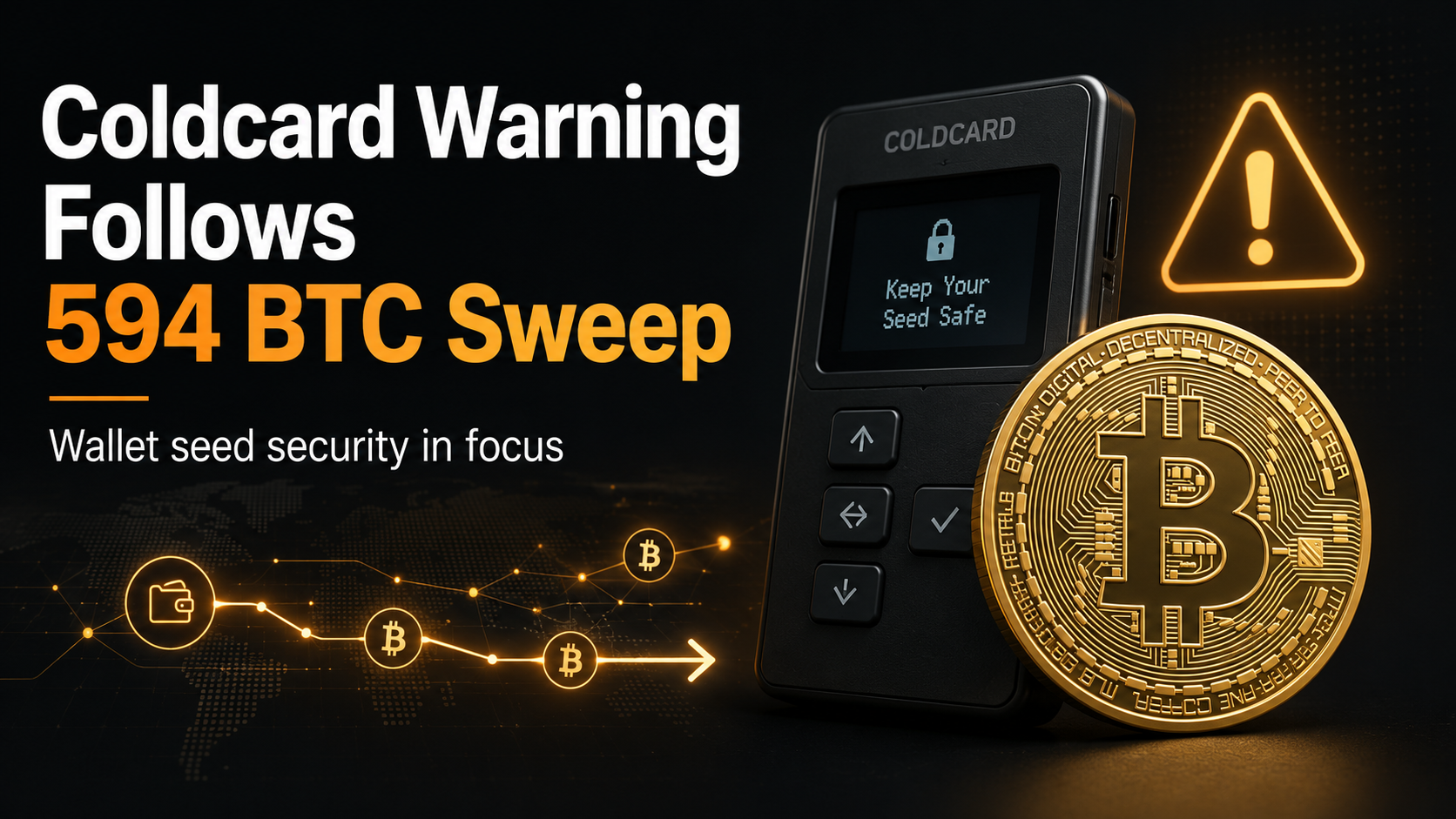
Coldcard Mk3 警告紧随 3800 万美元 Bitcoin 被扫荡事件,但原因仍未确认
比特币硬件钱包制造商Coinkite已警告用户,Coldcard设备存在种子生成问题,影响从4.0.1版本起的所有Mk3固件版本。该警告是在安全研究人员调查一起涉及594.48 BTC(约合3,800万美元)的协同转移事件时发出的。然而,目前尚无公开的技术证据证实Coldcard的问题导致了这些转账。



相关文章
查看更多
MEXC 流动性有多深?订单簿深度、滑点与第三方报告数据解析
您点击下单时的价格与实际成交的价格之间差多少,取决于流动性。本页按照第三方研究机构的衡量方式追踪 MEXC 的流动性:一是中间价上下窄区间内的订单簿(Order Book)深度,二是以实际规模模拟下单时产生的滑点(Slippage)。本页是一份持续更新的记录,收录自 2026 年 5 月以来每一份 TokenInsight 流动性报告中 MEXC 的主要结果,也包括 MEXC 排名第二或第三的项目

加息落地,BTC不跌反涨创八个月新高——利空出尽还是轧空狂欢?| MEXC Alpha Trader 投研周报
2026年9月第3周统计周期:2026年9月16日 – 9月22日数据截止:2026年9月22日核心叙事过去一周,加密市场经历了 “决议前承压——决议落地——强势反弹” 的完整周期。比特币从决议前的76,000-78,000美元区间起步,在美联储宣布加息后短暂下探,随后在财政部长债回购与ETF巨额流入的推动下强势拉升,9月21日触及 87,395美元,为2026年1月以来最高水平,单周涨幅约11%

CPI超预期引爆“加息押注”,美债收益率破5%创19年新高——市场在定价什么?| MEXC Alpha Trader 投研周报
2026年9月第2周统计周期:2026年9月9日 – 9月15日数据截止:2026年9月15日核心叙事过去一周,加密市场在通胀数据、加息预期与地缘政治的三重压制下持续承压。BTC从78,000美元附近起步,在CPI超预期与美债收益率突破5%的双重压制下逐步走低,9月11日一度下探至76,000美元附近,随后反弹至79,800美元。截至9月15日,比特币在77,000-78,000美元区间弱势整理。