How to Buy QQQON on MEXC: Step-by-Step Guide
Summary
QQQON is an Ondo tokenized product designed to provide economic exposure linked to the Invesco QQQ ETF (NASDAQ: QQQ).
QQQ itself tracks the Nasdaq-100 Index, creating the following structure:
Nasdaq-100
↓
Invesco QQQ
↓
Ondo QQQON
↓
QQQON/USDT on MEXC
MEXC currently provides a dedicated QQQON/USDT spot market, identified as Invesco QQQ (Ondo).
The basic purchase process is:
- Create or log in to MEXC.
- Check product eligibility.
- Prepare USDT.
- Open QQQON/USDT.
- Verify the product.
- Review QQQ and QQQON pricing.
- Check the order book.
- Choose Market or Limit.
- Enter an amount.
- Confirm the trade.
Before buying, users should understand that QQQON is not a directly owned QQQ share. Ondo states that its tokenized products provide economic exposure to underlying securities but do not give holders a right to hold or receive those securities.
What Is QQQON?
QQQON is the tokenized form of economic exposure linked to QQQ offered through the Ondo Stocks structure.
The product should not be confused with:
- QQQ itself;
- Nasdaq-100;
- Nasdaq Composite;
- A leveraged Nasdaq ETF;
- A cryptocurrency index.
Ondo's official product page identifies the underlying asset as Invesco QQQ.
What Does QQQ Track?
QQQ tracks the Nasdaq-100, which represents 100 of the largest non-financial companies listed on Nasdaq. Invesco states that the fund and index are rebalanced quarterly and reconstituted annually.
Therefore, users buying QQQON are taking exposure through two layers rather than directly purchasing the index:
Nasdaq-100 → QQQ → QQQON
What You Need Before Buying QQQON
Users generally need:
- A MEXC account;
- Eligibility to access the product;
- USDT in the Spot account;
- Basic knowledge of spot trading;
- A personal risk limit.
Ondo states that its tokenized products are unavailable to U.S.-based clients and that other jurisdiction-specific restrictions can apply.
Step 1: Log In to MEXC
Open MEXC and log in through the official website or application.
Before transferring funds, users should enable available account-security features such as:
- Two-factor authentication;
- Anti-phishing protections;
- Device monitoring;
- Withdrawal security.
Never share account passwords, verification codes or wallet recovery information.
Step 2: Confirm QQQON Eligibility
Tokenized securities can have different geographic restrictions from ordinary cryptocurrencies.
Before trading, confirm that:
- QQQON appears in your account;
- Spot trading is available;
- Your jurisdiction is supported.
The existence of a global MEXC product page does not automatically mean every account can access the asset.
Step 3: Prepare USDT
The MEXC market is:
QQQON/USDT
Therefore, users buying through that order book normally need USDT.
USDT can be obtained through supported:
- Crypto deposits;
- Spot trades;
- Fiat purchase channels;
- Conversion services,
depending on account and jurisdictional availability.
Step 4: Open the QQQON/USDT Market
Visit:
The current page provides:
- Chart;
- Order book;
- Market trades;
- Buy QQQON;
- Open orders;
- Order history;
- Trade history.
Step 5: Verify the Asset
Confirm:
Ticker: QQQON
Product: Invesco QQQ (Ondo)
This is important because similar names can refer to very different products.
For example:
- QQQ = Invesco ETF;
- QQQON = Ondo tokenized QQQ;
- TQQQ = leveraged Nasdaq-100 ETF;
- TQQQON = separate tokenized leveraged ETF product.
Do not assume these are interchangeable.
Step 6: Check the Underlying QQQ Market
Before placing a QQQON order, consider checking:
- Latest QQQ price;
- Whether U.S. equity markets are open;
- Major Nasdaq-100 news;
- QQQON market price;
- USDT/USD;
- MEXC spread and liquidity.
This matters because QQQON can continue participating in tokenized-market price discovery outside normal U.S. equity-market hours.
Why QQQON May Not Show Exactly the Same Number as QQQ
There are several reasons.
First, Ondo uses a total-return model, meaning reinvested distributions affect economic exposure.
Second, QQQON and QQQ trade through different infrastructures.
Third, QQQON/USDT uses USDT rather than USD.
Fourth, secondary-market liquidity can create temporary premiums or discounts.
Users should therefore compare economic value rather than assuming:
QQQ price = QQQON price exactly at every second
Step 7: Review the Order Book
The order book shows prices at which market participants are currently willing to buy or sell QQQON.
Important indicators include:
- Best bid;
- Best ask;
- Spread;
- Quantity near the current price;
- Depth at several price levels.
A thinner order book increases the potential for slippage.
What Is Slippage?
Suppose the lowest sell orders are:
- 0.2 QQQON at 700;
- 0.3 at 701;
- 1.0 at 704.
A sufficiently large Market order could execute across all three levels.
The resulting average price would be higher than 700.
This is why users should not assume the latest displayed price is available for their entire order.
Step 8: Choose Market or Limit
Market Order
A Market order prioritizes immediate execution against available liquidity.
Advantages:
- Fast;
- Simple.
Risks:
- Slippage;
- Less control over final execution price.
Limit Order
A Limit order allows the user to specify a maximum purchase price.
For example:
If QQQON trades around 700 USDT but a user is willing to buy only at 690 or below, they can place a Limit order at 690.
Advantages:
- Better price control.
Risks:
- The order may never fill.
Step 9: Enter the Purchase Amount
Enter the desired:
- QQQON quantity; or
- USDT amount.
Before confirming, review:
- Order type;
- Price;
- Quantity;
- Total estimated cost;
- Live fee information;
- Available USDT.
Step 10: Confirm the Purchase
After reviewing the order, submit it.
A Market order may execute immediately if sufficient liquidity is available.
A Limit order may remain open until:
- The market reaches the selected price;
- The order fills;
- The user cancels it.
Step 11: Review the Completed Trade
After execution, check:
- QQQON balance;
- Average fill price;
- Amount of USDT spent;
- Trade history.
This is particularly important when a Market order fills across multiple prices.
How to Sell QQQON
The selling process is similar:
- Open QQQON/USDT.
- Select Sell.
- Choose Market or Limit.
- Enter quantity.
- Review the expected USDT proceeds.
- Submit.
Selling through QQQON/USDT typically results in USDT proceeds, subject to the live order book and platform rules.
Alternative: Use MEXC Spot DCA
MEXC officially added QQQON to Spot DCA on March 13, 2026.
Eligible users can access:
This allows users to automate purchases instead of manually choosing every entry point.
MEXC's full instructions are available in the Spot DCA Complete Guide.
Alternative: Use MEXC Convert
MEXC also supports QQQON through Convert following its March 2026 product expansion.
Users can check:
Convert uses a quoted exchange interface rather than requiring users to manually interact with a spot order book.
Availability and live quotes should be confirmed before use.
Spot vs DCA vs Convert
| Method | Main Purpose |
|---|---|
| Spot | Manual trading with Market or Limit orders |
| Spot DCA | Automated recurring purchases |
| Convert | Simplified quoted conversion |
Users seeking maximum control over entry price may prefer a Limit order.
Users seeking recurring allocation may prefer DCA.
Users prioritizing a simplified conversion workflow may prefer Convert.
Why QQQON Is Different From Buying One Tokenized Stock
QQQON is linked to an ETF rather than one company.
QQQ itself spreads exposure across Nasdaq-100 companies.
This can reduce dependence on the performance of one company, but it does not eliminate concentration.
Invesco warns that QQQ remains a non-diversified fund and can be particularly sensitive to sectors such as technology.
Main Risks Before Buying QQQON
Nasdaq-100 Market Risk
A decline in large Nasdaq-listed companies can reduce QQQ.
QQQ Concentration Risk
Large technology and growth companies can have substantial weights.
QQQ Tracking Risk
QQQ may not perfectly reproduce Nasdaq-100 returns after expenses and implementation effects.
QQQON Tracking Risk
QQQON introduces a second tracking layer between the ETF and the token.
Liquidity and Slippage Risk
MEXC token liquidity can differ from QQQ's traditional-market liquidity.
Ondo Issuer and Backing Risk
QQQON depends on the Ondo product structure and supporting broker-dealer arrangements.
Blockchain Risk
Tokenized securities introduce network, smart-contract and transfer risks.
USDT Risk
The MEXC pair is quoted in USDT.
Jurisdictional Risk
Product access may be restricted according to location and investor status.
FAQ
How do I buy QQQON on MEXC?
Prepare USDT, open QQQON/USDT, choose Market or Limit, enter the desired amount and submit the order.
Can I buy QQQON with USDT?
Yes. MEXC provides a QQQON/USDT spot pair.
Is QQQON the same as QQQ?
No.
Does QQQON give direct ownership of QQQ shares?
No. Ondo says tokenholders do not have a right to hold or receive the underlying ETF shares.
Can I use a Limit order?
The MEXC spot market provides order-book trading, allowing users to choose available spot order types through the live interface.
Can I DCA into QQQON?
Yes. MEXC officially added QQQON to Spot DCA in March 2026.
Can I use MEXC Convert for QQQON?
MEXC added QQQON to Convert in March 2026.
Risk Disclaimer
This article is provided for educational purposes only.
QQQON carries risks associated with QQQ and the Nasdaq-100 as well as additional token issuer, backing, tracking, blockchain, liquidity, USDT, centralized-exchange custody and regulatory risks.
A tokenized ETF may provide broader underlying company exposure than a tokenized single stock, but diversification does not guarantee profit or prevent loss.

热门加密动态
查看更多
什么是 Invesco QQQ Trust (QQQ)?
Invesco QQQ Trust (QQQ) 是全球使用最广泛的工具之一,用于表达单一、集中的宏观观点:以纳斯达克 100 指数为代表的美国大盘成长股和创新能力。当市场参与者说“我想要大型科技股龙头的敞口”或“我想交易成长因子”时,QQQ 通常是最干净、流动性最好的答案。 QQQ 不像标准普尔 500 指数追踪器那样代表“整个市场”。它是一种倾斜(Tilt)——偏向于主导软件、半导体、互联网平台

链上就能买美股,还能领分红?MEXC × Ondo Finance 五大代币化新股解析
MEXC 联手 Ondo Finance 独家上线五大代币化美股(CCJON、TTMION、RMBSON、SYMON、KEELON),覆盖铀能源、PCB制造、半导体等硬核赛道,同步推出 RealStocks 真实持股产品。2026 年 RWA 赛道格局正在重塑,全球投资者如何用 USDT 上链买美股? 概述 2026 年 6 月 25 日,MEXC 与 Ondo Finance 宣布新一轮深度合作

从美债到私人信贷:为什么 RWA 是 2026 年最稳健的加密赛道?
国债、私人信贷、黄金,RWA赛道在2026年为何成为机构与散户共同争夺的核心叙事?本文深度解析链上资产代币化的市场规模、主要玩家与投资路径,并告诉你如何通过MEXC把握这一轮结构性机会。 Key Takeaways 截至2026年第一季度末,链上代币化RWA市值已达193亿美元,较2025年初的54亿美元增长256.7% 代币化美国国债突破100亿美元里程碑,BlackRock BUIDL 一只基

热门新闻
查看更多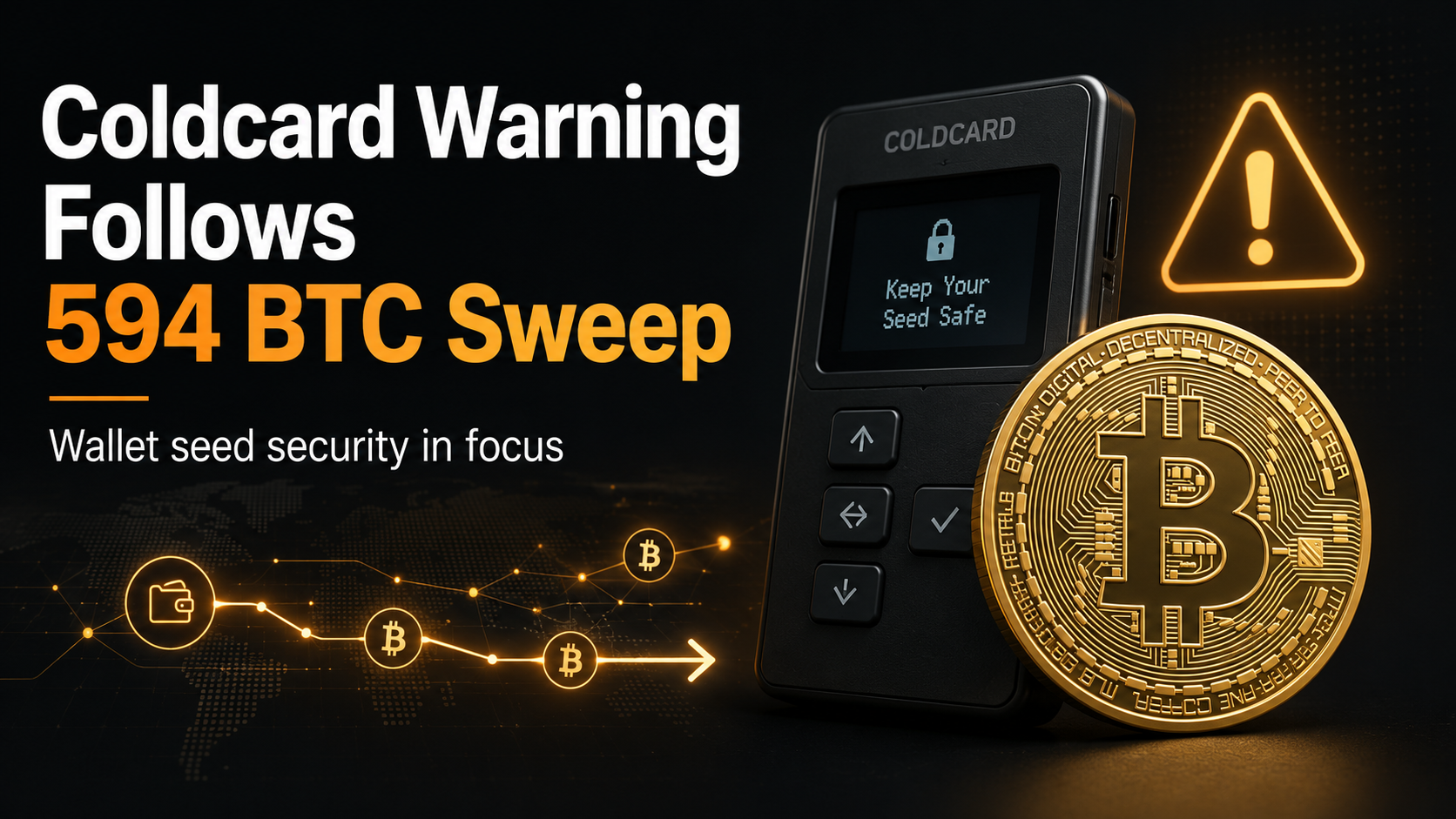
Coldcard Mk3 警告紧随 3800 万美元 Bitcoin 被扫荡事件,但原因仍未确认
比特币硬件钱包制造商Coinkite已警告用户,Coldcard设备存在种子生成问题,影响从4.0.1版本起的所有Mk3固件版本。该警告是在安全研究人员调查一起涉及594.48 BTC(约合3,800万美元)的协同转移事件时发出的。然而,目前尚无公开的技术证据证实Coldcard的问题导致了这些转账。


相关文章
查看更多
辉达股价预测:AI 热潮开始侵蚀辉达自己的利润了吗?
辉达的毛利率刚刚连续第三季度维持在接近 75% 的水准。 而在同一份新闻稿里,公司下修了这个数字的指引。 营收仍在加速——截至 2026 年 7 月 26 日的当季达 962 亿美元,比一年前的两倍还多,而下一季的指引则是 1,080 亿美元。 也就是说,公司一边加速增长,一边在每一美元营收上赚得更少;而这一组张力解释了大部分的原因,这组张力也是为什么覆盖同一家公司的分析师,连一年后的目标价都无法
AI 推理正在改变 NAND 周期吗?Sandisk 对存储芯片股意味着什么
AI 推理需要的不只是算力,大规模部署同样需要不断增长、能够快速访问且具备成本效率的存储容量。 NAND 正逐步成为与 HBM、DRAM 并存的 AI 容量层,而不再只是传统商品型存储产品。 Sandisk 预计,到 2030 年企业数据中心闪存需求将达到 1.2 ZB,并正在开发专门面向 AI 推理的 High Bandwidth Flash。 Sandisk、Samsung 等存储厂商开始采用
2026 AI 基础设施股票:谁真正受益于 Big Tech 的 AI 资本支出?
Key Takeaways Microsoft、Amazon、Alphabet 和 Meta 在 2026 年仍在大规模投入 AI 基础设施和数据中心。 Nvidia 仍是最直接的 AI 资本支出受益者之一,但 AI 云、服务器、网络和光通信也开始呈现明确增长。 CoreWeave、Nebius、Dell 和 Broadcom 提供了 AI 支出转化为营收、订单和待履约收入最清晰的证据之一。 随着