How to Trade MOONSHOTUSDT on MEXC: Kimi Pre-IPO Futures Guide
Summary
MEXC launched MOONSHOTUSDT Pre-IPO Futures on August 6, 2026, giving eligible traders a way to take leveraged long or short positions based on market expectations surrounding Kimi developer Moonshot AI before a potential public listing.
Open the MOONSHOTUSDT Futures market on MEXC
At launch, the contract supported:
Up to 20x leverage;
Cross and isolated margin;
Long and short positions;
USDT settlement;
Maker fee of 0.01%;
Taker fee of 0.04%.
These settings may change. Traders should always check the live contract page before submitting an order.
MOONSHOTUSDT is not Moonshot AI equity. Buying a long futures position does not make the trader a shareholder in Moonshot AI or Kimi.
What Should You Know Before Trading MOONSHOTUSDT?
Moonshot AI remains a private company.
Reuters reported in July 2026 that it was preparing for a possible Hong Kong IPO and had engaged Goldman Sachs and CICC as advisers, but the listing timetable remained fluid. Its valuation had reached approximately $30 billion in June.
This means MOONSHOTUSDT trades in a market without an established public Moonshot AI stock price.
The contract may therefore react strongly to:
Funding rounds;
Kimi product releases;
IPO reports;
Private valuation estimates;
Revenue news;
AI-sector sentiment.
MEXC warns generally that Pre-Market Futures have lower liquidity and higher volatility than mature perpetual-futures markets.
Step 1: Create a MEXC Account
Users need an eligible MEXC account.
New users can review:
How to Sign Up for a MEXC Account
Complete any identity-verification or eligibility requirements applicable to the account and jurisdiction.
Availability of MOONSHOTUSDT may differ by country or region.
Step 2: Prepare USDT
MOONSHOTUSDT is a USDT-margined contract.
Users therefore need USDT in the relevant MEXC futures account.
USDT can generally be obtained by:
Depositing from another wallet;
Transferring from the MEXC spot account;
Purchasing through an available fiat channel;
Converting another supported asset.
Always confirm the correct blockchain network when depositing USDT.
Step 3: Open MOONSHOTUSDT
Go directly to:
MEXC also allows users to find active Pre-Market contracts through the Futures interface by selecting the Pre-Market category.
Step 4: Understand the Trading Interface
Before entering a position, review:
Last price;
Fair or mark price;
Order book;
Funding rate;
Available margin;
Estimated liquidation price;
Open interest;
Contract leverage;
Position limits.
Do not rely only on the last traded price.
For leveraged futures, the mark or fair price may be more important for liquidation calculations than a single last trade.
Step 5: Choose Cross or Isolated Margin
MEXC supports both margin modes for Pre-Market perpetual futures.
Isolated Margin
Only margin allocated to the position is primarily used to support it.
This may make maximum loss exposure easier to control, although liquidation may occur sooner.
Cross Margin
Available futures margin can be shared across positions.
This may allow a position to withstand more volatility, but losses can affect a larger portion of the futures balance.
Beginners should understand the difference before opening a leveraged trade.
Step 6: Select Your Leverage
MOONSHOTUSDT launched with leverage of up to 20x.
Leverage should be selected according to risk tolerance rather than the maximum available setting.
| Leverage | Relative risk |
|---|---|
| 1x–2x | Lower |
| 3x–5x | Moderate but still leveraged |
| 10x | High |
| 20x | Very high |
This is a simplified risk illustration, not a guarantee of liquidation thresholds.
Actual liquidation depends on:
Entry price;
Margin mode;
Maintenance margin;
Position size;
Fees;
Additional margin;
Mark price.
Step 7: Decide Whether to Go Long or Short
Long MOONSHOTUSDT
A trader may go long when expecting Moonshot AI-related market expectations to improve.
Potential catalysts include:
Higher fundraising valuation;
Strong Kimi K3 adoption;
New commercial agreements;
Higher API usage;
IPO progress.
Short MOONSHOTUSDT
A trader may go short when expecting market expectations to deteriorate.
Potential catalysts include:
IPO delays;
Lower valuation;
Competitive pressure;
Weak monetization;
Rising compute costs;
Regulatory concerns.
Step 8: Choose a Market or Limit Order
Market Order
A market order prioritizes immediate execution.
The trade will match against available liquidity in the order book.
Risk:
Slippage can be significant in a thin Pre-IPO market.
Limit Order
A limit order specifies the price at which the trader is willing to enter.
Potential advantage:
Greater control over execution price.
Potential disadvantage:
The order may not fill.
Because MEXC states that Pre-Market Futures can have shallower order books and wider spreads, limit orders may be useful when liquidity is limited.
Step 9: Set Position Size
Position size should be based on acceptable loss rather than expected profit.
Before submitting an order, consider:
Total futures-account balance;
Leverage;
Entry price;
Liquidation price;
Stop-loss;
Funding;
Maximum acceptable loss.
High leverage combined with a large position can create rapid liquidation risk.
Step 10: Consider Stop-Loss and Take-Profit Orders
A stop-loss can help define an exit point when the market moves against the position.
A take-profit order can close a position when a predefined favorable price is reached.
Neither guarantees execution at the exact selected price during extreme volatility.
Rapid price gaps or low liquidity can produce slippage.
Step 11: Check the Funding Rate
Funding can materially affect the result of a leveraged position.
If funding is strongly positive:
Long positions may face higher holding costs.
If funding is strongly negative:
Short positions may face higher holding costs.
MEXC specifically warns that Pre-Market Futures funding rates can fluctuate substantially because there may be fewer reference-price sources and less balanced positioning.
Step 12: Monitor Kimi and Moonshot AI News
MOONSHOTUSDT can react quickly to information because there is no mature public Moonshot AI stock market.
Important events include:
Kimi model launches;
Kimi user growth;
API pricing;
Enterprise licensing;
Funding rounds;
IPO filings;
New investors;
GPU availability;
AI regulations.
Moonshot officially identifies Kimi K3 as a 2.8-trillion-parameter model with a one-million-token context window.
Reuters reported that K3 demand became sufficiently high after launch to create significant compute-capacity pressure.
MOONSHOTUSDT Trading Fees
Based on the launch settings provided for the KIMI contract:
| Fee | Launch rate |
|---|---|
| Maker | 0.01% |
| Taker | 0.04% |
Fee rates can change because of:
Platform adjustments;
User tiers;
Promotions;
Regional rules.
Always check the latest trading interface rather than assuming the launch fee remains permanent.
Why MEXC’s 20x Leverage Matters
MEXC launched MOONSHOTUSDT with maximum leverage of 20x.
This provides traders with greater capital efficiency than an unleveraged position, but greater leverage also reduces the amount of adverse price movement a position can withstand.
The correct interpretation is therefore:
Higher maximum leverage provides more flexibility, not lower risk.
The MEXC listing announcement is available here:
KIMI Moonshot AI Pre-IPO Futures Listing Announcement
What Could Happen After a Moonshot AI IPO?
MEXC’s general Pre-Market Futures framework allows contracts to transition toward standard futures after an official listing, subject to specific announcements and market conditions.
A real precedent is SKHYUSDT. Following SK hynix’s U.S. listing, MEXC converted its Pre-IPO Futures into standard futures without interrupting trading; existing positions and open orders remained intact.
MOONSHOTUSDT may not necessarily follow the identical process.
Traders should wait for MEXC’s official Moonshot-specific instructions if and when an IPO occurs.
What If Moonshot AI Does Not List?
An IPO can be:
Delayed;
Changed;
Withdrawn;
Canceled.
MEXC states that if an expected listing is canceled or material risk issues arise, a Pre-Market perpetual contract may be delisted and settled under announced procedures.
This makes IPO uncertainty a fundamental MOONSHOTUSDT risk.
Main MOONSHOTUSDT Risks
Liquidation Risk
Leverage can cause positions to be forcibly closed.
Low Liquidity
Pre-IPO markets may have shallower order books.
Pricing Uncertainty
There is no established public Moonshot AI stock price.
IPO Risk
The IPO may be delayed or canceled.
Funding Risk
Funding costs can reduce returns.
Valuation Risk
Moonshot’s private valuation may decline.
News Risk
A single funding, model or regulatory announcement can move the contract rapidly.
FAQ
How do I trade Kimi on MEXC?
Eligible users can trade MOONSHOTUSDT Pre-IPO perpetual futures through MEXC Futures.
Can I buy actual Kimi shares on MEXC?
No. MOONSHOTUSDT is a futures contract and does not provide Moonshot AI equity ownership.
What leverage does MOONSHOTUSDT support?
The contract launched with up to 20x leverage.
Can I short Kimi on MEXC?
Eligible traders can open MOONSHOTUSDT short positions.
What currency is used as margin?
MOONSHOTUSDT uses USDT margin.
Are MOONSHOTUSDT futures high risk?
Yes. Pre-Market Futures can have higher volatility, lower liquidity and greater forced-liquidation risk than standard futures.
Where can I trade MOONSHOTUSDT?
Risk Disclaimer
MOONSHOTUSDT Pre-IPO Futures are leveraged derivatives and do not provide ownership of Moonshot AI shares.
Futures trading may result in partial or total loss of margin. Higher leverage significantly increases liquidation risk. Pre-IPO pricing may be affected by private valuations, market sentiment, IPO uncertainty, low liquidity and rapidly changing information.
This article is for informational and educational purposes only and does not constitute investment, legal, financial or tax advice.
热门新闻
查看更多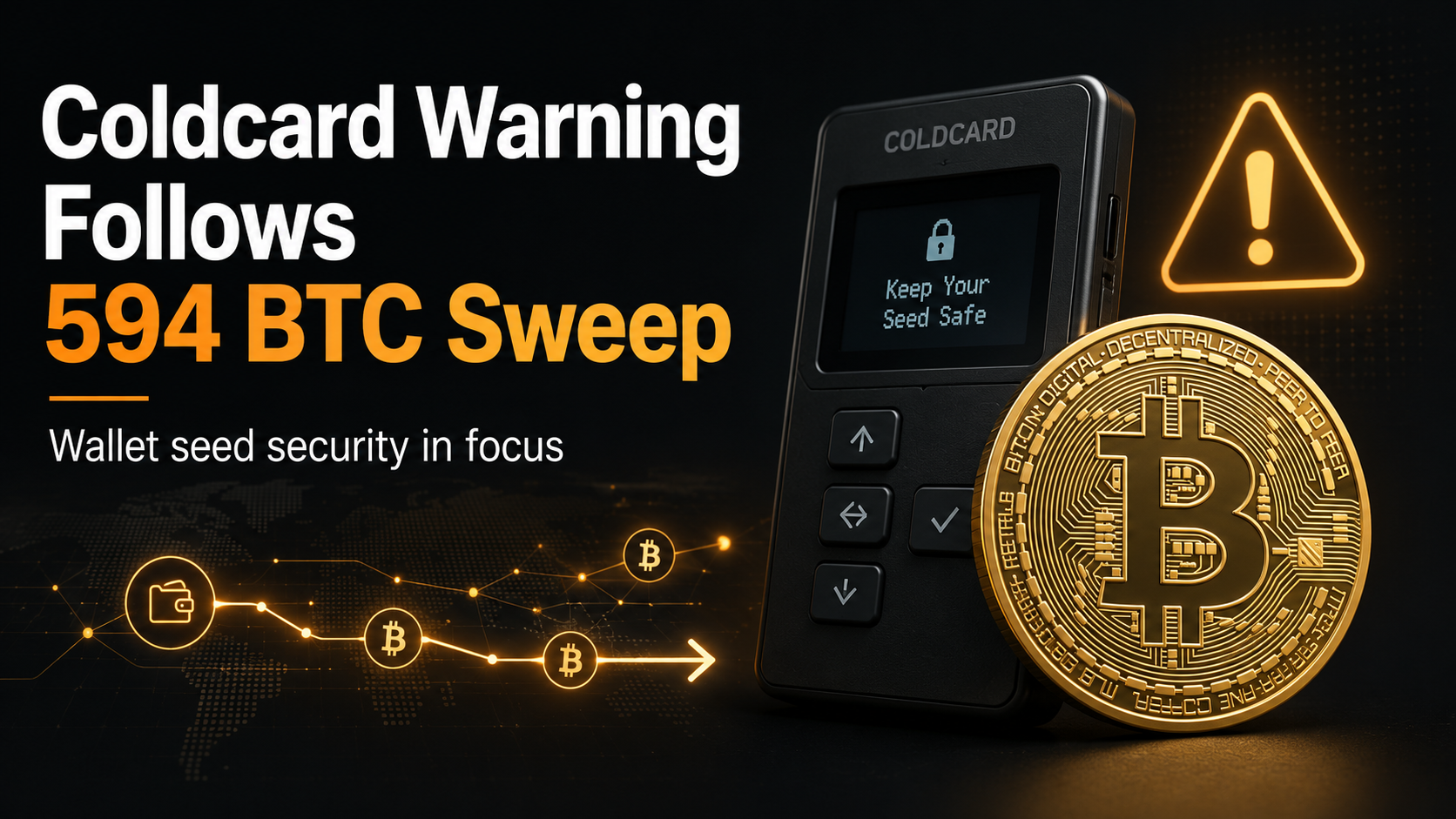
Coldcard Mk3 警告紧随 3800 万美元 Bitcoin 被扫荡事件,但原因仍未确认
比特币硬件钱包制造商Coinkite已警告用户,Coldcard设备存在种子生成问题,影响从4.0.1版本起的所有Mk3固件版本。该警告是在安全研究人员调查一起涉及594.48 BTC(约合3,800万美元)的协同转移事件时发出的。然而,目前尚无公开的技术证据证实Coldcard的问题导致了这些转账。


相关文章
查看更多
辉达股价预测:AI 热潮开始侵蚀辉达自己的利润了吗?
辉达的毛利率刚刚连续第三季度维持在接近 75% 的水准。 而在同一份新闻稿里,公司下修了这个数字的指引。 营收仍在加速——截至 2026 年 7 月 26 日的当季达 962 亿美元,比一年前的两倍还多,而下一季的指引则是 1,080 亿美元。 也就是说,公司一边加速增长,一边在每一美元营收上赚得更少;而这一组张力解释了大部分的原因,这组张力也是为什么覆盖同一家公司的分析师,连一年后的目标价都无法
AI 推理正在改变 NAND 周期吗?Sandisk 对存储芯片股意味着什么
AI 推理需要的不只是算力,大规模部署同样需要不断增长、能够快速访问且具备成本效率的存储容量。 NAND 正逐步成为与 HBM、DRAM 并存的 AI 容量层,而不再只是传统商品型存储产品。 Sandisk 预计,到 2030 年企业数据中心闪存需求将达到 1.2 ZB,并正在开发专门面向 AI 推理的 High Bandwidth Flash。 Sandisk、Samsung 等存储厂商开始采用
2026 AI 基础设施股票:谁真正受益于 Big Tech 的 AI 资本支出?
Key Takeaways Microsoft、Amazon、Alphabet 和 Meta 在 2026 年仍在大规模投入 AI 基础设施和数据中心。 Nvidia 仍是最直接的 AI 资本支出受益者之一,但 AI 云、服务器、网络和光通信也开始呈现明确增长。 CoreWeave、Nebius、Dell 和 Broadcom 提供了 AI 支出转化为营收、订单和待履约收入最清晰的证据之一。 随着