Kimi IPO Guide: Moonshot AI Valuation, Funding, Investors and Potential Listing
Summary
Interest in a potential Kimi IPO has increased as Moonshot AI expands its Kimi product ecosystem, launches more powerful AI models and raises billions of dollars from private investors.
Moonshot AI remains privately held as of August 2026.
Reuters reported that the company was preparing for a potential Hong Kong IPO and had engaged Goldman Sachs and China International Capital Corp. as advisers. Its latest reported valuation had reached approximately $30 billion, although the IPO timetable remained fluid.
Investors should distinguish between:
Private Moonshot AI valuation;
A future IPO valuation;
Future public-market capitalization;
Future per-share IPO price;
MOONSHOTUSDT Pre-IPO Futures pricing.
These figures are related but are not interchangeable.
Eligible users can currently trade MOONSHOTUSDT Pre-IPO Futures on MEXC, but the futures contract does not represent ownership of Moonshot AI shares.
What Is the Kimi IPO?
“Kimi IPO” is the common search term used for a potential public listing of Moonshot AI, the company that develops Kimi.
Kimi itself is a product rather than a separate publicly traded company.
Therefore, a future IPO would most likely involve shares in Moonshot AI or a holding entity rather than “Kimi shares” as a separate operating company.
Is Moonshot AI Publicly Listed?
No.
Moonshot remains privately held.
Reuters reported that the company was restructuring its offshore framework in preparation for a potential Hong Kong IPO.
No final:
Listing date;
Stock ticker;
Offering price;
Share count;
Exchange timetable;
should be considered confirmed until official regulatory documents are filed.
What Is Moonshot AI’s Latest Valuation?
Reuters reported that Moonshot’s valuation reached approximately $30 billion in June 2026.
Private-company valuation generally represents an estimate agreed during a financing transaction.
It does not necessarily equal the valuation investors will assign at IPO.
Private valuations can include:
Preferred-share rights;
Liquidation preferences;
Anti-dilution clauses;
Investor protections;
Strategic considerations.
A public investor may therefore value the same company differently.
How Much Has Moonshot AI Raised?
Reuters reported that Moonshot had raised more than $5.5 billion historically, including more than $2 billion in a May 2026 financing round.
Funding is particularly important for frontier AI companies because their costs can include:
GPU infrastructure;
Model training;
Inference;
Cloud computing;
Data acquisition;
Research talent;
Product development.
Moonshot’s access to computing resources is therefore central to both its technology and financial outlook.
Who Has Invested in Moonshot AI?
Reuters has reported investors including:
Meituan;
China Mobile;
CPE;
Alibaba and other existing strategic backers.
Alibaba is also linked to Moonshot through computing infrastructure. Reuters reported that Moonshot had access to approximately 20,000 Nvidia Hopper-generation chips through an Alibaba computing arrangement.
Strategic investors can provide more than capital. They may contribute:
Cloud infrastructure;
Distribution;
Enterprise customers;
Data-center capacity;
Ecosystem partnerships.
Why Does Moonshot Need So Much Capital?
Frontier AI is capital intensive.
Moonshot’s Kimi K3 contains 2.8 trillion total parameters and supports a context window of up to one million tokens. Kimi Agent also uses multiple tools and long-running autonomous workflows.
Scaling these products requires substantial investment in:
Training clusters;
Inference capacity;
Networking;
Storage;
Model engineering;
AI researchers.
Reuters reported that demand for Kimi K3 became strong enough for Moonshot to pause new subscriptions temporarily because computing capacity was under pressure.
An IPO could therefore provide additional capital for expansion.
Why Hong Kong Could Be an Attractive Listing Venue
A Hong Kong listing could potentially offer Moonshot:
Access to global institutional capital;
Greater familiarity with Chinese technology issuers;
Proximity to mainland investors;
An established technology-listing ecosystem;
More flexibility than some U.S. listing structures.
However, the eventual exchange and structure remain subject to the company’s final decision and regulatory approvals.
What Could Determine Moonshot’s IPO Valuation?
Kimi User Growth
More active users can strengthen the platform’s strategic position.
Revenue Growth
Investors will likely focus on:
Consumer subscriptions;
API revenue;
Enterprise contracts;
Licensing;
Revenue-sharing agreements.
Kimi K3 Adoption
Successful enterprise and developer adoption could support higher valuation multiples.
Compute Efficiency
AI businesses can grow revenue quickly while still facing enormous infrastructure costs.
Competition
Moonshot competes with:
DeepSeek;
Alibaba Qwen;
MiniMax;
Z.ai;
ByteDance;
OpenAI;
Anthropic;
Google.
Profitability
A future prospectus may reveal whether Moonshot is:
Profitable;
Loss-making;
Generating positive cash flow;
Increasing or reducing inference costs.
These details will strongly influence IPO valuation.
How Could the IPO Affect MOONSHOTUSDT?
The release of an official prospectus could significantly affect MOONSHOTUSDT.
New information might include:
Fully diluted share count;
Revenue;
Net losses or profits;
Cash position;
Investor ownership;
Offering size;
IPO valuation range.
A Pre-IPO Futures price based on uncertain assumptions could adjust quickly when audited public data becomes available.
Read What Is MOONSHOTUSDT Pre-IPO Futures? before interpreting the contract as a stock price.
Can a $30 Billion Private Valuation Become a $50 Billion IPO?
Yes, but the opposite is also possible.
Possible scenarios include:
| Scenario | Possible implication |
|---|---|
| Strong AI sentiment | IPO valuation above private round |
| Strong Kimi growth | Higher valuation |
| Strong revenue growth | Higher valuation |
| Weak markets | Lower valuation |
| Higher competition | Lower valuation |
| Large new share issuance | Greater dilution |
| Poor profitability | Lower valuation multiple |
Private valuations do not establish a guaranteed floor.
When Will the Kimi IPO Happen?
There is no confirmed public listing date.
Reuters described the timetable as tentative.
Investors should treat claims of a specific Kimi IPO date cautiously unless supported by:
HKEX filings;
Moonshot announcements;
Official prospectus documents;
Regulatory approvals.
How to Monitor the Kimi IPO
Watch for:
HKEX application documents.
Moonshot corporate announcements.
Adviser appointments.
Regulatory approval.
Updated funding rounds.
Prospectus publication.
Bookbuilding range.
Final offer price.
Listing date.
MOONSHOTUSDT traders should also monitor official MEXC announcements.
FAQ
Is Kimi going public?
Moonshot AI is preparing for a potential IPO, but no final listing date is confirmed.
What is Moonshot AI worth?
Its latest widely reported private valuation was approximately $30 billion.
Where could Moonshot AI list?
Reuters reported preparations for a potential Hong Kong IPO.
Does MOONSHOTUSDT represent IPO shares?
No.
Can the IPO valuation be lower than the private valuation?
Yes.
Where can MOONSHOTUSDT be traded?
Eligible users can access MOONSHOTUSDT on MEXC.
Risk Disclaimer
IPO plans, valuations and timelines can change substantially.
This article does not predict or guarantee that Moonshot AI will complete an IPO.
MOONSHOTUSDT is a leveraged derivative rather than Moonshot AI equity and carries substantial market and liquidation risks.
热门新闻
查看更多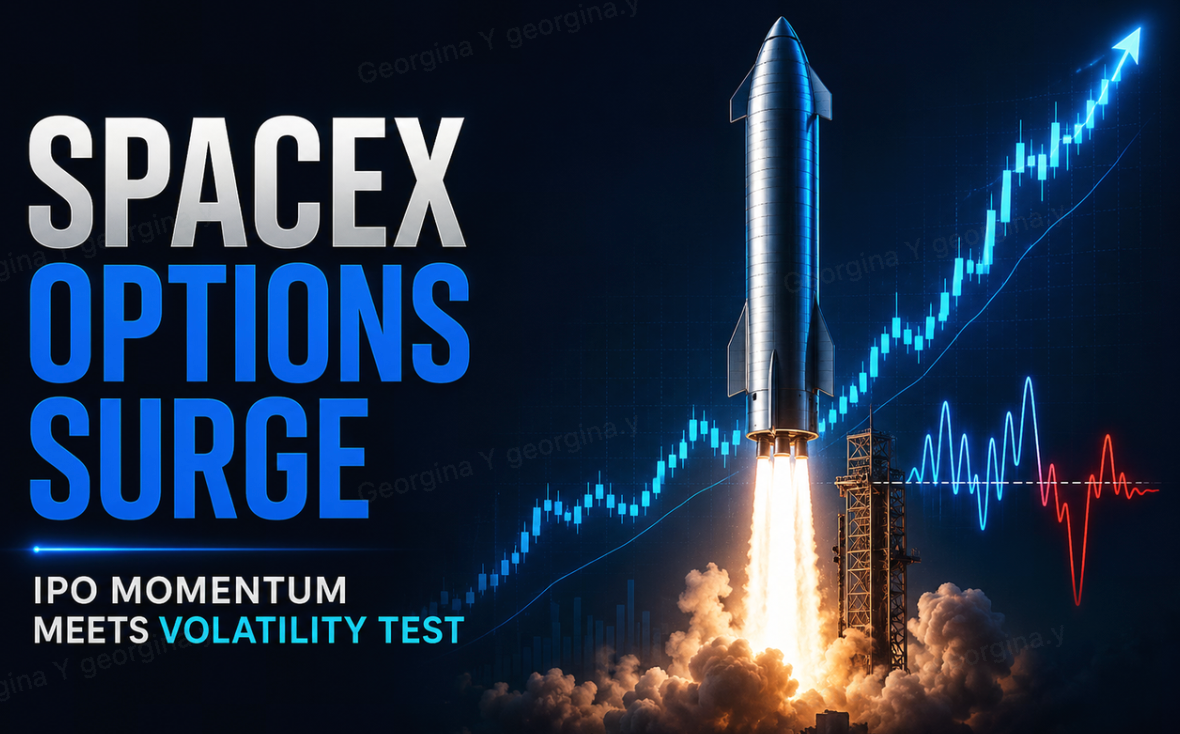
SpaceX 期权激增:IPO 势头转化为波动率测试
SpaceX 的 IPO 后反弹已不仅仅是一个首日需求的故事。在以 135 美元定价、开盘于 150 美元左右并迅速涨破 200 美元后,市场目前正在经历一次关键的测试。最显著的变化是衍生品的出现:创纪录的首日期权交易量使 SpaceX 从一个标准的 IPO 动量交易转化为一个复杂的、波动率驱动的定价叙事。在这种新机制下,整数关口、做市商对冲和隐含波动率对短期价格的影响与公司的长期太空愿景不相上下



相关文章
查看更多
辉达股价预测:AI 热潮开始侵蚀辉达自己的利润了吗?
辉达的毛利率刚刚连续第三季度维持在接近 75% 的水准。 而在同一份新闻稿里,公司下修了这个数字的指引。 营收仍在加速——截至 2026 年 7 月 26 日的当季达 962 亿美元,比一年前的两倍还多,而下一季的指引则是 1,080 亿美元。 也就是说,公司一边加速增长,一边在每一美元营收上赚得更少;而这一组张力解释了大部分的原因,这组张力也是为什么覆盖同一家公司的分析师,连一年后的目标价都无法
AI 推理正在改变 NAND 周期吗?Sandisk 对存储芯片股意味着什么
AI 推理需要的不只是算力,大规模部署同样需要不断增长、能够快速访问且具备成本效率的存储容量。 NAND 正逐步成为与 HBM、DRAM 并存的 AI 容量层,而不再只是传统商品型存储产品。 Sandisk 预计,到 2030 年企业数据中心闪存需求将达到 1.2 ZB,并正在开发专门面向 AI 推理的 High Bandwidth Flash。 Sandisk、Samsung 等存储厂商开始采用
2026 AI 基础设施股票:谁真正受益于 Big Tech 的 AI 资本支出?
Key Takeaways Microsoft、Amazon、Alphabet 和 Meta 在 2026 年仍在大规模投入 AI 基础设施和数据中心。 Nvidia 仍是最直接的 AI 资本支出受益者之一,但 AI 云、服务器、网络和光通信也开始呈现明确增长。 CoreWeave、Nebius、Dell 和 Broadcom 提供了 AI 支出转化为营收、订单和待履约收入最清晰的证据之一。 随着