SEC Blockchain Securities Rules Explained: Why Tokenized Stocks Could Change After a 50-Year Regulatory Update
The U.S. Securities and Exchange Commission is preparing to modernize one of the less visible but most important parts of America's securities infrastructure — and blockchain is now explicitly part of the discussion.
On September 1, 2026, the SEC proposed a sweeping update to the rules governing registered transfer agents, financial intermediaries responsible for maintaining securities ownership records and supporting processes such as transfers, corporate actions and settlement.
The significance for crypto is easy to miss.
According to the SEC's official proposal, the rules are being modernized partly to reflect the growing use of electronic communications and blockchain technology in securities offerings and share transfers.
The full proposal goes further, directly addressing transfer agents interacting with tokenized securities, distributed ledger technologies and smart contracts.
This is not the SEC approving every tokenized stock model.
But it does signal something potentially more important for the long term: U.S. securities regulation is beginning to adapt its core market infrastructure to a world where ownership records themselves can exist on blockchain networks.
Summary
The SEC proposed new transfer-agent rules on September 1, 2026, representing a major modernization of a regulatory framework that has not been substantively updated since the late 1970s and early 1980s.
Transfer agents maintain official securities ownership records and perform important functions involving issuance, transfers, dividends, mergers and settlement.
The SEC's proposed Transfer Agent Rules explicitly recognize the growing role of electronic recordkeeping, blockchain technology and other modern financial infrastructure.
For tokenized securities, this matters because blockchain can potentially become part of the system used to record and transfer ownership rather than merely creating a crypto token that tracks the price of an off-chain security.
The proposal is not final. Public comments are due 60 days after publication in the Federal Register, meaning the eventual requirements could change.
However, the regulatory direction reinforces a larger 2026 trend: tokenization is moving from experimental crypto products toward the underlying infrastructure of regulated securities markets.
What Did the SEC Propose?
The SEC wants to overhaul the federal rules applying to registered transfer agents.
The agency says these intermediaries now perform a much wider range of functions than when the original regulatory framework was created.
The problem is age.
According to the SEC's September 1 announcement, the transfer-agent rules have not been substantively updated since the first rules were adopted in the late 1970s and early 1980s.
Think about what has happened to financial markets since then.
Paper certificates became electronic records.
Trading moved online.
Settlement became increasingly automated.
Cybersecurity became a systemic financial risk.
Artificial intelligence entered financial operations.
And now securities themselves can be represented on blockchain networks.
The SEC's proposal attempts to bring the rules governing ownership records into that new technological environment.
What Is a Transfer Agent?
Transfer agents are not usually visible to ordinary investors, but they perform a fundamental market function.
They help issuers maintain records showing who owns their securities.
Their responsibilities can include:
maintaining shareholder records;
processing ownership transfers;
supporting dividend distributions;
handling corporate actions;
managing lost or replaced securities;
processing restrictive legends;
and supporting securities issuance.
In traditional markets, these functions operate largely behind the scenes.
Tokenization makes them much more interesting because blockchain technology is fundamentally a recordkeeping and asset-transfer system.
That creates an obvious question:
If blockchain can maintain a continuously updated ownership ledger, what happens to the traditional transfer-agent model?
Why Blockchain Changes the Transfer-Agent Question
A blockchain can record:
Wallet A owns asset → asset transfers → Wallet B becomes owner.
Traditional securities infrastructure already performs a similar conceptual function.
But regulated securities involve much more than moving a token between two addresses.
The system may also need to know:
who legally owns the security;
whether the investor is eligible;
whether transfer restrictions apply;
how dividends are distributed;
how corporate actions are handled;
how erroneous transactions are corrected;
and what happens if blockchain records conflict with legal ownership records.
That is why putting a stock “on-chain” is more complicated than creating a token with the same ticker.
The SEC Is Explicitly Addressing Tokenized Securities
The language inside the proposal is particularly important.
The SEC's full proposed rule says transfer agents interacting with:
tokenized securities;
distributed ledger technologies;
and
smart contracts
increasingly need to manage risks involving blockchain data integrity, security and distributed-ledger operating models.
That is a meaningful shift in regulatory vocabulary.
Blockchain is no longer being discussed only in relation to crypto tokens.
It is appearing inside proposed rules governing the machinery of the U.S. securities market.
Tokenized Securities Are Already Recognized by the SEC
This proposal does not appear in isolation.
Earlier in 2026, the SEC's Divisions of Corporation Finance, Investment Management and Trading and Markets issued an official Statement on Tokenized Securities.
The SEC described a tokenized security as a financial instrument that is already a security under federal securities laws but is formatted as, or represented by, a crypto asset whose ownership record is maintained wholly or partly through crypto networks.
That definition is extremely important.
It means:
Putting a security on blockchain does not stop it from being a security.
The technology used to record ownership can change without necessarily changing the legal nature of the asset.
Two Very Different Types of Tokenized Stocks
This distinction is already visible in today's market.
MEXC's existing guide to trading tokenized stocks explains that tokenized equity products can use substantially different legal structures.
One model can be backed 1:1 by actual securities.
Another may simply create a contractual or derivative exposure tracking the price of a stock.
Those products can look almost identical inside an app:
TSLA exposure
versus
TSLA exposure
But their legal rights may be very different.
One token could potentially represent rights connected to actual underlying shares.
Another could merely represent a contract whose value follows Tesla stock.
This is precisely why the regulatory infrastructure behind tokenization matters.
Blockchain Could Become the Official Ownership Record
The more transformative version of tokenization is not:
Create a token that tracks a stock.
It is:
Put the actual regulated ownership record on-chain.
The difference is enormous.
In the first model:
Traditional stock
↓
Custodian
↓
Token issuer
↓
Blockchain representation
↓
Investor
Blockchain is essentially an additional distribution layer.
In a more blockchain-native model:
Issuer
↓
Regulated blockchain ownership record
↓
Investor
The blockchain becomes part of the actual securities infrastructure.
MEXC Analyst View: The Important Shift Is From Tokenized Exposure to Tokenized Ownership
According to Priya Sharma, MEXC senior crypto industry analyst, the SEC proposal matters because the tokenized-stock debate is gradually moving beyond whether investors can trade blockchain-based representations of equities. The deeper question is whether blockchain can eventually become part of the legally recognized infrastructure used to establish and transfer securities ownership itself. If that happens, tokenization would move from a distribution innovation to a market-structure innovation.
Sharma argues that investors should pay particular attention to the distinction between price exposure and ownership rights. A token that tracks Apple or Tesla is not automatically equivalent to owning Apple or Tesla shares. The long-term institutional opportunity is much larger if regulators develop frameworks in which blockchain records can interact directly with recognized ownership registries, transfer agents and corporate actions.
She also cautions that regulation will not disappear simply because securities move on-chain. In fact, the opposite may occur. Blockchain-based securities infrastructure will need reliable systems for identity, cybersecurity, transfer restrictions, erroneous transactions and investor protection. The technology can automate parts of market infrastructure, but regulated markets still need clear rules determining when an on-chain record has legal authority.
Could Wallet Addresses Replace Traditional Shareholder Records?
This is where the SEC discussion becomes particularly interesting.
SEC Commissioner Hester Peirce raised a very specific question in her statement supporting the proposed transfer-agent update:
As securities move on-chain, should transfer agents continue collecting traditional information such as names and physical addresses, or could regulations eventually accommodate identifiers such as digital wallet addresses?
That question goes directly to the architecture of blockchain-based capital markets.
Traditional system:
John Smith → address → brokerage account → shareholder record
Potential blockchain system:
verified investor identity → compliant wallet → on-chain security
The challenge is preserving investor protection and legal accountability without eliminating the efficiencies blockchain is supposed to provide.
Why Smart Contracts Are Part of the Proposal
Smart contracts introduce another layer.
A tokenized security could theoretically automate actions that currently require multiple intermediaries.
For example:
Dividend announced
↓
Smart contract identifies eligible holders
↓
Payment automatically distributed
Or:
Investor attempts restricted transfer
↓
Smart contract checks eligibility
↓
Transfer approved or rejected
This can potentially reduce manual reconciliation and operational complexity.
But automation also creates risk.
A faulty smart contract can execute incorrect instructions extremely quickly.
That is why the SEC proposal discusses controls and oversight alongside technological modernization.
Cybersecurity Becomes Securities Infrastructure Risk
Traditional transfer-agent rules were created long before ransomware, smart-contract exploits or blockchain key management became financial-market concerns.
The SEC's full proposal specifically highlights areas such as:
information security;
cybersecurity;
disaster recovery;
operational risk;
blockchain data integrity;
and distributed-ledger operating models.
This is another indication that tokenization is becoming an infrastructure issue rather than simply a crypto-product issue.
If blockchain eventually records billions or trillions of dollars in securities ownership, protecting private keys, smart contracts and ledger integrity becomes part of protecting the securities market itself.
Why This Matters for Tokenized Stocks
Tokenized equities have expanded rapidly in 2026.
MEXC's Tokenized Stocks guide notes that the sector had already surpassed roughly $400 million in market size by July, while longer-term industry projections envision a market potentially reaching trillions of dollars.
MEXC has also examined how Securitize used Solana and Avalanche to tokenize approximately $295 million in shares, illustrating how regulated financial structures are increasingly interacting with public blockchains.
The SEC's proposal addresses another piece of the puzzle:
Who maintains the legally important ownership records behind those assets?
Tokenized Stock vs Real Stock Could Become a Less Useful Distinction
Today investors often think in two categories:
real stock
and
tokenized stock.
Over time, that distinction could become less meaningful.
If the legal security itself is issued and recorded using blockchain infrastructure, the tokenized version may not simply be a representation sitting on top of a traditional asset.
It could become the security's native format.
That would produce a progression like this:
| Stage | Structure |
|---|---|
| Traditional market | Stock recorded in conventional databases |
| Early tokenization | Blockchain token tracks off-chain stock |
| 1:1 tokenization | Token backed by corresponding underlying shares |
| Native tokenization | Security ownership itself recorded on-chain |
The SEC proposal does not automatically create the fourth stage.
But modernizing transfer-agent rules could help build the regulatory infrastructure required for it.
What Rights Do Tokenized Stock Holders Actually Have?
This remains one of the most important questions investors should ask.
MEXC's comparison of Robinhood Stock Tokens, xStocks and Ondo Stocks shows why two tokenized-stock products can provide very different ownership, backing and corporate-action arrangements.
Investors should examine whether a token provides:
economic exposure;
dividend rights;
voting rights;
redemption rights;
direct ownership;
beneficial ownership;
or merely a contractual claim.
A ticker symbol alone does not answer those questions.
Could Blockchain Make Stock Markets 24/7?
Potentially.
Crypto markets already operate continuously.
Traditional stock exchanges do not.
Tokenized securities could eventually allow assets to move between eligible investors outside conventional market hours.
But 24/7 trading requires more than a blockchain.
Liquidity providers need to operate continuously.
Cash or stablecoin settlement needs to remain available.
Custody systems must function continuously.
Corporate actions need clear rules.
Market surveillance cannot shut down overnight.
And regulators need mechanisms for handling unusual trading conditions.
The blockchain is therefore one part of a much larger market redesign.
The SEC Proposal Comes as Traditional Exchanges Move Toward Tokenization
The regulatory timing is particularly notable because major securities-market institutions are simultaneously experimenting with blockchain.
The London Stock Exchange Group, for example, announced plans this week to introduce tokenized versions of major UK equities through a new trading venue expected in 2027, subject to regulatory approval. Reuters reported that LSEG is developing tokenized UK share access as part of a broader digital-markets strategy.
This is happening alongside tokenized Treasury funds, blockchain-based settlement experiments and bank stablecoin projects.
Taken together, these developments point toward a larger convergence:
traditional securities are becoming programmable while crypto infrastructure is becoming regulated.
What the SEC Is Not Saying
The proposal should not be overstated.
The SEC has not declared that all securities can now move onto public blockchains.
It has not approved every tokenized-stock structure.
It has not eliminated transfer agents.
And it has not finalized the proposed rules.
Instead, the Commission is acknowledging that transfer agents already operate in a technological environment involving electronic systems, tokenized securities, blockchain and automated processes — and that rules written decades ago need to catch up.
Could Transfer Agents Eventually Become More Important?
At first glance, blockchain might seem capable of eliminating transfer agents.
If the ledger already shows who owns what, why maintain another recordkeeper?
The reality could be the opposite.
Tokenized markets may require specialized regulated entities that connect:
legal identity
with
wallet identity
with
blockchain ownership
with
corporate records.
Transfer agents could evolve from traditional recordkeepers into infrastructure providers coordinating those layers.
Commissioner Peirce explicitly asks in her statement whether transfer agents will perform more tasks or fewer tasks as securities move on-chain.
That question remains unanswered.
Why This Matters Beyond Tokenized Stocks
The implications extend beyond equities.
Similar infrastructure could eventually support:
tokenized bonds;
Treasury securities;
money-market funds;
private credit;
investment funds;
and other real-world assets.
MEXC has already examined the rapid growth of tokenized finance through developments such as BlackRock's BUIDL and the expanding tokenized Treasury market.
As more financial assets move onto blockchain infrastructure, ownership records become increasingly important.
The transfer-agent debate therefore sits underneath much of the broader real-world asset tokenization narrative.
What Happens Next?
The SEC proposal is not yet a final rule.
The Commission is opening the framework to public feedback, with comments due 60 days after publication in the Federal Register.
Market participants will likely focus on several questions:
How should transfer agents interact with blockchain records?
When does an on-chain record constitute authoritative ownership?
How should wallet addresses connect to verified investor identities?
How should smart-contract failures be handled?
What cybersecurity standards should apply?
And how should transfer agents support tokenized securities without forcing blockchain systems back into decades-old operating models?
The answers could influence how quickly regulated U.S. securities move on-chain.
Why This Could Be a Bigger Story Than Another Tokenized Stock Launch
A single tokenized Apple, Tesla or Nvidia product can attract attention.
But infrastructure determines whether tokenization scales.
For blockchain securities to become a meaningful part of global capital markets, the industry needs more than tokens.
It needs:
legal ownership standards;
regulated recordkeeping;
custody;
identity;
settlement assets;
interoperability;
cybersecurity;
and investor protection.
The SEC's transfer-agent proposal addresses one of those foundational layers.
That is why a regulatory update to rules created almost half a century ago could ultimately matter more than the launch of any individual tokenized stock.
FAQ
What did the SEC propose on September 1, 2026?
The SEC proposed modernizing federal rules governing registered transfer agents, including updates reflecting electronic recordkeeping, blockchain technology and modern securities-market infrastructure. The details are available in the SEC's official Transfer Agent Rules proposal.
What is a transfer agent?
A transfer agent maintains securities ownership records and supports processes including share transfers, issuance, dividends and corporate actions.
Does the SEC proposal mention blockchain?
Yes. The SEC explicitly discusses blockchain technology, tokenized securities, distributed ledger technologies and smart contracts in connection with modern transfer-agent operations.
Does this mean tokenized stocks are now fully approved in the U.S.?
No. The proposal modernizes the regulatory framework for transfer agents. It does not automatically approve every tokenized-security product or structure.
Can blockchain records represent legal securities ownership?
Blockchain can already be used as part of securities ownership-record systems, but the legal structure depends on how the security is issued and recorded. The SEC's earlier Statement on Tokenized Securities explains that tokenized securities can use different structures and provide different rights.
Are tokenized stocks the same as normal stocks?
Not necessarily. Some structures provide exposure to an underlying share without giving holders the same ownership or voting rights as conventional shareholders. MEXC's tokenized stock comparison guide explains several of these differences.
Could blockchain enable 24/7 stock trading?
Potentially, but continuous markets also require liquidity, custody, settlement, compliance and market-surveillance infrastructure. Blockchain alone does not solve every requirement.
When could the SEC proposal become final?
There is no guaranteed finalization date. The proposal enters a public-comment process, with comments due 60 days after publication in the Federal Register.
Disclaimer
This article is for informational and educational purposes only and does not constitute legal, financial or investment advice. The SEC transfer-agent rules discussed above are proposed rules rather than final regulations. Requirements, timelines and interpretations may change during the rulemaking process.
热门新闻
查看更多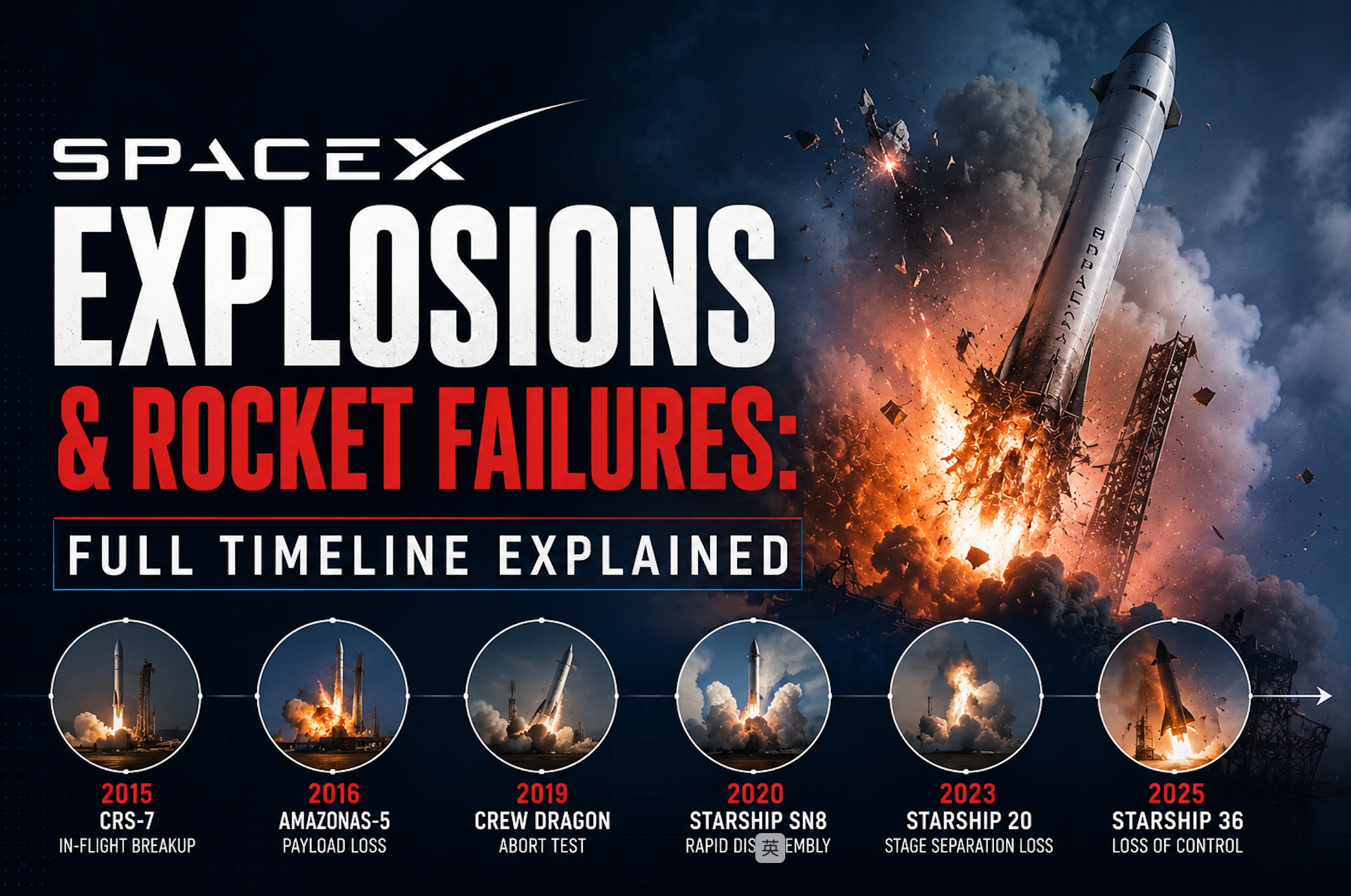
SpaceX音爆解析:为什么火箭发射与“龙飞船”再入会引发惊天巨响?
SpaceX研发的航天器引发的“音爆”(Sonic Boom)常常让加利福尼亚州以及其他发射/再入区域的居民感到惊慌,尤其是常年处于范登堡太空军基地周围和南加州“龙飞船”溅落航线下方社区的民众。需要明确的是,这种震耳欲聋的巨响通常并非发生了爆炸。音爆是当航天器、载人/货运舱或火箭级在大气层中的飞行速度超越音速时,所挤压空气产生的强型压力冲击波。对SpaceX而言,音爆最常见的触发源包括**“龙飞船

相关文章
查看更多
MEXC 流动性有多深?订单簿深度、滑点与第三方报告数据解析
您点击下单时的价格与实际成交的价格之间差多少,取决于流动性。本页按照第三方研究机构的衡量方式追踪 MEXC 的流动性:一是中间价上下窄区间内的订单簿(Order Book)深度,二是以实际规模模拟下单时产生的滑点(Slippage)。本页是一份持续更新的记录,收录自 2026 年 5 月以来每一份 TokenInsight 流动性报告中 MEXC 的主要结果,也包括 MEXC 排名第二或第三的项目
加息落地,BTC不跌反涨创八个月新高——利空出尽还是轧空狂欢?| MEXC Alpha Trader 投研周报
2026年9月第3周统计周期:2026年9月16日 – 9月22日数据截止:2026年9月22日核心叙事过去一周,加密市场经历了 “决议前承压——决议落地——强势反弹” 的完整周期。比特币从决议前的76,000-78,000美元区间起步,在美联储宣布加息后短暂下探,随后在财政部长债回购与ETF巨额流入的推动下强势拉升,9月21日触及 87,395美元,为2026年1月以来最高水平,单周涨幅约11%
CPI超预期引爆“加息押注”,美债收益率破5%创19年新高——市场在定价什么?| MEXC Alpha Trader 投研周报
2026年9月第2周统计周期:2026年9月9日 – 9月15日数据截止:2026年9月15日核心叙事过去一周,加密市场在通胀数据、加息预期与地缘政治的三重压制下持续承压。BTC从78,000美元附近起步,在CPI超预期与美债收益率突破5%的双重压制下逐步走低,9月11日一度下探至76,000美元附近,随后反弹至79,800美元。截至9月15日,比特币在77,000-78,000美元区间弱势整理。