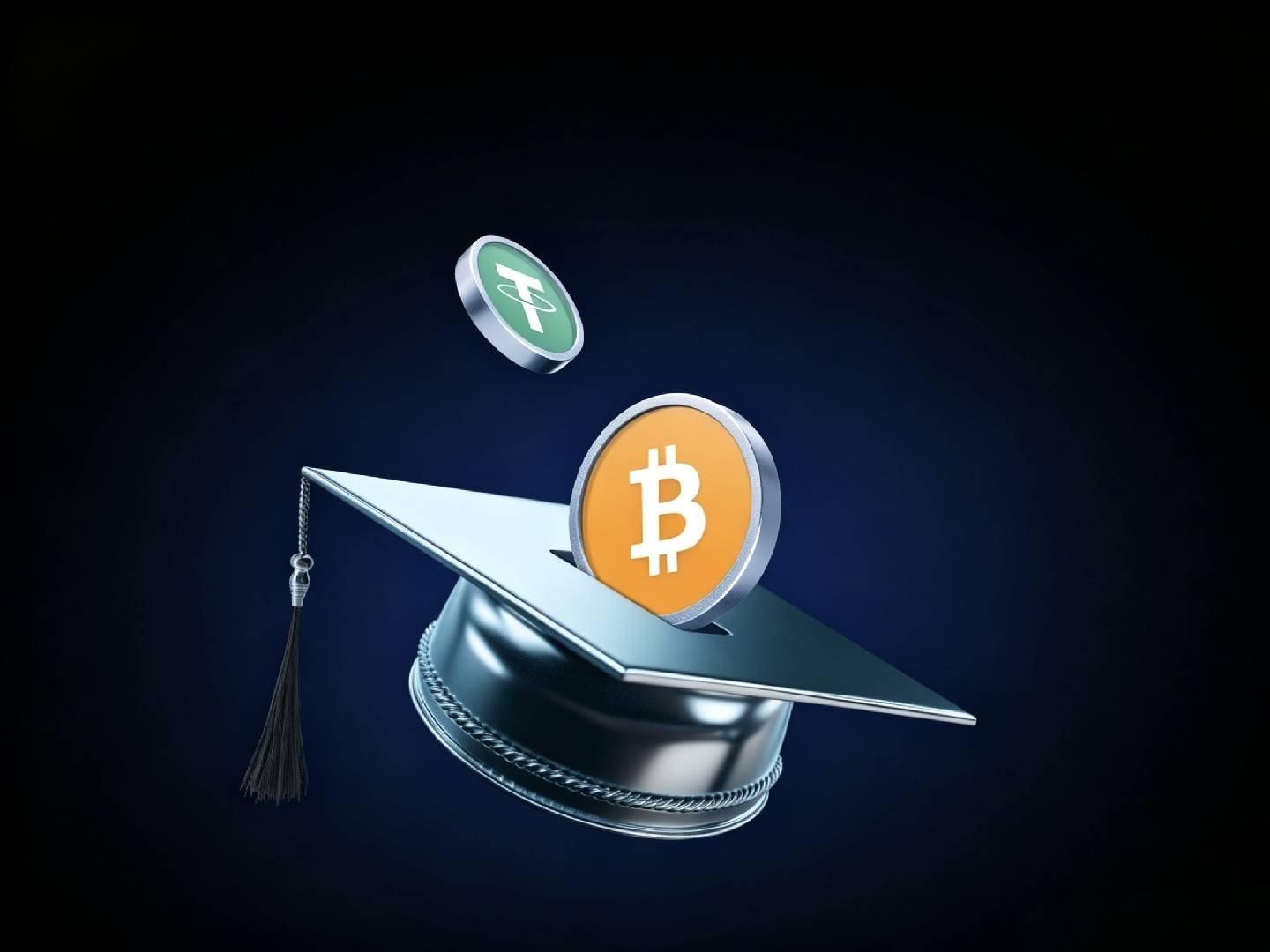
Stocks vs. Gold vs. Crypto: How Their Risk and Return Profiles Differ
Stocks, gold, and crypto can all rise or fall in price, but they do not create value in the same way. Stocks are tied to the earning power of businesses. Gold derives much of its value from scarcity, established demand, and its long history as a reserve asset. Crypto depends more heavily on network utility, adoption, liquidity, token supply, and market confidence.
That is why comparing stocks vs. gold vs. crypto solely by their past returns can be misleading. A better approach is to ask three questions: What could make this asset appreciate? What risks could cause a lasting loss? What role could the asset serve within a broader portfolio?
High volatility does not automatically make an asset unsuitable, just as low volatility does not guarantee safety. Suitability depends on an investor’s objectives, time horizon, liquidity needs, and ability to tolerate losses.
Stocks Provide Exposure to Business Growth
Buying stock means acquiring partial ownership in a company. Over time, the value of that ownership is closely connected to the company’s ability to generate revenue, earnings, and cash flow.
A business may become more valuable by attracting new customers, expanding into new markets, improving its margins, or building a durable competitive advantage. Shareholders may benefit from capital appreciation and, in some cases, dividends paid from corporate profits.
This gives stocks a natural growth role in many portfolios. Economic expansion, innovation, productivity gains, and rising consumer demand can support corporate earnings. However, shareholders also face business-specific risks. A company can lose customers, fall behind technologically, take on too much debt, or suffer from poor management.
Even a strong company can produce disappointing investment results if its stock was purchased at an excessive valuation. When investors already expect years of rapid growth, a small earnings disappointment may cause a significant repricing.
Interest rates also matter. Higher rates can increase corporate borrowing costs while reducing the present value of profits expected far in the future. Expensively valued growth companies are often particularly sensitive because a large part of their estimated value depends on distant earnings.
Investors can explore companies through the MEXC RealStocks market. Owning several stocks, however, does not automatically create diversification. A portfolio concentrated in one industry may still depend on a single source of risk.
Gold Often Plays a Defensive and Diversifying Role
Gold does not produce earnings, pay dividends, or generate cash flow. Its value comes from a different combination of factors: limited supply, physical properties, jewelry and industrial demand, institutional ownership, central-bank reserves, and long-established recognition as a store of value.
During periods of financial stress, geopolitical uncertainty, or declining confidence in currencies, some investors may move capital into gold. This historical behavior has given gold a defensive reputation.
Defensive does not mean risk-free. Gold can decline, sometimes for extended periods. Its price is influenced by real interest rates, the U.S. dollar, central-bank activity, investor positioning, and demand for safer assets.
When real yields rise, interest-bearing assets can become more attractive relative to gold, which produces no income. A stronger dollar can also create pressure because gold is commonly priced in dollars. Conversely, lower real yields, currency concerns, or rising demand for reserves may support the metal.
Gold’s portfolio role is therefore less about maximizing growth and more about reducing dependence on a single economic outcome. Investors can observe tokenized gold activity through the GOLD(XAUT)/USDT spot market on MEXC.
Tokenized gold, gold futures, gold-mining stocks, and physical bullion are not interchangeable. Each carries different custody, counterparty, liquidity, and product-structure risks.
Crypto Offers High-Volatility Digital Asset Exposure
Crypto is a broad category rather than a single uniform asset class. Bitcoin, smart contract platform tokens, stablecoins, utility tokens, and small-cap speculative assets have different functions, supply structures, and risk profiles.
Bitcoin’s value proposition, for example, includes its fixed maximum supply, decentralized network, security, global portability, liquidity, and user demand. Other tokens may depend on network usage, transaction fees, governance rights, incentives, or demand for a specific application.
Crypto markets are known for continuous trading, rapid shifts in sentiment, and sharp price movements. Liquidity conditions, regulation, technological developments, leverage, forced liquidations, and narrative changes can all move prices quickly.
This creates both opportunity and risk. Crypto may offer substantial upside during periods of expanding adoption and strong risk appetite. It can also experience deep and prolonged drawdowns when liquidity contracts or confidence disappears.
The BTC/USDT spot market on MEXC provides a real-time view of Bitcoin trading activity and price discovery. Market price alone, however, cannot determine whether a network is becoming more useful, secure, or widely adopted.
Within a portfolio, crypto is generally better understood as high-risk exposure than as a direct replacement for cash, stocks, or gold. Its weight should reflect the investor’s ability to absorb a severe loss rather than the size of the expected return.
Volatility Measures Movement, Not Investment Quality
Volatility describes how widely an asset’s price changes over a given period. A highly volatile asset may rise or fall sharply, while a lower-volatility asset may move within a narrower range.
Volatility does not answer whether an asset is fundamentally valuable. It describes uncertainty around price.
For an investor who needs the money within a few months, a highly volatile asset may be inappropriate because there may not be enough time to recover from a downturn. For someone with a longer horizon and greater loss tolerance, limited exposure to a volatile asset may fit within a broader plan.
Low volatility can also create a false sense of security. An asset may decline gradually for years or appear stable only because it trades infrequently. A thin market may show little movement until an investor attempts to sell a large position.
A more complete risk assessment considers potential drawdown, liquidity, time to recovery, business failure, inflation, custody, regulation, and correlation with other holdings. No single statistic can capture all of those risks.
Portfolio Roles Change With the Market Environment
Stocks are often categorized as growth assets, gold as a defensive asset, and crypto as a high-volatility growth or alternative asset. Those labels are useful, but they are not permanent laws.
When liquidity is abundant and investors are comfortable taking risk, stocks and crypto may rise together. During a severe market shock, both may fall as investors reduce exposure and seek cash. Gold may provide protection in some of those periods, but it can also decline if investors sell liquid holdings to meet immediate obligations.
An asset’s behavior depends not only on its design but also on who owns it, why they own it, and how they trade it. Bitcoin’s technical rules may remain unchanged while its short-term correlation with technology stocks rises because the same investors and liquidity conditions influence both markets.
This is why portfolio decisions should be based on scenarios rather than labels. Investors should consider what could happen if interest rates rise, growth slows, inflation returns, the dollar strengthens, or market liquidity disappears.
The central lesson in the stocks vs. gold vs. crypto comparison is that no asset is universally offensive, defensive, safe, or risky. Its role emerges from how it behaves alongside the other assets in the portfolio.
FAQ
Which is best: stocks, gold, or crypto?
There is no universal winner. Stocks provide exposure to corporate earnings, gold has a long history as a reserve and store-of-value asset, and crypto offers exposure to digital scarcity and network adoption. The appropriate choice depends on the investor’s objectives, time horizon, and risk tolerance.
Does high volatility mean an asset is a bad investment?
No. High volatility means a wider range of possible price outcomes. It does not automatically mean the asset has no value. The important questions are whether the position size is manageable and whether the investor can withstand a severe drawdown.
Does gold always rise when stocks fall?
No. Gold may perform defensively during some risk-off periods, but real yields, the dollar, liquidity needs, and market positioning can cause gold and stocks to decline at the same time.
Can crypto replace stocks or gold?
Not on a like-for-like basis. Crypto does not represent ownership in a profit-generating company, and it does not have gold’s long history as a reserve asset. It should be evaluated as a separate category with its own sources of value and risk.
Risk Warning
Stocks, gold-linked products, and crypto can all lose value. Tokenized assets may carry custody, liquidity, counterparty, and product-structure risks that differ from physical assets. This article is for educational purposes only and does not constitute investment advice.

热门新闻
查看更多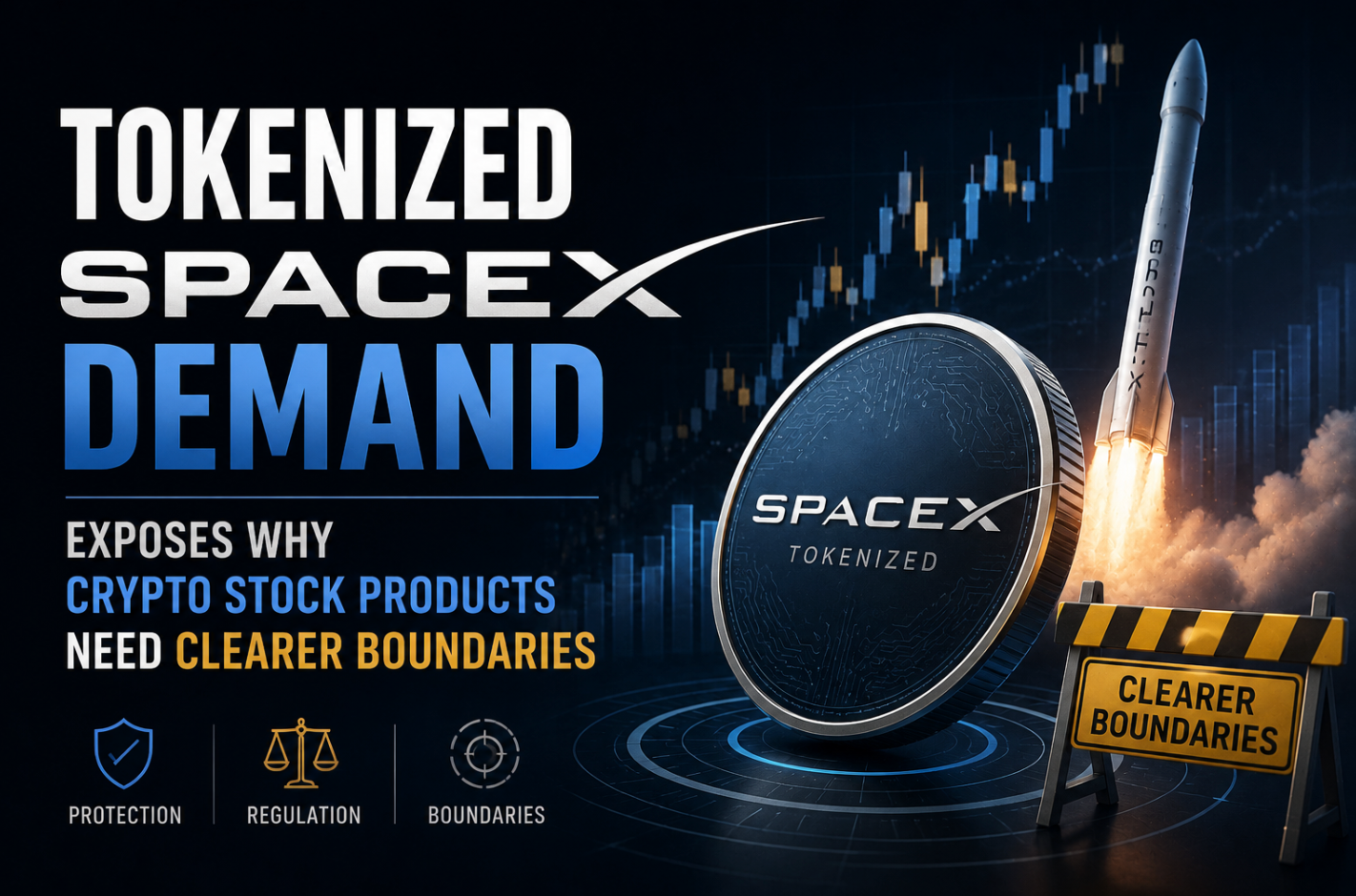
代币化 SpaceX 需求爆发,揭示加密股票产品为何亟需明确界限
代币化 SpaceX 股票产品在其历史性 IPO 期间吸引了超 10 亿美元的加密市场需求,但因供应商 xStocks 遭遇严重的底层股票供给不足,导致各大平台无法完成配额。据《华尔街日报》关于 SpaceX 代币需求的报道,由于实物资产短缺,交易所被迫取消活动。随后的 Bybit 发行更新公告 确认将向申购用户进行 100% 自动退款。同时,Kraken 关于 SpaceX 的支持页面 明确指出

美光财报前瞻:AI内存稀缺性面临迄今为止最大的持久性考验
美光科技将于6月24日收盘后公布其2026财年第三季度财报,市场预期已达到历史最高水平。公司官方指引预计营收将达到335亿美元,非GAAP毛利率约为81%,非GAAP每股收益(EPS)为19.15美元。而在此前的第二财季,美光已经创下了营收、利润率、EPS和自由现金流的历史新高。因此,这份财报的核心不在于AI需求是否强劲,而在于由AI驱动的内存稀缺性能持续多久,从而证明美光理应获得结构性估值重塑(

相关文章
查看更多
MEXC 链上观察日报:代币化大宗商品市场加速扩展,黄金借贷与石油上链升温
更新于:2026年10月12日 09:30(UTC+8)|作者:MEXC要闻速览XRPL修复存在超10年的关键漏洞Zcash预计1月引入抗量子签名操作码法国推进稳定币兑换税及加密离境税讨论代币化大宗商品正向黄金借贷与石油扩展Robinhood Chain交易量较9月中旬下降42%产业动态无需软分叉,StarkWare在比特币主网验证量子安全锁定方案但尚不适合大规模使用据Odaily星球日报
MEXC 链上观察日报:泰国将开放比特币、以太坊ETF上市交易
更新于:2026年10月10日 09:30(UTC+8)|作者:MEXC要闻速览泰国将开放比特币、以太坊ETF交易B3拟于2027年推出证券代币化平台XRP Ledger上线机构权限委托功能四大公链9月发行代币超190万个Base称代币化股票将引领超级周期产业动态无需软分叉,StarkWare在比特币主网验证量子安全锁定方案但尚不适合大规模使用据Odaily星球日报消息,StarkWare
MEXC 链上观察日报:渣打新加坡拟扩展加密资产、稳定币及RWA托管服务
要闻速览IMF称代币化资产规模已达650亿美元Chainlink金库适配器支持80多条链存款Sui上线CCTP V2连接29条链USDC渣打新加坡拟扩展数字资产托管服务USDD供应量与协议TVL双创历史新高产业动态越南拟探索独立数字资产监管框架,推动金融系统现代化据Odaily星球日报消息,越南于2026年7月签署的第1413/QD-TTg号决定提出探索独立数字资产监管框架,作为金融系统现代化及与