What Is OKLOON? Ondo Tokenized Oklo Stock Explained
Summary
OKLOON, styled by Ondo as OKLOon, is a tokenized product designed to provide economic exposure linked to Oklo Inc. (NYSE: OKLO).
The product chain is:
Oklo's Aurora, Fuel and Isotope Businesses
↓
NYSE: OKLO common stock
↓
Ondo OKLOON
↓
OKLOON/USDT on MEXC
Ondo's official asset page identifies the product as OKLOon: Oklo (Ondo Tokenized).
MEXC currently provides a dedicated OKLOON/USDT spot market.
The most important distinction is:
OKLOON is not uranium, HALEU, nuclear fuel, electricity or direct registered ownership of OKLO common stock. It is a separate tokenized financial product designed to provide economic exposure linked to OKLO.
What Is OKLOON?
OKLOON is part of Ondo Stocks, Ondo's tokenization platform for publicly traded securities.
Ondo describes its tokenized stocks as blockchain-based tokens designed to provide the economic exposure of the underlying security, including price movements and applicable reinvested dividends after withholding tax.
For OKLOON:
Underlying company: Oklo Inc.
Underlying listed security: OKLO
Tokenized product: OKLOon / OKLOON
MEXC pair: OKLOON/USDT
What Is the Underlying OKLO Stock?
OKLO is common stock in Oklo Inc.
Oklo develops:
- Fast-fission nuclear powerhouses;
- Nuclear fuel technologies;
- Fuel recycling;
- Critical radioisotopes.
The company's Aurora powerhouse can produce up to 75 MWe under its current product description, while Oklo's principal energy-sales model is to own and operate its plants and sell electricity and heat rather than simply selling reactor equipment.
OKLOON is linked to the equity value of this business—not directly to the output of a particular reactor.
Is OKLOON a Uranium Token?
No.
Uranium is a commodity and raw input into parts of the nuclear-fuel cycle.
OKLOON is linked to the stock of a nuclear-energy company.
The relationship is:
Uranium / Fuel Availability
↓
may affect
Oklo's Costs and Deployment
↓
which may affect
OKLO Stock
↓
which may affect
OKLOON
This is very different from a token directly tracking uranium prices.
Is OKLOON a HALEU Token?
No.
HALEU, or high-assay low-enriched uranium, is a type of enriched uranium fuel relevant to many advanced-reactor designs.
Oklo is working to secure HALEU, including through a June 2026 Letter of Intent with Centrus covering enough fuel to support multiple years of operation for up to five planned Aurora powerhouses beginning with deliveries scheduled from 2029.
HALEU availability can therefore influence Oklo's business.
But OKLOON does not represent direct ownership of HALEU.
Who Issues OKLOON?
OKLOON is not issued by:
- Oklo Inc.;
- The New York Stock Exchange;
- MEXC.
Ondo states that Ondo Stocks tokens are issued by Ondo Global Markets (BVI) Limited, while Ondo Finance provides tokenization services to the issuer.
The simplified structure is:
| Organization | Role |
|---|---|
| Oklo Inc. | Underlying public company |
| NYSE | Traditional market where OKLO trades |
| Ondo Global Markets (BVI) Limited | Token issuer |
| U.S.-registered custodial broker-dealers | Hold supporting securities/cash |
| MEXC | Secondary OKLOON/USDT trading venue |
How Is OKLOON Backed?
Ondo states that its tokenized stocks are fully backed by corresponding stocks or ETFs, with supporting assets held through one or more U.S.-registered custodial broker-dealers.
Ondo also describes protections including:
- Daily backing review by an independent verification agent;
- A security agent;
- A first-priority perfected security interest in collateral;
- A legal structure designed for bankruptcy remoteness.
For OKLOON, the relevant underlying public security is OKLO.
Does Buying OKLOON Mean You Directly Own OKLO Shares?
No.
Ondo explicitly states that its tokenized stocks provide economic exposure to underlying assets but are not themselves stocks, ETFs or ADRs and do not provide tokenholders with rights to hold or receive the corresponding underlying securities.
Therefore:
| Feature | OKLO | OKLOON |
|---|---|---|
| Oklo common stock | Yes | No |
| Economic exposure to Oklo | Yes | Designed to provide it |
| Direct OKLO share ownership | Yes through securities infrastructure | No |
| Blockchain token | No | Yes |
| Ondo issuer structure | No | Yes |
| MEXC spot trading | Tokenized version instead | OKLOON/USDT |
Does OKLOON Give You Ownership of an Aurora Reactor?
No.
Buying OKLOON does not provide legal ownership of:
- An Aurora powerhouse;
- A percentage of a Meta nuclear project;
- Nuclear fuel;
- Idaho National Laboratory facilities;
- Oklo's isotope reactors.
OKLOON is financial exposure linked to the equity security, not fractional ownership of individual physical assets.
Do OKLOON Holders Have Traditional OKLO Shareholder Rights?
Not in the same legal form as direct OKLO common shareholders.
A conventional OKLO shareholder participates through securities-market infrastructure and receives the rights associated with the common stock.
An OKLOON holder owns the tokenized product.
Ondo's product model is primarily designed around economic exposure, not direct delivery of the underlying common shares.
How Does OKLOON Track OKLO?
Ondo describes its tokenized stocks as total-return trackers.
That means the token is designed to reflect:
- Movements in the underlying stock price;
- Reinvested dividends and/or interest where applicable, net of relevant withholding taxes.
Oklo currently represents a growth-stage equity rather than a dividend-focused mature utility, but the total-return framework remains important because product mechanics can evolve with future corporate actions.
Does One OKLOON Always Equal Exactly One OKLO Share?
Users should not assume that relationship permanently.
Ondo products can use a Shares Per Token parameter, particularly as corporate distributions and product adjustments are reflected through the total-return structure.
Therefore, the correct practice is:
Check the current OKLOon product page when comparing one token with the underlying OKLO share.
A hard-coded permanent 1:1 assumption can become inaccurate.
How Does Minting and Redemption Help Track OKLO?
Ondo says direct minting and redemption is generally available 24 hours a day, five days a week, while tokens themselves can be transferred peer-to-peer 24/7, subject to restrictions.
This primary-market mechanism can support price alignment.
For example, if OKLOON trades materially above its underlying economic reference, eligible arbitrage participants may have an incentive to mint additional tokenized exposure and sell it.
If OKLOON trades materially below the reference, eligible participants may have an incentive to acquire and redeem it.
That can help reduce price dislocations.
Does Minting Guarantee Perfect Tracking?
No.
Ondo itself notes that minting or redemption can be temporarily halted because of:
- Corporate actions;
- Excessive volatility;
- Trading-session transitions;
- System risk controls.
Secondary-market liquidity can also create temporary differences.
Therefore:
Economic tracking does not mean identical prices every second.
Why OKLOON Can Be Especially Event-Driven
Oklo is still moving through major commercialization milestones.
Potential stock-moving events include:
- DOE authorizations;
- NRC licensing developments;
- Construction milestones;
- New power agreements;
- Meta project developments;
- Fuel-supply agreements;
- Capital raises.
For example, 2026 has already included DOE approval of Aurora-INL's PDSA, NRC approval of the Principal Design Criteria topical report and the Meta-backed 1.2 GW Ohio development agreement.
Such news can materially change investor estimates of Oklo's probability of future commercialization.
Can OKLOON Trade When the NYSE Is Closed?
Ondo states that its tokenized stocks can be transferred peer-to-peer 24/7, while direct minting and redemption is generally available 24/5.
Meanwhile, OKLO's main traditional price discovery occurs through U.S. securities markets.
This means token markets can potentially respond to new information outside normal U.S. equity sessions.
Example: DOE Announces a Milestone After Market Hours
Suppose OKLO closes at $70.
After the stock market closes, DOE announces a significant Aurora authorization milestone.
Tokenized-market participants may expect OKLO to trade higher when the NYSE reopens.
OKLOON could therefore begin trading at an implied premium to the last available OKLO close.
This does not automatically mean the token has failed to track.
It may represent new price discovery before the underlying equity market has reopened.
Why Can OKLOON and OKLO Prices Differ?
Possible reasons include:
- Different trading hours;
- Different liquidity;
- MEXC order-book depth;
- USDT/USD movements;
- News outside NYSE hours;
- Mint/redemption availability;
- Corporate actions;
- Shares Per Token adjustments.
Where Can Eligible Users Trade OKLOON?
MEXC currently provides:
The live MEXC page identifies the underlying company as Oklo Inc. and lists the token on Ethereum-based infrastructure.
Can OKLOON Be Purchased Through MEXC Spot DCA?
Yes.
MEXC officially added OKLOON to Spot DCA on March 13, 2026 at 10:00 UTC.
Eligible users can access:
MEXC's current DCA interface also includes a dedicated Tokenized Stock category.
Can OKLOON Be Used With MEXC Convert?
Yes.
MEXC officially added OKLOON to Convert on March 13, 2026 at 10:00 UTC. Its announcement describes Convert as offering zero transaction fees, instant conversions and a quoted fixed rate without manual order matching.
Eligible users can check:
Who Can Access OKLOON?
Tokenized securities are subject to geographic restrictions.
Ondo states that Ondo Stocks are not available in the United States or to U.S. persons through its offering structure, while additional restrictions apply in other jurisdictions.
MEXC users should also review the eligibility rules displayed for their own account and jurisdiction.
Main Risks of OKLOON
OKLO Equity Risk
If the market value of Oklo falls, OKLOON's economic reference can fall.
Commercialization Risk
Oklo has not yet built a mature fleet of operating commercial Aurora powerhouses.
Regulatory Risk
Nuclear commercialization depends on continued DOE and NRC progress.
Fuel Risk
Advanced nuclear fuel availability can constrain deployment.
Financing and Dilution Risk
Nuclear projects require substantial capital.
Tracking Risk
OKLOON can temporarily trade above or below underlying economic value.
Issuer and Custody Risk
OKLOON adds Ondo's issuer, collateral, broker-dealer and legal structures.
Blockchain Risk
Smart-contract and blockchain risks differ from ordinary OKLO ownership.
MEXC and USDT Risk
Holding and trading OKLOON/USDT adds centralized-exchange and quote-currency risks.
FAQ
What is OKLOON?
OKLOON is an Ondo tokenized product designed to provide economic exposure linked to Oklo's NYSE-listed OKLO stock.
Is OKLOON issued by Oklo?
No. Ondo Global Markets (BVI) Limited issues Ondo Stocks tokens.
Is OKLOON uranium?
No.
Does OKLOON represent HALEU?
No.
Does buying OKLOON mean I own OKLO shares directly?
No. Ondo states that tokenholders do not obtain rights to receive the underlying security.
Can OKLOON trade outside normal U.S. stock-market hours?
Tokenized securities can be transferred outside traditional market hours, although primary mint/redemption availability and secondary-market liquidity can differ.
Can I DCA into OKLOON on MEXC?
Yes. MEXC officially added OKLOON to Spot DCA in March 2026.
Can I use MEXC Convert for OKLOON?
Yes. MEXC added OKLOON to Convert in March 2026.
Risk Disclaimer
This article is provided for informational and educational purposes only and does not constitute investment, legal, tax or financial advice.
OKLOON is not uranium, nuclear fuel or a directly owned OKLO common share. It combines underlying Oklo equity risk with token-issuer, backing, tracking, liquidity, blockchain, USDT, MEXC custody and jurisdictional risks.

热门加密动态
查看更多
链上就能买美股,还能领分红?MEXC × Ondo Finance 五大代币化新股解析
MEXC 联手 Ondo Finance 独家上线五大代币化美股(CCJON、TTMION、RMBSON、SYMON、KEELON),覆盖铀能源、PCB制造、半导体等硬核赛道,同步推出 RealStocks 真实持股产品。2026 年 RWA 赛道格局正在重塑,全球投资者如何用 USDT 上链买美股? 概述 2026 年 6 月 25 日,MEXC 与 Ondo Finance 宣布新一轮深度合作

从美债到私人信贷:为什么 RWA 是 2026 年最稳健的加密赛道?
国债、私人信贷、黄金,RWA赛道在2026年为何成为机构与散户共同争夺的核心叙事?本文深度解析链上资产代币化的市场规模、主要玩家与投资路径,并告诉你如何通过MEXC把握这一轮结构性机会。 Key Takeaways 截至2026年第一季度末,链上代币化RWA市值已达193亿美元,较2025年初的54亿美元增长256.7% 代币化美国国债突破100亿美元里程碑,BlackRock BUIDL 一只基

RWA 代币化迎来治理突破:Ondo Finance × Broadridge,链上投票权来了
Ondo Finance 与金融科技巨头 Broadridge 达成合作,全球逾 250 种代币化股票和 ETF 持有人首次可通过区块链参与股东投票,RWA 赛道迎来里程碑式治理升级。 概述 2026 年 4 月 28 日,RWA 代币化领域头部协议 Ondo Finance 宣布与全球金融科技巨头 Broadridge Financial Solutions(NYSE: BR)正式建立合作关系。

热门新闻
查看更多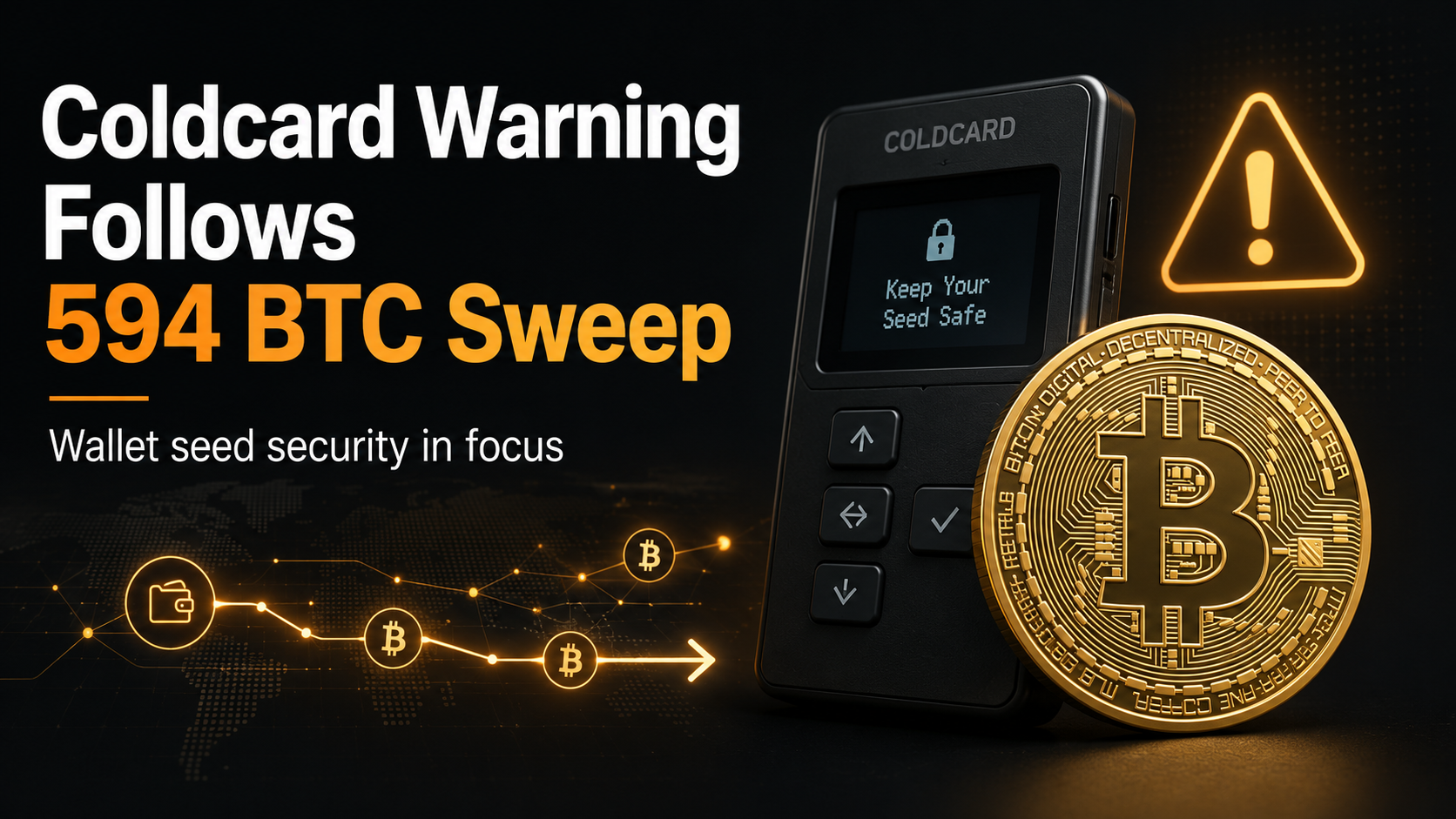
Coldcard Mk3 警告紧随 3800 万美元 Bitcoin 被扫荡事件,但原因仍未确认
比特币硬件钱包制造商Coinkite已警告用户,Coldcard设备存在种子生成问题,影响从4.0.1版本起的所有Mk3固件版本。该警告是在安全研究人员调查一起涉及594.48 BTC(约合3,800万美元)的协同转移事件时发出的。然而,目前尚无公开的技术证据证实Coldcard的问题导致了这些转账。


相关文章
查看更多
辉达股价预测:AI 热潮开始侵蚀辉达自己的利润了吗?
辉达的毛利率刚刚连续第三季度维持在接近 75% 的水准。 而在同一份新闻稿里,公司下修了这个数字的指引。 营收仍在加速——截至 2026 年 7 月 26 日的当季达 962 亿美元,比一年前的两倍还多,而下一季的指引则是 1,080 亿美元。 也就是说,公司一边加速增长,一边在每一美元营收上赚得更少;而这一组张力解释了大部分的原因,这组张力也是为什么覆盖同一家公司的分析师,连一年后的目标价都无法
AI 推理正在改变 NAND 周期吗?Sandisk 对存储芯片股意味着什么
AI 推理需要的不只是算力,大规模部署同样需要不断增长、能够快速访问且具备成本效率的存储容量。 NAND 正逐步成为与 HBM、DRAM 并存的 AI 容量层,而不再只是传统商品型存储产品。 Sandisk 预计,到 2030 年企业数据中心闪存需求将达到 1.2 ZB,并正在开发专门面向 AI 推理的 High Bandwidth Flash。 Sandisk、Samsung 等存储厂商开始采用
2026 AI 基础设施股票:谁真正受益于 Big Tech 的 AI 资本支出?
Key Takeaways Microsoft、Amazon、Alphabet 和 Meta 在 2026 年仍在大规模投入 AI 基础设施和数据中心。 Nvidia 仍是最直接的 AI 资本支出受益者之一,但 AI 云、服务器、网络和光通信也开始呈现明确增长。 CoreWeave、Nebius、Dell 和 Broadcom 提供了 AI 支出转化为营收、订单和待履约收入最清晰的证据之一。 随着