What Is SLVON? Ondo Tokenized iShares Silver Trust Explained
Summary
SLVON, officially styled by Ondo as SLVon, is an Ondo tokenized product designed to provide economic exposure linked to shares of the iShares Silver Trust (NYSE Arca: SLV).
The structure involves three separate layers:
Physical silver held by the iShares Silver Trust;
SLV shares traded through the traditional securities market;
SLVON tokens designed to track SLV’s economic performance.
Eligible users can trade SLVON/USDT on MEXC.
SLVON is not physical silver, is not an SLV share and is not issued by the iShares Silver Trust or MEXC. Ondo states that its tokenized securities provide economic exposure to their underlying assets but do not give tokenholders a general right to hold or receive those underlying securities.
| Product | What the holder owns | Main economic exposure |
|---|---|---|
| Physical silver | Coins or bullion | Silver market price |
| SLV | Shares in the iShares Silver Trust | Silver held by the Trust, less expenses |
| SLVON | Ondo tokenized product | Economic performance linked to SLV |
| SLVON/USDT on MEXC | Exchange-held SLVON balance | SLVON price quoted in USDT |
What Is SLVON?
SLVON is the MEXC ticker for SLVon: iShares Silver Trust (Ondo Tokenized).
The name combines:
SLV, the ticker of the iShares Silver Trust;
ON, referring to Ondo or onchain.
Ondo describes its tokenized products as blockchain tokens linked to publicly traded securities. Although the platform often uses “tokenized stocks” as a broad category, it also covers ETFs, exchange-traded products and other listed securities.
A precise definition is:
SLVON is an onchain token designed to provide economic exposure linked to the iShares Silver Trust, which itself seeks to reflect the performance of silver bullion before trust expenses and liabilities.
It should not be described simply as “digital silver” or “tokenized physical silver,” because the token tracks SLV rather than creating direct ownership of identified silver bars.
What Is the Underlying SLV Trust?
The iShares Silver Trust trades on NYSE Arca under the ticker SLV.
Its objective is to reflect the price performance of silver bullion before payment of the Trust’s expenses and liabilities. The Trust is passive and does not actively trade silver to generate additional returns or protect investors from price declines.
The Trust’s principal asset is silver bullion held through its custody structure. Its official product page identifies:
NYSE Arca as the exchange;
The LBMA Silver Price as its reference benchmark;
A sponsor fee of 0.50%;
No regular distribution frequency;
Physical ounces of silver held in the Trust.
SLV’s structure means that SLVON is exposed to two separate tracking relationships:
How closely SLV reflects the value of its underlying silver;
How closely SLVON reflects the economic value of SLV.
How SLVON Connects to Physical Silver
The relationship can be simplified as:
Global silver market
↓
Value of silver held by the iShares Silver Trust
↓
SLV net asset value
↓
SLV market price on NYSE Arca
↓
Ondo SLVON reference value
↓
SLVON/USDT price on MEXC
This structure is different from a token whose issuer directly allocates a particular silver bar to each tokenholder.
An SLVON holder is economically several steps removed from the physical metal:
The iShares Silver Trust holds silver;
SLV shares represent interests in the Trust;
Ondo’s product tracks SLV;
MEXC provides a secondary market for SLVON.
Who Issues SLVON?
SLVON is not issued by:
BlackRock;
iShares;
The iShares Silver Trust;
NYSE Arca;
MEXC;
A silver mining company.
Ondo’s disclosures state that the issuer of Ondo Stocks is Ondo Global Markets (BVI) Limited, a British Virgin Islands business company. Ondo Finance provides tokenization services to the issuer.
The roles can be summarized as follows:
| Organization | Role |
|---|---|
| iShares Silver Trust | Holds silver and issues SLV shares |
| Sponsor, trustee and custodian | Operate and administer the SLV structure |
| NYSE Arca | Primary exchange for SLV |
| Ondo Global Markets | Issues the SLVON tokenized product |
| Broker-dealers and custodians | Hold securities and cash supporting Ondo products |
| MEXC | Provides the SLVON/USDT secondary market |
| SLVON holder | Holds the tokenized product |
How Is SLVON Backed?
Ondo states that its tokenized stocks and ETFs are fully backed by the corresponding publicly traded securities and cash held with U.S. broker-dealers.
Its stated protection framework includes:
Full asset backing;
Daily review by an independent verification agent;
A security agent acting for tokenholder protection;
Security interests in designated collateral;
Minting and redemption rights for eligible participants;
Measures intended to make the backing structure bankruptcy-remote.
For SLVON, the corresponding traditional-market asset is SLV rather than silver bullion directly.
| Backing layer | Asset |
|---|---|
| SLV Trust backing | Physical silver and limited related assets |
| SLVON backing | SLV securities and applicable cash |
| MEXC user balance | SLVON held through the exchange’s custody system |
These arrangements are designed to connect SLVON with SLV’s value, but they do not eliminate issuer, custody, legal, operational or market risk.
Does Buying SLVON Mean Owning SLV Shares?
No.
Ondo explicitly states that its tokens are not themselves stocks or ETFs and do not give holders a general right to hold or receive the underlying assets.
| Ownership question | SLV holder | SLVON holder |
|---|---|---|
| Directly holds SLV shares | Yes, directly or beneficially | No |
| Directly owns silver bars | No | No |
| Has economic exposure related to silver | Yes | Yes, through SLV |
| Holds a blockchain token | No | Yes |
| Can demand delivery of an SLV share | Through normal securities ownership | No general right |
| Can redeem individual holdings for silver | Generally no | No |
| Has blockchain and smart-contract risk | No | Yes |
SLVON should therefore be described as tokenized economic exposure to SLV, not as direct ownership of either SLV or silver bullion.
How Does SLVON Track SLV?
SLVON is designed to track SLV through:
Underlying security backing;
Token minting;
Token redemption;
Market-maker activity;
Arbitrage;
Secondary-market trading.
Ondo describes its tokenized securities as total-return trackers. This means they are designed to reflect the price movement of the underlying security and any applicable distributions after tax withholding.
SLV currently lists no regular distribution frequency. Its economic return is primarily driven by silver prices after accounting for trust expenses.
When SLVON Trades Above Its Reference Value
If SLVON trades at a premium, an eligible participant may be able to:
Mint SLVON based on the applicable reference value;
Sell the tokens in the secondary market;
Increase available supply;
Help reduce the premium.
When SLVON Trades Below Its Reference Value
If SLVON trades at a discount, an eligible participant may be able to:
Purchase discounted SLVON;
Redeem the tokens under Ondo’s applicable procedures;
Reduce circulating supply;
Help narrow the discount.
Ordinary MEXC users should not assume that they personally have access to direct Ondo minting and redemption. Eligibility, identity verification, jurisdiction and minimum transaction requirements may apply.
Can SLVON Trade at a Different Price From SLV?
Yes.
SLVON and SLV trade through separate order books, settlement systems and investor groups.
Temporary price differences may result from:
MEXC order-book depth;
Trading while NYSE Arca is closed;
USDT moving slightly away from one U.S. dollar;
Sudden changes in the silver price;
SLV itself trading above or below net asset value;
Delays or pauses in minting and redemption;
Market-maker activity;
Network or platform conditions;
Large market orders.
SLV can already trade at a premium or discount to its net asset value. SLVON can then trade at a separate premium or discount to the value associated with SLV.
This creates two potential layers of price difference:
| Layer | Possible difference |
|---|---|
| Silver to SLV | SLV market price versus silver-backed net asset value |
| SLV to SLVON | SLVON market price versus SLV reference value |
Does One SLVON Equal One SLV Share?
Users should not assume that a permanent one-token-to-one-share relationship is guaranteed.
The economic ratio may be affected by:
Trust fees;
Changes in the amount of silver represented by each SLV share;
Corporate or product actions;
Distribution treatment;
Token adjustments;
Issuer terms.
The current SLVON asset page and applicable offering documents should be checked before calculating premiums, discounts or position exposure.
How Do SLV Expenses Affect SLVON?
SLV currently has a stated sponsor fee of 0.50%.
Because the Trust’s principal asset is silver rather than an income-generating business, the Trust may sell silver to pay expenses and liabilities. Over time, this generally reduces the quantity of silver represented by each SLV share.
Because SLVON tracks SLV rather than raw spot silver, this expense effect is indirectly included in SLVON’s long-term economic exposure.
An SLVON user may also face separate costs, including:
MEXC trading fees;
Bid-ask spreads;
Slippage;
Blockchain transaction fees, where applicable;
Ondo minting or redemption costs for eligible direct users;
Currency or stablecoin conversion costs.
When Can SLVON Be Traded?
Eligible users may trade the SLVON/USDT market on MEXC, subject to platform availability and maintenance.
Ondo announced 24/7 instant minting and redemption for supported tokenized stocks and ETFs in June 2026. Token transfers are also designed to operate continuously on supported networks. Availability remains subject to eligibility, jurisdiction, asset support, corporate actions, volatility controls and other risk-management conditions.
When SLV’s primary market is closed:
Its latest exchange price may become stale;
SLVON may react to changes in global silver markets;
MEXC spreads may widen;
Premiums or discounts may increase;
Order-book liquidity may decline.
Continuous availability does not guarantee continuous liquidity or exact price tracking.
Which Blockchains Support Ondo Tokenized Assets?
Ondo Stocks are available across supported networks including Ethereum, BNB Chain and Solana. Ondo has also expanded bridging and DeFi integrations for selected assets.
However, users should not assume that MEXC supports SLVON deposits or withdrawals on every network supported by Ondo.
Before transferring SLVON, users should verify:
Whether MEXC currently supports SLVON withdrawals;
Which blockchain network is supported;
The correct contract address;
Minimum withdrawal requirements;
Network fees;
Whether the receiving wallet supports the token.
Sending a token through an unsupported network may result in permanent loss.
How to Trade SLVON on MEXC
The general process is:
Create an eligible MEXC account.
Complete any applicable identity-verification requirements.
Deposit or acquire USDT.
Open the SLVON/USDT trading page.
Review SLV’s latest price and net asset value.
Check the SLVON bid-ask spread and order-book depth.
Select a market or limit order.
Enter the amount of SLVON to buy or sell.
Review the estimated cost and trading fee.
Confirm the order.
Useful MEXC Learn resources include:
SLVON vs Physical Silver vs SLV
| Feature | Physical silver | SLV | SLVON |
|---|---|---|---|
| Product | Bullion or coins | Exchange-traded trust share | Ondo tokenized product |
| Direct metal ownership | Yes | No | No |
| Direct SLV ownership | No | Yes | No |
| Quote asset | Fiat price per unit | Usually USD | USDT on MEXC |
| Personal storage | Required | Not required | Not required |
| Blockchain functionality | No | No | Supported where available |
| Trust fee exposure | No | Yes | Indirectly, through SLV |
| Token issuer risk | No | No | Yes |
| Smart-contract risk | No | No | Yes |
| Ordinary retail silver redemption | Already owns metal | Generally unavailable | Unavailable |
Potential Benefits of SLVON
Potential features include:
Silver-related exposure using USDT;
Access through a crypto trading account;
Fractional token quantities;
Potential trading outside regular U.S. exchange hours;
Blockchain transferability on supported networks;
Integration with eligible digital-asset applications;
No need for personal silver storage.
These features do not make SLVON equivalent to physical silver or direct SLV ownership.
Main Risks of SLVON
Silver-Price Risk
SLVON may decline when silver prices fall. Neither the SLV Trust nor SLVON actively protects holders from adverse silver-price movements.
SLV Tracking and Expense Risk
SLV may differ from the spot price of silver, and its expenses gradually reduce the amount of silver represented by each share.
SLVON Tracking Risk
SLVON may trade at a premium or discount to the value associated with SLV.
Issuer and Custody Risk
The product depends on Ondo’s legal structure, securities backing, broker-dealers, custodians and security arrangements.
MEXC Platform Risk
Assets held on MEXC depend on the exchange’s security, custody, liquidity and operational availability.
Blockchain Risk
Smart-contract vulnerabilities, network disruptions, incorrect transfers or compromised private keys can cause losses.
USDT Risk
Changes in USDT’s market value relative to the U.S. dollar can affect the numerical SLVON/USDT price.
Regulatory and Eligibility Risk
Ondo tokenized securities are subject to jurisdictional restrictions and are not generally available to U.S. persons. Other countries may restrict access to retail users or require professional-investor status.
FAQ
What is SLVON?
SLVON is an Ondo tokenized product designed to provide economic exposure linked to the iShares Silver Trust.
Is SLVON physical silver?
No. SLVON is a blockchain token linked to SLV, while SLV itself holds silver through a trust structure.
Is SLVON issued by BlackRock or iShares?
No. It is issued through Ondo’s tokenization structure.
Does buying SLVON mean I own SLV shares?
No. SLVON holders do not have a general right to hold or receive the underlying SLV shares.
Does SLVON track the spot price of silver directly?
Not directly. It tracks SLV’s economic performance, while SLV seeks to reflect silver-bullion performance before expenses and liabilities.
Why can SLVON differ from SLV?
Differences may result from separate liquidity, USDT movements, trading hours, order-book conditions and minting or redemption availability.
Can SLVON trade when NYSE Arca is closed?
The MEXC market may remain available, but spreads and price differences may increase outside traditional market hours.
Where can eligible users trade SLVON?
Eligible users can access the SLVON/USDT spot market on MEXC.
Risk Disclaimer
This article is provided for informational and educational purposes only. It does not constitute investment, financial, legal, accounting or tax advice.
SLVON combines exposure to silver and the iShares Silver Trust with additional issuer, backing, custody, tracking, liquidity, blockchain, smart-contract, USDT, exchange and regulatory risks.
SLVON is not physical silver, is not an SLV share and does not provide a guaranteed right to receive either silver bullion or the underlying security.
Readers should review the official Ondo SLVON asset page, Ondo Stocks disclosures, official iShares SLV information, applicable SEC filings and the MEXC SLVON/USDT market before making any decision.

热门加密动态
查看更多
链上就能买美股,还能领分红?MEXC × Ondo Finance 五大代币化新股解析
MEXC 联手 Ondo Finance 独家上线五大代币化美股(CCJON、TTMION、RMBSON、SYMON、KEELON),覆盖铀能源、PCB制造、半导体等硬核赛道,同步推出 RealStocks 真实持股产品。2026 年 RWA 赛道格局正在重塑,全球投资者如何用 USDT 上链买美股? 概述 2026 年 6 月 25 日,MEXC 与 Ondo Finance 宣布新一轮深度合作

从美债到私人信贷:为什么 RWA 是 2026 年最稳健的加密赛道?
国债、私人信贷、黄金,RWA赛道在2026年为何成为机构与散户共同争夺的核心叙事?本文深度解析链上资产代币化的市场规模、主要玩家与投资路径,并告诉你如何通过MEXC把握这一轮结构性机会。 Key Takeaways 截至2026年第一季度末,链上代币化RWA市值已达193亿美元,较2025年初的54亿美元增长256.7% 代币化美国国债突破100亿美元里程碑,BlackRock BUIDL 一只基

RWA 代币化迎来治理突破:Ondo Finance × Broadridge,链上投票权来了
Ondo Finance 与金融科技巨头 Broadridge 达成合作,全球逾 250 种代币化股票和 ETF 持有人首次可通过区块链参与股东投票,RWA 赛道迎来里程碑式治理升级。 概述 2026 年 4 月 28 日,RWA 代币化领域头部协议 Ondo Finance 宣布与全球金融科技巨头 Broadridge Financial Solutions(NYSE: BR)正式建立合作关系。

热门新闻
查看更多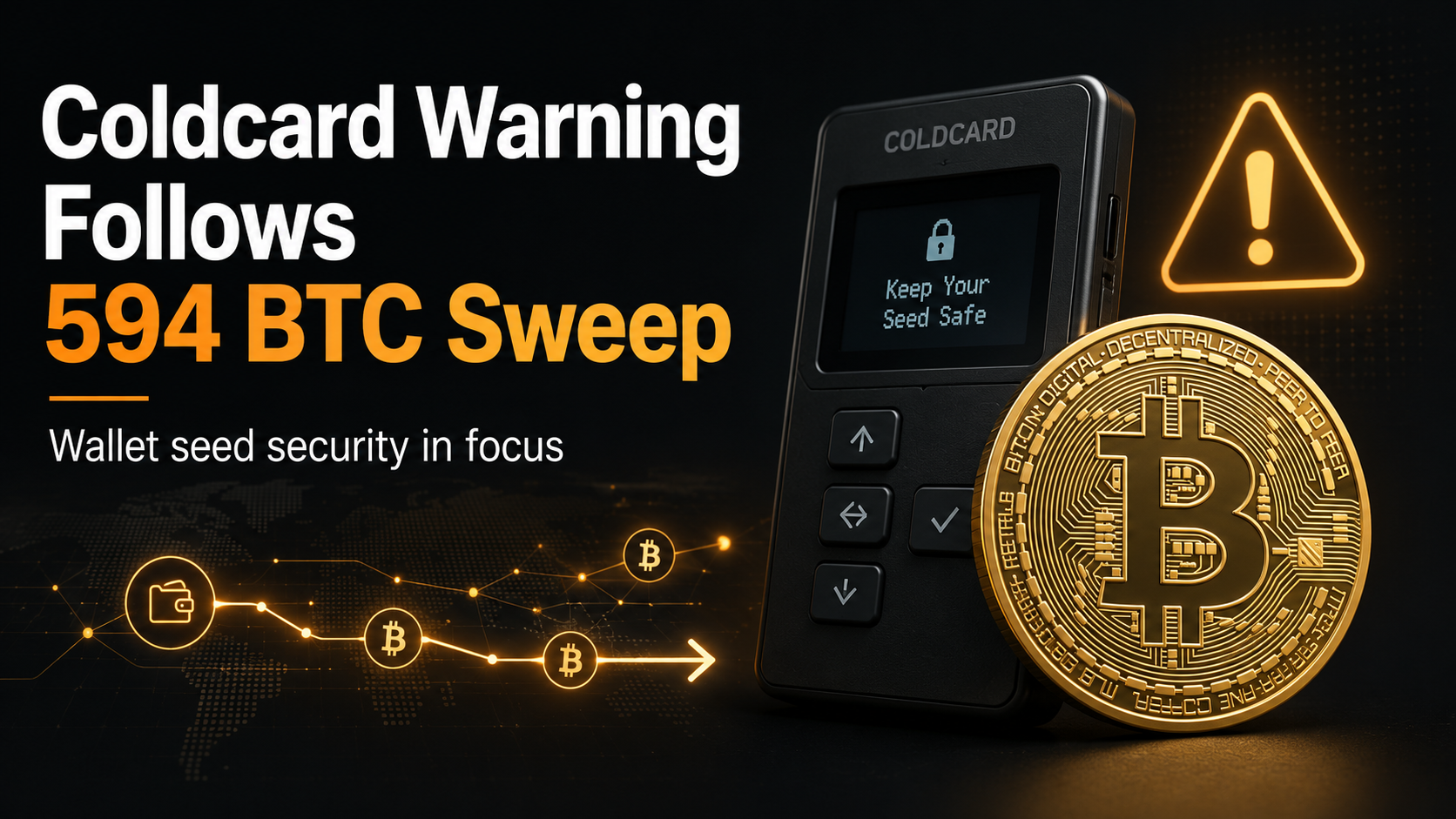
Coldcard Mk3 警告紧随 3800 万美元 Bitcoin 被扫荡事件,但原因仍未确认
比特币硬件钱包制造商Coinkite已警告用户,Coldcard设备存在种子生成问题,影响从4.0.1版本起的所有Mk3固件版本。该警告是在安全研究人员调查一起涉及594.48 BTC(约合3,800万美元)的协同转移事件时发出的。然而,目前尚无公开的技术证据证实Coldcard的问题导致了这些转账。

相关文章
查看更多
辉达股价预测:AI 热潮开始侵蚀辉达自己的利润了吗?
辉达的毛利率刚刚连续第三季度维持在接近 75% 的水准。 而在同一份新闻稿里,公司下修了这个数字的指引。 营收仍在加速——截至 2026 年 7 月 26 日的当季达 962 亿美元,比一年前的两倍还多,而下一季的指引则是 1,080 亿美元。 也就是说,公司一边加速增长,一边在每一美元营收上赚得更少;而这一组张力解释了大部分的原因,这组张力也是为什么覆盖同一家公司的分析师,连一年后的目标价都无法
AI 推理正在改变 NAND 周期吗?Sandisk 对存储芯片股意味着什么
AI 推理需要的不只是算力,大规模部署同样需要不断增长、能够快速访问且具备成本效率的存储容量。 NAND 正逐步成为与 HBM、DRAM 并存的 AI 容量层,而不再只是传统商品型存储产品。 Sandisk 预计,到 2030 年企业数据中心闪存需求将达到 1.2 ZB,并正在开发专门面向 AI 推理的 High Bandwidth Flash。 Sandisk、Samsung 等存储厂商开始采用
2026 AI 基础设施股票:谁真正受益于 Big Tech 的 AI 资本支出?
Key Takeaways Microsoft、Amazon、Alphabet 和 Meta 在 2026 年仍在大规模投入 AI 基础设施和数据中心。 Nvidia 仍是最直接的 AI 资本支出受益者之一,但 AI 云、服务器、网络和光通信也开始呈现明确增长。 CoreWeave、Nebius、Dell 和 Broadcom 提供了 AI 支出转化为营收、订单和待履约收入最清晰的证据之一。 随着