Why Do Gold, Oil, and Bitcoin Have Value? Scarcity Is Not Enough
Why do gold, oil, and Bitcoin have value when they are fundamentally different assets?
Gold is a physical metal with thousands of years of monetary history. Crude oil is an industrial commodity that is consumed by the global economy. Bitcoin is a digital asset governed by a decentralized network and a predictable issuance schedule.
They all trade at observable market prices because people are willing to exchange money for them. Yet scarcity alone does not explain that willingness. Something can be rare and still have little economic value if nobody needs it, trusts it, uses it, or can trade it efficiently.
Scarcity becomes economically meaningful only when it meets demand. Understanding that relationship is the key to understanding why gold, oil, and Bitcoin derive value from very different sources.
Gold Combines Physical Scarcity With Long-Established Demand
Gold is naturally scarce. Discovering deposits, developing mines, and extracting usable metal require time, capital, energy, and specialized expertise. New supply cannot be created quickly in response to higher prices.
Physical scarcity is only one part of the story. Gold also has demand from jewelry buyers, industry, investors, financial institutions, and central banks. It is durable, resistant to corrosion, divisible, and widely recognized across borders. These characteristics have helped gold maintain a long-standing role as a store of value and reserve asset.
Gold does not generate earnings or cash flow in the way a business can. Its price therefore depends largely on what market participants are willing to pay for its monetary, investment, and physical properties.
Real interest rates, the direction of the U.S. dollar, central-bank purchases, investment flows, and geopolitical risk can all influence gold demand. Gold may attract interest when investors seek protection from financial instability, but it does not rise during every period of uncertainty. Higher real yields, a stronger dollar, or a shift toward riskier assets can put pressure on its price.
Readers following this market can view the GOLD(XAUT)/USDT futures market on MEXC. A gold-linked futures contract or tokenized product is not the same as holding physical bullion. Each instrument has its own market structure, custody arrangements, and risks.
Oil Derives Value From Being Used and Consumed
Oil is also scarce, but its economic role is very different from gold.
Gold can remain in storage for decades. Oil’s primary value comes from consumption. Transportation, aviation, petrochemicals, manufacturing, and parts of the energy system depend on crude oil and its refined products.
That makes oil highly sensitive to changes in the real economy. When industrial production, shipping, and travel expand, expected demand may rise. During an economic slowdown, demand expectations can weaken as factories, airlines, and consumers use less fuel.
Supply is equally important. Oil prices can react to production decisions, sanctions, armed conflict, transportation bottlenecks, inventory levels, weather events, and underinvestment in new capacity. Because supply chains are global, a disruption in one region may affect prices far beyond that market.
Crude oil is not a single uniform product. Different grades vary in density, sulfur content, transportation costs, and delivery location. This is one reason benchmarks such as West Texas Intermediate and Brent can trade at different prices.
The OIL(WTI)/USDT futures market on MEXC provides exposure to a derivative linked to the WTI crude oil market. Trading a derivative does not involve buying, transporting, or storing physical barrels of oil.
Oil demonstrates an important principle: an asset does not need to function as a long-term store of value to have substantial economic value. Continued industrial demand can support value because the commodity performs a role that businesses and consumers need.
Bitcoin’s Scarcity Comes From Rules Rather Than Geology
Bitcoin has no physical form. Its scarcity is created by protocol rules rather than geological limits.
The Bitcoin protocol sets a maximum supply of 21 million coins. New BTC enters circulation through mining, and the block reward is reduced roughly every four years. This makes the issuance schedule more predictable than the supply of many physical commodities.
A fixed limit does not create value by itself. If Bitcoin had no users, no secure network, no market liquidity, and no practical reason to hold or transfer it, the 21 million cap would mean very little.
Bitcoin’s value proposition also depends on decentralization, network security, verifiable ownership, portability, and the ability to transfer value without relying on a single central operator. Its users may value it as a digitally scarce asset, a censorship-resistant settlement system, or a potential long-term store of value.
Adoption can create network effects. A network may become more useful as more people hold it, accept it, build infrastructure around it, and provide liquidity. Greater participation can make it easier for other users to enter or exit the market.
Bitcoin still has a much shorter history than gold. It is also substantially more volatile and remains exposed to regulatory, technological, custody, and market-adoption risks.
The BTC/USDT spot market on MEXC shows how buyers and sellers establish Bitcoin’s market price in real time. That price reflects the market’s current consensus; it does not prove what Bitcoin will be worth in the future.
Gold, Oil, and Bitcoin Cannot Be Valued the Same Way
All three assets are affected by supply and demand, but the sources of that demand are not interchangeable.
Gold’s value is supported by physical scarcity, long-established recognition, reserve demand, jewelry, and its perceived defensive role. Oil’s value comes mainly from industrial consumption and its importance to transportation and production. Bitcoin’s value depends on digital scarcity, network security, portability, liquidity, and continued user acceptance.
Their prices therefore respond to different catalysts.
Gold may react to real interest rates, the dollar, central-bank activity, and demand for defensive assets. Oil may move when markets reassess economic growth, inventories, production, or geopolitical supply risks. Bitcoin may respond to global liquidity, regulation, institutional participation, crypto market sentiment, and changes in adoption.
Calling all three assets “scarce” does not mean they should move in the same direction. Scarcity describes a constraint on supply. It does not explain why demand exists or whether that demand will endure.
Scarce Assets Can Still Lose Value
Scarcity cannot protect an asset from every risk.
Demand can fall. Substitutes can emerge. Regulation can reduce access. Technology can change how a commodity is used. Market trust can weaken, and poor liquidity can make an asset difficult to sell at an expected price.
Oil faces long-term questions about energy efficiency, alternative technologies, and changing consumption patterns. Gold is sensitive to interest rates, currency conditions, and investor flows. Bitcoin faces volatility, regulatory uncertainty, custody risks, technical risks, and the possibility that adoption develops differently from market expectations.
A more complete valuation framework therefore asks several questions at once:
What limits the supply? Who needs the asset, and why? What function does it perform? How durable is that demand? How liquid is the market? What does it cost to hold or trade the asset? What could weaken confidence in it?
That framework is more useful than simply assuming that anything rare must become valuable.
FAQ
Does scarcity guarantee that an asset will have value?
No. Scarcity matters only when there is demand. If nobody wants, needs, uses, or trusts an asset, limited supply cannot guarantee a meaningful or stable price.
Why do gold and oil have different value drivers if both are commodities?
Gold is widely held for investment, reserves, and jewelry and can be stored for long periods. Oil is primarily consumed by transportation and industry, making its value more sensitive to economic activity and physical supply conditions.
Why does Bitcoin have value if it is not backed by a physical asset?
Bitcoin derives value from its fixed supply, decentralized network, security, portability, verifiable ownership, liquidity, and user demand. These features create a value proposition, but they do not eliminate volatility or other risks.
Is Bitcoin the same as digital gold?
“Digital gold” is a comparison, not a statement that the two assets are identical. Both have scarcity-based narratives, but gold has a much longer history and different demand sources. Bitcoin is more portable and programmatically scarce, but it is also considerably more volatile.
Risk Warning
Gold, oil, and Bitcoin can all experience substantial price volatility. Futures involve leverage, margin requirements, and liquidation risk, which may amplify losses. Tokenized or derivative exposure is not the same as owning a physical asset. This article is for educational purposes only and does not constitute investment advice.

热门新闻
查看更多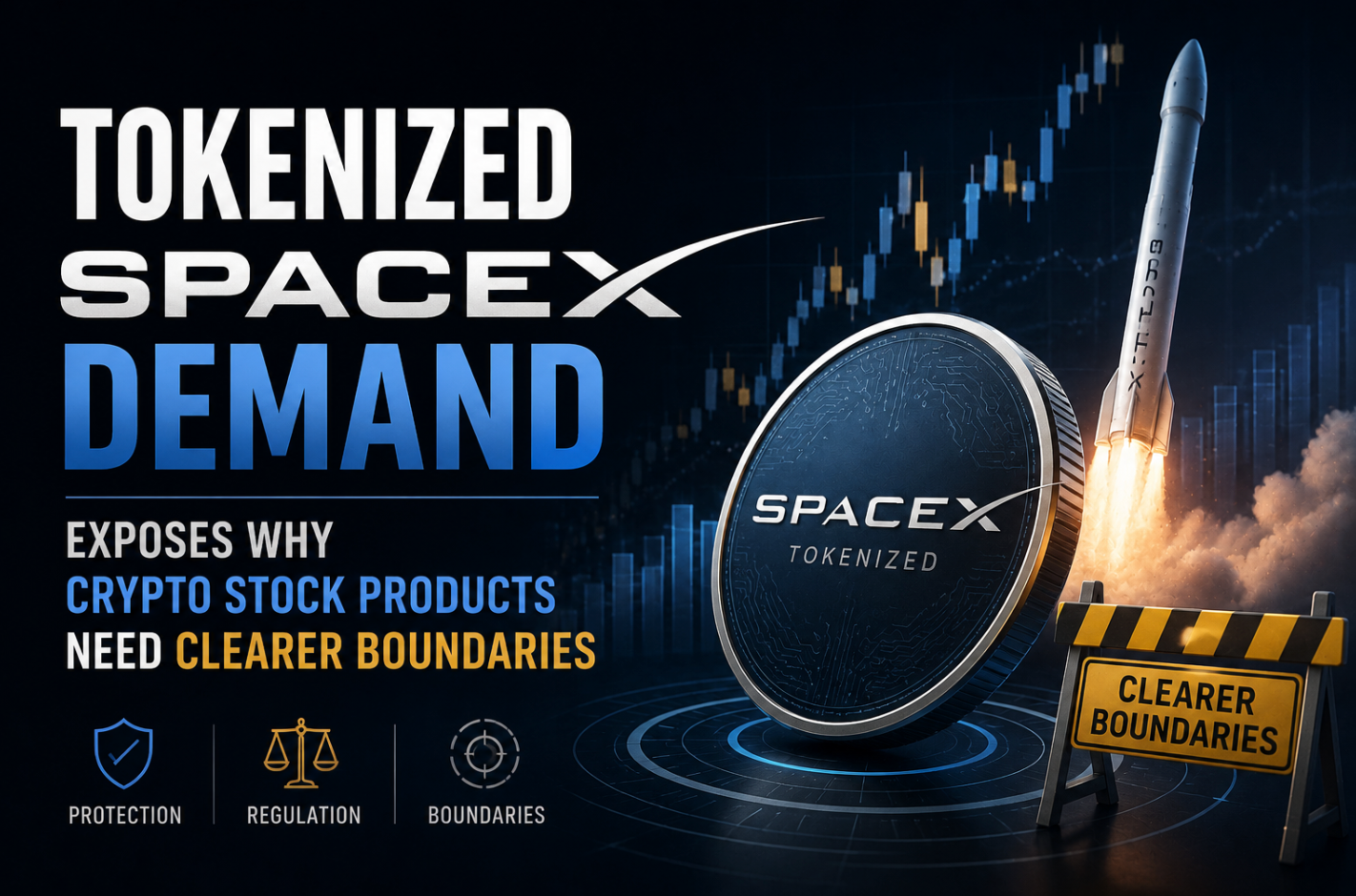
代币化 SpaceX 需求爆发,揭示加密股票产品为何亟需明确界限
代币化 SpaceX 股票产品在其历史性 IPO 期间吸引了超 10 亿美元的加密市场需求,但因供应商 xStocks 遭遇严重的底层股票供给不足,导致各大平台无法完成配额。据《华尔街日报》关于 SpaceX 代币需求的报道,由于实物资产短缺,交易所被迫取消活动。随后的 Bybit 发行更新公告 确认将向申购用户进行 100% 自动退款。同时,Kraken 关于 SpaceX 的支持页面 明确指出

美光财报前瞻:AI内存稀缺性面临迄今为止最大的持久性考验
美光科技将于6月24日收盘后公布其2026财年第三季度财报,市场预期已达到历史最高水平。公司官方指引预计营收将达到335亿美元,非GAAP毛利率约为81%,非GAAP每股收益(EPS)为19.15美元。而在此前的第二财季,美光已经创下了营收、利润率、EPS和自由现金流的历史新高。因此,这份财报的核心不在于AI需求是否强劲,而在于由AI驱动的内存稀缺性能持续多久,从而证明美光理应获得结构性估值重塑(

相关文章
查看更多
MEXC 链上观察日报:香港将于10月13日上市第二只现货Solana ETF
更新于:2026年10月13日 09:30(UTC+8)|作者:MEXC要闻速览三大巨头稳定币并购总额超30亿美元渣打上线RLUSD机构托管服务FASB拟允许稳定币计入现金等价物香港第二只现货Solana ETF将上市韩国拟扩展股票、债券及基金代币化产业动态前端将于2026年11月12日弃用,Blur市场协议继续运行且Blend停止撮合新贷款据Odaily星球日报消息,Blur表示blur

MEXC 链上观察日报:代币化大宗商品市场加速扩展,黄金借贷与石油上链升温
更新于:2026年10月12日 09:30(UTC+8)|作者:MEXC要闻速览XRPL修复存在超10年的关键漏洞Zcash预计1月引入抗量子签名操作码法国推进稳定币兑换税及加密离境税讨论代币化大宗商品正向黄金借贷与石油扩展Robinhood Chain交易量较9月中旬下降42%产业动态无需软分叉,StarkWare在比特币主网验证量子安全锁定方案但尚不适合大规模使用据Odaily星球日报
MEXC 链上观察日报:泰国将开放比特币、以太坊ETF上市交易
更新于:2026年10月10日 09:30(UTC+8)|作者:MEXC要闻速览泰国将开放比特币、以太坊ETF交易B3拟于2027年推出证券代币化平台XRP Ledger上线机构权限委托功能四大公链9月发行代币超190万个Base称代币化股票将引领超级周期产业动态无需软分叉,StarkWare在比特币主网验证量子安全锁定方案但尚不适合大规模使用据Odaily星球日报消息,StarkWare