Overview
Wafer-scale AI processor maker
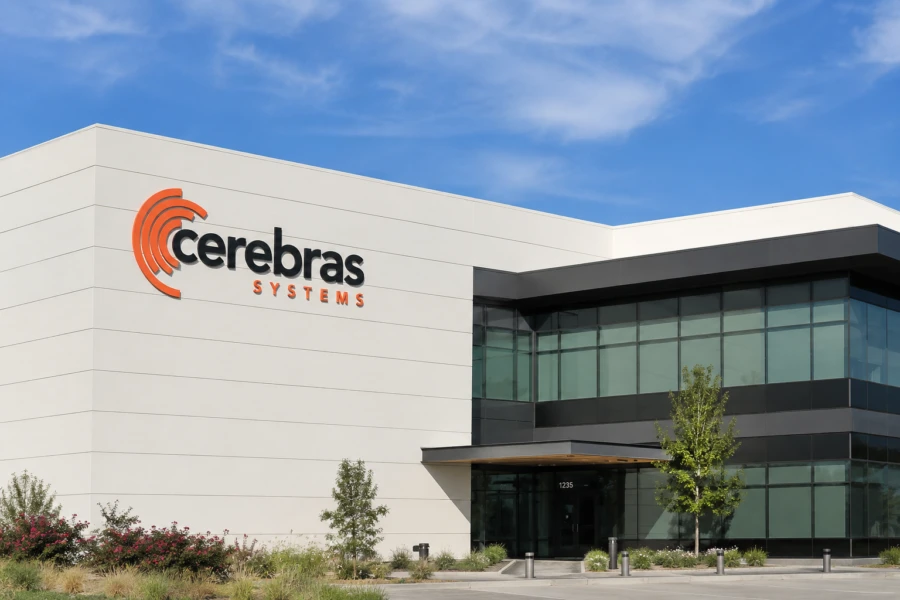
Cerebras Systems (
Nasdaq ticker: CBRS) reports third-quarter 2026 financial results after the U.S. stock market closes today, Thursday, November 12, 2026, followed by an earnings conference call at 06:00 Singapore Time on Friday, November 13 (5:00 p.m. EST / 22:00 UTC), with management guiding Q3 Non-GAAP Core revenue to $214.0 million to $216.0 million (against a $215.82 million Zacks consensus estimate, up 2.0% to 2.9% sequentially from $209.87 million in Q2 2026), Core gross margin to a full-year low of 38% to 40%, and consensus projecting a Core loss of $0.13 per share. After losing nearly 59% of its market value over the past three months before rebounding 7.92% on November 11 to close at $101.08 ($23.07 billion market capitalization), CBRS faces a critical inflection point tonight: management must confirm that the 38% to 40% third-quarter gross margin represents a temporary trough caused by costly rented-back systems, and guide fourth-quarter Core revenue to an implied $263.8 million to $273.8 million (+25.0% sequentially at the midpoint) as lower-cost Cerebras-owned systems come online to hit its raised full-year 2026 outlook of $880 million to $890 million in Core revenue and 41% to 43% Core gross margin.
Key Takeaways
Tonight's third-quarter release is the most important profitability and execution test for Cerebras since its May 2026 initial public offering (when the company sold 30 million shares at $185 per share for $6.4 billion in gross proceeds). In its second-quarter report on August 12, 2026, Cerebras more than doubled Core total revenue (+103% year over year) to a record $209.9 million—led by a 287% surge in Core cloud and services revenue to $127.7 million that surpassed hardware revenue for the first time—and disclosed $25.4 billion in Remaining Performance Obligations (RPO); yet a GAAP diluted loss of -$2.98 per share (driven by IPO-related stock-based compensation vesting) and Q3 Core gross margin guidance stepping down from 46.5% in Q1 and 40.6% in Q2 to 38%–40% in Q3 triggered the after-hours selloff analyzed in our
Cerebras Q2 post-earnings drop review. Over the past six weeks, CBRS absorbed further pressure from a September 30 report regarding
OpenAI workload allocation across competing chips, an October 28 short-seller report questioning wafer longevity and depreciation schedules, and the November 10 IPO lock-up expiration, knocking shares down to a 52-week low of $77.84 before this week's bounce. Backed by $8.6 billion in cash and marketable securities, tonight's call centers on backlog conversion, customer concentration, and fourth-quarter margin recovery.
Release Schedule, Standard Time Shift, and Implied Q3 and Q4 Financial Derivation
According to the official
Q3 earnings date release published by Sunnyvale-headquartered Cerebras Systems on October 20, 2026, third-quarter 2026 financial results (for the three months ended September 30, 2026) will be released after the Nasdaq market closes today, Thursday, November 12, 2026 (after 16:00 EST / 21:00 UTC, or 05:00 SGT on Friday, November 13), followed by a live webcast conference call at 5:00 p.m. Eastern Standard Time (2:00 p.m. PST).
International investors and traders tuning into the call must account for the one-hour time-zone shift caused by the end of U.S. Daylight Saving Time on Sunday, November 1, 2026, which moved Eastern Time from EDT (UTC-4) to EST (UTC-5). Although the conference call remains fixed at 5:00 p.m. Eastern on the local U.S. clock, the UTC timestamp shifts one hour later from 21:00 UTC to 22:00 UTC: whereas the Q2 2026 earnings call on August 12 began at 05:00 a.m. Singapore Time (UTC+8) the following morning, tonight's Q3 2026 call begins at 06:00 a.m. Singapore Time on Friday, November 13. Market participants relying on August's local Asian clock schedule would arrive an hour early.
Before comparing the numbers against consensus, investors must understand the accounting bridge between Cerebras's
GAAP results and its
Core Non-GAAP results: because Cerebras granted substantial performance-vesting customer warrants to anchor buyers including OpenAI and G42 ($960.6 million in non-current customer warrant assets on the June 30 balance sheet), U.S. GAAP requires amortizing the fair value of those customer warrants as a contra-revenue deduction against reported sales. Management's "Core" Non-GAAP metrics add back non-cash customer warrant contra-revenue, pass-through revenues and costs, and stock-based compensation. Combining verified figures from the
Q1 2026 official earnings release, the
Q2 2026 official earnings release, and the
Zacks Q3 consensus preview establishes the exact implied fourth-quarter hurdle required to meet full-year 2026 guidance.
Financial Metric (USD Millions, Except Per-Share Data) | Q1 2026 Reported Actual | Q2 2026 Reported Actual (Ended Jun 30, 2026) | Q3 2026 Official Guidance (and Zacks Consensus) | Full-Year 2026 Official Guidance (Raised Aug 12) | Implied Q4 2026 Requirement (Derived) |
Core Total Revenue (Non-GAAP) | $191.3M (+92% YoY, +12% QoQ) | $209.9M ($209.87M exact, +103% YoY, +9.7% QoQ) | Guided $214.0M to $216.0M (+2.0% to +2.9% QoQ); Zacks consensus $215.82M | $880.0M to $890.0M (midpoint $885.0M, raised from $855M–$865M) | Subtracting H1 actual ($401.2M) and Q3 midpoint ($215.0M) implies Q4 Core revenue of $263.8M to $273.8M (midpoint $268.8M, +25.0% QoQ) |
GAAP Total Revenue | $193.4M (+94% YoY; Hardware $110.6M / Cloud $82.8M) | $180.1M (+74% YoY; Cloud $126.0M / Implied Hardware $54.1M) | Not guided on a GAAP basis; depends on Q3 warrant vesting amortization | Not separately guided on a GAAP basis | Q2 reflected a $29.8M gap between GAAP ($180.1M) and Core ($209.9M) due to customer warrants |
Core Gross Margin & Implied Core Gross Profit | 46.5% (reported 47%; Hardware 42% / Cloud 53%; ~$89.0M profit) | 40.6% (reported 41%, +940 bps YoY; ~$85.2M profit; GAAP margin 14%) | Guided 38.0% to 40.0% (midpoint 39.0%; implied $81.3M to $86.4M profit) | 41.0% to 43.0% (midpoint 42.0%; implied ~$371.7M full-year gross profit) | Subtracting implied 9M Core gross profit (~$258.1M) leaves ~$113.6M for Q4—requiring Q4 Core gross margin to rebound to ~42.3% |
Core Operating Margin & Implied Operating Loss | Approx. -1.3% (Core net loss was -$2.5M; GAAP op loss -$15.0M) | -16.0% (+2,600 bps vs. -42% in Q2 25; ~$33.6M Core op loss; GAAP op margin -265%) | Guided -25.0% to -23.0% (midpoint -24.0%; implied -$50.2M to -$53.5M loss) | -19.0% to -17.0% (midpoint -18.0%; implied ~-$159.3M full-year loss) | Stepping down 800 bps sequentially in Q3 on R&D and cloud buildout before narrowing in Q4 |
Diluted Loss Per Share (Core vs. GAAP EPS) | Core net loss -$2.5M | Core EPS -$0.04 (beat -$0.18 consensus by 80.95%); GAAP EPS -$2.98 (-$450.5M net loss) | Zacks consensus Core EPS stands at -$0.13 per share | Not guided on a per-share basis | Q2's $450.5M GAAP net loss reflected $66.5M+ in IPO-vested stock compensation and warrant charges |
Two quantitative conclusions stand out from the derivation table above:
First, third-quarter top-line guidance ($214.0 million to $216.0 million, midpoint $215.0 million) represents a near-flat sequential pause (+2.0% to +2.9% over Q2's $209.87 million). However, because management simultaneously raised full-year 2026 Core revenue guidance in August by $25 million to a range of $880.0 million to $890.0 million (midpoint $885.0 million), the entire back-half growth acceleration is loaded into the fourth quarter: subtracting $401.17 million in first-half Core revenue and $215.0 million in Q3 guided Core revenue leaves $263.8 million to $273.8 million (midpoint $268.8 million) to be delivered in Q4 2026 alone—an implied 25.0% sequential surge in a single quarter.
Second, hitting full-year Core gross margin guidance of 41.0% to 43.0% (midpoint 42.0%, or ~$371.7 million in full-year Core gross profit on $885.0 million of revenue) after printing 46.5% in Q1 ($89.0 million), 40.6% in Q2 ($85.2 million), and a guided 39.0% midpoint in Q3 ($83.9 million) requires fourth-quarter Core gross profit to reach roughly $113.6 million—which mathematically requires Q4 Core gross margin to jump back to ~42.3% (+330 basis points sequentially over Q3).
Contracted Deal Value vs. RPO Backlog vs. Recognized Revenue: Customer Mix Unpacked
To model Cerebras accurately, investors must separate multi-year headline deal announcements, balance-sheet Remaining Performance Obligations (RPO), and quarterly recognized revenue, while tracking how rapidly the business is diversifying away from its legacy Middle Eastern customer base.
Revenue or Backlog Tier | Historical / Prior Baseline | Q2 2026 Verified Status (As of Jun 30, 2026) | Accounting Recognition Rule & Customer Mix | Key Q3 Watchpoint Tonight |
Headline Master Relationship Agreements (Deal Value) | 2024 S-1 relied on G42 purchase commitments | >$20.0B multi-year OpenAI agreement (750 MW through 2028); multi-year AWS and AMD partnerships | OpenAI deal delivers in phases through 2028; OpenAI can terminate part/all if capacity deadlines or SLAs are missed | Management commentary on OpenAI 750 MW deployment schedule and AWS Bedrock Q1 2027 integration |
Remaining Performance Obligations (RPO / Backlog) | ~15% of YE 2025 backlog slated for recognition by YE 2027 (43% in next 2 years) | $25.4 billion in contracted RPO as of June 30, 2026 (excludes AWS partnership RPO) | Unbilled/deferred future revenue under binding contracts; underpins guidance for 2027 Core revenue to "more than triple" | Whether Q3 ending RPO held near $25.2B+ or expanded on new enterprise wins (such as Bilt's 8M-member AI platform) |
Core Cloud & Other Services Recognized Revenue | FY2025: $152.0M (~30% of sales); Q1 2026: $79.8M (+167% YoY; GAAP $82.8M) | $127.7M (+287% YoY, +60.0% QoQ; GAAP $126.0M, +281% YoY) | Recognized as inference tokens and reserved cloud clusters are consumed; rose to 60.8% of Core revenue in Q2 | How much Q3 cloud growth came from OpenAI (Codex-Spark / GPT-5.6 Sol) vs. enterprise models (Kimi K2.6, Gemma 4) |
Core Hardware Systems Recognized Revenue | FY2025: $358.0M (~70% of sales); Q1 2026: $111.6M (+60% YoY; GAAP $110.6M) | Approx. $82.2M (derived as $209.9M Core total minus $127.7M Core cloud; GAAP ~$54.1M) | Recognized upon physical shipment and customer acceptance of on-premises CS-3/CS-4 wafer systems; fell to 39.2% of Core sales | Whether on-premises hardware shipments remained muted in Q3 as production prioritized internal Cerebras Cloud clusters |
Customer Concentration (MBZUAI & G42 Share) | 2024: G42 was 85%–87% of sales; 2025: MBZUAI 62% + G42 24% = 86% combined | Q2 2026: Abu Dhabi's MBZUAI was 34% of revenue and G42 was 9% (43% combined) | Shipments to UAE require U.S. export licenses; OpenAI and North American cloud ramp is steadily diluting UAE share | Exact Q3 Form 10-Q disclosure of the percentage of Q3 recognized revenue derived from MBZUAI, G42, and OpenAI |
First, the revenue mix flipped decisively in the second quarter of 2026. In fiscal 2025 ($510.0 million total revenue) and Q1 2026 ($191.3 million Core revenue), on-premises hardware systems generated 70.2% and 58.3% of revenue, respectively. In Q2 2026, however, Core cloud and other services revenue surged 287% year over year (and 60.0% sequentially) to $127.7 million, representing 60.8% of total Core revenue, while implied Core hardware revenue stepped down from $111.6 million in Q1 to $82.2 million in Q2 (39.2% of Core revenue).
Second, while OpenAI dominates the $25.4 billion forward backlog (having launched real-time coding model Codex-Spark on Cerebras on February 12, 2026 at >1,000 tokens/second and an Ultrafast preview for GPT-5.6 Sol at up to 750 tokens/second in August), Abu Dhabi entities still generated nearly half of current recognized revenue in Q2: MBZUAI accounted for 34% and G42 accounted for 9% of Q2 2026 sales (43% combined, down from 86% in full-year 2025). On September 30, 2026, a report by SemiAnalysis stating that OpenAI would run the Ultrafast mode of GPT-6.1 Sol on Nvidia GPUs instead of Cerebras sent CBRS shares down nearly 20% that week despite OpenAI CEO Sam Altman publicly calling Cerebras a "close partner." Tonight's Q3 customer-concentration footnote and management commentary on OpenAI's 2027 delivery schedule will be scrutinized to confirm that the 750 MW contract remains on its original trajectory.
Product Delivery, Supply-Chain Moats, and the 600 MW Data-Center Bottleneck
If Cerebras holds $25.4 billion in contracted RPO and expects 2027 Core revenue to more than triple (implying >$2.64 billion in 2027 Core revenue), why did management guide Q3 2026 Core revenue to grow just 2% to 3% sequentially to $214 million–$216 million?
The bottleneck is not silicon wafer fabrication or memory shortages; it is powered data-center capacity. On the silicon manufacturing side, Cerebras's Wafer-Scale Engine (WSE)—which integrates 1.4 trillion transistors across an entire 300mm silicon wafer on the next-generation CS-4 unveiled in August—enjoys a structural supply-chain advantage over conventional GPU architectures. As explained in our comparison of
AI computing platforms vs semiconductor foundries, traditional GPU accelerators depend on scarce High-Bandwidth Memory (HBM),
TSMC CoWoS advanced packaging, and 3-nanometer lithography nodes. Because Cerebras keeps all memory on-chip using static RAM (SRAM) across a single uncut wafer, it uses
zero HBM memory, zero CoWoS packaging, and zero 3nm capacity. Management confirmed in Q2 that it has already secured all required TSMC wafer allocations for 2027 and beyond, while adding assembly lines at contract manufacturers Flex, Sanmina, and Rocket EMS to increase system manufacturing capacity more than
10x in 2026.
Instead, converting the $25.4 billion RPO into recognized cloud revenue requires plugging those wafer-scale systems into high-density data centers. In Q2, Cerebras expanded its data-center capacity live and under contract for delivery by year-end 2027 to more than 600 MW (followed on August 31 by an agreement with Compute Nordic Finland to build a new 165 MW AI data center in Mikkeli, Finland). Alongside internal cloud buildouts, Cerebras is preparing to launch its disaggregated inference solution with AMD and AWS in Q4 2026 (where AWS Trainium 3 or AMD chips handle prefill and Cerebras CS-3/CS-4 systems handle high-speed decode), followed by general availability on AWS Bedrock in Q1 2027 and initial hyperscaler revenue contribution in mid-2027. Any slippage in commissioning Q4 data-center halls or the Q1 2027 AWS Bedrock launch would push revenue recognition out of Q4 2026 and into 2027.
The 38%–40% Gross Margin Trough, Useful-Life Accounting Debate, and $8.6B Cash Cushion
The sharpest debate heading into tonight's 5:00 p.m. EST call centers on Cerebras's gross margin compression and capital expenditure accounting.
As highlighted in the
Investing.com Q3 metrics and risks preview, Core gross margin stepped down from
46.5% (47% rounded) in Q1 2026 (when Core cloud gross margin was 53% and Core hardware gross margin was 42%) to
40.6% (41% rounded) in Q2 2026 (while GAAP gross margin dropped from 45% to 14%), and is guided to
38.0% to 40.0% in Q3 2026 alongside a Core operating margin of
-25% to -23% (down from -16% in Q2). Management explained on the August 12 call that this margin drop was caused by
rented-back systems: to serve surging cloud inference demand before its own newly built data centers came online, Cerebras leased back systems from customers, incurring high rental costs in cost of revenue. Management explicitly called Q3 the gross margin trough and projected a rebound in Q4 (to hit its 41%–43% full-year Core gross margin guide) as lower-cost,
Cerebras-owned systems come online, targeting a long-run gross margin above 60%.
Cash Flow, CapEx, or Balance-Sheet Metric | FY2025 or Prior-Year Baseline ($ Thousands) | Q1 2026 / As of Mar 31, 2026 ($ Thousands) | Q2 2026 / H1 Cumulative As of Jun 30, 2026 ($ Thousands) | Financial Health & Margin / Depreciation Implication |
Cash, Cash Equivalents, Restricted Cash & Short-Term Investments | $701,706 (cash & equivalents at YE 2025) | $1,716,016 cash + $1,029,098 restricted cash | $8.6 billion total liquidity ($6,742,157 cash + $684,680 restricted + short-term investments) | Bolstered by $6.4B May IPO, $1.0B Feb Series H, $1.0B Jan OpenAI loan, and undrawn $850M revolver |
Net Cash Used in Operating Activities (OCF) | -$123,843 in H1 2025 (-$54,937 in Q1 25) | +$12,335 in Q1 2026 (positive operating cash flow) | -$47,488 in H1 2026 (implies -$59,823 in Q2 2026 operating cash outflow) | Upfront customer billings and deferred revenue ($1.81B+ total) kept 6-month operating cash burn to just $47.5M |
Purchases of Property and Equipment (CapEx) | -$185,094 in H1 2025 (-$98,244 in Q1 25) | -$131,970 in Q1 2026 ($132.0M) | -$548,873 in H1 2026 ($548.9M; implies $416.90M in Q2 2026 alone) | Massive Q2 CapEx ($416.9M) built Cerebras-owned cloud systems, lifting net PP&E from $437.4M to $986.8M |
Assumed Useful Life of Data-Center Equipment | 1.5 to 3.0 years in draft IPO filings through Dec 2025 | Revised to 3.0 to 5.0 years in public S-1 filed Apr 17, 2026 | Depreciated over 3 to 5 years into cloud cost of revenue | Oct 28 short report alleged wafers draw 70%–80% power at idle and fail in ~2 years; management response awaited |
Examining the capital expenditure and depreciation rows in the table above through the lens of
cash flow vs book profit reveals why tonight's margin commentary carries heightened stakes:
First, Cerebras is investing aggressively in self-owned cloud hardware: purchases of property and equipment (primarily wafer-scale systems built for Cerebras Cloud) surged from $131.97 million in Q1 2026 to $416.90 million in Q2 2026 ($548.87 million across the first half of 2026), more than doubling net property and equipment on the balance sheet from $437.40 million at year-end 2025 to $986.81 million on June 30, 2026.
Second, as summarized in the
TIKR short-report and margin analysis, short-seller Culper Research published a report on October 28, 2026 claiming that Cerebras wafers run continuous "dummy operations" (drawing 70% to 80% of peak power at idle) to prevent thermal-expansion cracking, causing wafers to wear out in 1.5 to 2.5 years; Culper also pointed out that between draft IPO filings in December 2025 and the public S-1 filed on April 17, 2026, Cerebras extended the assumed useful life of its data-center equipment from
1.5–3 years to 3–5 years, reducing annual depreciation charges and boosting reported gross margins. While the two-year failure claim is unverified, investors tonight will look for management to address wafer field reliability and depreciation assumptions as $986.8 million+ of owned PP&E begins depreciating into Q3 and Q4 cloud cost of revenue.
On the liquidity front, however, Cerebras faces zero near-term solvency pressure: with $8.6 billion in cash, cash equivalents, restricted cash, and short-term investments on hand as of June 30 (plus an undrawn $850 million revolving credit facility) against just $47.49 million in six-month operating cash burn, the company holds well over four years of self-funded runway even at a $1.2 billion to $1.6 billion annual CapEx pace.
Q4 Guidance Checkpoints and Three Post-Earnings Stock Scenarios
Entering Thursday's post-close report,
Finviz CBRS market data shows Cerebras shares closing Wednesday, November 11 at
$101.08 (+7.92% on the session after peer CoreWeave's earnings beat lifted AI infrastructure stocks, and trading at $99.48 in Wednesday after-hours action; 14-day RSI sits near 29.28, and short interest stands at 12.6%). Across 228.20 million shares outstanding, CBRS carries a market capitalization of
$23.07 billion—down more than 56% from its $53.2 billion valuation prior to Q2 earnings in August ($261.76 close) and down 73.8% from its $386.34 52-week high, after absorbing analyst price-target reductions from UBS (Nov 2), Rosenblatt (cut to $170 on Nov 9), and Wedbush (cut from $290 to $190 on Nov 9 while maintaining an Outperform rating), as well as the November 10 IPO lock-up expiration. Despite those cuts, the consensus 12-month analyst price target remains between
$245.18 and $248.50 (+142% to +146% implied upside across 11 Buy ratings and 0 Sell ratings).
When the Q3 numbers cross the wire after 16:00 EST today and the 06:00 SGT (Friday) call begins, the stock's trajectory will be governed by three scenario paths:
Post-Earnings Scenario | Q3 2026 Print & Margin Trough Triggers | Q4 2026 Guidance & Strategic Commentary | CBRS Price Reaction Zones (vs. $101.08 Close / $99.48 After-Hours) |
Bullish Trough-Confirmation & Squeeze Scenario | Q3 Core revenue beats $216M guide ($218M+); Core gross margin prints at 39.5%–40.5% (holding top of range); Core operating margin beats -23% | Guides Q4 Core revenue to >=$268.8M (+25% QoQ) with Q4 Core gross margin rebounding above 42.3%; reaffirms >3x 2027 revenue growth and refutes wafer-life short claims | Clears the Oct 28 breakdown level at $112.56, triggering short covering (12.6% short float) toward the 50-day moving average at $157.53 and $161.20–$170.00 |
Base Consolidation Scenario (In-Line Transition Quarter) | Q3 Core revenue prints at $214M–$216M with Core gross margin at 38.0%–39.5% and Core EPS near -$0.13 | Reaffirms FY26 Core revenue of $880M–$890M and 41%–43% gross margin, confirming owned systems ramp in Q4 while keeping AWS/OpenAI timelines unchanged | Consolidates inside the $89.68 to $112.56 range as the market digests Nov 10 lock-up supply and awaits Q4 commissioning proof |
Bearish Margin Miss or Guidance Cut Scenario | Q3 Core gross margin falls below the 38.0% floor, Core operating margin misses -25%, or GAAP warrant/SBC charges widen unexpectedly | Guides Q4 Core revenue below $260M (forcing a cut to the $880M–$890M FY26 outlook) due to data-center power delays or prolonged reliance on rented-back systems | Breaks below Friday's $89.68 bounce level and retests the November 2 all-time/52-week low at $77.84 |
Investors tracking the post-close release and comparing AI semiconductor valuations on
MEXC Stocks can
view live CBRS stock charts to monitor real-time price action, valuation multiples, and key support levels.
Exclusive View from the MEXC Editorial Team
What actually warrants watching when Cerebras reports after the bell tonight is not whether third-quarter Core revenue edges past its modest $214 million to $216 million guidance, but whether management can prove that the company's unit economics flip from "rented-back margin compression" to "owned-system operating leverage" in the fourth quarter.
Both of Cerebras's first two public earnings reports (Q1 on June 23 and Q2 on August 12) triggered sharp post-earnings selloffs—not because top-line demand was weak, but because the market struggled to reconcile a $25.4 billion RPO backlog with falling sequential gross margins (46.5% in Q1 down to 40.6% in Q2, and guided to 38%–40% in Q3) and a -$2.98 Q2 GAAP EPS print distorted by IPO stock-compensation and customer warrant charges. Over the past month, with the stock down more than 60% from its August pre-earnings price of $261.76 to $101.08 and the November 10 IPO lock-up expiration now in the rearview mirror, expectations entering Q3 are vastly more sober.
Three specific numbers in tonight's release and 06:00 SGT conference call will decide whether $77.84 to $101.08 marks a durable institutional bottom. First is the implied fourth-quarter Core revenue and gross margin bridge: to uphold its raised full-year guide of $880 million to $890 million in Core revenue and 41% to 43% in Core gross margin, management must guide Q4 Core revenue to roughly $264 million to $274 million (+25% sequentially) and Q4 Core gross margin back above 42.3%. Second is concrete evidence that the $416.9 million spent on property and equipment in Q2 ($548.9 million in H1) has translated into live, Cerebras-owned cloud clusters replacing expensive rented-back machines. Third is a transparent technical rebuttal to the October 28 short-seller questions surrounding wafer power draw and the 3-to-5-year depreciation schedule. Delivering a clean Q4 margin rebound backed by $8.6 billion in cash and a TSMC supply chain free of HBM and CoWoS bottlenecks is what will validate management's projection of more than tripling revenue in 2027.
FAQ
What time does Cerebras (CBRS) release Q3 2026 earnings today, and when is the conference call?
Cerebras Systems Inc. will release its Q3 2026 financial results after the U.S. stock market closes today, Thursday, November 12, 2026 (after 16:00 EST / 21:00 UTC, or 05:00 Singapore Time on Friday, November 13), and will host its live webcast conference call at 5:00 p.m. Eastern Standard Time (2:00 p.m. PST). Because the United States ended Daylight Saving Time on Sunday, November 1, 2026, the 5:00 p.m. EST call corresponds to 22:00 UTC and 06:00 a.m. Singapore Time (UTC+8) on Friday, November 13—one hour later than the Q2 2026 call on August 12 (05:00 a.m. SGT).
What are Cerebras's Q3 2026 guidance and Wall Street consensus estimates?
Management guided Q3 2026 Non-GAAP Core revenue to $214.0 million to $216.0 million (up 2.0% to 2.9% sequentially from $209.87 million in Q2 2026), Core gross margin to 38% to 40% (down from 46.5% in Q1 and 40.6% in Q2), and Core operating margin to -25% to -23% (compared with -16% in Q2). The Zacks Consensus Estimate stands at $215.82 million in Core revenue and a Non-GAAP Core loss of -$0.13 per share (compared with -$0.04 Core EPS and -$2.98 GAAP EPS in Q2 2026).
Why did Cerebras guide Q3 2026 gross margin down to 38%–40%, and when will margins recover?
Cerebras guided Q3 Core gross margin to a full-year low of 38% to 40% because the company temporarily rented back systems previously sold to customers in order to meet surging demand on Cerebras Cloud before its own newly constructed data centers came online. Those rented-back systems carry higher operating costs. Management designated Q3 as the margin trough and raised full-year 2026 Core gross margin guidance to 41% to 43%, implying that Q4 Core gross margin must rebound above ~42.3% as lower-cost, Cerebras-owned systems (built with $548.9 million in H1 2026 CapEx) come online.
How much revenue does Cerebras need in Q4 2026 to meet its full-year $880M–$890M guidance?
Cerebras generated $191.3 million in Core revenue in Q1 2026 and $209.87 million in Q2 2026 ($401.17 million for the first half). If Q3 Core revenue lands at the $215.0 million guidance midpoint, nine-month Core revenue will reach $616.17 million. To meet management's raised full-year 2026 Core revenue guidance of $880.0 million to $890.0 million (midpoint $885.0 million), Cerebras must generate $263.8 million to $273.8 million (midpoint $268.8 million) in Q4 2026 alone—a 25.0% sequential increase over Q3.
How do Cerebras's $25.4B RPO backlog, the $20B OpenAI deal, and Abu Dhabi customer concentration fit together?
As of June 30, 2026, Cerebras held $25.4 billion in Remaining Performance Obligations (RPO, contracted future revenue), anchored by its January 2026 Master Relationship Agreement with OpenAI valued at over $20 billion to deploy 750 megawatts of inference compute through 2028 (while excluding future revenue from its AWS Bedrock partnership). While OpenAI dominates the forward backlog, SEC filings show that in Q2 2026 recognized revenue, Abu Dhabi's MBZUAI accounted for 34% and G42 accounted for 9% (43% combined, down from 86% in full-year 2025), making ongoing customer diversification a key watchpoint in Q3.
How much cash does Cerebras have, and what did the October 28 short-seller report allege?
Following its $6.4 billion IPO in May 2026, $1.0 billion Series H round in February, and $1.0 billion OpenAI working-capital loan in January, Cerebras held $8.6 billion in cash, cash equivalents, restricted cash, and short-term investments as of June 30, 2026 (plus an undrawn $850 million revolver), with six-month operating cash burn of just $47.49 million and H1 CapEx of $548.87 million. On October 28, 2026, short-seller Culper Research alleged that Cerebras wafers draw 70%–80% of peak power at idle to prevent thermal warping, wear out in ~2 years, and benefited from an extension of assumed equipment useful life from 1.5–3 years to 3–5 years in the April 2026 S-1 filing—claims investors expect management to address tonight.
Disclaimer
This article is for general information only and does not constitute investment advice, financial advice, legal advice, tax advice or any trading recommendation. Prices of crypto assets, equities and other related financial assets can move sharply, and the historical data, company disclosures and third-party expectations cited here cannot guarantee future results, while the consensus estimates and third-party projections referenced do not represent actual outcomes and will change with subsequent disclosures and revisions. Readers should conduct their own research and reach independent judgments based on their own financial circumstances, investment objectives and risk tolerance, consulting a qualified professional where appropriate. MEXC operates in compliance with applicable laws and regulations and does not provide services to residents of restricted jurisdictions, and the MEXC Crypto Pulse team accepts no liability for any direct or indirect losses arising from use of the information in this article.
About the Author
MEXC Editorial Team provides the latest platform updates, product launches, trading feature guides, and industry insights. With a focus on developments in the global crypto market, it delivers transparent information, professional data, and forward-looking analysis. Both beginners and experienced traders can find firsthand updates, in-depth observations, and official announcements related to the MEXC ecosystem.
Research References