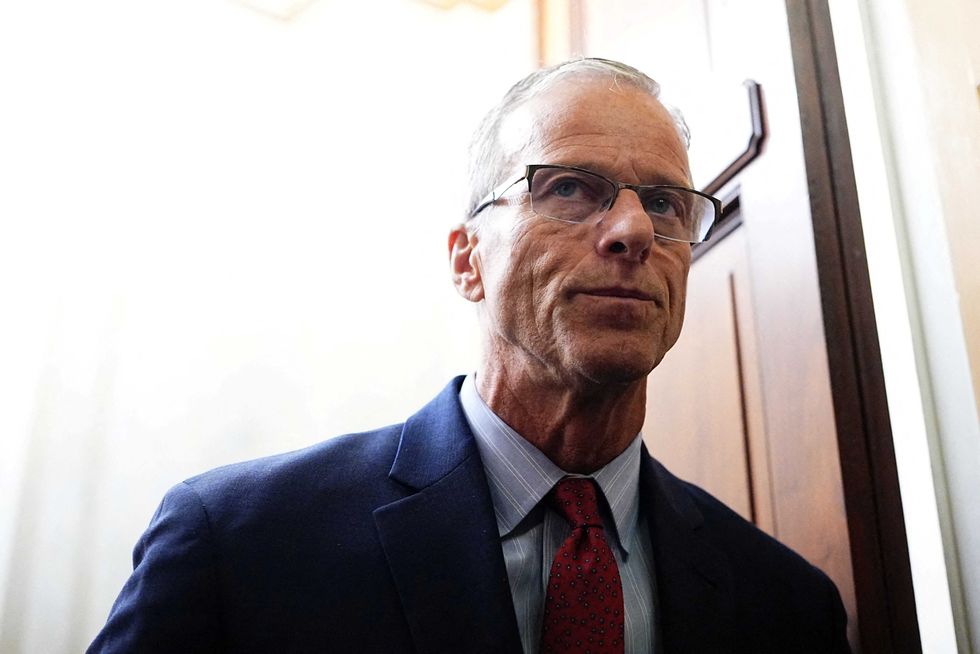
The Bank of Canada lowered its overnight rate to 2.5% on Wednesday, responding to mounting economic damage from US tariffs and a slowdown in hiring. The quarter-point cut was the first since March and met predictions from markets and economists. Governor Tiff Macklem, speaking in Ottawa, said the decision was unanimous. “With a weaker economy […]The Bank of Canada lowered its overnight rate to 2.5% on Wednesday, responding to mounting economic damage from US tariffs and a slowdown in hiring. The quarter-point cut was the first since March and met predictions from markets and economists. Governor Tiff Macklem, speaking in Ottawa, said the decision was unanimous. “With a weaker economy […]

Bank of Canada cuts rate to 2.5% as tariffs and weak hiring hit economy

2025/09/17 23:09

The Bank of Canada lowered its overnight rate to 2.5% on Wednesday, responding to mounting economic damage from US tariffs and a slowdown in hiring. The quarter-point cut was the first since March and met predictions from markets and economists.

Governor Tiff Macklem, speaking in Ottawa, said the decision was unanimous. “With a weaker economy and less upside risk to inflation, Governing Council judged that a reduction in the policy rate was appropriate to better balance the risks going forward,” Tiff said.

He confirmed there was “clear consensus” among policymakers to move ahead with easing, but refused to give any signals on future cuts.

The central bank is reacting to worsening labor market data and a noticeable drop in exports and investment. Policymakers reported that Canada lost more than 106,000 jobs in July and August, mostly in sectors sensitive to global trade.

Hiring has also slowed elsewhere. Unemployment now stands at 7.1%. Officials said these conditions—combined with the effects of US trade policy—created the need for rate relief.

Bank holds back forward guidance, watches trade and inflation mix

Tiff didn’t offer guidance about what happens next, walking back language from the July meeting that had left the door open to more cuts. He explained the bank would be “proceeding carefully,” and warned that “the disruptive effects of shifts in trade will continue to add to costs even as they weigh on economic activity.”

The economy shrank by 1.6% on an annualized basis in the second quarter, matching the bank’s expectations. The decline came mostly from reduced exports and weak business investment. Tiff said consumption and housing were still holding up, but warned that “slow population growth and labor market weakness” could soon hit household spending.

On tariffs, Tiff was direct: “Tariffs are having a profound effect on several key sectors, including the auto, steel, and aluminum sectors.” He also mentioned that Prime Minister Mark Carney had recently removed retaliatory tariffs on certain US goods, which took away one possible driver of inflation. But the central bank doesn’t believe that’s enough to undo the broader hit coming from global protectionism.

The bank’s preferred core inflation measures—the trim and median indexes—are running close to 3%, but Tiff said upward momentum in those numbers has “dissipated.” Wage growth is also cooling. “Recent data suggest the upward pressures on underlying inflation have diminished,” he added. The bank now sees underlying inflation trending closer to 2.5%.

No word on money market stress as Canada joins EU defense talks

Despite volatility in money markets, the Bank of Canada avoided mentioning funding pressures, even though the Canadian Overnight Repo Rate Average (Corra) has traded 5 basis points above the policy rate through most of September. The deposit rate was set at 2.45%, which remains 5 basis points under the target rate.

At the same time, Canada is deepening military ties with Europe. The European Union gave the go-ahead on Wednesday to begin negotiations with both Canada and the UK for access to the EU’s €150 billion SAFE fund, meant to boost defense investment. The news came from the European Council, which is currently led by Denmark.

If approved, the deal will let Canadian companies take part in joint defense procurements funded by SAFE (Security Action for Europe). This move would expand existing security partnerships between Canada and the EU. The SAFE fund was launched after Russia’s 2022 invasion of Ukraine and aims to strengthen Europe’s defense posture, especially with concerns about President Donald Trump’s stance on NATO.

Right now, only companies from EU nations have full access, though Ukraine gets special treatment. Other non-EU nations, including Albania, Turkey, and South Korea, are also trying to join. Albania’s Prime Minister Edi Rama met with NATO Secretary General Mark Rutte in Brussels on Wednesday to discuss participation.

Want your project in front of crypto’s top minds? Feature it in our next industry report, where data meets impact.

Disclaimer: The articles reposted on this site are sourced from public platforms and are provided for informational purposes only. They do not necessarily reflect the views of MEXC. All rights remain with the original authors. If you believe any content infringes on third-party rights, please contact [email protected] for removal. MEXC makes no guarantees regarding the accuracy, completeness, or timeliness of the content and is not responsible for any actions taken based on the information provided. The content does not constitute financial, legal, or other professional advice, nor should it be considered a recommendation or endorsement by MEXC.

You May Also Like

CEO Sandeep Nailwal Shared Highlights About RWA on Polygon

CEO Sandeep Nailwal Shared Highlights About RWA on Polygon

The post CEO Sandeep Nailwal Shared Highlights About RWA on Polygon appeared on BitcoinEthereumNews.com. Polygon CEO Sandeep Nailwal highlighted Polygon’s lead in global bonds, Spiko US T-Bill, and Spiko Euro T-Bill. Polygon published an X post to share that its roadmap to GigaGas was still scaling. Sentiments around POL price were last seen to be bearish. Polygon CEO Sandeep Nailwal shared key pointers from the Dune and RWA.xyz report. These pertain to highlights about RWA on Polygon. Simultaneously, Polygon underlined its roadmap towards GigaGas. Sentiments around POL price were last seen fumbling under bearish emotions. Polygon CEO Sandeep Nailwal on Polygon RWA CEO Sandeep Nailwal highlighted three key points from the Dune and RWA.xyz report. The Chief Executive of Polygon maintained that Polygon PoS was hosting RWA TVL worth $1.13 billion across 269 assets plus 2,900 holders. Nailwal confirmed from the report that RWA was happening on Polygon. The Dune and https://t.co/W6WSFlHoQF report on RWA is out and it shows that RWA is happening on Polygon. Here are a few highlights: – Leading in Global Bonds: Polygon holds 62% share of tokenized global bonds (driven by Spiko’s euro MMF and Cashlink euro issues) – Spiko U.S.… — Sandeep | CEO, Polygon Foundation (※,※) (@sandeepnailwal) September 17, 2025 The X post published by Polygon CEO Sandeep Nailwal underlined that the ecosystem was leading in global bonds by holding a 62% share of tokenized global bonds. He further highlighted that Polygon was leading with Spiko US T-Bill at approximately 29% share of TVL along with Ethereum, adding that the ecosystem had more than 50% share in the number of holders. Finally, Sandeep highlighted from the report that there was a strong adoption for Spiko Euro T-Bill with 38% share of TVL. He added that 68% of returns were on Polygon across all the chains. Polygon Roadmap to GigaGas In a different update from Polygon, the community…
Share
BitcoinEthereumNews2025/09/18 01:10
CME Group to launch Solana and XRP futures options in October

CME Group to launch Solana and XRP futures options in October

The post CME Group to launch Solana and XRP futures options in October appeared on BitcoinEthereumNews.com. CME Group is preparing to launch options on SOL and XRP futures next month, giving traders new ways to manage exposure to the two assets.  The contracts are set to go live on October 13, pending regulatory approval, and will come in both standard and micro sizes with expiries offered daily, monthly and quarterly. The new listings mark a major step for CME, which first brought bitcoin futures to market in 2017 and added ether contracts in 2021. Solana and XRP futures have quickly gained traction since their debut earlier this year. CME says more than 540,000 Solana contracts (worth about $22.3 billion), and 370,000 XRP contracts (worth $16.2 billion), have already been traded. Both products hit record trading activity and open interest in August. Market makers including Cumberland and FalconX plan to support the new contracts, arguing that institutional investors want hedging tools beyond bitcoin and ether. CME’s move also highlights the growing demand for regulated ways to access a broader set of digital assets. The launch, which still needs the green light from regulators, follows the end of XRP’s years-long legal fight with the US Securities and Exchange Commission. A federal court ruling in 2023 found that institutional sales of XRP violated securities laws, but programmatic exchange sales did not. The case officially closed in August 2025 after Ripple agreed to pay a $125 million fine, removing one of the biggest uncertainties hanging over the token. This is a developing story. This article was generated with the assistance of AI and reviewed by editor Jeffrey Albus before publication. Get the news in your inbox. Explore Blockworks newsletters: Source: https://blockworks.co/news/cme-group-solana-xrp-futures
Share
BitcoinEthereumNews2025/09/17 23:55
U.S. OCC Allows Banks ‘Riskless’ Crypto Trading Role

U.S. OCC Allows Banks ‘Riskless’ Crypto Trading Role

The post U.S. OCC Allows Banks ‘Riskless’ Crypto Trading Role appeared on BitcoinEthereumNews.com. Key Points: OCC allows banks to act as agents in crypto trades. No crypto inventory is held by banks. Activities must comply with safety and legal standards. The U.S. Office of the Comptroller of the Currency issued Interpretive Letter 1188, allowing national banks to engage in “riskless principal” cryptocurrency transactions, as reported on December 9th. This guidance enables banks to act as agent brokers in cryptocurrency trades, highlighting a regulatory shift and potentially influencing institutional crypto engagement. OCC Grants New Role for Banks in Crypto Market The adjustment allows banks to serve their clients in the cryptocurrency market with added flexibility and confidence. It broadens financial intermediation activities available to banks with applicable safety and soundness requirements. Banks can now integrate into the growing crypto-asset space without directly handling or holding the assets. No high-profile individuals or organizations have directly commented on the letter. The lack of immediate reaction from notable figures or platforms suggests either satisfaction with status-quo compliance or the absence of perceived impact on the market status. “OCC describes the activity as ‘riskless principal crypto-asset transactions’ and confirms that a national bank may engage in such transactions ‘as part of customer-driven financial intermediation activities’ so long as the bank does not maintain a proprietary crypto position and complies with safety and soundness standards and laws.” OCC News Release on Interpretive Letter 1188 Bitcoin Holds Strong Despite Recent Regulatory Movements Did you know? The OCC’s regulatory approach, including Letter 1188, builds on earlier guidance beginning with Interpretive Letter 1170 in 2020, which allowed banks to offer crypto custody services. As of December 9, 2025, Bitcoin (BTC) maintains a price of $93,039.58, with a market capitalization of formatNumber(1857050434910.60, 2). Its 24-hour trading volume stands at formatNumber(56455834645.94, 2), reflecting a decrease of 4.98% over the same period, according to CoinMarketCap.…
Share
BitcoinEthereumNews2025/12/10 02:05