Curve Finance has put forward a revenue-sharing protocol to give CRV holders sustainable income beyond emissions and fees. Curve aims to mint $60 million in crvUSD and channel it into three Bitcoin pools, and create yield opportunities. On August 18, a contributor known as michwill put forward an idea called “Create a crvUSD credit line [...]]]>Curve Finance has put forward a revenue-sharing protocol to give CRV holders sustainable income beyond emissions and fees. Curve aims to mint $60 million in crvUSD and channel it into three Bitcoin pools, and create yield opportunities. On August 18, a contributor known as michwill put forward an idea called “Create a crvUSD credit line [...]]]>

CRV Holders Poised for Direct Yield Under New Curve Finance Proposal

  • Curve Finance has put forward a revenue-sharing protocol to give CRV holders sustainable income beyond emissions and fees.
  • Curve aims to mint $60 million in crvUSD and channel it into three Bitcoin pools, and create yield opportunities.

On August 18, a contributor known as michwill put forward an idea called “Create a crvUSD credit line to Yield Basis.” People are already referring to it as Yield Basis for short, and the core idea is to provide CRV holders who lock into veCRV with a more direct and steady stream of income from the protocol.

Currently, most veCRV rewards originate from emissions and indirect incentives; however, this proposal would redirect real protocol revenue to stakers through a crvUSD-powered mechanism. If the community signs off, it could mark one of the biggest overhauls of Curve’s tokenomics in years.

The crvUSD credit line is designed to act like fuel for Curve’s liquidity engine, funding pools in much the same way as crvUSD mint markets and PegKeepers. The Yield Basis proposal lays out a system where 35%–65% of the value generated flows directly back to veCRV holders, while still ensuring liquidity providers benefit from fees and incentives.

In practice, the plan would bootstrap three “Bitcoin wrapper” pools, WBTC, cbBTC, and tBTC, each initially capped at $10 million. Pre-minted crvUSD would be loaned into these pools to strengthen liquidity while reducing long-term risks like impermanent loss.

Revenue Flow and Distribution

The revenue model is structured with multiple layers: LPs borrowing crvUSD pay rates that stay within the system to rebalance pools, while trading fees from stablecoin-to-BTC wrapper pairs are split, half covering operations and half shared between veYB holders and LPs.

With multipliers and emissions factored in, the design ensures that veYB holders capture a significant portion of the upside, aligning governance with recurring, protocol-backed rewards.

Another topic in the Yield Basis debate is how many YB tokens, the governance and incentive layer of the system, should flow back to Curve DAO itself. The working plan is that around 20% of YB token inflation would go directly to the DAO, with the potential for more if the program scales successfully. This would give the wider Curve ecosystem both skin in the game and resources to manage ongoing oversight.

However, not everyone is sold on going all-in right away. Some in the community are pushing for a phased rollout instead of dropping the entire $60 million credit line on day one. The suggestion: start smaller, maybe $10M–$20M, watch how the pools perform, and adjust based on results.

Others are focused on guardrails, audits, contract safety, crvUSD’s peg stability, and clear plans for what happens if markets swing against the system. In the first quarter of 2025, Curve Finance processed close to $35 billion in transactions, a reminder of just how central the protocol remains in DeFi.

Right now, Curve’s total value locked stands at about $39 million. On the market side, CRV has seen a big pickup in activity, with trading volume jumping 37.5% to around $230 million. The token’s market cap is sitting at roughly $1.7 billion, and CRV is currently changing hands at $0.7724. Traders are already eyeing the next key resistance level up near $0.80.

]]>
Market Opportunity
Curve Logo
Curve Price(CRV)
$0.2441
$0.2441$0.2441
+4.18%
USD
Curve (CRV) Live Price Chart
Disclaimer: The articles reposted on this site are sourced from public platforms and are provided for informational purposes only. They do not necessarily reflect the views of MEXC. All rights remain with the original authors. If you believe any content infringes on third-party rights, please contact [email protected] for removal. MEXC makes no guarantees regarding the accuracy, completeness, or timeliness of the content and is not responsible for any actions taken based on the information provided. The content does not constitute financial, legal, or other professional advice, nor should it be considered a recommendation or endorsement by MEXC.

You May Also Like

Comcast’s Versant reports declining annual profit as it prepares to go public

Comcast’s Versant reports declining annual profit as it prepares to go public

The post Comcast’s Versant reports declining annual profit as it prepares to go public appeared on BitcoinEthereumNews.com. Versant, Comcast’s spinoff of the majority of its NBCUniversal cable network portfolio, is gearing up to go public. The new entity will trade on the Nasdaq under the ticker “VSNT” after the separation, according to a filing with the Securities and Exchange Commission Thursday. Investors also became privy to more of Versant’s financials. According to the filing, Versant’s revenue has been on the decline in recent years. Last year, the assets housed under Versant generated $7 billion in revenue. That’s down from $7.4 billion in 2023 and $7.8 billion in 2022. Net income attributable to Versant was $1.4 billion last year, down from $1.5 billion in 2023 and $1.8 billion in 2022. Cable networks and traditional media companies have faced financial pressures as viewers have migrated from the traditional pay TV bundle to streaming platforms, diminishing ad spending within the market. Comcast’s decision to put the likes of USA, CNBC, MSNBC, Oxygen, E!, SYFY and Golf Channel into a new company was to isolate the declining cable business from the more profitable internet and streaming services. Versant could then be solely focused on how to evolve its brands to compete in a streaming-dominated media landscape. Thursday’s filing detailed that around 65 million households get some form of cable. Disclosure: Comcast is the parent company of NBCUniversal, which owns CNBC. Versant would become the new parent company of CNBC upon Comcast’s planned spinoff of Versant. Source: https://www.cnbc.com/2025/09/18/comcast-versant-annual-profit-public.html
Share
BitcoinEthereumNews2025/09/19 06:11
Time Traveler: Those Who Bought XRP Early Will Become the New Rich
Time Traveler: Those Who Bought XRP Early Will Become the New Rich

Cryptocurrency continues to reshape global finance. Among digital assets, XRP stands out as a foundational technology with real-world utility. Its adoption in payments
Share
Timestabloid2026/03/01 19:02
Lawmaker tears into White House's 'incoherent' Iran attack justification

Lawmaker tears into White House's 'incoherent' Iran attack justification

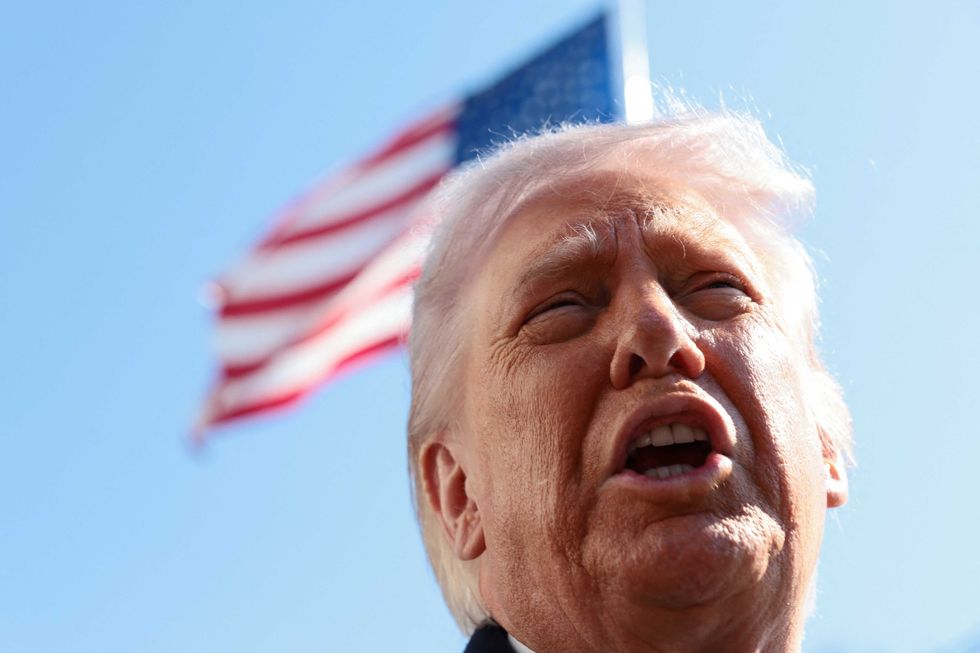
President Donald Trump launched strikes into Iran Saturday morning in the second bombing campaign on the country. CNN's Kaitlan Collins couldn't help but notice
Share
Alternet2026/03/01 19:24