Gold Price Falls for Fourth Straight Day as US Inflation Data Lifts Dollar and Rate Hike Bets
TLDR
- Gold fell as much as 2.2% to near $4,550 an ounce, putting it down around 3.4% for the week
- US producer prices posted their biggest annual rise in four years in April; consumer inflation also beat forecasts
- Traders scaled back expectations for Fed rate cuts and some began pricing in possible further rate hikes
- The Strait of Hormuz remains closed due to the Iran war, keeping energy prices and inflation fears elevated
- ANZ Group pushed its $6,000 gold target back to mid-2027, from early next year
Gold and silver dropped sharply on Friday as fresh US inflation data pushed up the dollar and Treasury yields, reducing the appeal of precious metals that earn no interest.
Spot gold fell as much as 2.2% to near $4,550 an ounce and was on track for a weekly loss of around 3.4%. Bullion is down more than 13% since the Iran war began.
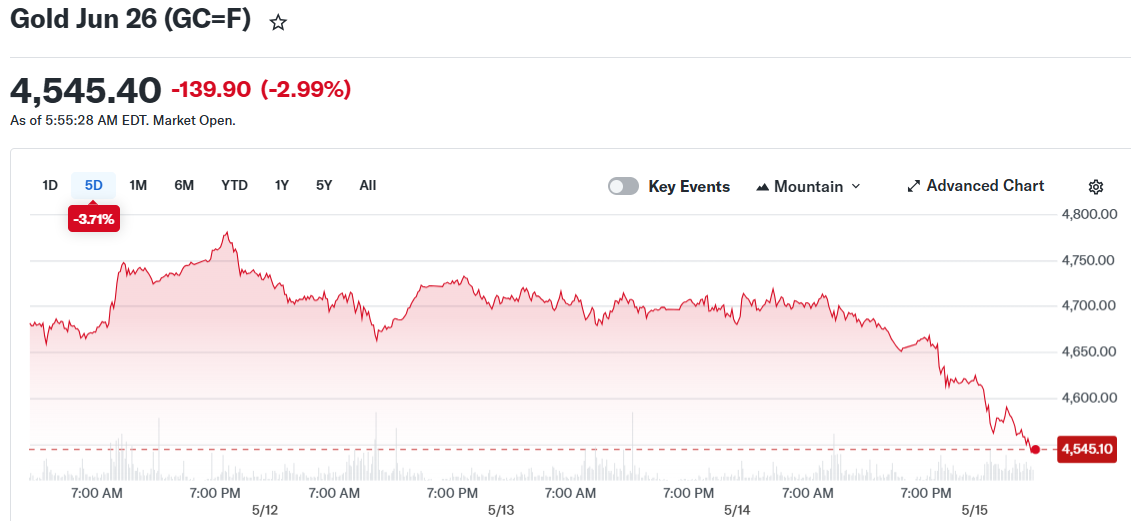 Gold Jun 26 (GC=F)
Silver was hit harder, falling as much as 7.1% at one point. It settled down around 6% to $78.50 an ounce. Platinum and palladium also declined.
The US Dollar Index rose 0.3% on the day and was up more than 1% for the week. A stronger dollar makes gold more expensive for overseas buyers, which typically weighs on demand.
Two-year Treasury yields climbed to their highest level in months. Higher yields reduce the attraction of non-interest-bearing assets like gold.
Why Inflation Is Driving the Sell-Off
US producer prices rose at the fastest annual pace since 2022 in April. Consumer prices also came in above expectations. Retail sales data showed consumer demand holding up despite higher energy costs.
The data led traders to cut their bets on Federal Reserve rate cuts this year. Some investors went further, starting to price in the possibility of additional rate increases.
Gold traditionally benefits from uncertainty and inflation fears, but when markets believe inflation will lead to higher rates, the benefit fades. Higher rates increase the opportunity cost of holding gold.
The Strait of Hormuz, the key waterway for global oil flows, remains closed due to the ongoing Iran war. Oil headed for a weekly gain, keeping pressure on inflation globally.
Trump-Xi Talks and Iran Escalation Add Pressure
Investors were watching the Trump-Xi summit in Beijing closely for signals on trade and the Iran situation. The meeting ended without major breakthroughs, though both sides called the talks constructive.
Chinese state media said the two countries agreed to maintain stable trade ties and coordinate on international issues. Trump said the US-China relationship was “very strong” and that Xi had offered help on the Hormuz situation.
Copper also declined, with London Metal Exchange futures falling 2.6% to $13,644 a ton. Copper had been supported by the AI-driven equity rally, which the bond market sell-off interrupted.
India added to the negative tone for gold, tightening import rules to defend the rupee after recently raising import duties. India is the world’s second-largest gold market.
Gold has traded in a tight range since falling sharply when the Iran war started. Markets remain caught between inflation fears that could keep rates high and growth concerns that could eventually push central banks to ease.
The post Gold Price Falls for Fourth Straight Day as US Inflation Data Lifts Dollar and Rate Hike Bets appeared first on CoinCentral.


You May Also Like

Spot CVD Chart Reveals Critical Bitcoin Support Levels as Institutional Orders Surge on April 2

Bitcoin Exchange Supply Hits Lowest Level Since 2018 While Ethereum Supply Rises