

Computational Research Infrastructure at FSID Drives Schaeffler India’s Innovation Push
computational research infrastructure at FSID Signals Schaeffler India’s Deep-Tech Innovation Strategy
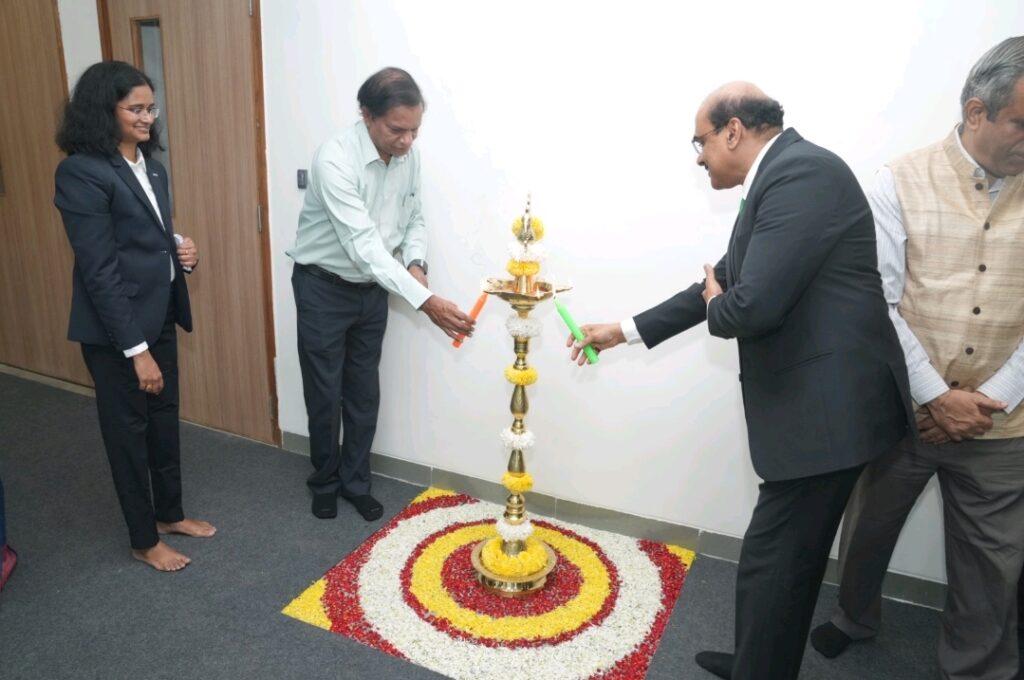
The announcement of a computational research infrastructure at FSID by Schaeffler India in collaboration with Indian Institute of Science and Foundation for Science Innovation and Development marks more than a research infrastructure upgrade. It reflects a broader industrial transition where computational capability is becoming central to innovation competitiveness.
As engineering systems become increasingly software-defined, simulation-intensive, and AI-assisted, enterprises are under pressure to reduce product development cycles while improving sustainability and performance outcomes simultaneously.
This is where the deeper significance of the initiative emerges.
By enabling high-performance computing environments for materials science, energy systems, and sustainable mobility research, Schaeffler India is investing in the foundational layer of future industrial innovation.
Why computational research infrastructure at FSID Matters Beyond Academia
For decades, industrial R&D in India has relied heavily on fragmented collaboration models. Enterprises funded isolated research programs while academic institutions independently managed infrastructure constraints.
That model is increasingly inadequate.
Modern mobility engineering requires computationally intensive simulations involving aerodynamics, thermal systems, AI modelling, lightweight materials, and predictive analytics. Physical prototyping alone is no longer economically scalable.
The computational research infrastructure at FSID addresses this challenge by creating a shared capability environment designed for continuous experimentation and interdisciplinary collaboration.
“At Schaeffler India, we are committed to building skills and manufacturing excellence rooted in India’s unique strengths, aligned with its needs, and geared towards creating lasting value. Such efforts depend on strong academia-industry collaboration, with institutions like Indian Institute of Science playing a critical role in equipping researchers with the right tools and expertise.
We’re proud to support its latest computational infrastructure through Schaeffler India’s CSR programme, HOPE. Beyond its immediate purpose, the facility will empower a wide spectrum of IISc research projects across diverse streams and teams, thereby amplifying the impact of collaborative research. Schaeffler India and IISc have a strong pipeline of joint projects, and our teams are fully aligned to move into execution. It reflects what’s possible when two organizations come together with a shared purpose to strengthen research across multiple disciplines at IISc.” — Harsha Kadam, MD & CEO, Schaeffler India
The deeper implication is strategic. Research infrastructure itself is becoming a long-term competitive advantage.
Organizations that can orchestrate academia, startups, MSMEs, and industrial partners through shared computational ecosystems are likely to accelerate innovation faster than those operating in isolated silos.
The Shift From Sponsored Research to Shared Capability Ownership
This initiative reflects a structural transformation in how industrial organizations engage with academia.
Historically, many collaborations were transactional—focused on grants, limited projects, or short-term experimentation. Schaeffler India’s approach is notably different because it invests directly in computational infrastructure capacity.
This changes the operating model.
Instead of funding isolated outputs, the organization is enabling ongoing innovation throughput.
The infrastructure includes:
- High-performance hybrid CPU-GPU compute environments
- Advanced cooling systems
- Dedicated laboratory facilities
- Power backup systems
- Large-scale simulation capability
“The initiative of Schaeffler India to establish a high-performance computational facility for developing intelligent and sustainable systems at FSID, IISc, is highly commendable. With the long-term aim of creating a computational facility with a peak performance of around 32 PFLOPs, comprising a mixture of CPUs and GPUs, the facility will be highly beneficial for the research groups at IISc, startups incubated at FSID, and industries that collaborate with FSID/IISc. We look forward to the increasing digitalization, automation, and acceleration of research that this facility can create around the IISc ecosystem and the upcoming long-term collaborative activities with Schaeffler India.” — Sai Gautam Gopalakrishnan, Associate Professor of Materials Engineering, IISc
The long-term target of reaching approximately 32 PFLOPs capability elevates the initiative into the category of advanced scientific computing environments rather than traditional university infrastructure.
Strategically, this indicates that Schaeffler India views computational science as foundational to future mobility leadership.
How HPC Infrastructure Changes Industrial CX
From a CX standpoint, computational infrastructure may appear invisible. However, customers increasingly experience its outcomes indirectly through:
- Faster innovation cycles
- Improved reliability
- Better sustainability performance
- Reduced engineering defects
- More efficient mobility systems
This becomes critical when industries are transitioning toward electric mobility and intelligent manufacturing ecosystems.
Simulation-led engineering significantly reduces the dependency on expensive physical prototyping while accelerating iteration velocity.
Operationally, this translates into:
- Faster validation cycles
- Lower R&D costs
- Higher engineering precision
- Improved scalability of experimentation
“Being the interface for collaborative research with industry and deep science innovation at Indian Institute of Science, we are pleased to have this new infrastructure, which will significantly strengthen our ability to support faculty and other researchers pursuing interdisciplinary research across materials, energy systems, and sustainable mobility. This collaboration with Schaeffler India marks an important step in enhancing FSID’s capabilities in high-end simulations, data-intensive research, and next-generation technology development. We see this as a strong example of how industry-academia partnerships can accelerate research and innovation with real-world relevance.” — Prof B. Gurumoorthy, Director, Foundation for Science Innovation and Development
The broader customer impact emerges through better products entering the market faster and with greater engineering maturity.
The Competitive Positioning Advantage
Globally, industrial technology leaders are increasingly investing in AI-enabled simulation ecosystems and digital engineering platforms.
Companies like Siemens and Bosch have already established extensive digital engineering ecosystems linked to university collaborations.
In India, however, large-scale shared computational infrastructure initiatives remain relatively limited.
This gives Schaeffler India an opportunity to create ecosystem-level differentiation.
The strategy also strengthens long-term talent pipelines. Researchers, students, startups, and MSMEs gaining exposure to enterprise-grade computational systems are more likely to contribute to advanced industrial innovation environments.
At a structural level, this initiative also supports India’s broader ambition of strengthening deep-tech and advanced manufacturing capability.
computational research infrastructure at FSID and the Future of Collaborative Innovation
The signing of the Master Research Agreement between Schaeffler India and IISc expands the significance of the initiative further.
The infrastructure is not positioned as a standalone facility. It functions as the base layer for future collaborative research programs.
This is where the shift becomes strategically important.
Instead of isolated innovation programs, organizations are increasingly building persistent innovation ecosystems that combine:
- Compute infrastructure
- Academic expertise
- Startup experimentation
- Industrial commercialization
- Talent development
The partnership model reduces barriers for advanced research participation while enabling continuous knowledge exchange.
Indirectly, this also improves India’s readiness for AI-driven industrial engineering, where GPU-intensive computational environments will become increasingly essential.
What Enterprises Should Learn From This Model
The announcement offers several lessons for manufacturing and mobility organizations.
First, innovation competitiveness increasingly depends on computational capability rather than only production capacity.
Second, ecosystem-based research infrastructure may generate stronger long-term returns than isolated innovation sponsorships.
Third, industry-academia collaboration is evolving toward co-owned capability platforms rather than project-specific engagement.
Finally, future customer experience in industrial sectors will be heavily influenced by invisible infrastructure layers such as AI modelling, predictive engineering, and HPC-enabled experimentation.
The companies that invest early in these foundational systems are likely to gain long-term advantages in innovation velocity, engineering efficiency, and sustainable product development.
Why This Partnership Could Influence India’s Industrial Innovation Model
The collaboration between Schaeffler India, IISc, and FSID may eventually become a reference framework for how India structures future industrial research ecosystems.
At a national level, one of the persistent gaps in advanced engineering research has been uneven access to enterprise-grade computational infrastructure. While large corporations possess internal simulation environments, startups, MSMEs, and academic researchers often operate with limited compute capacity.
This initiative helps reduce that divide.
By enabling shared access to advanced computational resources, the partnership creates a multiplier effect across the innovation ecosystem. Faculty researchers gain faster simulation capability, startups gain access to infrastructure they otherwise could not afford, and industry partners gain proximity to emerging scientific breakthroughs.
From a CX standpoint, the downstream effect is substantial. Better simulation capability can improve product reliability, shorten failure-detection cycles, accelerate sustainable engineering programs, and ultimately improve end-user trust in industrial systems.
The deeper implication is that India’s future competitiveness in mobility and manufacturing may increasingly depend on collaborative digital infrastructure rather than isolated organizational capability.
The Future of Motion Technology Will Be Compute-Led
Schaeffler Group’s global positioning around intelligent and sustainable motion technology aligns closely with this initiative.
As the mobility sector moves toward electrification, connected systems, renewable energy integration, and AI-assisted engineering, computational intensity will rise sharply.
Future engineering workflows will depend on:
- Real-time simulation
- Predictive digital twins
- AI-assisted optimization
- Advanced material discovery
- Autonomous systems modelling
- Sustainable energy simulations
This means the companies investing early in scalable compute ecosystems may gain disproportionate long-term advantages.
Strategically, Schaeffler India’s move indicates recognition that the future of manufacturing leadership will not be determined solely by physical production scale. It will increasingly be shaped by the ability to model, simulate, predict, and optimize complex systems faster than competitors.
The computational research infrastructure at FSID therefore represents more than infrastructure expansion.
It represents a foundational investment into the future operating system of industrial innovation.
Key Takeaways
- The computational research infrastructure at FSID reflects a strategic shift toward ecosystem-driven innovation.
- HPC capability is becoming central to industrial competitiveness.
- Schaeffler India is positioning itself as a long-term motion technology innovation orchestrator.
- Shared computational ecosystems may reshape India’s future industrial R&D model.
- The initiative strengthens future mobility, AI engineering, and sustainable manufacturing readiness.
- Industry-academia collaboration is evolving from project sponsorship to shared capability ownership.
- Advanced computational infrastructure is becoming a critical enabler of future industrial CX outcomes.
The post Computational Research Infrastructure at FSID Drives Schaeffler India’s Innovation Push appeared first on CX Quest.


You May Also Like

Iran’s foreign minister targeted in assassination attempt, wife killed

Bitcoin treasury sell-off accelerates as Riot, Bhutan, and public companies exit positions




