Author: Zen, PANews The South Korean tech and crypto industries are witnessing their largest merger to date. On November 26, South Korean internet giant Naver announced it had agreed to acquire Dunamu, the operator of Upbit, South Korea's largest virtual asset exchange. Following the announcement, Naver's stock price rose as much as 7.7% in after-hours trading. Naver stated that the move aims to "build a future growth engine based on digital assets." Rumors of the acquisition had been circulating in South Korean media for weeks before the official announcement, initially boosting Naver's stock price. It is understood that executives from both companies held multiple rounds of behind-the-scenes discussions to bridge valuation differences and regulatory concerns. It's worth noting that just as the market was buzzing with merger rumors, the global cryptocurrency market weakened, with the market capitalization of digital assets falling by more than $1 trillion from its peak. The volatile macroeconomic environment added uncertainty to the deal, but the two parties ultimately chose to join forces. Naver and Upbit merge, and a super financial platform in South Korea is on the verge of emerging. According to regulatory filings submitted by Naver that day, the acquisition will be conducted through Naver Financial, Naver's fintech subsidiary, with each Dunamu share exchangeable for 2.54 newly issued Naver Financial shares. Based on this exchange ratio, Dunamu's equity is valued at approximately 15.1 trillion won (about US$10.3 billion), and Naver Financial at approximately 4.9 trillion won (US$3.347 billion). This acquisition will make Dunamu a wholly-owned subsidiary of Naver Financial through a share swap. Following the transaction, Naver's stake in Naver Financial will be significantly diluted from approximately 70% to around 17%. Dunamu's founder and chairman, Song Chi-hyung, who holds a substantial stake in Dunamu, will nominally become Naver Financial's largest shareholder. However, he and the vice chairman will delegate more than half of their voting rights to Naver to ensure Naver's control over the merged financial subsidiary (approximately 46.5% of the voting rights). In other words, although Dunamu formally merged into Naver Financial as the major shareholder, actual control remained with Naver. This arrangement protected the interests of Naver shareholders while also allowing Dunamu's management to become significant stakeholders through shareholding, laying the foundation for subsequent integration. According to the preliminary timetable announced by both parties, Naver Financial and Dunamu plan to hold shareholder meetings on May 22, 2026, respectively, to vote on the share swap merger plan. If approved by shareholders, the final share swap transaction is expected to be completed on June 30, 2026. The transaction is also subject to antitrust review by the Korea Fair Trade Commission (FTC) and approval from financial regulators for the change of major shareholders. To protect the interests of minority shareholders, the plan includes a repurchase right for dissenting shareholders—dissenters can request the company to repurchase their Naver Financial shares at a price of 117,780 won per share between May 22 and June 11, 2026. If the total amount of repurchase rights exercised exceeds 1.1 trillion won (approximately US$751 million) and neither party adjusts the plan, the transaction may fall through. However, given the current market reaction and the prospects of both companies, the likelihood of large-scale shareholder objections is low. From a regulatory perspective, given Upbit's dominant position in the South Korean cryptocurrency exchange market, the FTC may conduct a rigorous assessment of the post-merger market concentration, paying particular attention to whether it harms consumer interests. However, some argue that bringing Upbit under Naver, which has good relations with the government, might actually reduce regulatory resistance. Overall, with the South Korean government gradually improving cryptocurrency regulation and adopting a more conciliatory attitude in recent years, the policy risks of this merger are gradually decreasing. The merger between Naver and Dunamu is seen as a major milestone in the reshaping of South Korea's technology and financial landscape. As a South Korean internet giant and a national gateway platform, Naver has been expanding rapidly in recent years, encompassing payments, cloud computing, artificial intelligence, and content. Following this acquisition, Naver will incorporate the emerging field of cryptocurrency trading into its portfolio, while Upbit will leverage Naver's vast user ecosystem. The two companies plan to create a comprehensive super platform integrating search, communication, payments, and virtual asset trading, embedding digital assets into all aspects of South Korean daily life. Specifically, Naver's Naver Pay payment platform, which currently boasts over 18 trillion won in annual transaction volume, is expected to integrate with Upbit's crypto trading functionality, providing users with a one-stop financial service from fiat currency to cryptocurrency. Furthermore, the acquisition will undoubtedly accelerate the implementation of Naver's long-standing research into stablecoins pegged to the Korean won. In addition, the two companies plan to invest 10 trillion won (approximately US$6.8 billion) over the next five years to build next-generation financial infrastructure based on the integration of AI and blockchain. It's worth noting that shortly after the acquisition was officially announced, around 4:42 AM local time on November 27, 2025, Upbit transferred approximately $36.81 million worth of Solana network-related assets to an unknown external wallet. Upbit stated that it has confirmed the scale of the asset theft and plans to fully compensate for it using its own assets to ensure that users' assets are not affected. Crisis: Crypto Market Weakness and Bithumb, the Sole Challenger Upbit, the main player in this acquisition, is currently the undisputed leader in South Korea's virtual asset trading sector. According to statistics from the Financial Supervisory Service (FSS) of South Korea, Upbit's cumulative transaction volume reached 833 trillion won (approximately US$642 billion) in the first half of 2025, accounting for 71.6% of the total cryptocurrency trading volume in the country. This market share gives Upbit a near-monopoly. The next largest exchange, Bithumb, had a trading volume of 300 trillion won during the same period, representing a 25.8% market share. Other local platforms combined accounted for less than 3%. Globally, thanks to the fervent investments of South Korean users, Upbit has consistently ranked among the top cryptocurrency exchanges in terms of trading volume. However, Upbit's dominance in the domestic market has declined somewhat compared to 2024. This change is closely related to the resurgence of its main competitor, Bithumb. Bithumb's market share fell to single digits in 2023 due to operational and compliance issues, but since 2024, it has implemented aggressive strategies such as zero transaction fees to attract retail investors, and its market share has rapidly increased. According to data from The Block cited by the Korean media outlet KoreaTechDesk, Upbit's total transaction volume in the third quarter of 2025 was approximately $286.4 billion, a slight increase year-on-year; however, Bithumb's transaction volume surged from $4.7 billion last year to $12.81 billion. Analysts point out that Bithumb has been actively vying for users and trading volume in recent years in preparation for its IPO, and the South Korean cryptocurrency trading market is evolving from a "one dominant player and many weaker players" to a "two-strong" market. Even so, Upbit still holds a significant lead over Bithumb of approximately 40 percentage points. Following the news of Naver's acquisition, debates surrounding the valuations of the two companies intensified, indicating that the market recognizes Upbit's relatively higher premium and leading position. Upbit's transaction volume trend over the past year Bithumb's trading volume trend over the past year   More noteworthy is the shift in overall market sentiment – trading volume has declined significantly compared to last year. The South Korean crypto market experienced a frenzy at the end of 2024: statistics show that Upbit's single-day trading volume surged to $27.45 billion on December 3, 2024, a record high, approximately ten times the usual daily level. However, after this "crazy night," market sentiment plummeted, entering a cooling phase in 2025. In November 2025, Upbit's average daily trading volume was only about $1.78 billion, a sharp drop of 80% from the peak at the end of 2024. Its trading volume has declined for four consecutive months and is trending towards a narrow fluctuation between $2 billion and $4 billion. Upbit's recent decline in trading volume and market share is the result of a combination of factors. Besides Bithumb's strong challenge, changes in the regulatory environment and shifts in investment preferences are likely the more significant reasons. In the second half of 2025, South Korea's Financial Intelligence Unit (FIU) fined Dunamu approximately 35.2 billion won for Upbit's violations of anti-money laundering regulations, including customer identification, and imposed a three-month suspension of some of its operations. This incident had a certain impact on Upbit's brand image and new user growth. Furthermore, the South Korean stock market has experienced an unprecedented bull market this year, with a large amount of retail investor funds flowing back from the cryptocurrency market to the stock market, jokingly referred to as "returning the韭菜 (retail investors) to fertile fields." The technology sector, represented by AI concept stocks, has ignited the market, with the South Korean KOSPI index rising by over 70% year-to-date and repeatedly breaking historical highs. Many young investors who were previously keen on discussing altcoins are now talking about "AI/semiconductor concept stocks" in Kakao Talk chat groups and Naver forums. The diversion of speculative funds and attention from the stock market is also closely related to the global cooling of the cryptocurrency industry. After a strong rebound in the crypto market starting in 2024, retail investor enthusiasm in South Korea reached its peak this summer. However, by Q4 of this year, the global cryptocurrency market had weakened again, and this macroeconomic backdrop undoubtedly dragged down sentiment in the South Korean cryptocurrency market, which is dominated by retail investors. Next stop, aiming for a Nasdaq listing? Following the merger announcement, the market is paying close attention to the IPO plans of Upbit's parent company. In fact, rumors of Dunamu's IPO have been circulating for some time. Back in the 2021 crypto bull market, Dunamu's valuation soared, and founder Song Chi-hyung rose to the top of South Korea's rich list, leading to speculation within the industry that the company had IPO plans. However, due to the uncertain regulatory environment at the time, Dunamu did not take any further action. Subsequently, Dunamu introduced strategic shareholders, including Kakao and HYBE, through a private placement, temporarily alleviating its capital needs. When news broke that Naver was acquiring Dunamu, its IPO in the US was put back on the agenda. According to Bloomberg, Upbit plans to conduct its initial public offering (IPO) on Nasdaq after merging with Naver Financial. Bloomberg first reported this news on November 24, stating that Upbit would begin preparations for its US listing after the merger. While neither Naver nor Dunamu has officially responded to the plan, several mainstream media outlets have confirmed this strategic intention through various channels. South Korea's *Seoul Economic Daily* reported that the merged company may seek a Nasdaq listing with a potential valuation of up to $34 billion. If true, this would make it the first major Asian cryptocurrency exchange to list on the US capital market. It's worth noting that Upbit's main competitor, Bithumb, is also planning a US IPO. Cryptonews revealed that Bithumb is striving to list on Nasdaq as early as 2026, ahead of Upbit. This "listing race" between the two major South Korean exchanges reveals the ambition of the South Korean crypto industry to expand beyond South Korea, onto the international stage, and gain recognition from global investors. From the current perspective, Naver's acquisition of Dunamu has not weakened the latter's motivation to go public; on the contrary, it has created more favorable conditions for its IPO. Through the merger, Dunamu will become part of Naver's financial division, aligning with publicly traded companies in terms of corporate governance and financial transparency, thus clearing some obstacles for its future IPO. Naver's endorsement also helps boost international investors' confidence in Upbit's business model. In addition, the US capital market has gradually become more accepting of large crypto companies this year, with Circle, Bullish, Gemini and Galaxy Digital going public one after another, and Coinbase being officially included in the S&P 500 index, becoming the first crypto exchange to enter the S&P 500. Upbit's decision to ride this wave of industry momentum at this time is the perfect opportunity to successfully list on Nasdaq. Author: Zen, PANews The South Korean tech and crypto industries are witnessing their largest merger to date. On November 26, South Korean internet giant Naver announced it had agreed to acquire Dunamu, the operator of Upbit, South Korea's largest virtual asset exchange. Following the announcement, Naver's stock price rose as much as 7.7% in after-hours trading. Naver stated that the move aims to "build a future growth engine based on digital assets." Rumors of the acquisition had been circulating in South Korean media for weeks before the official announcement, initially boosting Naver's stock price. It is understood that executives from both companies held multiple rounds of behind-the-scenes discussions to bridge valuation differences and regulatory concerns. It's worth noting that just as the market was buzzing with merger rumors, the global cryptocurrency market weakened, with the market capitalization of digital assets falling by more than $1 trillion from its peak. The volatile macroeconomic environment added uncertainty to the deal, but the two parties ultimately chose to join forces. Naver and Upbit merge, and a super financial platform in South Korea is on the verge of emerging. According to regulatory filings submitted by Naver that day, the acquisition will be conducted through Naver Financial, Naver's fintech subsidiary, with each Dunamu share exchangeable for 2.54 newly issued Naver Financial shares. Based on this exchange ratio, Dunamu's equity is valued at approximately 15.1 trillion won (about US$10.3 billion), and Naver Financial at approximately 4.9 trillion won (US$3.347 billion). This acquisition will make Dunamu a wholly-owned subsidiary of Naver Financial through a share swap. Following the transaction, Naver's stake in Naver Financial will be significantly diluted from approximately 70% to around 17%. Dunamu's founder and chairman, Song Chi-hyung, who holds a substantial stake in Dunamu, will nominally become Naver Financial's largest shareholder. However, he and the vice chairman will delegate more than half of their voting rights to Naver to ensure Naver's control over the merged financial subsidiary (approximately 46.5% of the voting rights). In other words, although Dunamu formally merged into Naver Financial as the major shareholder, actual control remained with Naver. This arrangement protected the interests of Naver shareholders while also allowing Dunamu's management to become significant stakeholders through shareholding, laying the foundation for subsequent integration. According to the preliminary timetable announced by both parties, Naver Financial and Dunamu plan to hold shareholder meetings on May 22, 2026, respectively, to vote on the share swap merger plan. If approved by shareholders, the final share swap transaction is expected to be completed on June 30, 2026. The transaction is also subject to antitrust review by the Korea Fair Trade Commission (FTC) and approval from financial regulators for the change of major shareholders. To protect the interests of minority shareholders, the plan includes a repurchase right for dissenting shareholders—dissenters can request the company to repurchase their Naver Financial shares at a price of 117,780 won per share between May 22 and June 11, 2026. If the total amount of repurchase rights exercised exceeds 1.1 trillion won (approximately US$751 million) and neither party adjusts the plan, the transaction may fall through. However, given the current market reaction and the prospects of both companies, the likelihood of large-scale shareholder objections is low. From a regulatory perspective, given Upbit's dominant position in the South Korean cryptocurrency exchange market, the FTC may conduct a rigorous assessment of the post-merger market concentration, paying particular attention to whether it harms consumer interests. However, some argue that bringing Upbit under Naver, which has good relations with the government, might actually reduce regulatory resistance. Overall, with the South Korean government gradually improving cryptocurrency regulation and adopting a more conciliatory attitude in recent years, the policy risks of this merger are gradually decreasing. The merger between Naver and Dunamu is seen as a major milestone in the reshaping of South Korea's technology and financial landscape. As a South Korean internet giant and a national gateway platform, Naver has been expanding rapidly in recent years, encompassing payments, cloud computing, artificial intelligence, and content. Following this acquisition, Naver will incorporate the emerging field of cryptocurrency trading into its portfolio, while Upbit will leverage Naver's vast user ecosystem. The two companies plan to create a comprehensive super platform integrating search, communication, payments, and virtual asset trading, embedding digital assets into all aspects of South Korean daily life. Specifically, Naver's Naver Pay payment platform, which currently boasts over 18 trillion won in annual transaction volume, is expected to integrate with Upbit's crypto trading functionality, providing users with a one-stop financial service from fiat currency to cryptocurrency. Furthermore, the acquisition will undoubtedly accelerate the implementation of Naver's long-standing research into stablecoins pegged to the Korean won. In addition, the two companies plan to invest 10 trillion won (approximately US$6.8 billion) over the next five years to build next-generation financial infrastructure based on the integration of AI and blockchain. It's worth noting that shortly after the acquisition was officially announced, around 4:42 AM local time on November 27, 2025, Upbit transferred approximately $36.81 million worth of Solana network-related assets to an unknown external wallet. Upbit stated that it has confirmed the scale of the asset theft and plans to fully compensate for it using its own assets to ensure that users' assets are not affected. Crisis: Crypto Market Weakness and Bithumb, the Sole Challenger Upbit, the main player in this acquisition, is currently the undisputed leader in South Korea's virtual asset trading sector. According to statistics from the Financial Supervisory Service (FSS) of South Korea, Upbit's cumulative transaction volume reached 833 trillion won (approximately US$642 billion) in the first half of 2025, accounting for 71.6% of the total cryptocurrency trading volume in the country. This market share gives Upbit a near-monopoly. The next largest exchange, Bithumb, had a trading volume of 300 trillion won during the same period, representing a 25.8% market share. Other local platforms combined accounted for less than 3%. Globally, thanks to the fervent investments of South Korean users, Upbit has consistently ranked among the top cryptocurrency exchanges in terms of trading volume. However, Upbit's dominance in the domestic market has declined somewhat compared to 2024. This change is closely related to the resurgence of its main competitor, Bithumb. Bithumb's market share fell to single digits in 2023 due to operational and compliance issues, but since 2024, it has implemented aggressive strategies such as zero transaction fees to attract retail investors, and its market share has rapidly increased. According to data from The Block cited by the Korean media outlet KoreaTechDesk, Upbit's total transaction volume in the third quarter of 2025 was approximately $286.4 billion, a slight increase year-on-year; however, Bithumb's transaction volume surged from $4.7 billion last year to $12.81 billion. Analysts point out that Bithumb has been actively vying for users and trading volume in recent years in preparation for its IPO, and the South Korean cryptocurrency trading market is evolving from a "one dominant player and many weaker players" to a "two-strong" market. Even so, Upbit still holds a significant lead over Bithumb of approximately 40 percentage points. Following the news of Naver's acquisition, debates surrounding the valuations of the two companies intensified, indicating that the market recognizes Upbit's relatively higher premium and leading position. Upbit's transaction volume trend over the past year Bithumb's trading volume trend over the past year   More noteworthy is the shift in overall market sentiment – trading volume has declined significantly compared to last year. The South Korean crypto market experienced a frenzy at the end of 2024: statistics show that Upbit's single-day trading volume surged to $27.45 billion on December 3, 2024, a record high, approximately ten times the usual daily level. However, after this "crazy night," market sentiment plummeted, entering a cooling phase in 2025. In November 2025, Upbit's average daily trading volume was only about $1.78 billion, a sharp drop of 80% from the peak at the end of 2024. Its trading volume has declined for four consecutive months and is trending towards a narrow fluctuation between $2 billion and $4 billion. Upbit's recent decline in trading volume and market share is the result of a combination of factors. Besides Bithumb's strong challenge, changes in the regulatory environment and shifts in investment preferences are likely the more significant reasons. In the second half of 2025, South Korea's Financial Intelligence Unit (FIU) fined Dunamu approximately 35.2 billion won for Upbit's violations of anti-money laundering regulations, including customer identification, and imposed a three-month suspension of some of its operations. This incident had a certain impact on Upbit's brand image and new user growth. Furthermore, the South Korean stock market has experienced an unprecedented bull market this year, with a large amount of retail investor funds flowing back from the cryptocurrency market to the stock market, jokingly referred to as "returning the韭菜 (retail investors) to fertile fields." The technology sector, represented by AI concept stocks, has ignited the market, with the South Korean KOSPI index rising by over 70% year-to-date and repeatedly breaking historical highs. Many young investors who were previously keen on discussing altcoins are now talking about "AI/semiconductor concept stocks" in Kakao Talk chat groups and Naver forums. The diversion of speculative funds and attention from the stock market is also closely related to the global cooling of the cryptocurrency industry. After a strong rebound in the crypto market starting in 2024, retail investor enthusiasm in South Korea reached its peak this summer. However, by Q4 of this year, the global cryptocurrency market had weakened again, and this macroeconomic backdrop undoubtedly dragged down sentiment in the South Korean cryptocurrency market, which is dominated by retail investors. Next stop, aiming for a Nasdaq listing? Following the merger announcement, the market is paying close attention to the IPO plans of Upbit's parent company. In fact, rumors of Dunamu's IPO have been circulating for some time. Back in the 2021 crypto bull market, Dunamu's valuation soared, and founder Song Chi-hyung rose to the top of South Korea's rich list, leading to speculation within the industry that the company had IPO plans. However, due to the uncertain regulatory environment at the time, Dunamu did not take any further action. Subsequently, Dunamu introduced strategic shareholders, including Kakao and HYBE, through a private placement, temporarily alleviating its capital needs. When news broke that Naver was acquiring Dunamu, its IPO in the US was put back on the agenda. According to Bloomberg, Upbit plans to conduct its initial public offering (IPO) on Nasdaq after merging with Naver Financial. Bloomberg first reported this news on November 24, stating that Upbit would begin preparations for its US listing after the merger. While neither Naver nor Dunamu has officially responded to the plan, several mainstream media outlets have confirmed this strategic intention through various channels. South Korea's *Seoul Economic Daily* reported that the merged company may seek a Nasdaq listing with a potential valuation of up to $34 billion. If true, this would make it the first major Asian cryptocurrency exchange to list on the US capital market. It's worth noting that Upbit's main competitor, Bithumb, is also planning a US IPO. Cryptonews revealed that Bithumb is striving to list on Nasdaq as early as 2026, ahead of Upbit. This "listing race" between the two major South Korean exchanges reveals the ambition of the South Korean crypto industry to expand beyond South Korea, onto the international stage, and gain recognition from global investors. From the current perspective, Naver's acquisition of Dunamu has not weakened the latter's motivation to go public; on the contrary, it has created more favorable conditions for its IPO. Through the merger, Dunamu will become part of Naver's financial division, aligning with publicly traded companies in terms of corporate governance and financial transparency, thus clearing some obstacles for its future IPO. Naver's endorsement also helps boost international investors' confidence in Upbit's business model. In addition, the US capital market has gradually become more accepting of large crypto companies this year, with Circle, Bullish, Gemini and Galaxy Digital going public one after another, and Coinbase being officially included in the S&P 500 index, becoming the first crypto exchange to enter the S&P 500. Upbit's decision to ride this wave of industry momentum at this time is the perfect opportunity to successfully list on Nasdaq.

Naver, South Korea's first publicly traded internet company, has acquired Upbit's parent company, while the country's largest cryptocurrency exchange is aiming for a Nasdaq listing.

2025/11/27 15:53

Author: Zen, PANews

The South Korean tech and crypto industries are witnessing their largest merger to date. On November 26, South Korean internet giant Naver announced it had agreed to acquire Dunamu, the operator of Upbit, South Korea's largest virtual asset exchange.

Following the announcement, Naver's stock price rose as much as 7.7% in after-hours trading. Naver stated that the move aims to "build a future growth engine based on digital assets." Rumors of the acquisition had been circulating in South Korean media for weeks before the official announcement, initially boosting Naver's stock price. It is understood that executives from both companies held multiple rounds of behind-the-scenes discussions to bridge valuation differences and regulatory concerns.

It's worth noting that just as the market was buzzing with merger rumors, the global cryptocurrency market weakened, with the market capitalization of digital assets falling by more than $1 trillion from its peak. The volatile macroeconomic environment added uncertainty to the deal, but the two parties ultimately chose to join forces.

Naver and Upbit merge, and a super financial platform in South Korea is on the verge of emerging.

According to regulatory filings submitted by Naver that day, the acquisition will be conducted through Naver Financial, Naver's fintech subsidiary, with each Dunamu share exchangeable for 2.54 newly issued Naver Financial shares. Based on this exchange ratio, Dunamu's equity is valued at approximately 15.1 trillion won (about US$10.3 billion), and Naver Financial at approximately 4.9 trillion won (US$3.347 billion).

This acquisition will make Dunamu a wholly-owned subsidiary of Naver Financial through a share swap. Following the transaction, Naver's stake in Naver Financial will be significantly diluted from approximately 70% to around 17%. Dunamu's founder and chairman, Song Chi-hyung, who holds a substantial stake in Dunamu, will nominally become Naver Financial's largest shareholder. However, he and the vice chairman will delegate more than half of their voting rights to Naver to ensure Naver's control over the merged financial subsidiary (approximately 46.5% of the voting rights).

In other words, although Dunamu formally merged into Naver Financial as the major shareholder, actual control remained with Naver. This arrangement protected the interests of Naver shareholders while also allowing Dunamu's management to become significant stakeholders through shareholding, laying the foundation for subsequent integration.

According to the preliminary timetable announced by both parties, Naver Financial and Dunamu plan to hold shareholder meetings on May 22, 2026, respectively, to vote on the share swap merger plan. If approved by shareholders, the final share swap transaction is expected to be completed on June 30, 2026. The transaction is also subject to antitrust review by the Korea Fair Trade Commission (FTC) and approval from financial regulators for the change of major shareholders.

To protect the interests of minority shareholders, the plan includes a repurchase right for dissenting shareholders—dissenters can request the company to repurchase their Naver Financial shares at a price of 117,780 won per share between May 22 and June 11, 2026. If the total amount of repurchase rights exercised exceeds 1.1 trillion won (approximately US$751 million) and neither party adjusts the plan, the transaction may fall through.

However, given the current market reaction and the prospects of both companies, the likelihood of large-scale shareholder objections is low. From a regulatory perspective, given Upbit's dominant position in the South Korean cryptocurrency exchange market, the FTC may conduct a rigorous assessment of the post-merger market concentration, paying particular attention to whether it harms consumer interests. However, some argue that bringing Upbit under Naver, which has good relations with the government, might actually reduce regulatory resistance. Overall, with the South Korean government gradually improving cryptocurrency regulation and adopting a more conciliatory attitude in recent years, the policy risks of this merger are gradually decreasing.

The merger between Naver and Dunamu is seen as a major milestone in the reshaping of South Korea's technology and financial landscape. As a South Korean internet giant and a national gateway platform, Naver has been expanding rapidly in recent years, encompassing payments, cloud computing, artificial intelligence, and content. Following this acquisition, Naver will incorporate the emerging field of cryptocurrency trading into its portfolio, while Upbit will leverage Naver's vast user ecosystem. The two companies plan to create a comprehensive super platform integrating search, communication, payments, and virtual asset trading, embedding digital assets into all aspects of South Korean daily life.

Specifically, Naver's Naver Pay payment platform, which currently boasts over 18 trillion won in annual transaction volume, is expected to integrate with Upbit's crypto trading functionality, providing users with a one-stop financial service from fiat currency to cryptocurrency. Furthermore, the acquisition will undoubtedly accelerate the implementation of Naver's long-standing research into stablecoins pegged to the Korean won. In addition, the two companies plan to invest 10 trillion won (approximately US$6.8 billion) over the next five years to build next-generation financial infrastructure based on the integration of AI and blockchain.

It's worth noting that shortly after the acquisition was officially announced, around 4:42 AM local time on November 27, 2025, Upbit transferred approximately $36.81 million worth of Solana network-related assets to an unknown external wallet. Upbit stated that it has confirmed the scale of the asset theft and plans to fully compensate for it using its own assets to ensure that users' assets are not affected.

Crisis: Crypto Market Weakness and Bithumb, the Sole Challenger

Upbit, the main player in this acquisition, is currently the undisputed leader in South Korea's virtual asset trading sector. According to statistics from the Financial Supervisory Service (FSS) of South Korea, Upbit's cumulative transaction volume reached 833 trillion won (approximately US$642 billion) in the first half of 2025, accounting for 71.6% of the total cryptocurrency trading volume in the country.

This market share gives Upbit a near-monopoly. The next largest exchange, Bithumb, had a trading volume of 300 trillion won during the same period, representing a 25.8% market share. Other local platforms combined accounted for less than 3%. Globally, thanks to the fervent investments of South Korean users, Upbit has consistently ranked among the top cryptocurrency exchanges in terms of trading volume.

However, Upbit's dominance in the domestic market has declined somewhat compared to 2024. This change is closely related to the resurgence of its main competitor, Bithumb. Bithumb's market share fell to single digits in 2023 due to operational and compliance issues, but since 2024, it has implemented aggressive strategies such as zero transaction fees to attract retail investors, and its market share has rapidly increased. According to data from The Block cited by the Korean media outlet KoreaTechDesk, Upbit's total transaction volume in the third quarter of 2025 was approximately $286.4 billion, a slight increase year-on-year; however, Bithumb's transaction volume surged from $4.7 billion last year to $12.81 billion.

Analysts point out that Bithumb has been actively vying for users and trading volume in recent years in preparation for its IPO, and the South Korean cryptocurrency trading market is evolving from a "one dominant player and many weaker players" to a "two-strong" market. Even so, Upbit still holds a significant lead over Bithumb of approximately 40 percentage points. Following the news of Naver's acquisition, debates surrounding the valuations of the two companies intensified, indicating that the market recognizes Upbit's relatively higher premium and leading position.

Upbit's transaction volume trend over the past year
Bithumb's trading volume trend over the past year

More noteworthy is the shift in overall market sentiment – trading volume has declined significantly compared to last year. The South Korean crypto market experienced a frenzy at the end of 2024: statistics show that Upbit's single-day trading volume surged to $27.45 billion on December 3, 2024, a record high, approximately ten times the usual daily level. However, after this "crazy night," market sentiment plummeted, entering a cooling phase in 2025. In November 2025, Upbit's average daily trading volume was only about $1.78 billion, a sharp drop of 80% from the peak at the end of 2024. Its trading volume has declined for four consecutive months and is trending towards a narrow fluctuation between $2 billion and $4 billion.

Upbit's recent decline in trading volume and market share is the result of a combination of factors. Besides Bithumb's strong challenge, changes in the regulatory environment and shifts in investment preferences are likely the more significant reasons.

In the second half of 2025, South Korea's Financial Intelligence Unit (FIU) fined Dunamu approximately 35.2 billion won for Upbit's violations of anti-money laundering regulations, including customer identification, and imposed a three-month suspension of some of its operations. This incident had a certain impact on Upbit's brand image and new user growth.

Furthermore, the South Korean stock market has experienced an unprecedented bull market this year, with a large amount of retail investor funds flowing back from the cryptocurrency market to the stock market, jokingly referred to as "returning the韭菜 (retail investors) to fertile fields." The technology sector, represented by AI concept stocks, has ignited the market, with the South Korean KOSPI index rising by over 70% year-to-date and repeatedly breaking historical highs. Many young investors who were previously keen on discussing altcoins are now talking about "AI/semiconductor concept stocks" in Kakao Talk chat groups and Naver forums.

The diversion of speculative funds and attention from the stock market is also closely related to the global cooling of the cryptocurrency industry. After a strong rebound in the crypto market starting in 2024, retail investor enthusiasm in South Korea reached its peak this summer. However, by Q4 of this year, the global cryptocurrency market had weakened again, and this macroeconomic backdrop undoubtedly dragged down sentiment in the South Korean cryptocurrency market, which is dominated by retail investors.

Next stop, aiming for a Nasdaq listing?

Following the merger announcement, the market is paying close attention to the IPO plans of Upbit's parent company. In fact, rumors of Dunamu's IPO have been circulating for some time. Back in the 2021 crypto bull market, Dunamu's valuation soared, and founder Song Chi-hyung rose to the top of South Korea's rich list, leading to speculation within the industry that the company had IPO plans.

However, due to the uncertain regulatory environment at the time, Dunamu did not take any further action. Subsequently, Dunamu introduced strategic shareholders, including Kakao and HYBE, through a private placement, temporarily alleviating its capital needs. When news broke that Naver was acquiring Dunamu, its IPO in the US was put back on the agenda.

According to Bloomberg, Upbit plans to conduct its initial public offering (IPO) on Nasdaq after merging with Naver Financial. Bloomberg first reported this news on November 24, stating that Upbit would begin preparations for its US listing after the merger.

While neither Naver nor Dunamu has officially responded to the plan, several mainstream media outlets have confirmed this strategic intention through various channels. South Korea's *Seoul Economic Daily* reported that the merged company may seek a Nasdaq listing with a potential valuation of up to $34 billion. If true, this would make it the first major Asian cryptocurrency exchange to list on the US capital market.

It's worth noting that Upbit's main competitor, Bithumb, is also planning a US IPO. Cryptonews revealed that Bithumb is striving to list on Nasdaq as early as 2026, ahead of Upbit. This "listing race" between the two major South Korean exchanges reveals the ambition of the South Korean crypto industry to expand beyond South Korea, onto the international stage, and gain recognition from global investors.

From the current perspective, Naver's acquisition of Dunamu has not weakened the latter's motivation to go public; on the contrary, it has created more favorable conditions for its IPO. Through the merger, Dunamu will become part of Naver's financial division, aligning with publicly traded companies in terms of corporate governance and financial transparency, thus clearing some obstacles for its future IPO. Naver's endorsement also helps boost international investors' confidence in Upbit's business model.

In addition, the US capital market has gradually become more accepting of large crypto companies this year, with Circle, Bullish, Gemini and Galaxy Digital going public one after another, and Coinbase being officially included in the S&P 500 index, becoming the first crypto exchange to enter the S&P 500.

Upbit's decision to ride this wave of industry momentum at this time is the perfect opportunity to successfully list on Nasdaq.

Disclaimer: The articles reposted on this site are sourced from public platforms and are provided for informational purposes only. They do not necessarily reflect the views of MEXC. All rights remain with the original authors. If you believe any content infringes on third-party rights, please contact [email protected] for removal. MEXC makes no guarantees regarding the accuracy, completeness, or timeliness of the content and is not responsible for any actions taken based on the information provided. The content does not constitute financial, legal, or other professional advice, nor should it be considered a recommendation or endorsement by MEXC.

You May Also Like

One Of Frank Sinatra’s Most Famous Albums Is Back In The Spotlight

One Of Frank Sinatra’s Most Famous Albums Is Back In The Spotlight
The post One Of Frank Sinatra’s Most Famous Albums Is Back In The Spotlight appeared on BitcoinEthereumNews.com. Frank Sinatra’s The World We Knew returns to the Jazz Albums and Traditional Jazz Albums charts, showing continued demand for his timeless music. Frank Sinatra performs on his TV special Frank Sinatra: A Man and his Music Bettmann Archive These days on the Billboard charts, Frank Sinatra’s music can always be found on the jazz-specific rankings. While the art he created when he was still working was pop at the time, and later classified as traditional pop, there is no such list for the latter format in America, and so his throwback projects and cuts appear on jazz lists instead. It’s on those charts where Sinatra rebounds this week, and one of his popular projects returns not to one, but two tallies at the same time, helping him increase the total amount of real estate he owns at the moment. Frank Sinatra’s The World We Knew Returns Sinatra’s The World We Knew is a top performer again, if only on the jazz lists. That set rebounds to No. 15 on the Traditional Jazz Albums chart and comes in at No. 20 on the all-encompassing Jazz Albums ranking after not appearing on either roster just last frame. The World We Knew’s All-Time Highs The World We Knew returns close to its all-time peak on both of those rosters. Sinatra’s classic has peaked at No. 11 on the Traditional Jazz Albums chart, just missing out on becoming another top 10 for the crooner. The set climbed all the way to No. 15 on the Jazz Albums tally and has now spent just under two months on the rosters. Frank Sinatra’s Album With Classic Hits Sinatra released The World We Knew in the summer of 1967. The title track, which on the album is actually known as “The World We Knew (Over and…
Share
BitcoinEthereumNews2025/09/18 00:02
Lovable AI’s Astonishing Rise: Anton Osika Reveals Startup Secrets at Bitcoin World Disrupt 2025

Lovable AI’s Astonishing Rise: Anton Osika Reveals Startup Secrets at Bitcoin World Disrupt 2025

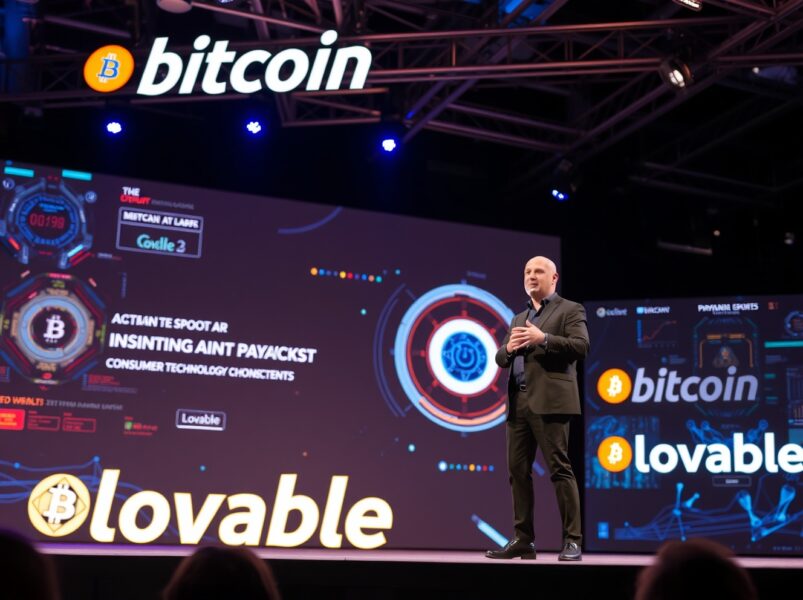
BitcoinWorld Lovable AI’s Astonishing Rise: Anton Osika Reveals Startup Secrets at Bitcoin World Disrupt 2025 Are you ready to witness a phenomenon? The world of technology is abuzz with the incredible rise of Lovable AI, a startup that’s not just breaking records but rewriting the rulebook for rapid growth. Imagine creating powerful apps and websites just by speaking to an AI – that’s the magic Lovable brings to the masses. This groundbreaking approach has propelled the company into the spotlight, making it one of the fastest-growing software firms in history. And now, the visionary behind this sensation, co-founder and CEO Anton Osika, is set to share his invaluable insights on the Disrupt Stage at the highly anticipated Bitcoin World Disrupt 2025. If you’re a founder, investor, or tech enthusiast eager to understand the future of innovation, this is an event you cannot afford to miss. Lovable AI’s Meteoric Ascent: Redefining Software Creation In an era where digital transformation is paramount, Lovable AI has emerged as a true game-changer. Its core premise is deceptively simple yet profoundly impactful: democratize software creation. By enabling anyone to build applications and websites through intuitive AI conversations, Lovable is empowering the vast majority of individuals who lack coding skills to transform their ideas into tangible digital products. This mission has resonated globally, leading to unprecedented momentum. The numbers speak for themselves: Achieved an astonishing $100 million Annual Recurring Revenue (ARR) in less than a year. Successfully raised a $200 million Series A funding round, valuing the company at $1.8 billion, led by industry giant Accel. Is currently fielding unsolicited investor offers, pushing its valuation towards an incredible $4 billion. As industry reports suggest, investors are unequivocally “loving Lovable,” and it’s clear why. This isn’t just about impressive financial metrics; it’s about a company that has tapped into a fundamental need, offering a solution that is both innovative and accessible. The rapid scaling of Lovable AI provides a compelling case study for any entrepreneur aiming for similar exponential growth. The Visionary Behind the Hype: Anton Osika’s Journey to Innovation Every groundbreaking company has a driving force, and for Lovable, that force is co-founder and CEO Anton Osika. His journey is as fascinating as his company’s success. A physicist by training, Osika previously contributed to the cutting-edge research at CERN, the European Organization for Nuclear Research. This deep technical background, combined with his entrepreneurial spirit, has been instrumental in Lovable’s rapid ascent. Before Lovable, he honed his skills as a co-founder of Depict.ai and a Founding Engineer at Sana. Based in Stockholm, Osika has masterfully steered Lovable from a nascent idea to a global phenomenon in record time. His leadership embodies a unique blend of profound technical understanding and a keen, consumer-first vision. At Bitcoin World Disrupt 2025, attendees will have the rare opportunity to hear directly from Osika about what it truly takes to build a brand that not only scales at an incredible pace in a fiercely competitive market but also adeptly manages the intense cultural conversations that inevitably accompany such swift and significant success. His insights will be crucial for anyone looking to understand the dynamics of high-growth tech leadership. Unpacking Consumer Tech Innovation at Bitcoin World Disrupt 2025 The 20th anniversary of Bitcoin World is set to be marked by a truly special event: Bitcoin World Disrupt 2025. From October 27–29, Moscone West in San Francisco will transform into the epicenter of innovation, gathering over 10,000 founders, investors, and tech leaders. It’s the ideal platform to explore the future of consumer tech innovation, and Anton Osika’s presence on the Disrupt Stage is a highlight. His session will delve into how Lovable is not just participating in but actively shaping the next wave of consumer-facing technologies. Why is this session particularly relevant for those interested in the future of consumer experiences? Osika’s discussion will go beyond the superficial, offering a deep dive into the strategies that have allowed Lovable to carve out a unique category in a market long thought to be saturated. Attendees will gain a front-row seat to understanding how to identify unmet consumer needs, leverage advanced AI to meet those needs, and build a product that captivates users globally. The event itself promises a rich tapestry of ideas and networking opportunities: For Founders: Sharpen your pitch and connect with potential investors. For Investors: Discover the next breakout startup poised for massive growth. For Innovators: Claim your spot at the forefront of technological advancements. The insights shared regarding consumer tech innovation at this event will be invaluable for anyone looking to navigate the complexities and capitalize on the opportunities within this dynamic sector. Mastering Startup Growth Strategies: A Blueprint for the Future Lovable’s journey isn’t just another startup success story; it’s a meticulously crafted blueprint for effective startup growth strategies in the modern era. Anton Osika’s experience offers a rare glimpse into the practicalities of scaling a business at breakneck speed while maintaining product integrity and managing external pressures. For entrepreneurs and aspiring tech leaders, his talk will serve as a masterclass in several critical areas: Strategy Focus Key Takeaways from Lovable’s Journey Rapid Scaling How to build infrastructure and teams that support exponential user and revenue growth without compromising quality. Product-Market Fit Identifying a significant, underserved market (the 99% who can’t code) and developing a truly innovative solution (AI-powered app creation). Investor Relations Balancing intense investor interest and pressure with a steadfast focus on product development and long-term vision. Category Creation Carving out an entirely new niche by democratizing complex technologies, rather than competing in existing crowded markets. Understanding these startup growth strategies is essential for anyone aiming to build a resilient and impactful consumer experience. Osika’s session will provide actionable insights into how to replicate elements of Lovable’s success, offering guidance on navigating challenges from product development to market penetration and investor management. Conclusion: Seize the Future of Tech The story of Lovable, under the astute leadership of Anton Osika, is a testament to the power of innovative ideas meeting flawless execution. Their remarkable journey from concept to a multi-billion-dollar valuation in record time is a compelling narrative for anyone interested in the future of technology. By democratizing software creation through Lovable AI, they are not just building a company; they are fostering a new generation of creators. His appearance at Bitcoin World Disrupt 2025 is an unmissable opportunity to gain direct insights from a leader who is truly shaping the landscape of consumer tech innovation. Don’t miss this chance to learn about cutting-edge startup growth strategies and secure your front-row seat to the future. Register now and save up to $668 before Regular Bird rates end on September 26. To learn more about the latest AI market trends, explore our article on key developments shaping AI features. This post Lovable AI’s Astonishing Rise: Anton Osika Reveals Startup Secrets at Bitcoin World Disrupt 2025 first appeared on BitcoinWorld.
Share
Coinstats2025/09/17 23:40
