

👨🏿🚀TechCabal Daily – Airtel Money is eating M-PESA’s lunch
Good morning. 
Take a deep dive into Kenya’s digital economy. Our latest study from TechCabal Insights, Kenya’s Digital Economy Report 2025, offers an unparalleled look at the country’s tech ecosystem, detailing the mobile-first revolution that saw mobile money process over 95% of all retail digital payments in 2024. Understand the infrastructure, startups, and policies that make Kenya a continental leader.
Download the report here.
Even more fitting, we talk about mobile money in today’s newsletter. Let’s dive in.
- Vodacom secures key approval for Safaricom deal
- Airtel Money’s mobile money win in Kenya
- Kenya’s interest rate lowest in three years
- Ampersand opens up swap stations to other EV players
- World Wide Web 3
- Opportunities
Companies
Vodacom clears critical hurdle in $2.1 billion Safaricom stake expansion
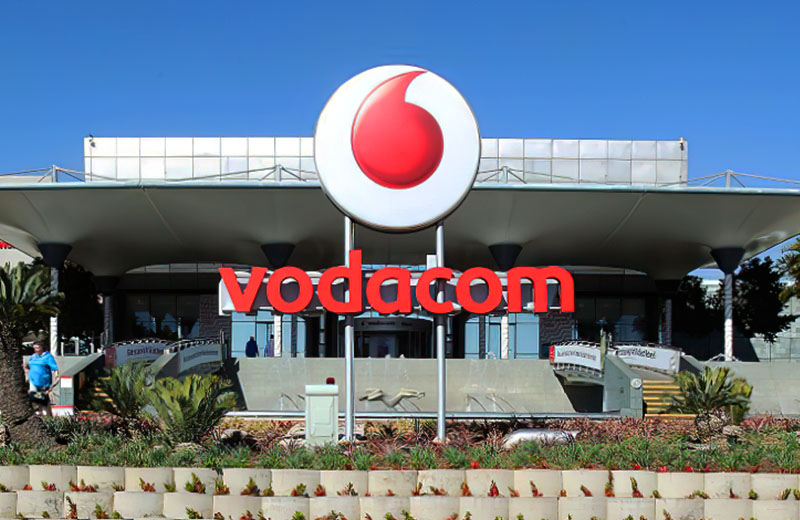 Image Source: Vodacom
Vodacom just slipped past a crucial gatekeeper in its bid to hug Safaricom a little tighter, and it only cost a $2.1 billion promise and a thumbs-up from Deloitte.
On Tuesday, Vodacom Group secured a key regulatory approval in South Africa for its planned $2.1 billion acquisition of an additional 20% stake in Kenya’s telecom giant, Safaricom.
The deal, classified as a related-party transaction, required an independent “fairness opinion” to protect minority shareholders. Audit firm Deloitte has provided that sign-off, confirming the share price is reasonable.
The primary players are Vodacom (the acquiring South African operator), its parent company Vodafone, and Safaricom. The transaction involves Vodacom purchasing Vodafone Kenya, which holds the Safaricom shares.
Between the lines: This restructuring consolidates Safaricom, East Africa’s most profitable company, more firmly under the Vodafone/Vodacom umbrella, shifting significant ownership to the South African unit.
Why is this important? For Vodacom Group, this tightens control over Safaricom’s immense profits (it reported a net income of KES 58.2 billion ~$450 million in the half year ended September 2025) and strategic assets, like M-PESA, providing crucial scale for expansion in mobile money and new markets like Ethiopia.
Concurrently in Kenya, Vodafone Kenya is buying a 15% stake from the government, reducing state ownership to 20% and increasing direct foreign ownership to 55%.
Deloitte’s opinion, now open for shareholder review for 28 days from December 5, clears a major step. Completion awaits remaining regulatory approvals in Kenya, moving the group closer to a deeper integration of its most valuable African asset.
Powering businesses across Africa to pay and get paid in local currencies.
With Fincra, businesses, startups, global enterprises and platforms can easily send and receive payments in multiple African currencies, empowering trade, and growth across the continent. Create your account in 3 minutes.
Mobile money
Airtel Money crosses 10% mobile money market share in Kenya
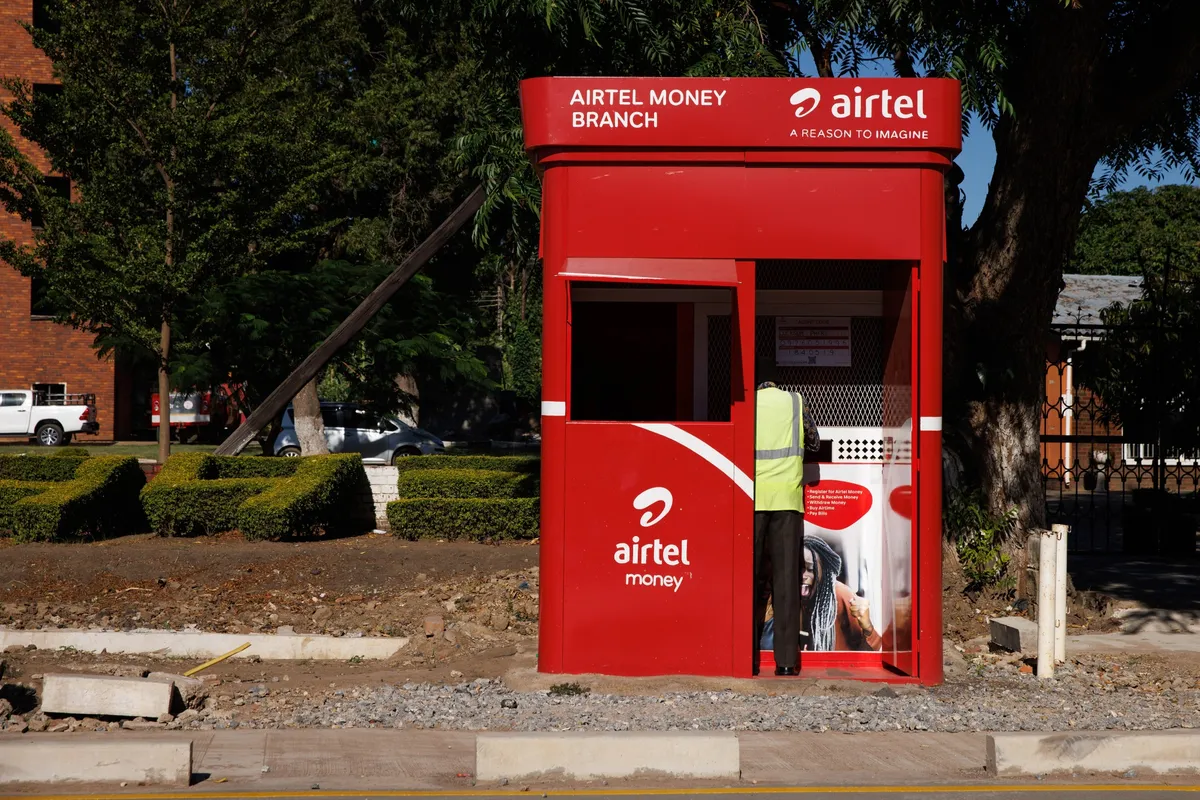 Image Source: Google
You might want to check if your Kenyan neighbour is ditching M-PESA for Airtel Money this Christmas. New data says Airtel Money is receiving some fan love.
In September, Airtel Money Kenya, one of the challenger mobile money services in the country, clawed 10.3% market share for the first time, cutting into M-PESA’s dominance, according to a Competition Authority of Kenya (CAK) report. In the same period, Safaricom-owned M-PESA slipped to 89.7%, marking the first time ever that its share dipped below 90%.
It’s not a random shift: Airtel Money has slowly been chipping away at M-Pesa’s market dominance, which sat at 97% in 2023 and fell to about 90.8% in early 2025. Today, that figure has dropped to a ridiculous 89.7% by M-PESA’s standards.
Why it happened: Airtel ran sustained pricing and cashback campaigns, including the “Rudishiwa” refunds, where users got their cash back on airtime purchases. It also expanded agent coverage from 182,472 outlets in 2018 to 381,116 in 2024, improving physical access and supporting higher transaction output.
What does this mean for Kenya’s competitive mobile money space? Though there are now more mobile devices than Kenyans (penetration rate of 139%, according to the CAK), opening up the mobile money operators to a larger serviceable market, the sector is still effectively a duopoly between M-PESA and Airtel Money, which plans to go public in 2026. It means that with deeper entrenchment of both players, it could be getting harder for new entrants to compete.
Zoom out: Yes, M-PESA still leads the market in transaction value, merchant payments, high-value transfers, and even subscriptions. But Airtel Money held only 2.9% of Kenya’s mobile money market share in early 2024; now, that figure stands at 10.3% and is still climbing. Should M-PESA worry?
Enjoy smooth payments while you’re home this Detty December
Coming home for Detty December? Enjoy smooth payments every day with your Paga US account. Send money to any bank instantly. Don’t miss out, get started now.
Economy
Kenya’s interest rate hits lowest in nearly three years
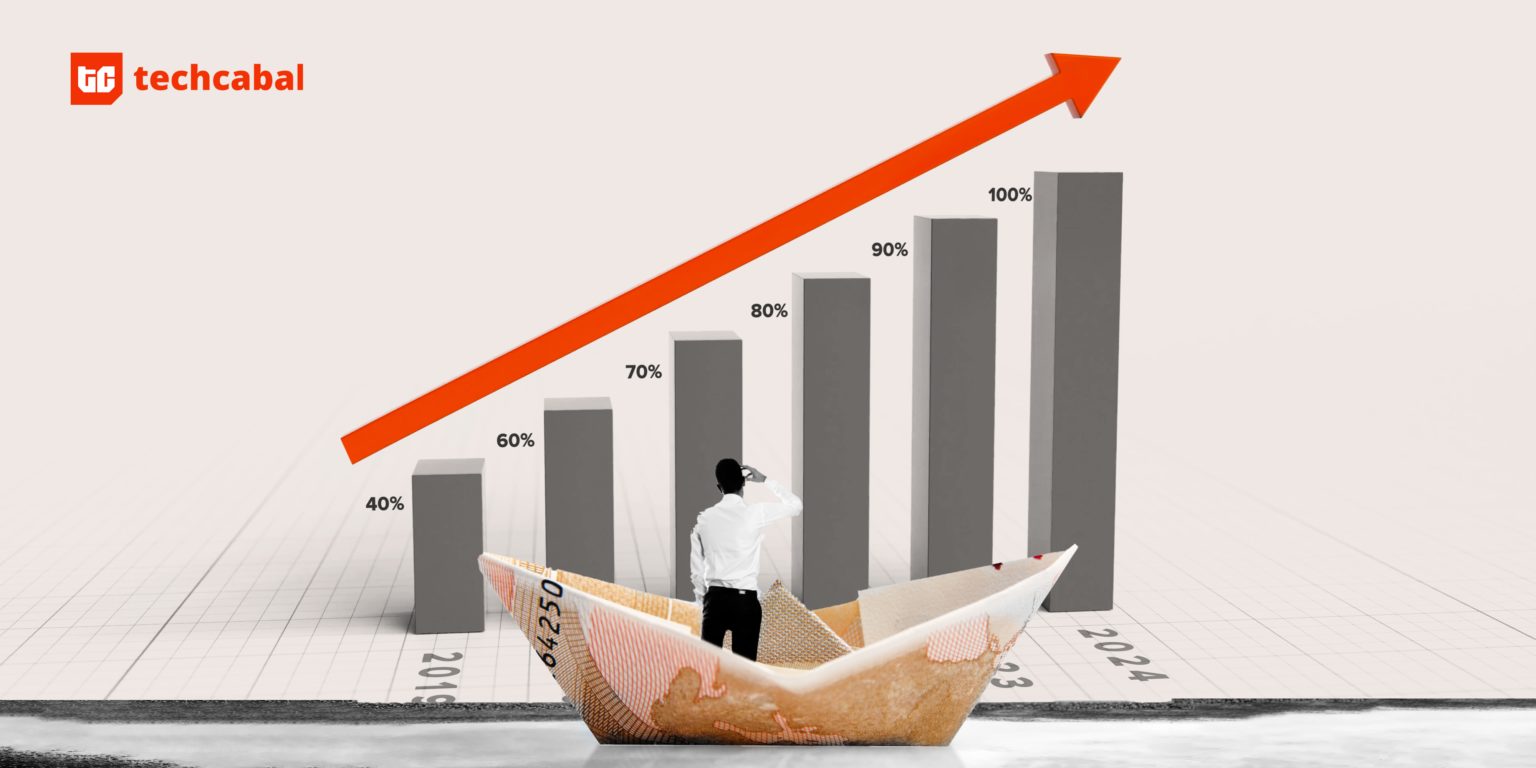 Image Source: TechCabal
It’s been a minute since we talked about countries’ interest rates and who’s sneezing at monetary policy meetings. But this one is significant: Kenya has been cutting interest rates for so long that the borrowing rate is now at its lowest ever since February 2023.
On Tuesday, Kenya’s Monetary Policy Committee (MPC) cut its benchmark interest rate for the ninth consecutive time—since June 2024—from 9.25% to 9%.
In November, headline and core inflation eased to 4.5% and 2.3% respectively, down from 4.6% and 2.7% the previous month. After months of nudging from the Central Bank of Kenya (CBK), private sector credit is finally growing, hitting 6.3% in November.
Food inflation also eased from 8% to 7.7%, riding on what the government says is a strengthening economy, at least on paper. CBK governor Kamau Thugge has framed the numbers as proof that the central bank’s work is paying off and that banks should keep expanding lending to support private sector activity.
What’s missing from the CBK’s victory lap is the risk side: Kenya is still grappling with a heavy debt-servicing burden, and sustained monetary easing could eventually collide with fiscal pressures. The government needs cheaper borrowing to refinance its obligations, but prolonged rate cuts can corner the CBK into prioritising growth over price or currency stability. For now, inflation is mild enough to justify the easing cycle, but the room for error is narrowing.
With lower borrowing costs, the CBK is clearly pushing for more aggressive economic spending, conveniently timed for the festive season. The Kenyan shilling has also remained relatively stable against the dollar, a key factor the regulator is counting on to keep consumers and businesses willing to spend in local terms.
Stay up to date with Paystack news!
Subscribe to Paystack for a curated dose of product updates, insights, event invites and more. Subscribe here →.
Mobility
Ampersand Energy launches battery swap network in East Africa
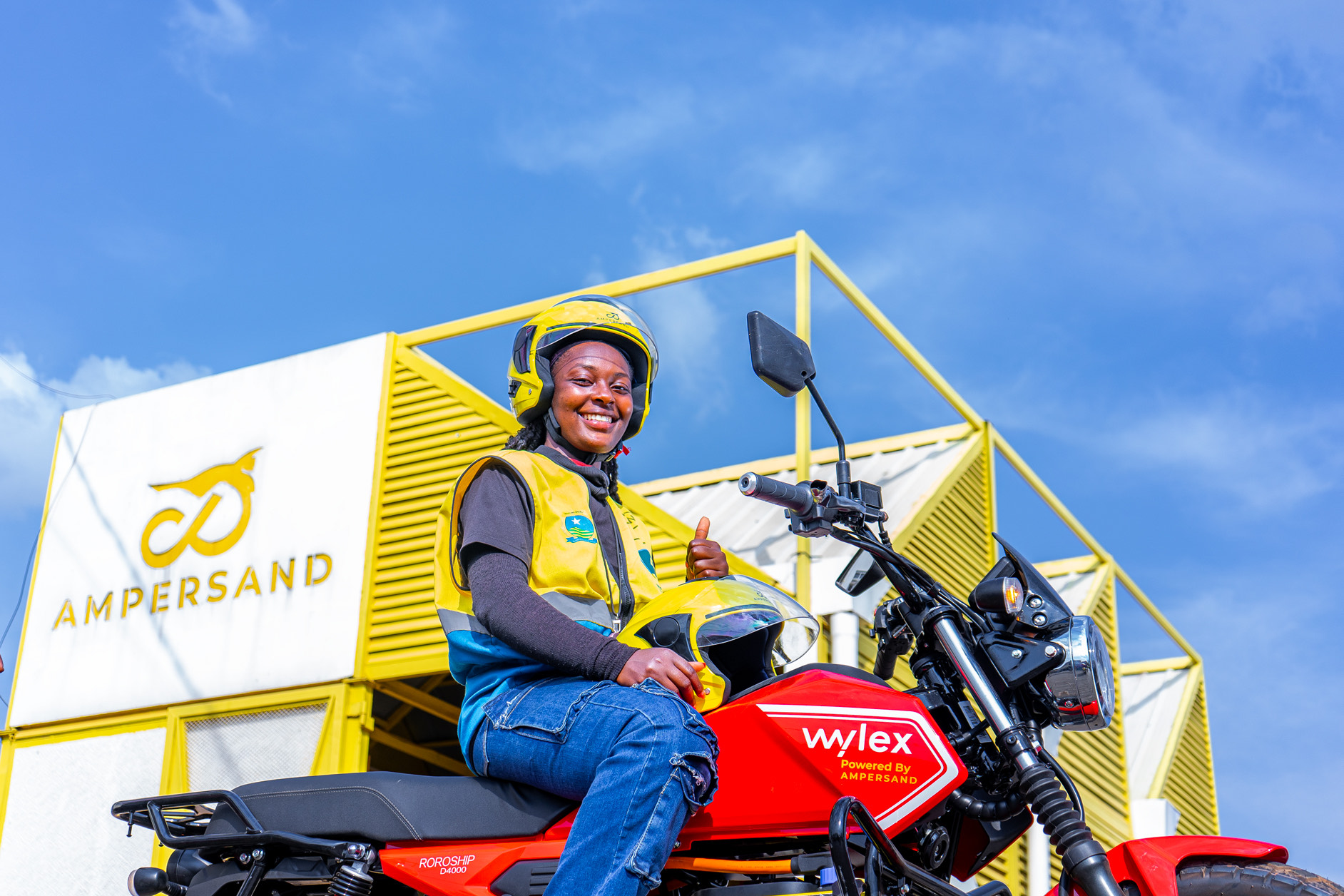 Image source: Ampersand Energy
Ampersand Energy, a Rwandan electric mobility startup, has opened its battery-swap network to any global electric vehicle (EV) manufacturer that meets its standards, to drive adoption of electric mobility across Africa’s commercial motorcycle markets. It’s a big step for a startup that has designed its own e-bikes, built its own batteries, and run its own swap stations.
So, what’s this battery-swap network? It’s an energy grid built for commercial motorcycles. Instead of a rider parking their bike for hours to charge, they can pull into a swap station, unlock the empty battery, slot it out, and slide in a fully charged one. Ampersand owns the batteries, maintains them, charges them, and tracks their performance through software. Riders never have to worry about battery health, charging time, electricity access, or degradation.
By opening this network, Ampersand is saying the EV market belongs to those who control the energy layer, and that layer is lucrative. The company already does over 20,000 swaps daily, each costing riders about $2 for roughly 80 km.
Why does this matter? It means that riders won’t lose money while waiting for their bikes to charge. The batteries may also last longer because Ampersand manages them properly. This swapping network solves an essential infrastructure problem in Africa’s EV market: the lack of charging infrastructure.
Wylex Mobility, an established Asian EV manufacturer, is the first to join Ampersand’s open network. The foreign e-mobility company is bringing the hardware e-bike parts, while Ampersand will supply batteries, control software, and access to swap stations. As part of the partnership, Ampersand will also assemble Wykex’s bikes at its Nairobi factory.
Yet by opening up its infrastructure to other e-mobility players, Ampersand could be directly enabling them to compete. The Rwandan startup says it is fine with that, as it believes providing easy access to charging infrastructure will increase EV uptake in East Africa.
AI in a Nutshell gives you weekly AI knowledge and insights

Want to stay close to AI but hate long reads? AI in a Nutshell gives you weekly AI knowledge, news, tools, and insights – short, smart, and fun. Perfect for curious (but lazy) readers who still want to stay ahead. Subscribe here.
CRYPTO TRACKER
The World Wide Web3
Source:

|
Coin Name |
Current Value |
Day |
Month |
|---|---|---|---|
| Bitcoin | $92,641 |
+ 2.86% |
– 12.72% |
| Ether | $3,324 |
+ 6.67% |
– 7.76% |
| Yooldo | $0.3323 |
+ 85.47% |
+ 869.49% |
| Solana | $138.89 |
+ 4.48% |
– 16.98% |
* Data as of 06.50 AM WAT, December 10, 2025.
Opportunities
- The Growth Talent Accelerator Programme (GTAP) is alGROWithm’s flagship training experience designed to turn ambitious professionals, operators, and teams into world-class Growth Engineers. If you’re an individual looking to upskill and become indispensable in 2026, or a company looking to strengthen your team, optimise operations, and increase revenue, GTAP 2026 is the right place to start. Apply for the Lite stream as an individual or nominate your team for the Pro stream
- Every startup has a story worth hearing. My Startup in 60 Seconds by TechCabal offers founders a one-minute spotlight to share their vision, challenges, and achievements. Beyond visibility, it connects you to investors, customers, and Africa’s tech ecosystem. Apply to be featured or explore other TechCabal advertorial opportunities. This is a paid opportunity.
- Win $30 Weekly This Christmas! This December, cross-border payment company Accrue is giving away $30 weekly, and you could be one of the lucky winners! Getting started is simple: just download the Accrue app from the App Store or Google Play Store and jump right into the challenge, and maybe even snag a little holiday cash while you’re at it.
- The BackEnd: How this fintech moves money where freelancers live
- Why African startups and SMEs hesitate to go public, according to BRVM’s Corinne Ormon
- Safaricom raises $154m as investors flood its bond sale
Written by: Kenn Abuya, Opeyemi Kareem, and Emmanuel Nwosu
Edited by: Emmanuel Nwosu & Ganiu Oloruntade
Want more of TechCabal?
Sign up for our insightful newsletters on the business and economy of tech in Africa.
- The Next Wave: futuristic analysis of the business of tech in Africa.
- TC Scoops: breaking news from TechCabal
- Francophone Weekly by TechCabal: insider insights and analysis of Francophone’s tech ecosystem
P:S If you’re often missing TC Daily in your inbox, check your Promotions folder and move any edition of TC Daily from “Promotions” to your “Main” or “Primary” folder and TC Daily will always come to you.

You May Also Like

BDACS Launches KRW1, South Korean Won-Backed Stablecoin, Marking Key Digital Asset Milestone

What Every Platform Eventually Learns About Handling User Payments Across Borders
