President Donald Trump’s Crypto Czar David Sacks, a prominent Silicon Valley investor and venture capitalist, is putting in overtime defending his boss’s push forPresident Donald Trump’s Crypto Czar David Sacks, a prominent Silicon Valley investor and venture capitalist, is putting in overtime defending his boss’s push for

Trump’s AI czar defends POTUS push for federal AI oversight

2025/12/13 12:39

President Donald Trump’s Crypto Czar David Sacks, a prominent Silicon Valley investor and venture capitalist, is putting in overtime defending his boss’s push for federal AI oversight.

Sacks argues that the administration is only focused on pushing back on the “most onerous examples of state regulation” while listing reasons such a move is needed for continued innovation in the AI industry. 

David Sacks defends Trump on AI

Donald Trump signed an executive order titled “Ensuring a National Policy Framework for Artificial Intelligence,” aimed at establishing a unified federal regulatory framework for AI on Thursday. 

The move seeks to preempt or override state-level AI regulations, which the administration views as a “patchwork” that burdens companies and discourages U.S. competitiveness, particularly against China. 

However, it has drawn sharp criticism from Democrats, some states, and AI safety advocates, who argue it strips away essential consumer protections without providing immediate federal replacements.

Sacks disagrees, saying the move, which involves developing with Congress a common standard for oversight of the emerging technology, is more about easing a growing compliance burden for companies than anything else. 

Right now, AI model development is taking place across multiple states, all with their own regulatory standards. Sacks highlighted that as an issue. 

He acknowledged that the U.S. is currently leading China where AI is concerned, but that innovation could fall behind if forced to comply with a patchwork of conflicting AI rules emerging across all 50 states.

While speaking on Fox Business’ “Mornings with Maria”, he said, “If you have to report to 50 different state regulators at 50 different times with 50 different definitions, it’s extremely onerous. And it’s going to slow down innovation, and it’s going to hinder our progress in the AI race.”

“So if we want to stay in the lead, as President Trump has declared, we need to have a single national standard, one standard for AI, so that the most onerous states, the most draconian ones, can’t hold you up,” he added. “We want to work with Congress on this.”

Until a national standard is in place, Sacks claims the administration is prepared to push back against what it sees as excessively restrictive state regulations.

Some states will not accept the order without a fight

The order is widely expected to face legal challenges, especially from states with provisions already in place. Many of these states are expected to treat the order as a case of federal overreach as it affects their respective abilities to govern technology within their borders. 

California State Senator Scott Wiener has already drawn the battle lines. “It’s absurd for Trump to think he can weaponize the DOJ and Commerce to undermine those state rights,” Wiener said in a statement. “If the Trump Administration tries to enforce this ridiculous order, we will see them in court.”

Democratic U.S. Senator Brian Schatz has also shared plans to draft legislation that would seek a full repeal of the order.

“Embracing the amazing possibilities of AI can’t come at the cost of leaving Americans vulnerable to its profound risks, which is exactly what this executive order does,” Schatz said. “Congress has a responsibility to get this technology right – and quickly – but states must be allowed to act in the public interest in the meantime.”

Meanwhile, Sacks has said the provision that calls on the Justice Department to sue states over AI rules will only go after the most burdensome regulations. 

While he expressed uncertainty about whether the administration would seek to challenge California or New York, he singled out a law in Colorado seeking to prohibit algorithmic discrimination and tagged it “probably the most excessive.”

Trump resorted to the executive order because White House officials and Republican lawmakers reportedly refused to include similar legislation preempting state AI laws in a must-pass defense bill earlier this month. 

The order calls for Sacks and other administration officials to work with Congress on legislation for a “minimally burdensome national standard.”

Unfortunately, it has come at a time when more state lawmakers have started expressing an eagerness to impose some rules of the road on the ever-growing AI sector. Experts foresee complications, as any state passing legislation would face potential conflict with the White House.

Join Bybit now and claim a $50 bonus in minutes

Disclaimer: The articles reposted on this site are sourced from public platforms and are provided for informational purposes only. They do not necessarily reflect the views of MEXC. All rights remain with the original authors. If you believe any content infringes on third-party rights, please contact [email protected] for removal. MEXC makes no guarantees regarding the accuracy, completeness, or timeliness of the content and is not responsible for any actions taken based on the information provided. The content does not constitute financial, legal, or other professional advice, nor should it be considered a recommendation or endorsement by MEXC.

You May Also Like

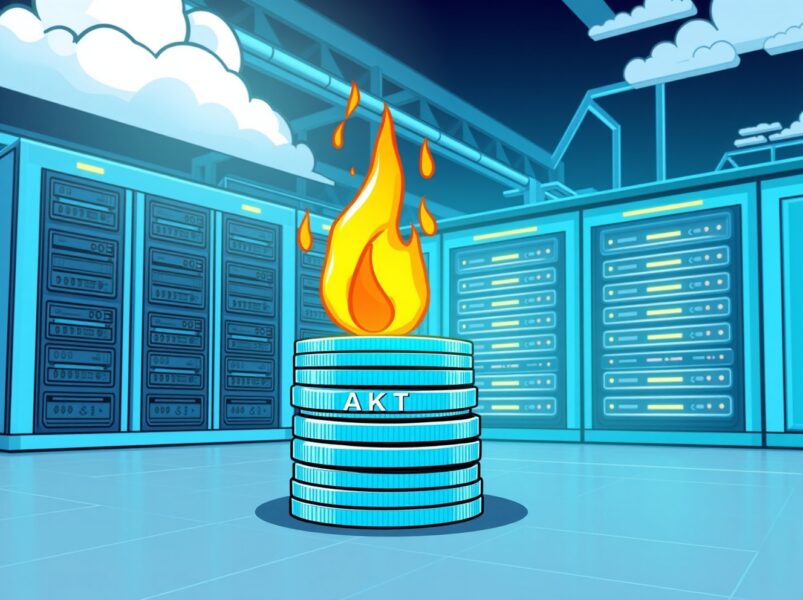
Akash Network’s Strategic Move: A Crucial Burn for AKT’s Future

Akash Network’s Strategic Move: A Crucial Burn for AKT’s Future

BitcoinWorld Akash Network’s Strategic Move: A Crucial Burn for AKT’s Future In the dynamic world of decentralized computing, exciting developments are constantly shaping the future. Today, all eyes are on Akash Network, the innovative supercloud project, as it proposes a significant change to its tokenomics. This move aims to strengthen the value of its native token, AKT, and further solidify its position in the competitive blockchain space. The community is buzzing about a newly submitted governance proposal that could introduce a game-changing Burn Mint Equilibrium (BME) model. What is the Burn Mint Equilibrium (BME) for Akash Network? The core of this proposal revolves around a concept called Burn Mint Equilibrium, or BME. Essentially, this model is designed to create a balance in the token’s circulating supply by systematically removing a portion of tokens from existence. For Akash Network, this means burning an amount of AKT that is equivalent to the U.S. dollar value of fees paid by network users. Fee Conversion: When users pay for cloud services on the Akash Network, these fees are typically collected in various cryptocurrencies or stablecoins. AKT Equivalence: The proposal suggests converting the U.S. dollar value of these collected fees into an equivalent amount of AKT. Token Burn: This calculated amount of AKT would then be permanently removed from circulation, or ‘burned’. This mechanism creates a direct link between network utility and token supply reduction. As more users utilize the decentralized supercloud, more AKT will be burned, potentially impacting the token’s scarcity and value. Why is This Proposal Crucial for AKT Holders? For anyone holding AKT, or considering investing in the Akash Network ecosystem, this proposal carries significant weight. Token burning mechanisms are often viewed as a positive development because they can lead to increased scarcity. When supply decreases while demand remains constant or grows, the price per unit tends to increase. Here are some key benefits: Increased Scarcity: Burning tokens reduces the total circulating supply of AKT. This makes each remaining token potentially more valuable over time. Demand-Supply Dynamics: The BME model directly ties the burning of AKT to network usage. Higher adoption of the Akash Network supercloud translates into more fees, and thus more AKT burned. Long-Term Value Proposition: By creating a deflationary pressure, the proposal aims to enhance AKT’s long-term value, making it a more attractive asset for investors and long-term holders. This strategic move demonstrates a commitment from the Akash Network community to optimize its tokenomics for sustainable growth and value appreciation. How Does BME Impact the Decentralized Supercloud Mission? Beyond token value, the BME proposal aligns perfectly with the broader mission of the Akash Network. As a decentralized supercloud, Akash provides a marketplace for cloud computing resources, allowing users to deploy applications faster, more efficiently, and at a lower cost than traditional providers. The BME model reinforces this utility. Consider these impacts: Network Health: A stronger AKT token can incentivize more validators and providers to secure and contribute resources to the network, improving its overall health and resilience. Ecosystem Growth: Enhanced token value can attract more developers and projects to build on the Akash Network, fostering a vibrant and diverse ecosystem. User Incentive: While users pay fees, the potential appreciation of AKT could indirectly benefit those who hold the token, creating a circular economy within the supercloud. This proposal is not just about burning tokens; it’s about building a more robust, self-sustaining, and economically sound decentralized cloud infrastructure for the future. What Are the Next Steps for the Akash Network Community? As a governance proposal, the BME model will now undergo a period of community discussion and voting. This is a crucial phase where AKT holders and network participants can voice their opinions, debate the merits, and ultimately decide on the future direction of the project. Transparency and community engagement are hallmarks of decentralized projects like Akash Network. Challenges and Considerations: Implementation Complexity: Ensuring the burning mechanism is technically sound and transparent will be vital. Community Consensus: Achieving broad agreement within the diverse Akash Network community is key for successful adoption. The outcome of this vote will significantly shape the tokenomics and economic model of the Akash Network, influencing its trajectory in the rapidly evolving decentralized cloud landscape. The proposal to introduce a Burn Mint Equilibrium model represents a bold and strategic step for Akash Network. By directly linking network usage to token scarcity, the project aims to create a more resilient and valuable AKT token, ultimately strengthening its position as a leading decentralized supercloud provider. This move underscores the project’s commitment to innovative tokenomics and sustainable growth, promising an exciting future for both users and investors in the Akash Network ecosystem. It’s a clear signal that Akash is actively working to enhance its value proposition and maintain its competitive edge in the decentralized future. Frequently Asked Questions (FAQs) 1. What is the main goal of the Burn Mint Equilibrium (BME) proposal for Akash Network? The primary goal is to adjust the circulating supply of AKT tokens by burning a portion of network fees, thereby creating deflationary pressure and potentially enhancing the token’s long-term value and scarcity. 2. How will the amount of AKT to be burned be determined? The proposal suggests burning an amount of AKT equivalent to the U.S. dollar value of fees paid by users on the Akash Network for cloud services. 3. What are the potential benefits for AKT token holders? Token holders could benefit from increased scarcity of AKT, which may lead to higher demand and appreciation in value over time, especially as network usage grows. 4. How does this proposal relate to the overall mission of Akash Network? The BME model reinforces the Akash Network‘s mission by creating a stronger, more economically robust ecosystem. A healthier token incentivizes network participants, fostering growth and stability for the decentralized supercloud. 5. What is the next step for this governance proposal? The proposal will undergo a period of community discussion and voting by AKT token holders. The community’s decision will determine if the BME model is implemented on the Akash Network. If you found this article insightful, consider sharing it with your network! Your support helps us bring more valuable insights into the world of decentralized technology. Stay informed and help spread the word about the exciting developments happening within Akash Network. To learn more about the latest crypto market trends, explore our article on key developments shaping decentralized cloud solutions price action. This post Akash Network’s Strategic Move: A Crucial Burn for AKT’s Future first appeared on BitcoinWorld.
Share
Coinstats2025/09/22 21:35